Alpine Newts

Let's Learn About Alpine Newts
Word of the Week
Alpine
Alpine describes areas of tall mountains, especially the Alps mountain range, which is located in Europe.
The alpine newt lives in the Alps. That is how they got their name!
Fast Facts
Where do alpine newts live?
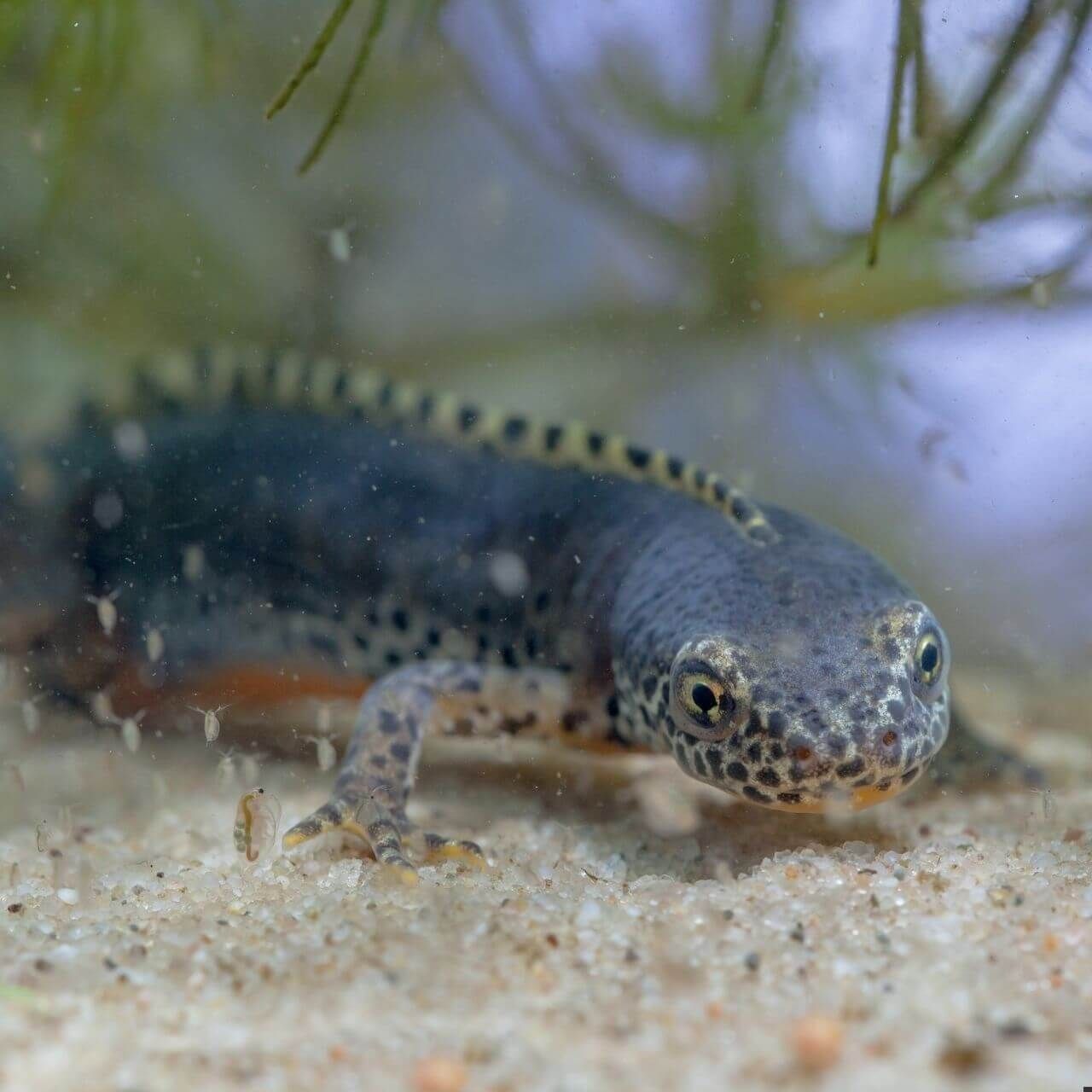
Alpine newts are found throughout many countries in central Europe.
They commonly live at high elevations in the Alps mountain range. Some alpine newts live in the lowlands all the way down to sea level.
What do alpine newts eat?
Adult alpine newts are carnivores. They eat meat.
Alpine newts eat different food during their life cycle. Larval alpine newts eat small animals and algae. Efts eat small animals on land, like worms, insects, and spiders. Adult alpine newts eat small animals on land and in water.
What traits do alpine newts share?
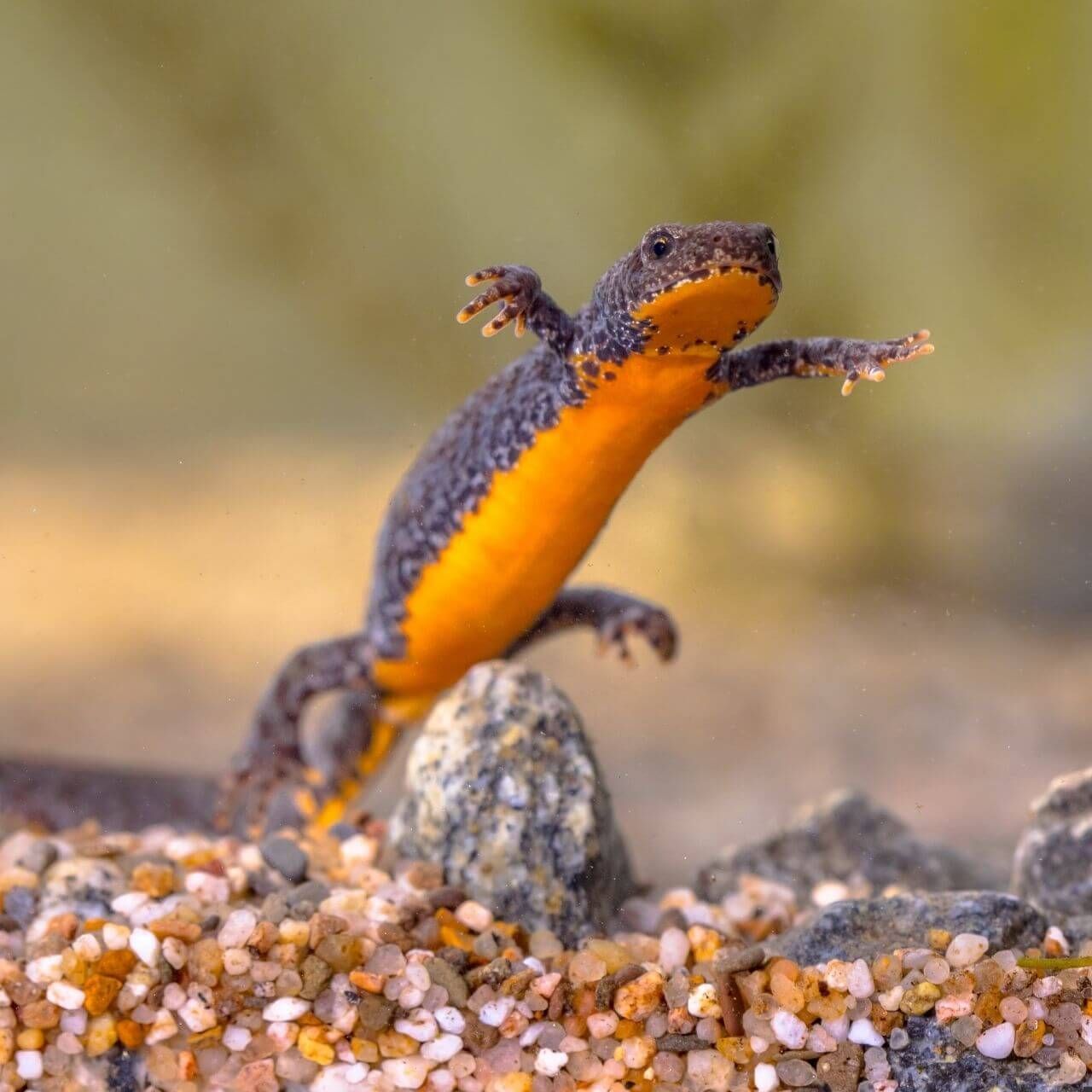
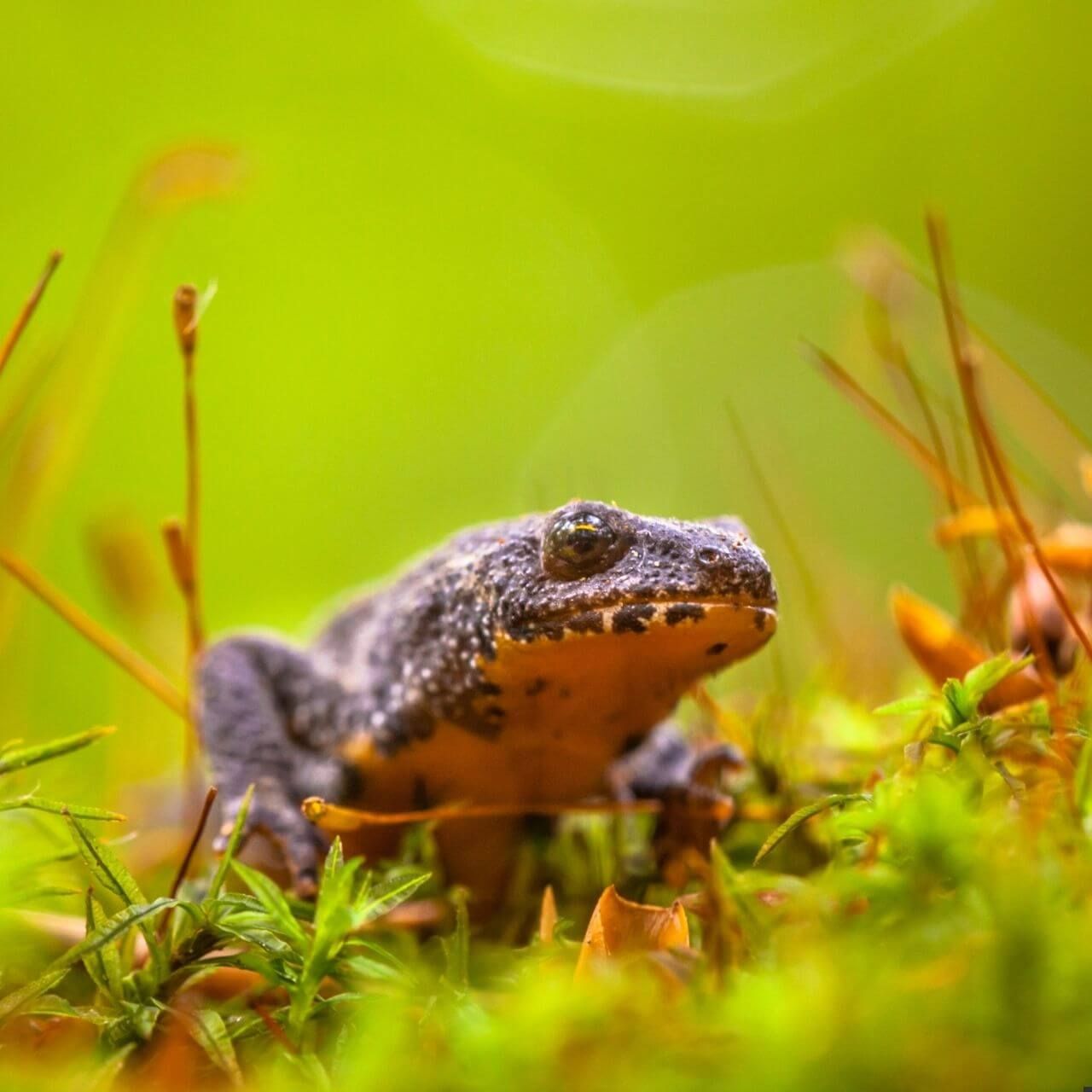
Alpine newts have many interesting traits, such as...
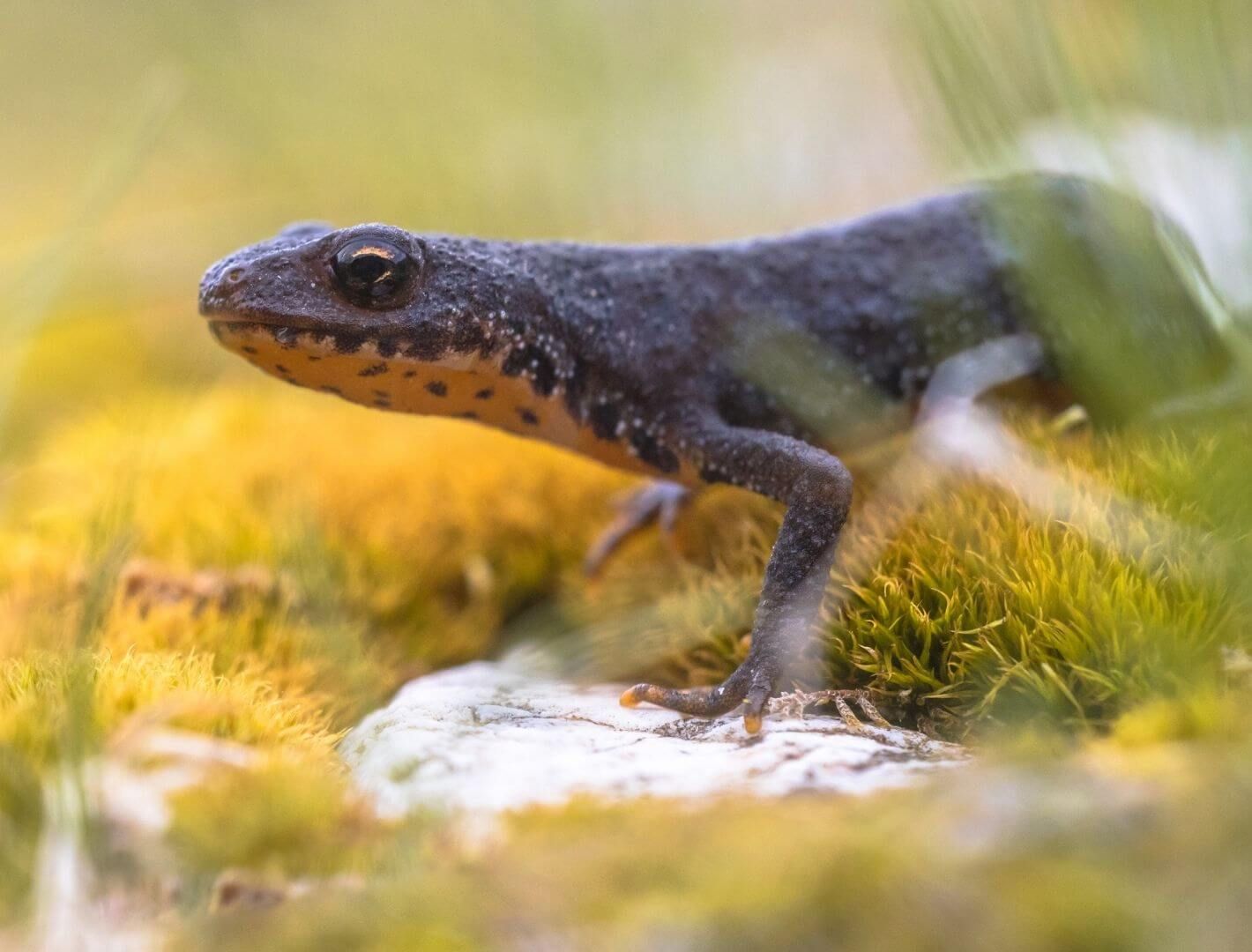
- A dark back and orange belly
- An aquatic larval phase
- A terrestrial juvenile (eft) phase
- A semi-aquatic adult phase
- A dormant phase in the winter called brumation
How many alpine newts are there?
There is no population estimate for wild alpine newts.
Alpine newts are listed as Least Concern by the IUCN. Scientists are not worried they will go extinct. Wild alpine newts face threats like invasive species and pollution.
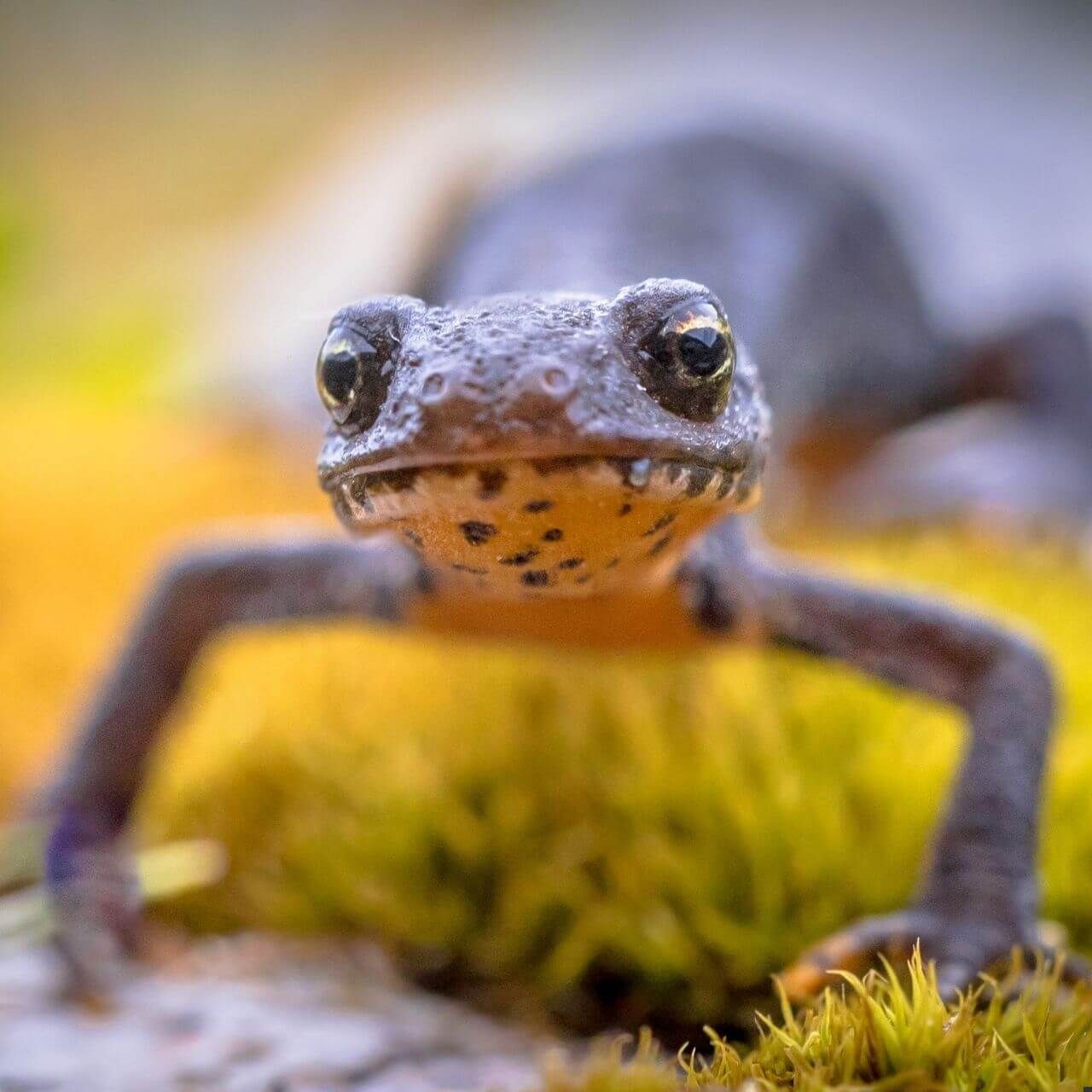
Species Spotlight
Newt Metamorphosis
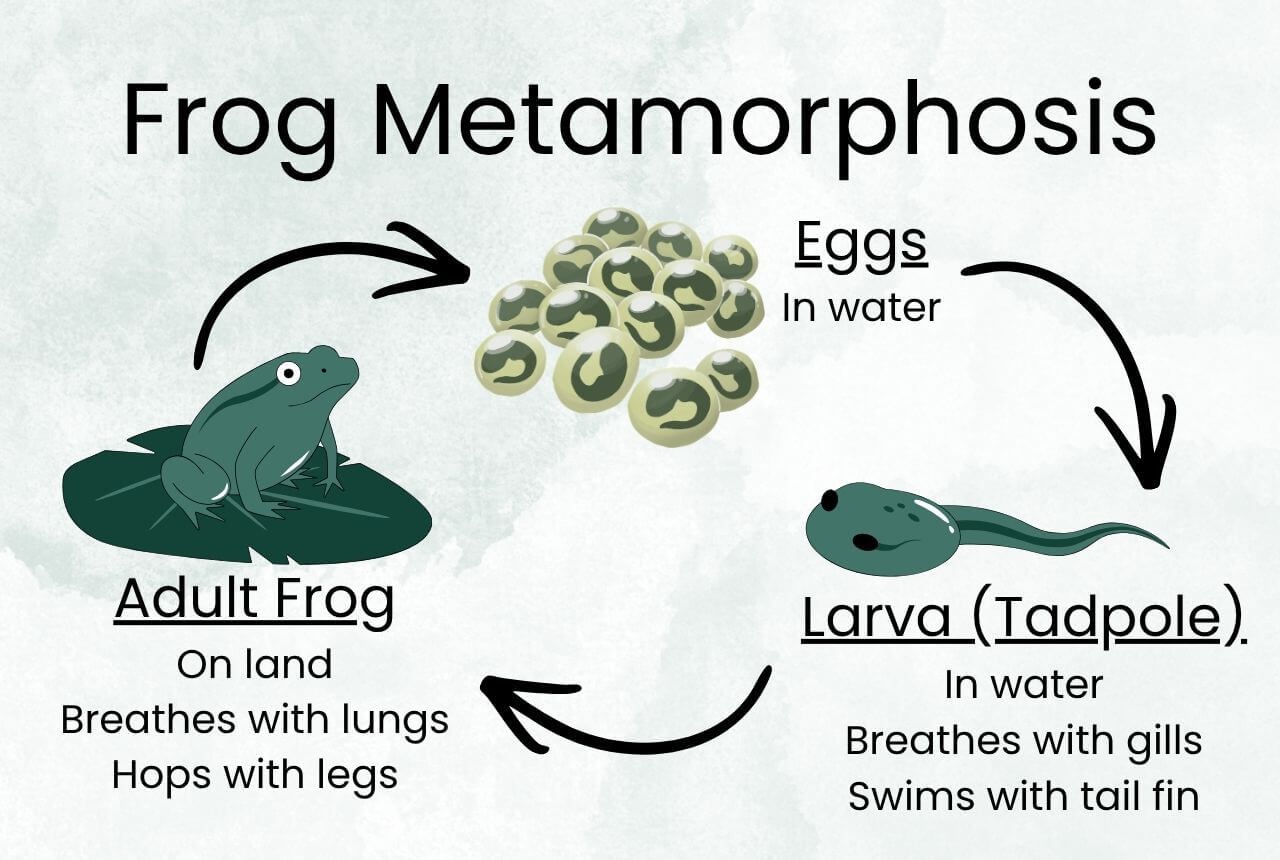
Amphibians are famous for their fascinating life cycle. Most amphibians go through metamorphosis. They change between different phases during their life. Frog metamorphosis is the most common example. A frog starts its life as an egg. Then, it hatches into its larval phase. A larval frog is called a tadpole. It lives in water, breathes with gills, and swims with a tail fin. Eventually, it goes through a big change into an adult frog. It absorbs its gills and tail, develops lungs and legs, and moves onto land. It can only mate once it becomes an adult.
Many salamanders have a similar metamorphosis. However, newts do things a little differently. European newts, like alpine newts, have an extra phase. Let’s take a look.
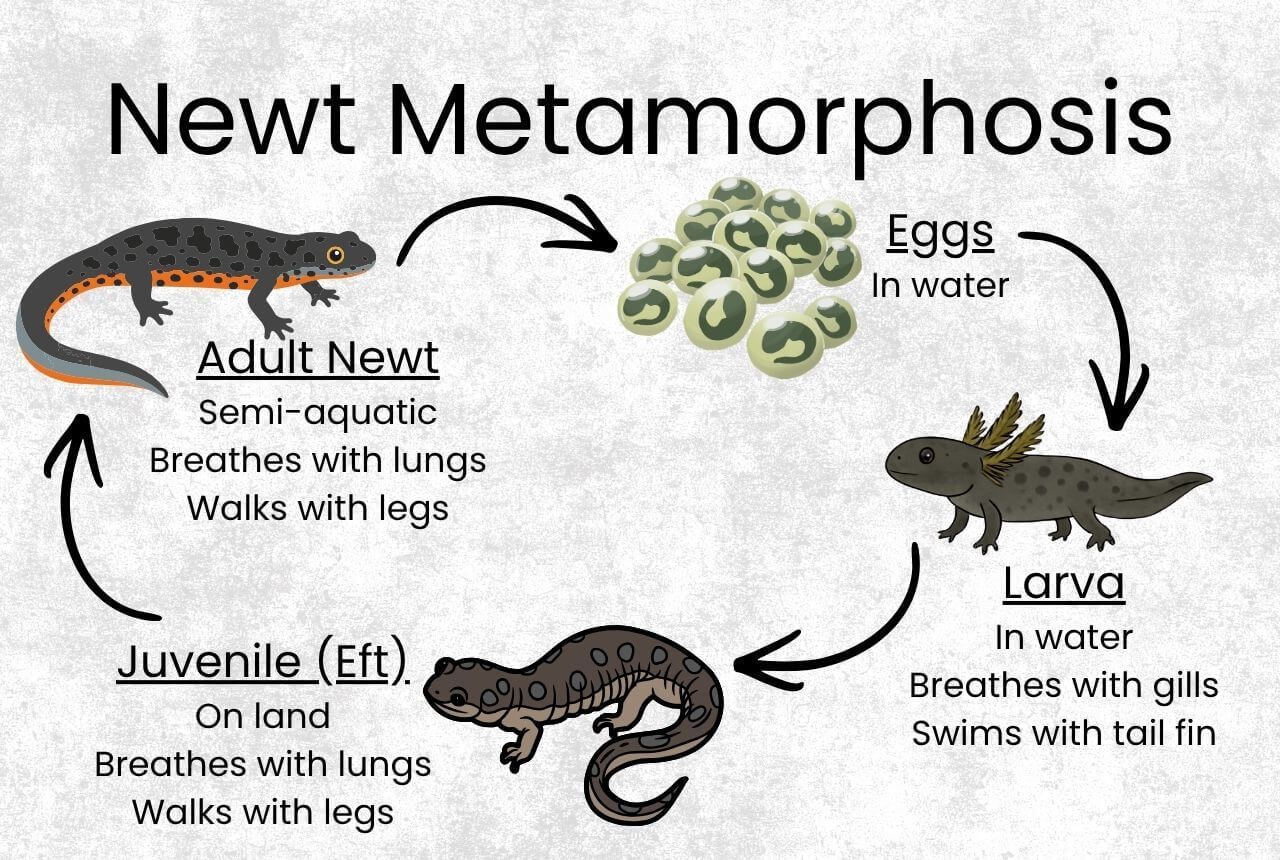
An alpine newt starts its life as an egg. Then, it hatches into its larval phase. Like a tadpole, a larval newt lives underwater. It breathes with feathery gills and swims with a tail fin. After a few weeks, the larval newt changes into its juvenile phase. Juvenile newts are called efts. Efts breathe air with lungs and live on land. Alpine newts can stay in their eft phase for a few years. Eventually, the eft changes into its adult phase. It can only mate once it becomes an adult.
Frog and newt metamorphosis have similarities. They both lay eggs, hatch into a larval phase, and can only reproduce as adults. The biggest difference is that newts have an extra phase, the juvenile, or eft, phase.
BRAIN BLAST
What other animals go through metamorphosis? Compare the metamorphosis of other animals to newt metamorphosis.
Conservation Corner
Removing Invasive Fish
Alpine newts are not endangered! They are listed as Least Concern by the IUCN. This means that scientists are not worried they will go extinct anytime soon. However, alpine newts face threats in the wild. One of their main threats is invasive fish. Trout, minnows, and sunfish have been introduced to lakes and ponds in the Alps. These fish are not native. They were introduced on purpose for fishing.
Invasive fish harm alpine newts in many ways. Mainly, fish eat alpine newt eggs and larvae. Fewer newts reach adulthood, meaning fewer newts can reproduce. Invasive fish also change the behavior of adult newts. Newts spend more time hiding when they return to the water. They are less likely to look for food or mates. This causes them to reproduce less frequently.
Overall, invasive species cause the alpine newt population to shrink. Fewer newts reproduce, and the eggs and larvae of newts that are able to reproduce are often eaten. The only way to allow the newt population to grow is to remove the fish. This is a big project. Removing invasive fish from these habitats takes up to 7 years. Organizations like Life Resque AlPyr use nets, traps, and electrofishing to remove the invasive fish. They have successfully removed fish from several lakes in the Alps, allowing the newt population to grow. Learn more about their work using the link below.
To Newt, or Not to Newt
Identify which statements describe newts and which do not describe newts.
Alpine Newt Challenge
xxx
Learn More!
Glossary
Adaptation
The process by which a species becomes more fit for its environment over the course of several generations. It is a result of natural selection.
Albino
Used to describe animals with a color mutation causing them to appear all white with red/pink eyes.
Amphibian
A cold-blooded vertebrate with permeable skin that goes through a metamorphosis!
Aquatic
Living in water.
Cannibalism
An animal that preys on members of its own species.
Captivity
When animals are kept and cared for by people (like in a zoo).
Carnivore
An animal that eats other animals.
Cold-Blooded
An animal that relies on the outside temperature to regulate their body temperature (reptiles and amphibians). Also known as ectothermic.
Critically Endangered
An rating from the International Union for Conservation of Nature (IUCN) that indicates a species is at an extremely high risk of extinction in the wild
Eft
The aquatic larval form of a salamander.
Endemic
Living in one place and nowhere else.
Extinct in the Wild
Used to describe animals that only exist in captivity, like at a zoo.
Gills
The respiratory organ that allows fish, amphibians in their larval phase, and crustaceans to absorb oxygen molecules from water.
Hormone
A natural chemical that an animal’s body makes that controls how its body functions.
Invasive Species
An organism that has been introduced to an area it is not native to.
Larva
The aquatic phase of an amphibian's life cycle occurring after the amphibian exits the egg.
Leucistic
Used to describe an animal with a mutation that causes them to appear mostly or completely white (with regularly colored eyes).
Metamorphosis
The process of an animal changing and developing from an egg to an adult through different life phases.
Neoteny
The condition of an animal retaining its juvenile traits as an adult.
Predator
An animal that hunts other animals for food.
Prey
An animal that is hunted and eaten by another animal.
Regeneration
The process by which an animal regrows a body part.
Reproduce
The act of producing offspring.
Species
A closely related group of animals with similar characteristics that are capable of reproducing (example: tigers).
Vertebrate
An animal that has a backbone.