
American Bullfrogs

Let's Learn About American Bullfrogs
Word of the Week
Invasive Species
Invasive species are organisms that have established a population somewhere they are not native.
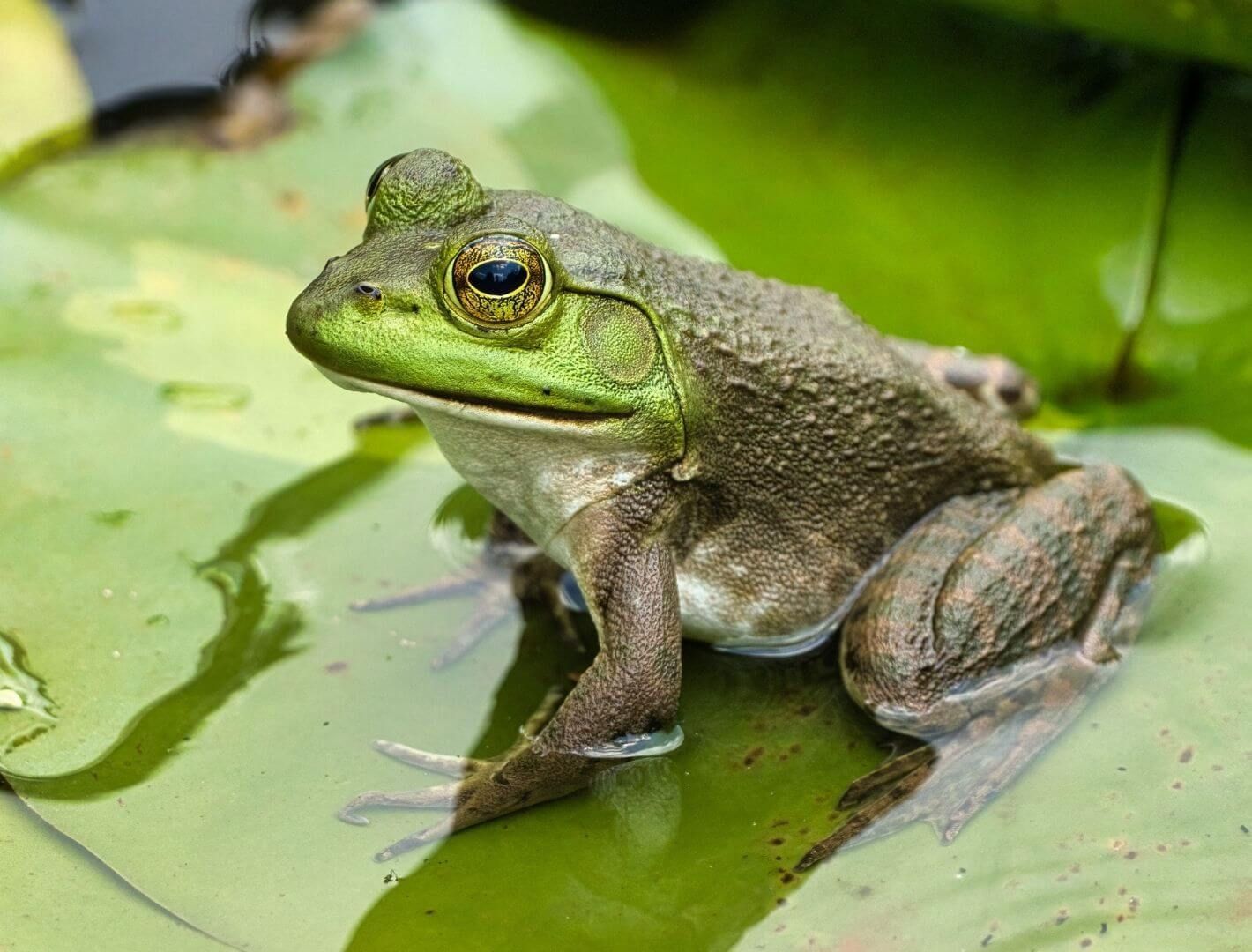
American bullfrogs are native to the eastern United States. They are an invasive species in the western United States, South America, Asia, and other regions. They are harmful because they outcompete and eat native species.
Fast Facts
Where do American bullfrogs live?
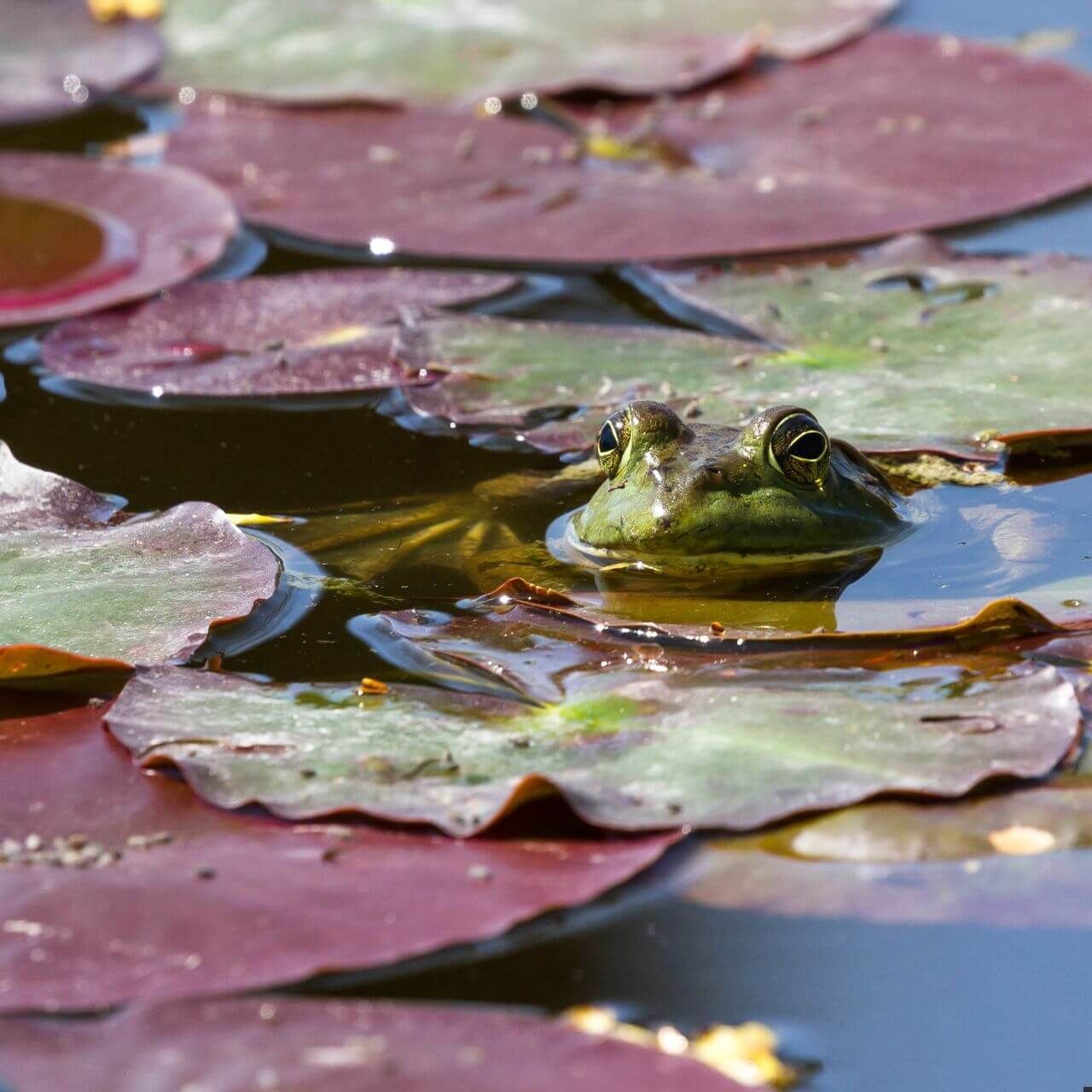
American bullfrogs are native to the eastern United States. They are invasive in the western United States, South America, Europe, and Asia.
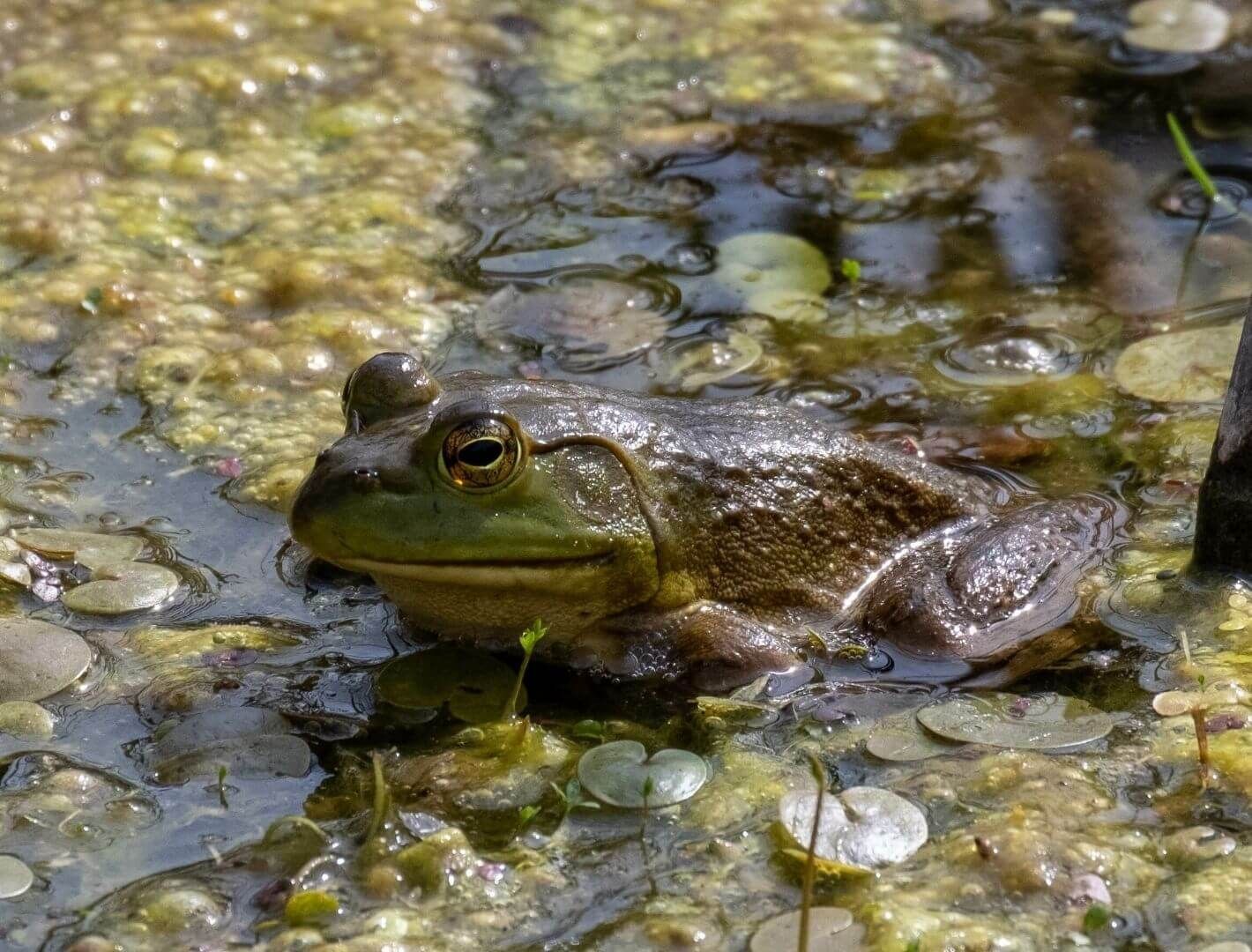
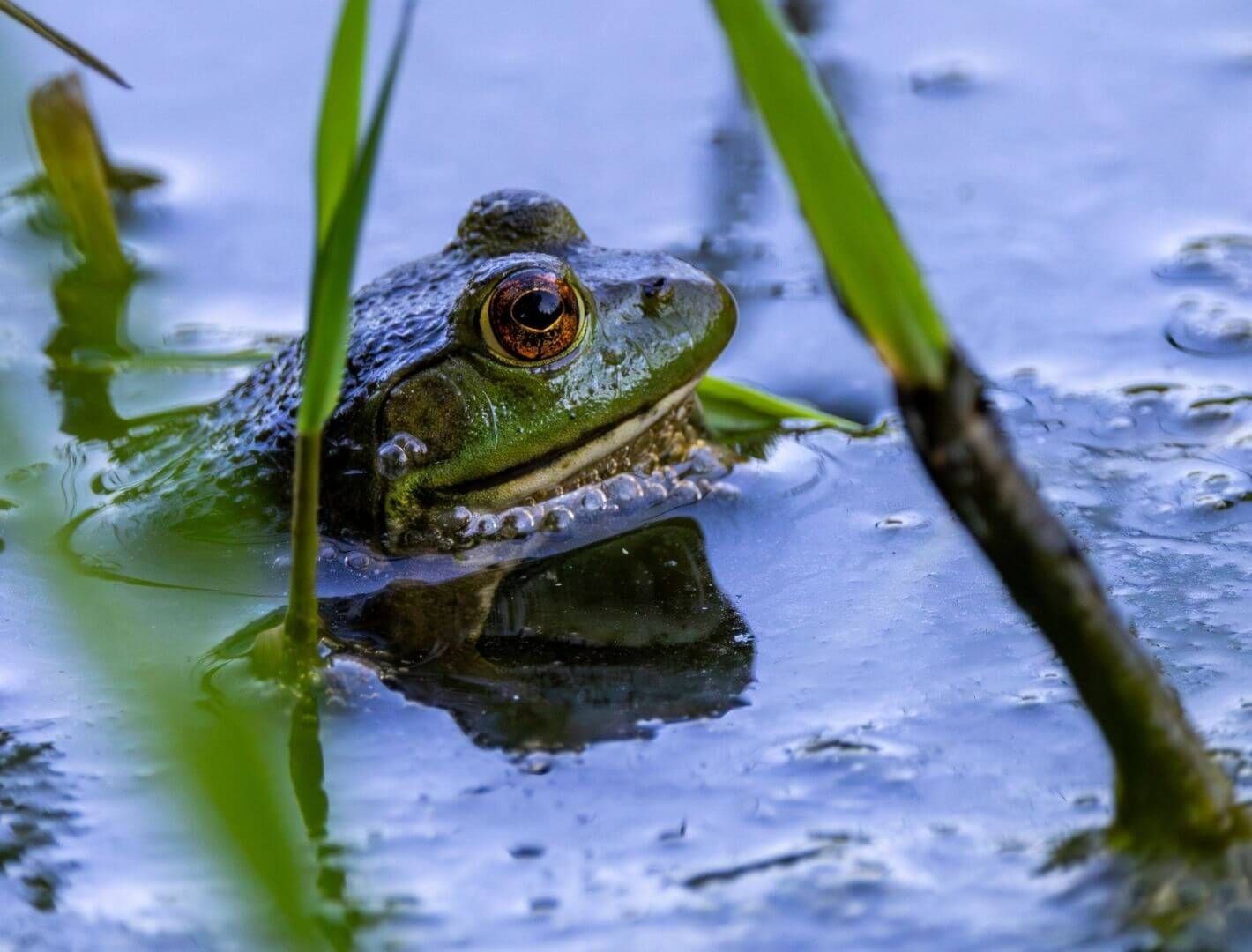
They live in shallow, slow-moving freshwater habitats, like ponds and swamps.
What do American bullfrogs eat?
American bullfrogs are carnivores. They are meat-eaters.
American bullfrogs feed on fish, other frogs, insects, snails, eggs, snakes, and lizards. They even eat other American bullfrogs.
What traits do American bullfrogs share?
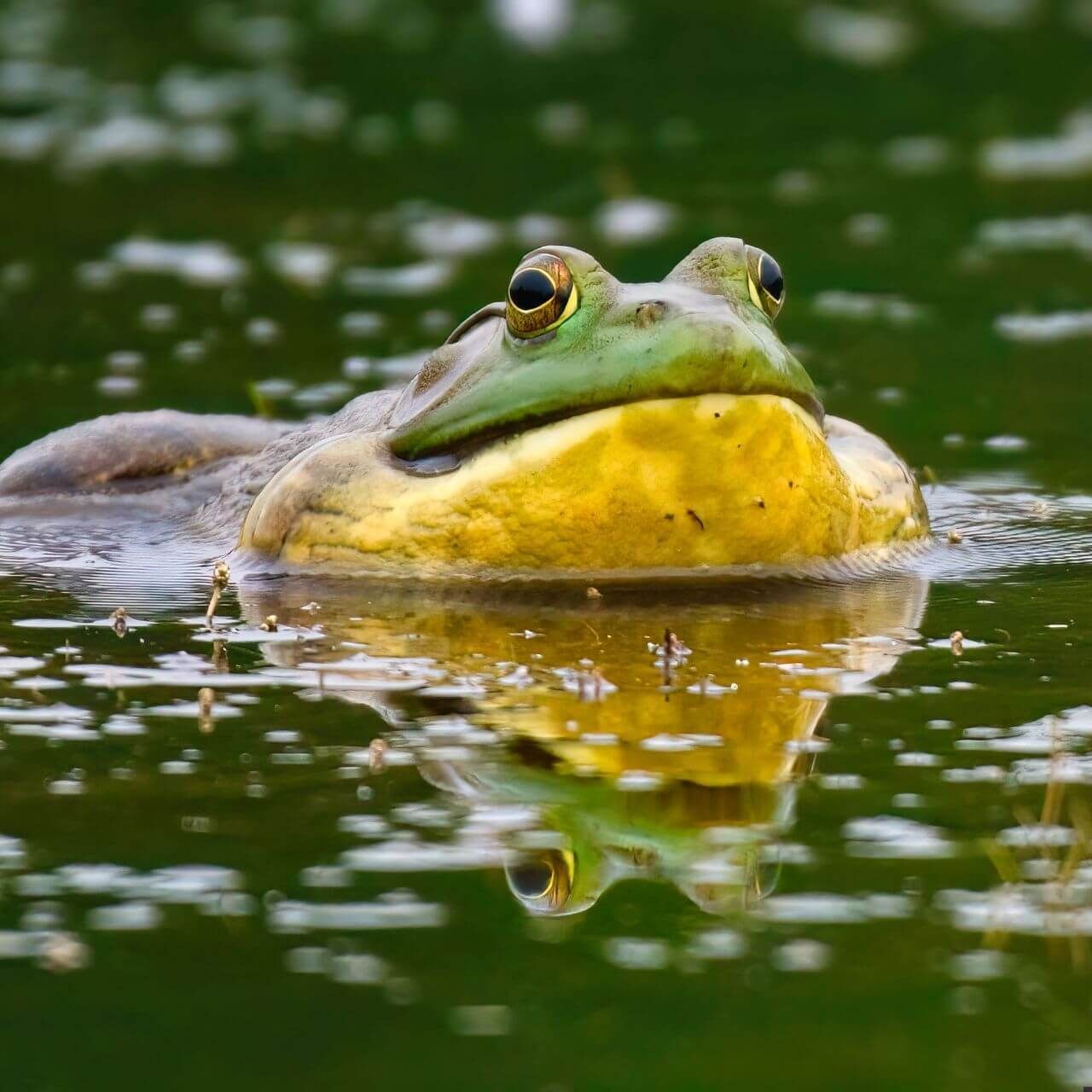
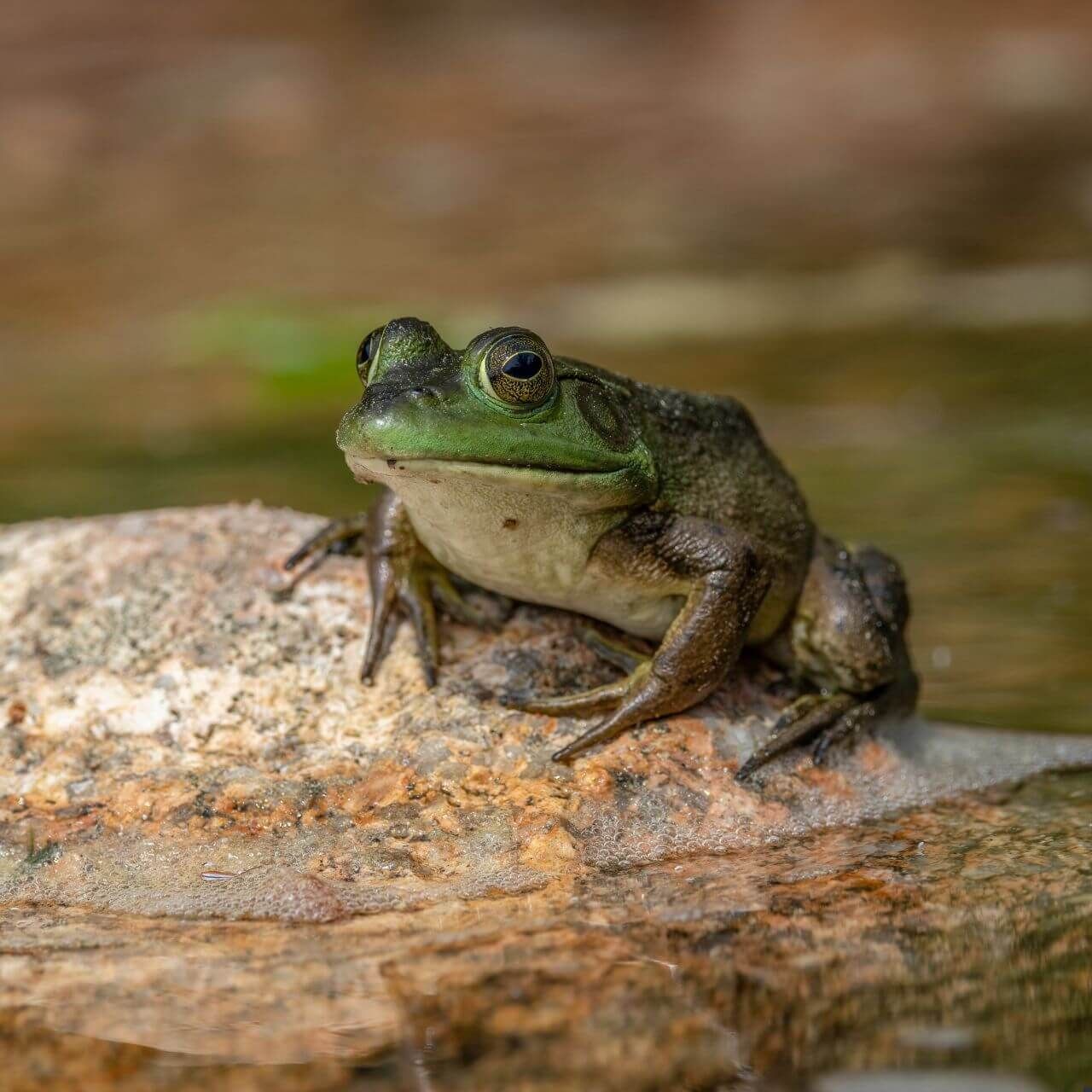
American bullfrogs have many traits in common with other frogs, including...
- Permeable skin
- Long, sticky tongue
- Webbed feed for swimming
- Large eyes
- Metamorphosis
How many American bullfrogs are there?
There is one single species of American bullfrog.
Fortunately, American bullfrogs are not endangered. However, there is no current population estimate. Scientists predict that their population is growing, especially in areas where they are invasive.
Species Spotlight
American Bullfrog Vs. African Bullfrog
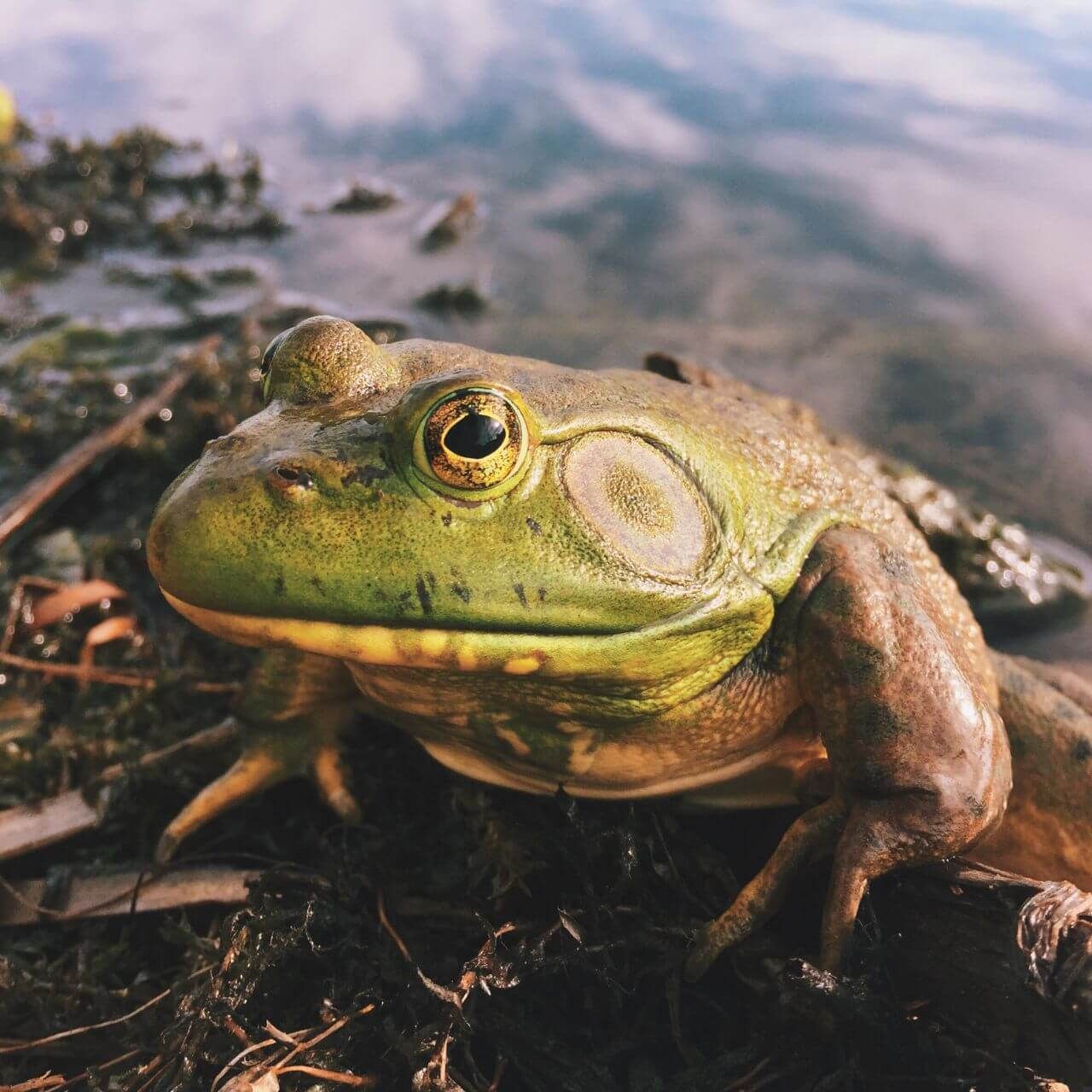
The term “bullfrog” is a bit confusing. In the United States, it describes the American bullfrog. In Africa, it describes the African bullfrog. They are different species, but they have many similarities. They are both large and loud. They typically live in swamps and ponds. They are both aggressive during the breeding season. However, they have a few traits that make them different.
Size:
American bullfrogs and African bullfrogs are both large. They are both the largest species of frog on their continent. However, American bullfrogs are smaller than African bullfrogs. American bullfrogs weigh less than 2 lbs, while African bullfrogs weigh up to 3 lbs.
Range:
American bullfrogs and African bullfrogs live in different places. The American bullfrog is native to the eastern United States. However, it can also be found in parts of South America, Europe, and Asia because it is an invasive species. The African bullfrog is native to southern Africa.
Eggs:
Both American bullfrogs and African bullfrogs are noisy. They are also aggressive during the breeding season. Males croak loudly and fight with other males to show dominance. After breeding, females of each species produce a different number of eggs. American bullfrogs produce up to 20,000 eggs, while African bullfrogs produce fewer than 4,000 eggs.
The similarities between American bullfrogs and African bullfrogs make them easily confused. However, using their size, range, and egg count, we can easily tell them apart.
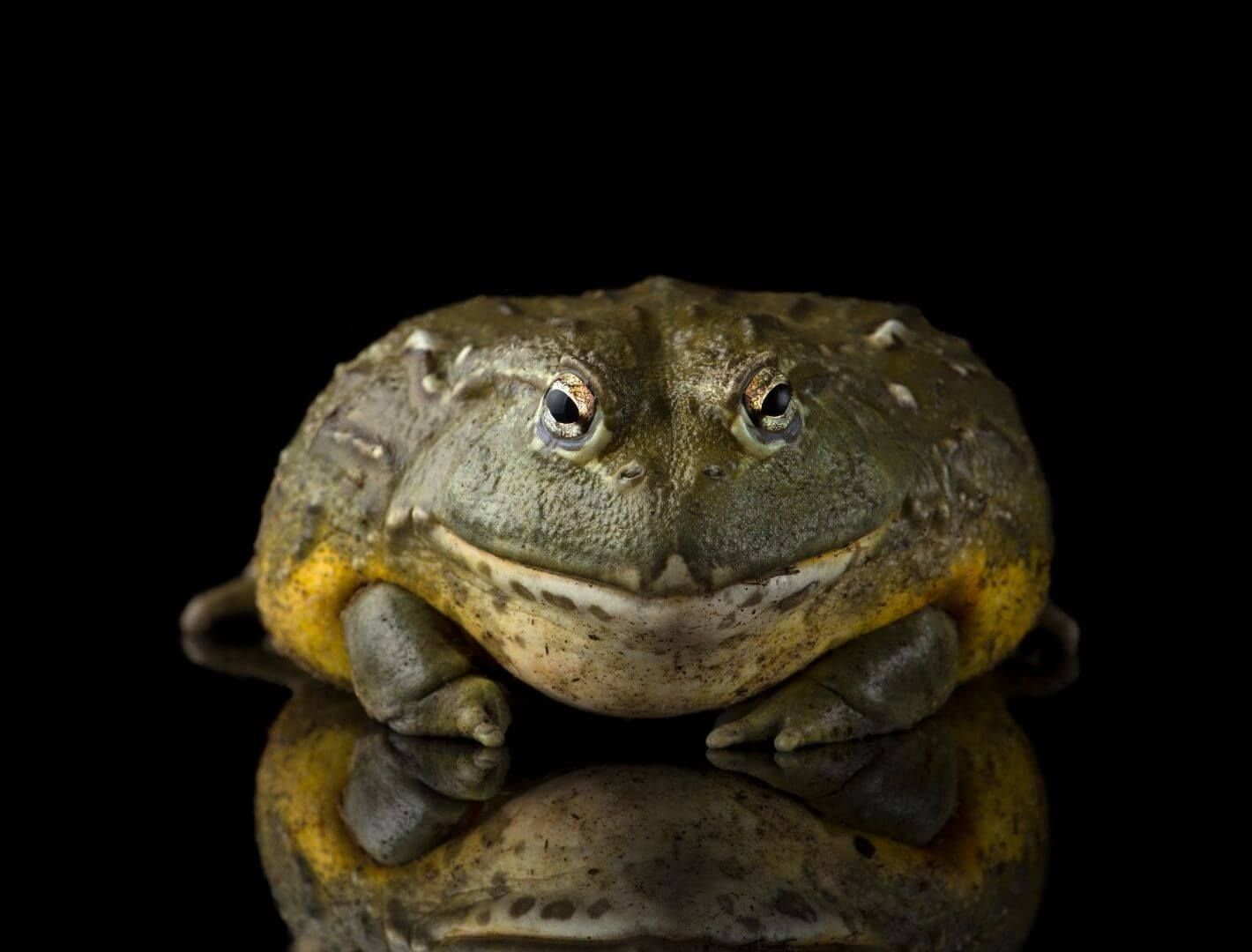
African Bullfrog
Pyxicephalus adspersus
BRAIN BLAST
Other animals have confusing names, too. For example, a jellyfish is not really a fish! What other animals can you think of that have confusing names?
Conservation Corner
Removing Invasive Bullfrogs
American bullfrogs are native to the eastern United States, but they also live in many places where they are not native. They were brought to these places on purpose. People hoped they would eat harmful bugs and provide food to people. Unfortunately, they have done more harm than good.
Bullfrogs change the food web in these new places. They eat animals like fish, young turtles, and other frogs. Few predators eat them because of their large size. American bullfrogs also produce up to 20,000 eggs at a time. This has caused their population to grow quickly. Bullfrogs make it hard for native species to survive.
Many conservation groups work to remove American bullfrogs from these areas. Bullfrog removal has been successful in some areas, like Yosemite National Park. From 2005 to 2019, hard-working biologists removed more than 8,000 bullfrogs from the park. No bullfrogs have been observed in the park since 2019. Since then, biologists have reintroduced many native species. The California red-legged frog and other native frog and salamander populations are growing!
Conservation projects like this are only possible because of dedicated biologists and funding from organizations like the National Park Service. This successful bullfrog removal program is a perfect example of the importance of our national parks.
Bullfrog Challenge
Design an American Bullfrog's Perfect Habitat
Learn More!
Glossary
Adaptation
The process by which a species becomes more fit for its environment over the course of several generations. It is a result of natural selection.
Ambush
The act of sneaking up on prey.
Amphibian
A cold-blooded vertebrate with permeable skin that goes through a metamorphosis!
Cannibal
To eat members of the same species.
Carnivore
An animal that eats other animals.
Cold-Blooded
An animal that relies on the outside temperature to regulate their body temperature (reptiles and amphibians). Also known as ectothermic.
Competition
An interaction between organisms where both are working to obtain the same resource.
Endangered
Referring to an organism that is threatened with extinction.
Invasive Species
An organism that has established a population somewhere it is not native.
Metamorphosis
The process of an animal changing and developing from an egg to an adult through different life phases.
Predator
An animal that hunts other animals for food.
Prey
An animal that is hunted and eaten by another animal.
Sexual Dimorphism
A significant difference in size, color, or other physical characteristic between males and females of the same species.
Species
A closely related group of animals with similar characteristics that are capable of reproducing (example: tigers).
Tadpole
The aquatic larval phase of a frog or toad.
Territorial
Referring to an animal that defends an area (its territory) from other members of its species.
Tympanic Membrane
A part of the hearing organ that vibrates in response to sound (also known as an eardrum).