
Fire Salamanders

Let's Learn About Fire Salamanders
The main source we used for information regarding fire salamander life cycles was Caudata Culture (https://www.caudata.org/cc/species/Salamandra/Salamandra_sp.shtml)
Word of the Week
Toxin
Toxins are naturally occurring substances that can harm humans and other organisms. Poison and venom contain toxins.
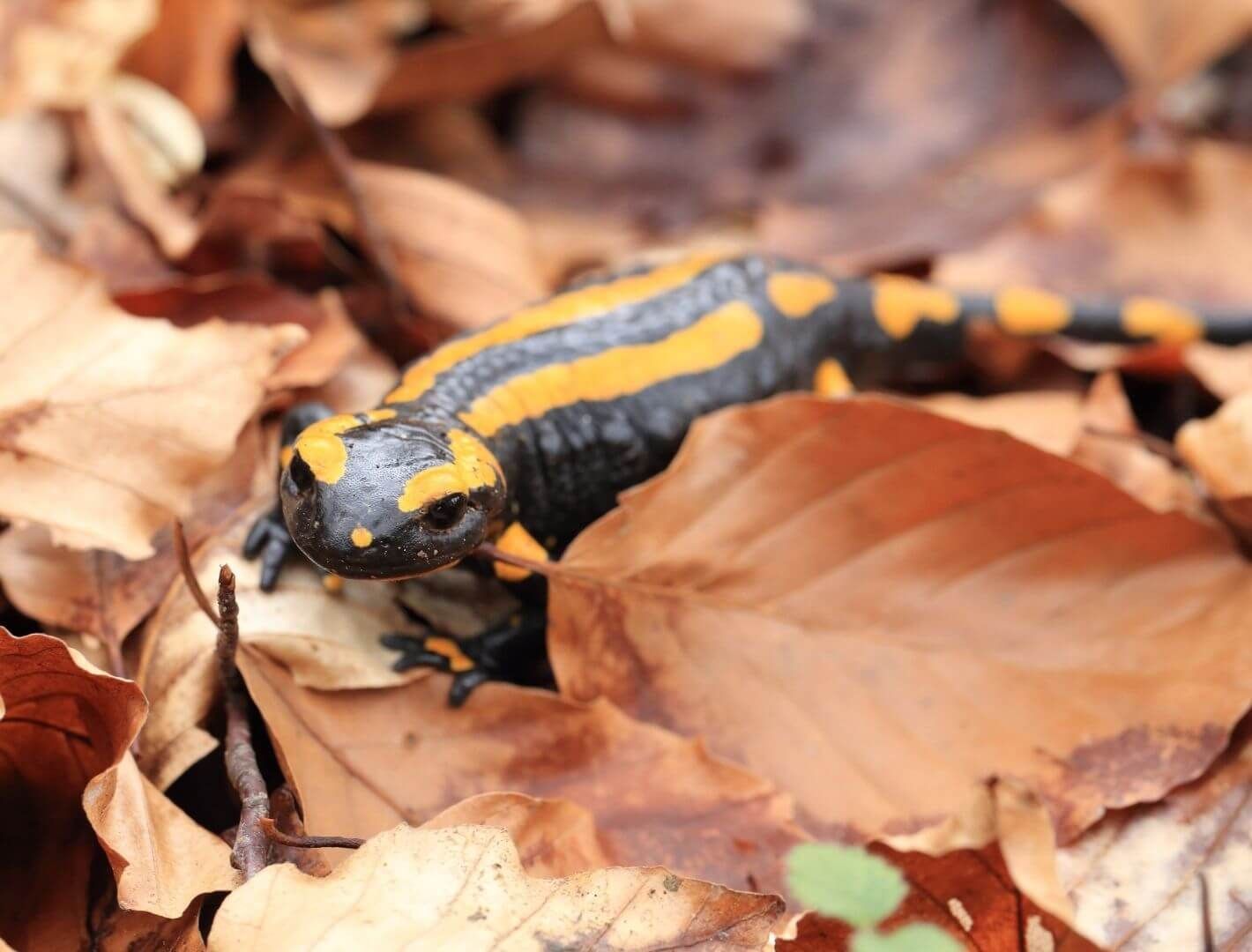
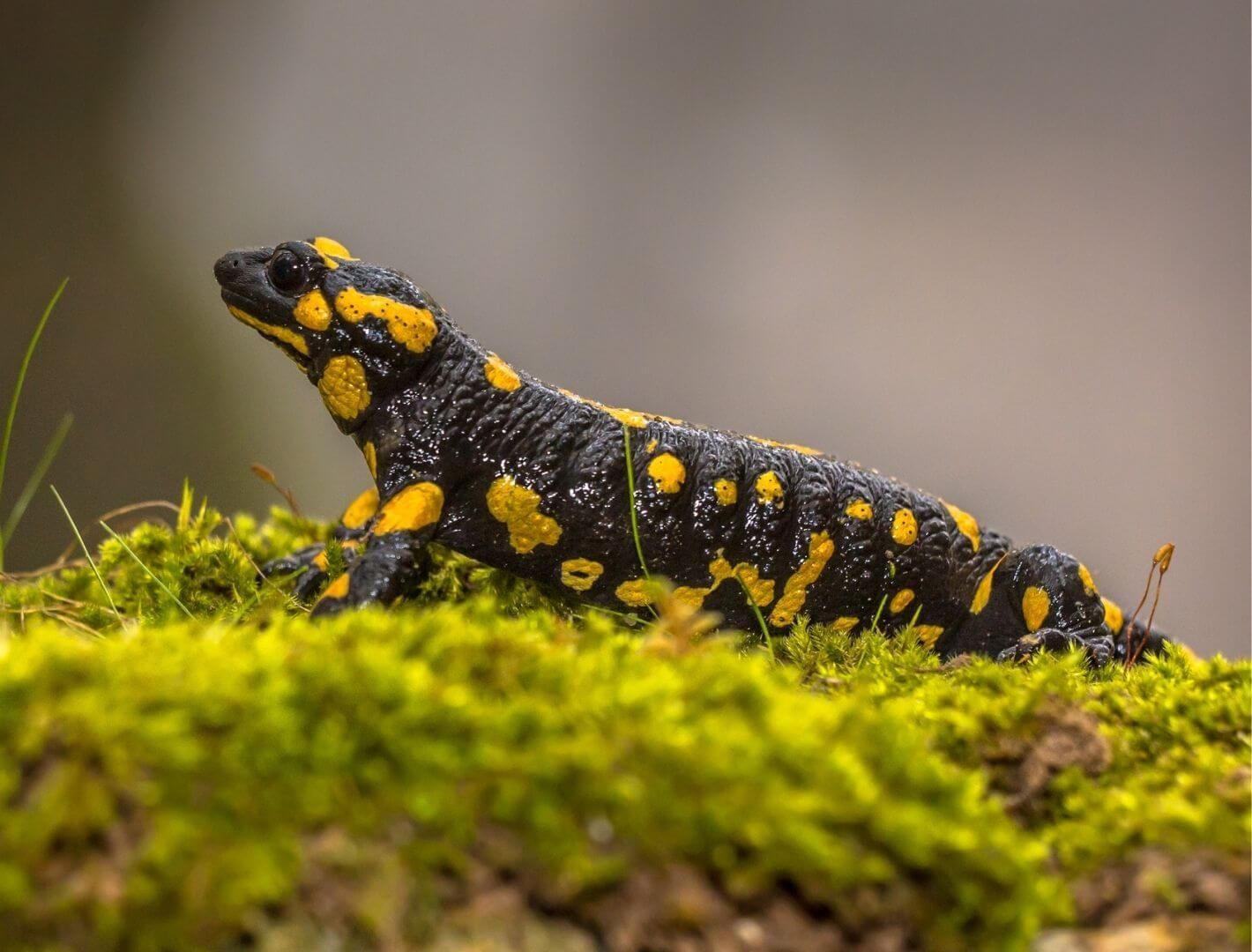
Fire salamanders are poisonous. They secrete toxins from glands near their head and on their back.
Fast Facts
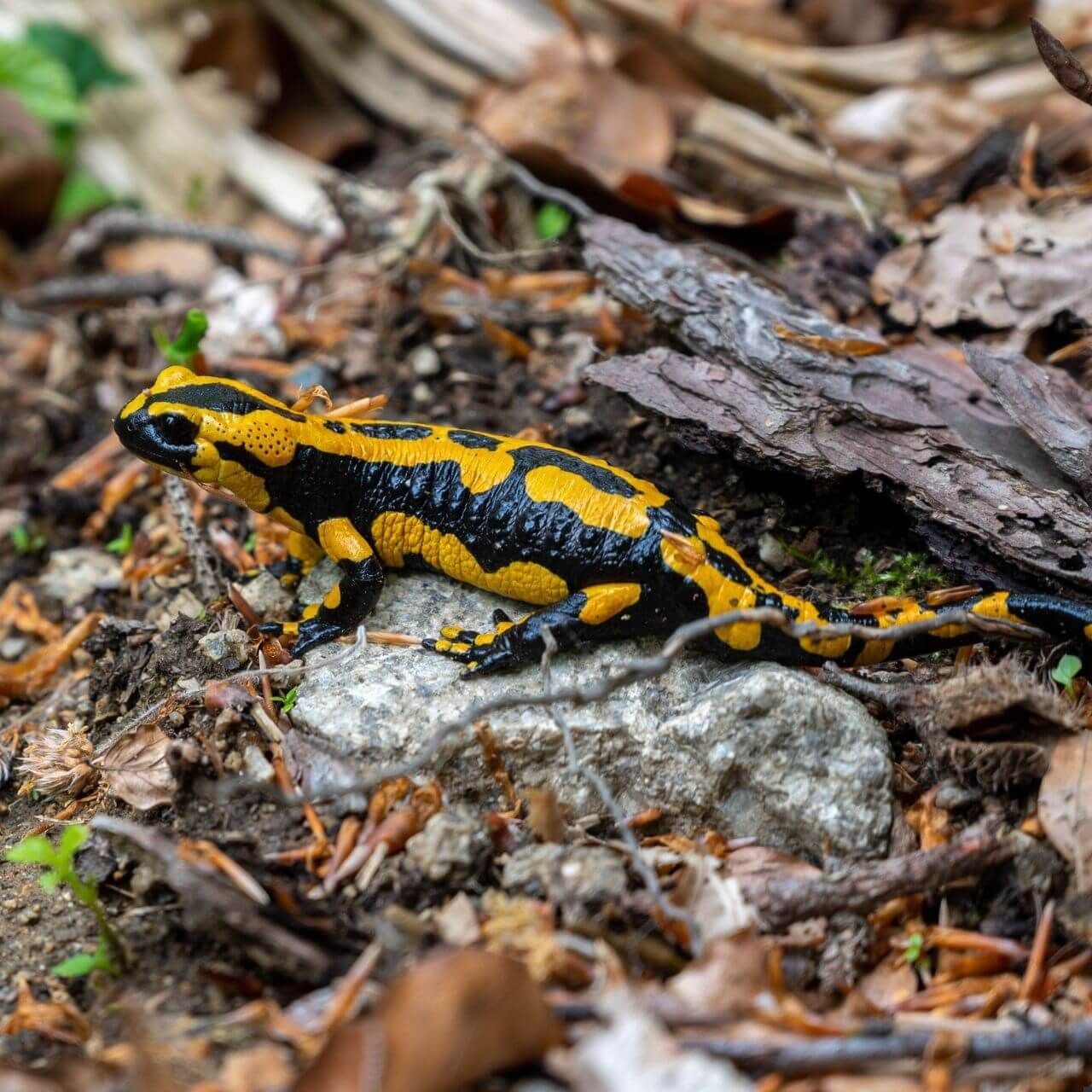
Where do fire salamanders live?
Fire salamanders live in many countries in Europe.
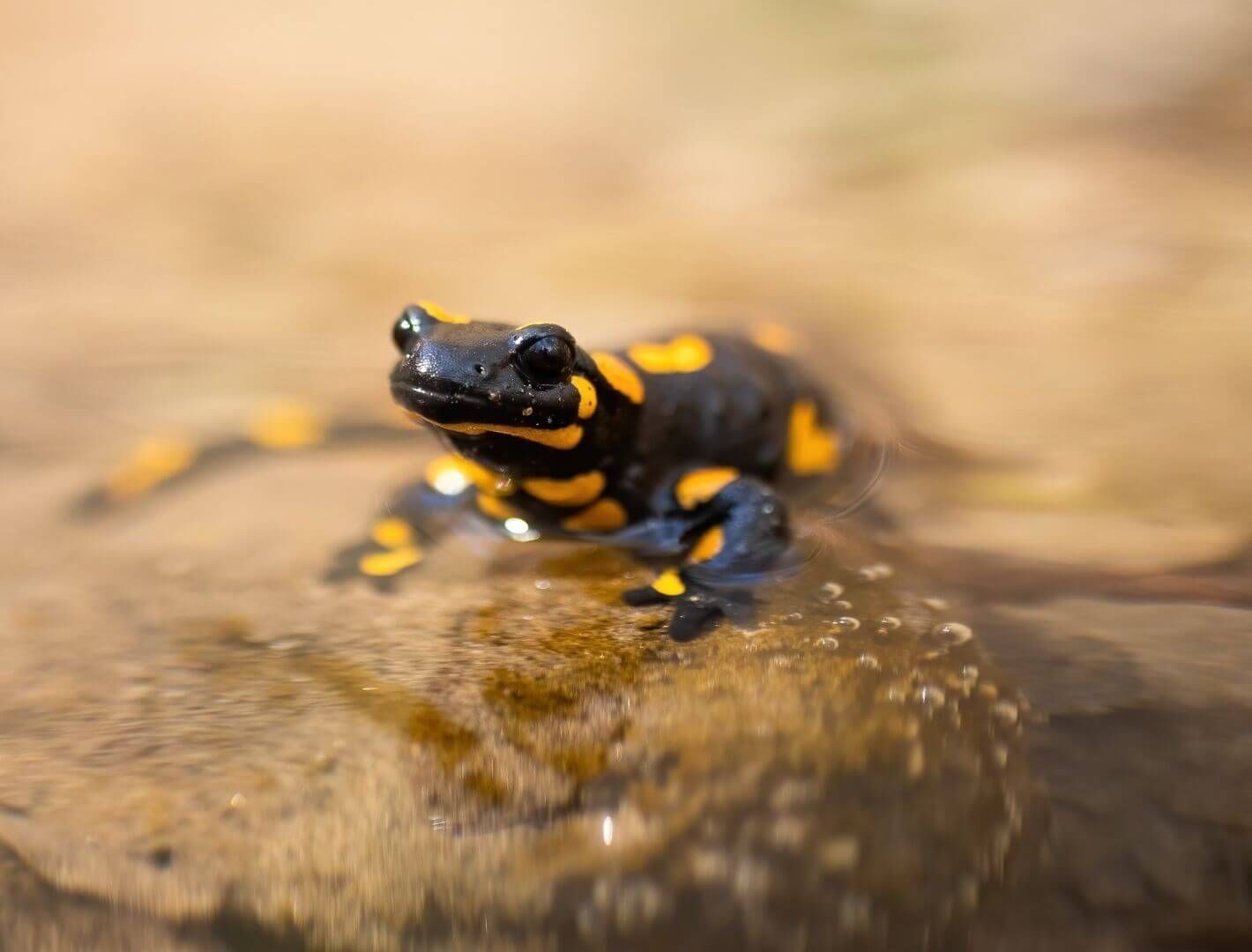
They are most common in forest habitats. They use fallen leaves as the perfect hiding spot. Like most salamanders, they typically live close to water.
What do fire salamanders eat?
Fire salamanders are carnivores. They are meat-eaters.
They eat insects, spiders, millipedes, centipedes, worms, and slugs. They also eat other amphibians, like newts and frogs.
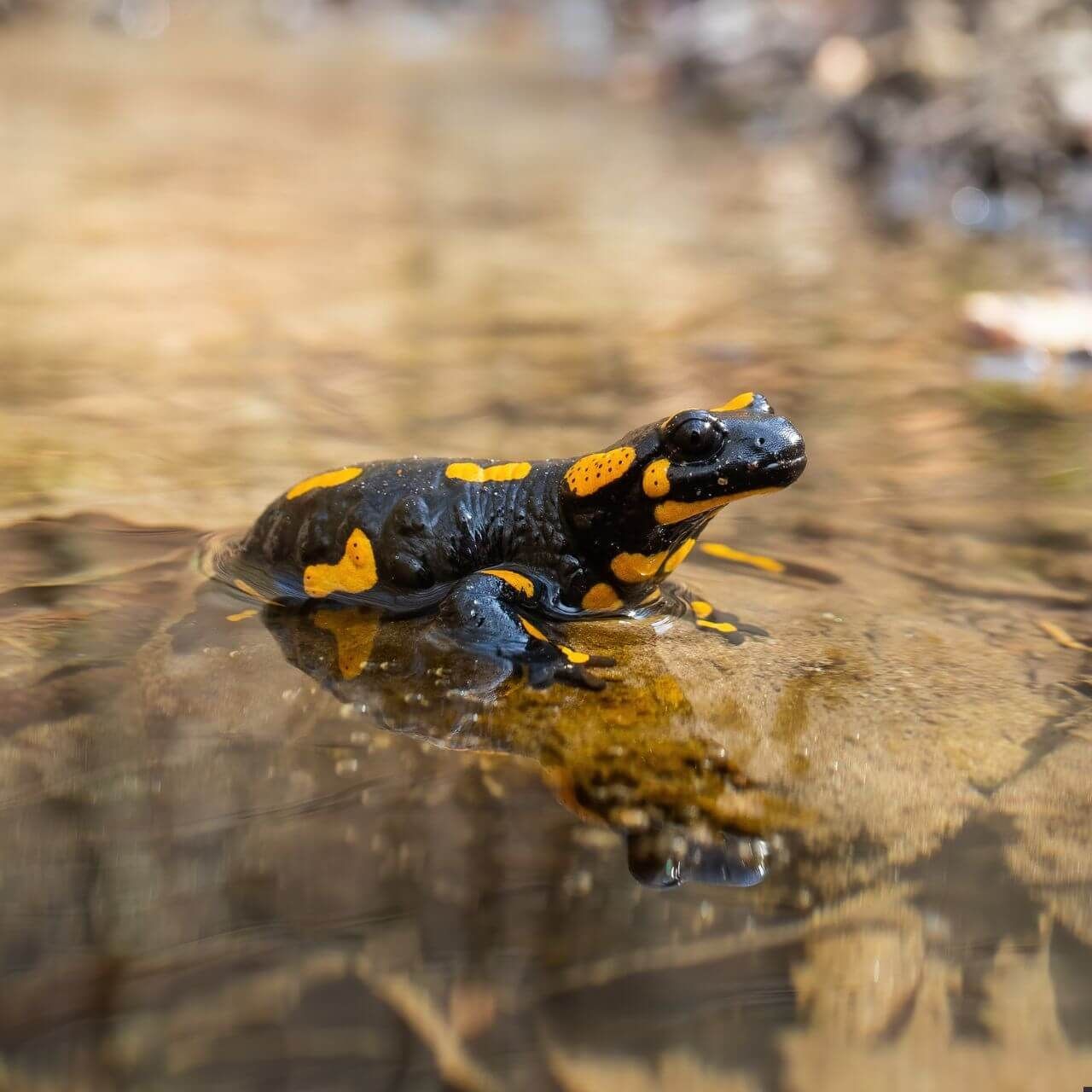
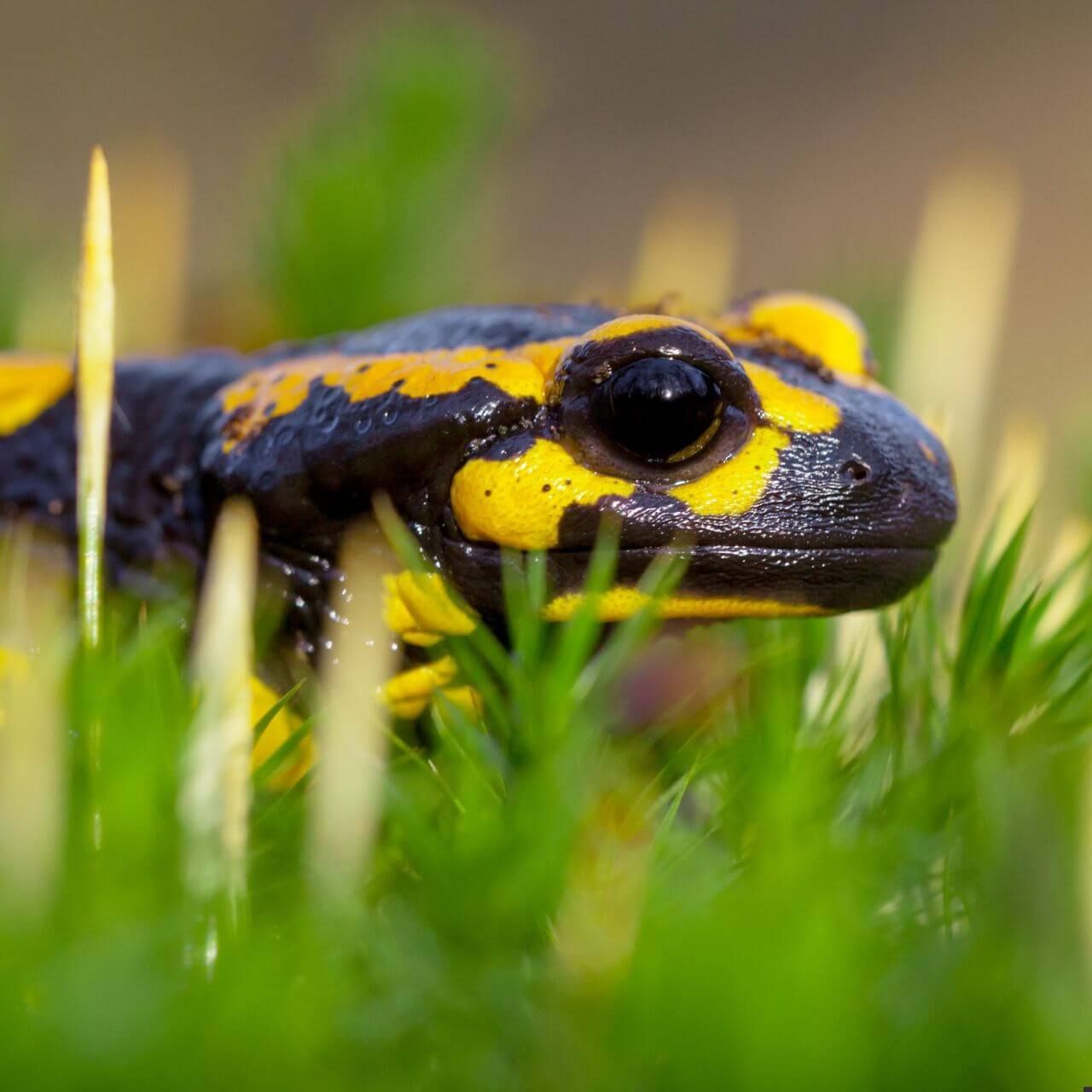
What traits do fire salamanders share?
Fire salamanders have many traits in common with other salamanders, including...
- Permeable skin
- Metamorphosis
- Poison
- Four legs and a long tail
- Bulging eyes
How many fire salamanders are there?
There is one single species of fire salamander. However, there are many subspecies.
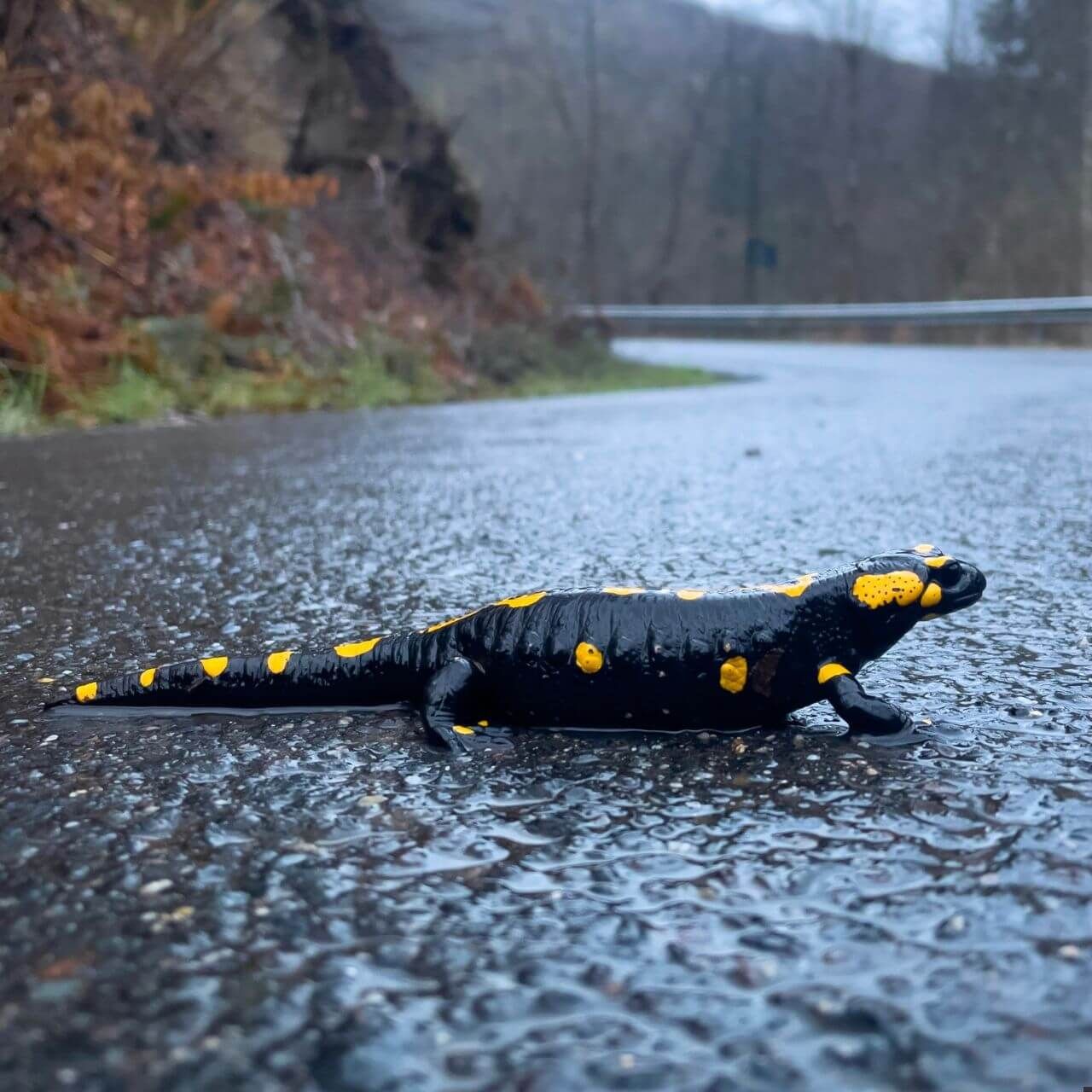
Fire salamanders are listed as Vulnerable by the IUCN. Their main threats are habitat loss, pollution, and a deadly fungus. The chytrid fungus threatens most amphibian species because of their permeable skin.
Species Spotlight
Studying Fire Salamanders
Scientists have studied fire salamanders across Europe for decades. They have compared colors and patterns, behaviors, and reproduction. They found different species and subspecies. One of their main discoveries is that fire salamander reproduction is different from other salamanders.
Most salamanders produce eggs. Females lay small, gooey eggs in shallow ponds. The eggs hatch into larval (baby) salamanders. Larval salamanders breathe with feathery gills and eat small organisms in water. Eventually, they go through metamorphosis. They absorb their gills, develop lungs, and move onto land.
Fire salamanders do things a little differently. Most larval fire salamanders hatch from their eggs right as they are born. They can be born at different stages of their metamorphosis. Some are born with gills like other larval salamanders. Some are born more developed, closer to their adult stage. Even some fire salamanders that live in the same area are born at different stages. These unusual differences have left scientists puzzled for decades.
Learning more about fire salamanders takes time and dedication. Scientists continue to study their reproduction to learn how their environment affects their reproduction. These studies help us learn how we can protect their habitats so fire salamanders thrive in the future.
BRAIN BLAST
Research a species of salamander native to your area. Compare its life cycle to a fire salamander's life cycle.
Conservation Corner
Threats to Fire Salamanders
As we learned in our lesson, fire salamanders have permeable skin. Oxygen and water pass through their skin into their body. This allows them to breathe and drink through their skin! Unfortunately, harmful chemicals and fungi in their habitat also pass through their skin. These harmful substances can be deadly to salamanders.
Habitat loss also threatens fire salamanders. Fire salamanders live in forests across Europe, including Spain and Italy. Their forest home has been destroyed over hundreds of years to build railroads, cathedrals, and homes. Today, their habitat continues to shrink. Humans destroy forests and other habitats around the world as our population grows.
To help fire salamanders, biologists are studying how fire salamanders move around. They research what areas of the forest salamanders use. They study which parts of the forest are important for salamanders, like fallen leaves and dead logs. They focus on protecting these parts of the forest as we build new cities, farms, and roads. They also educate local communities about the importance of local forests. This allows humans and fire salamanders to live peacefully in the same areas.
Crossword
Use the clues about fire salamanders to complete the crossword puzzle.
Fire Salamanders Challenge
Pretend you are a scientist studying fire salamanders. Complete the packet to design your study.
Learn More!
Glossary
Adaptation
The process by which a species becomes more fit for its environment over the course of several generations. It is a result of natural selection.
Amphibian
A cold-blooded vertebrate with permeable skin that goes through a metamorphosis.
Aquatic
Living in water.
Cannibalism
An animal that preys on members of its own species.
Carnivore
An animal that eats other animals.
Cold-Blooded
An animal that relies on the outside temperature to regulate their body temperature (reptiles and amphibians). Also known as ectothermic.
Competition
An interaction between organisms where both are working to obtain the same resource.
Fungus
A group of spore-producing organisms that feed on organic matter (ex. mushrooms, mold, etc.).
Gills
The respiratory organ that allows fish, amphibians in their larval phase, and crustaceans to absorb oxygen molecules from water.
Gland
An organ that produces substances useful for survival (ex. sweat glands, venom glands, preening glands).
Habitat Loss
Occurs when habitats are destroyed and changed into human-managed land such as cropland, towns, or dams.
Nocturnal
To be most active at nighttime.
Permeable
Allowing liquid, nutrients, or other elements to pass through.
Poison
A toxin that is harmful when touched or eaten and is often produced in glands.
Larva
The aquatic phase of an amphibian's life cycle occurring after the amphibian exits the egg.
Metamorphosis
The process of an animal changing and developing from an egg to an adult through different life phases.
Predator
An animal that hunts other animals for food.
Prey
An animal that is hunted and eaten by another animal.
Reproduce
The act of producing offspring.
Salamander
An amphibian with a long body, four legs, and long tail.
Secrete
To produce or discharge a substance (such as a poison dart frog secreting poison).
Species
A closely related group of animals with similar characteristics that are capable of reproducing (example: tigers).
Toxin
Naturally occurring substances that can harm humans and other organisms.
Vertebrate
An animal that has a backbone.