
Red-Eyed Tree Frogs

Let's Learn About Red-Eyed Tree Frogs
Word of the Week
Deimatic Behavior
Deimatic behavior is a defensive strategy where an animal displays bright colors, eyespots, or rapidly changes size to startle a predator. Deimatic behavior is also called a startle display.
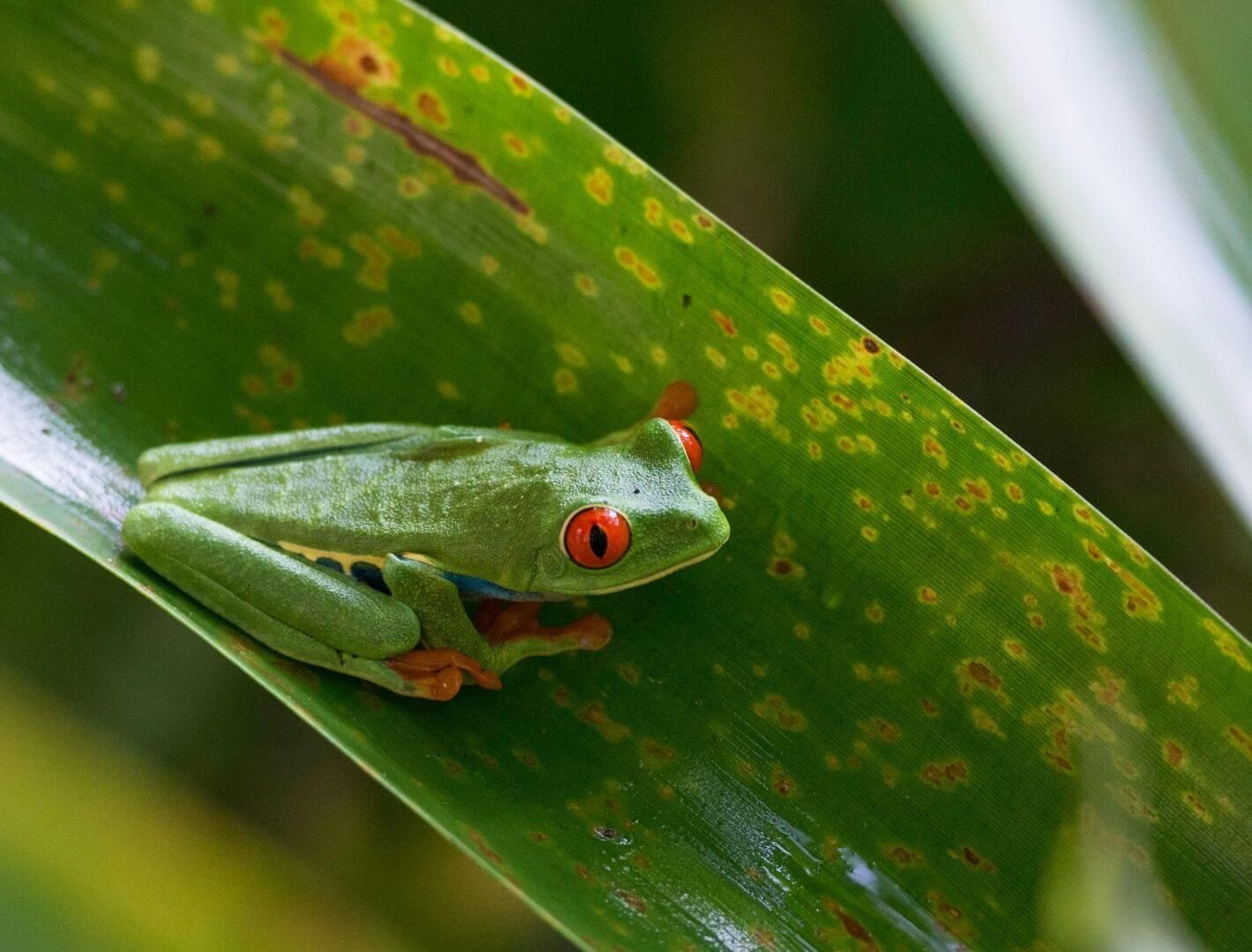
Red-eyed tree frogs use display their brightly colored eyes and sides when threatened by a predator.
Fast Facts
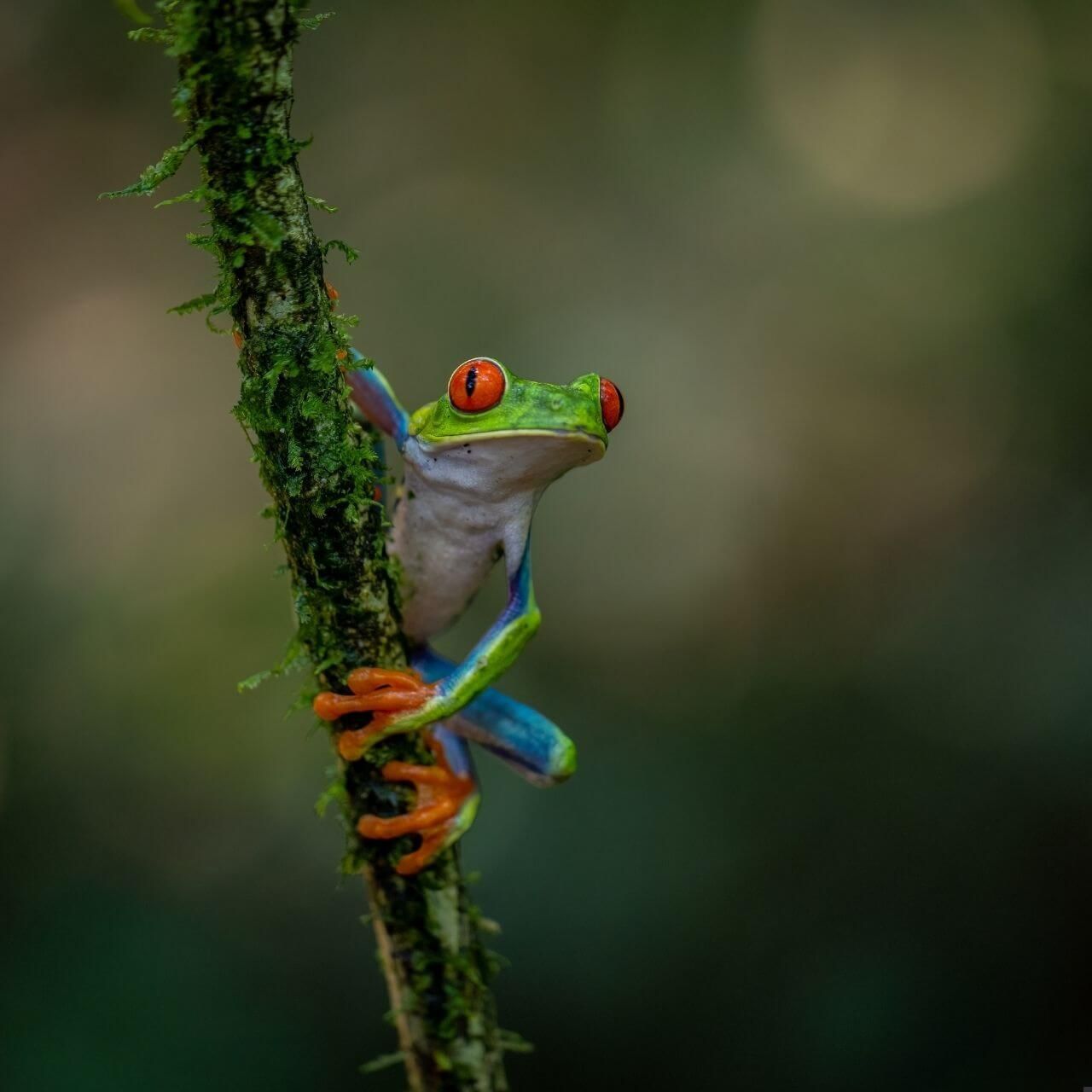
Where do red-eyed tree frogs live?
Red-eyed tree frogs are native to Central America, which is the southern part of North America. They also live in a very small part of South America.
They inhabit tropical forests and wetlands.
What do red-eyed tree frogs eat?
Red-eyed tree frogs are insectivores. They mostly eat insects.
They search for food at night. They eat moths, cricket, flies, mosquitos, and other insects.
What traits do red-eyed tree frogs share?
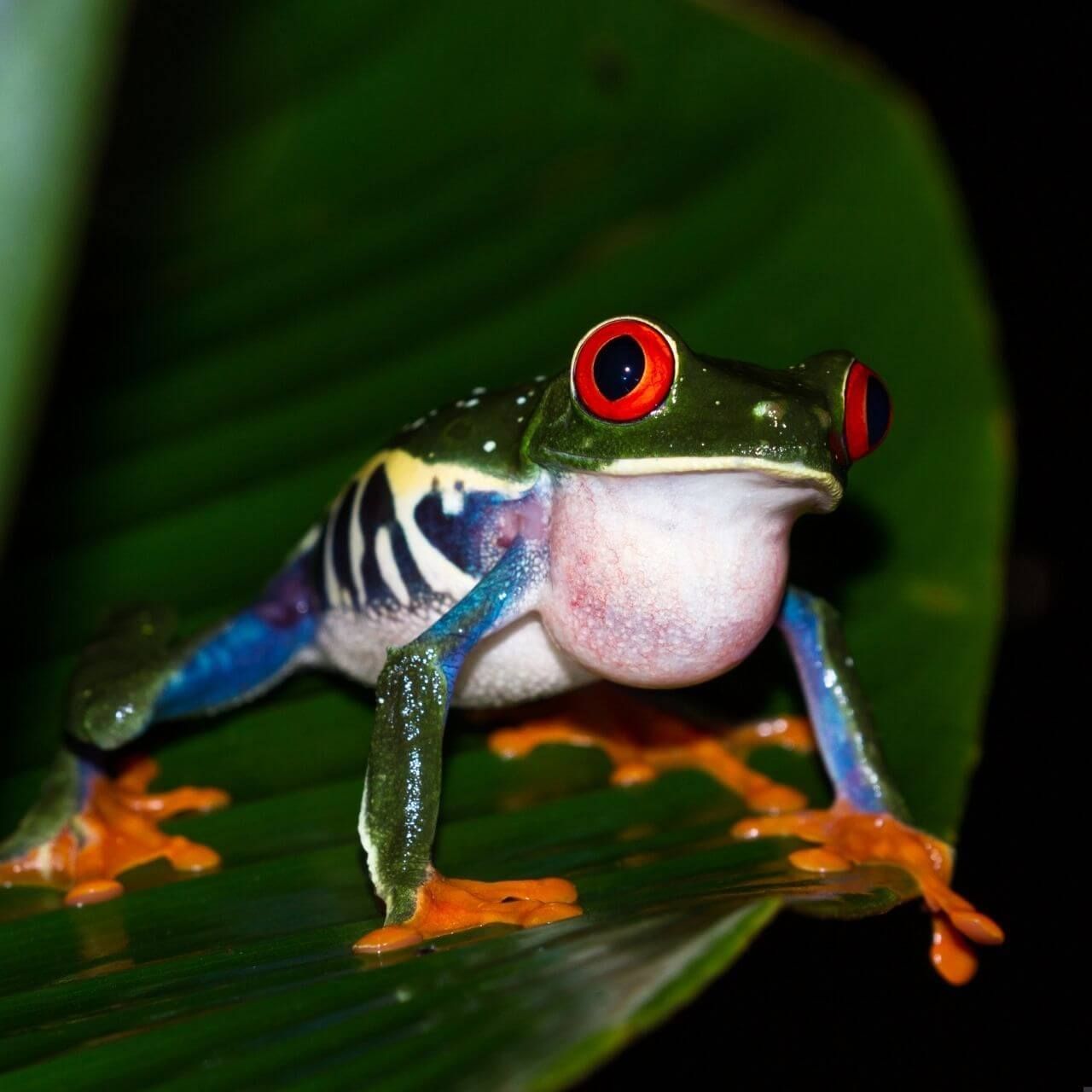
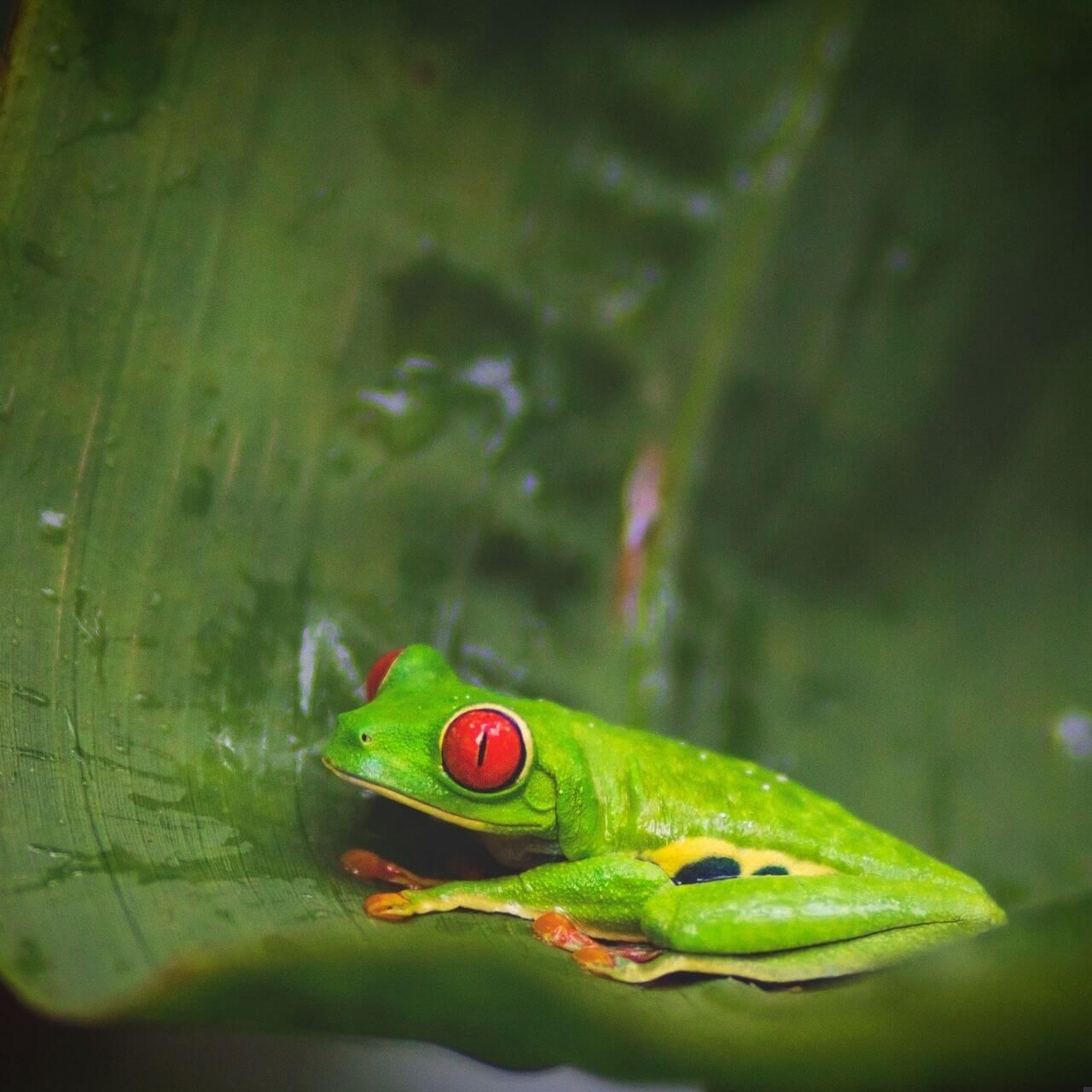
Red-eyed tree frogs have many fascinating traits, such as...
- Bright red eyes
- A smooth green body
- Brightly colored sides, legs, and feet
- A long, sticky tongue
- Nictitating membranes
How many red-eyed tree frogs are there?
Red-eyed tree frogs are listed as Least Concern by the IUCN. Scientists are not concerned that red-eyed tree frogs will go extinct.
Red-eyed tree frogs face several threats in the wild. Their main threats are deforestation and a harmful fungus.
Species Spotlight
Startle Display
Animals have many creative ways to defend themselves from predators. Some are covered in protective scales or shells. Some warn of danger with colors and sounds. Others use poison or venom. Red-eyed tree frogs have none of these. So, how does a 3-inch-long frog avoid being eaten in a predator-filled forest?
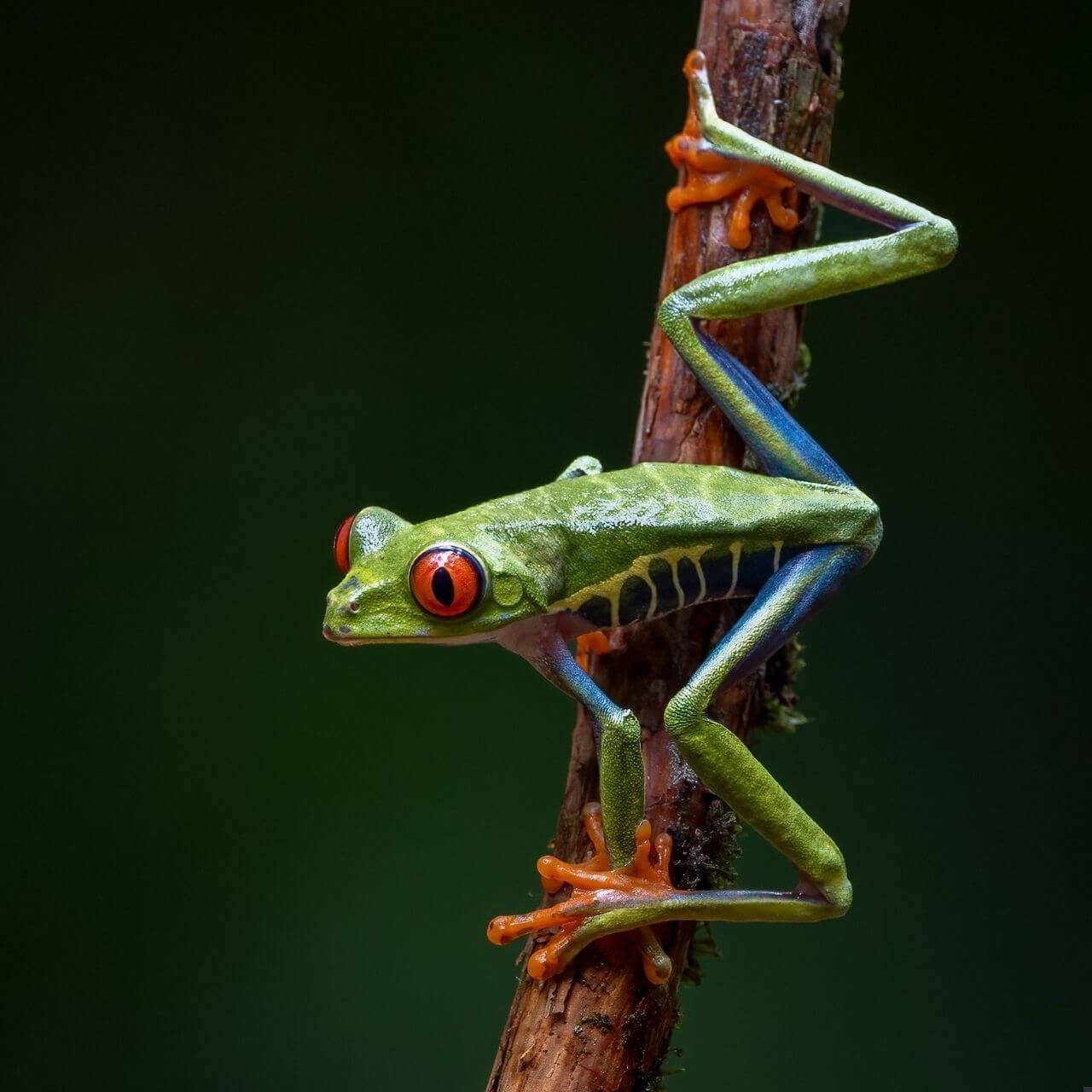
Red-eyed tree frogs have impressive camouflage. When resting, their red eyes and bright blue and yellow sides are hidden. Their smooth, green bodies blend in with leaves and stems. Predators often do not see them. If spotted, a red-eyed tree frog startles predators. They open their eyes and stretch their legs to show a bright pop of color. This allows the red-eyed tree frog to escape from the distracted predator.
Startle displays are called deimatic behavior. Red-eyed tree frogs are not the only animals that use deimatic behavior. Dead-leaf mantises typically have flawless camouflage. When threatened, they fan their wings to show red-and-black spots. Sunbitterns quickly spread their wings to show large eyespots. Frilled lizards flare their large neck flaps and open their mouth. Deimatic behavior is a helpful adaptation that many animals use to avoid being eaten.
Crocodile
ButtonBRAIN BLAST
Can you think of any other animals that use deimatic behavior when threatened? Describe what they use to startle predators.
Conservation Corner
CITES Protects Red-Eyed Tree Frogs
The red-eyed tree frog is often called the world’s most famous frog. People find their small size and bright colors fascinating and adorable. Some people like them so much that they want them as pets. Red-eyed tree frogs have been taken from the wild to be sold as pets for many decades. Scientists noticed their wild population shrinking. To protect them, red-eyed tree frogs were listed by a conservation group called CITES.
CITES is an organization that monitors the buying and selling of endangered species. Animals listed by CITES can only be bought or sold with a permit. The permit documents where the animal came from, how many are sold, and why. Permits help CITES keep track of how many animals are taken from the wild each year. Zoos and conservation groups commonly apply for permits. This allows them to legally move animals between countries.
CITES listed red-eyed tree frogs in 2008. The listing made it illegal to buy or sell them without a permit. Red-eyed tree frogs are not endangered. Therefore, many different types of companies have permits to buy and sell them. In the United States, even pet stores have permits. They can legally buy and sell red-eyed tree frogs. However, thanks to CITES, scientists know how many red-eyed tree frogs are taken from the wild. They can deny permits if their wild population drops. CITES allows frog lovers to keep red-eyed tree frogs as pets while also protecting their wild population.
Red-Eyed Tree Frog Facts
Complete each sentence about red-eyed tree frogs.
Red-Eyed Tree Frog Challenge
xxx
Learn More!
Glossary
Adaptation
The process by which a species becomes more fit for its environment over the course of several generations. It is a result of natural selection.
Amphibian
A cold-blooded vertebrate with permeable skin that goes through a metamorphosis.
Aposematic Coloration
Bright colors used to warn predators of poison.
Carnivore
An animal that eats other animals.
Cold-Blooded
An animal that relies on the outside temperature to regulate their body temperature (reptiles and amphibians). Also known as ectothermic.
Deforestation
The process of removing trees by cutting them down to use their wood or burning them to make room for something else.
Endangered
Referring to an organism that is threatened with extinction.
Fungus
A group of spore-producing organisms that feed on organic matter (ex. mushrooms, mold, etc.)
Gland
An organ that produces substances useful for survival (ex. sweat glands, venom glands, preening glands).
Illegal Pet Trade
The illegal collection, purchase, and sale of a wild animal.
Metamorphosis
The process of an animal changing and developing from an egg to an adult through different life phases.
Mimicry
An animal that looks, acts, or sounds like something other than itself.
Poison
A toxin that is harmful when touched or eaten and is often produced through glands.
Predator
An animal that hunts other animals for food.
Prey
An animal that is hunted and eaten by another animal.
Rainforest
An ecosystem that receives a large amount of rain and has trees that form a closed canopy.
Secrete
To produce and discharge a substance (such as a poison dart frog secreting poison).
Species
A closely related group of animals with similar characteristics that are capable of reproducing (example: tigers).
Territorial
Referring to an animal that defends an area (its territory) from other members of its species.
Toxin
An animal that has a backbone.