
Kingfishers

Let's Learn About Kingfishers
Word of the Week
Piscivore
Piscivores are animals that mainly eat fish.
Kingfishers, pelicans, and bald eagles are all piscivores.
Fast Facts
Where do kingfishers live?
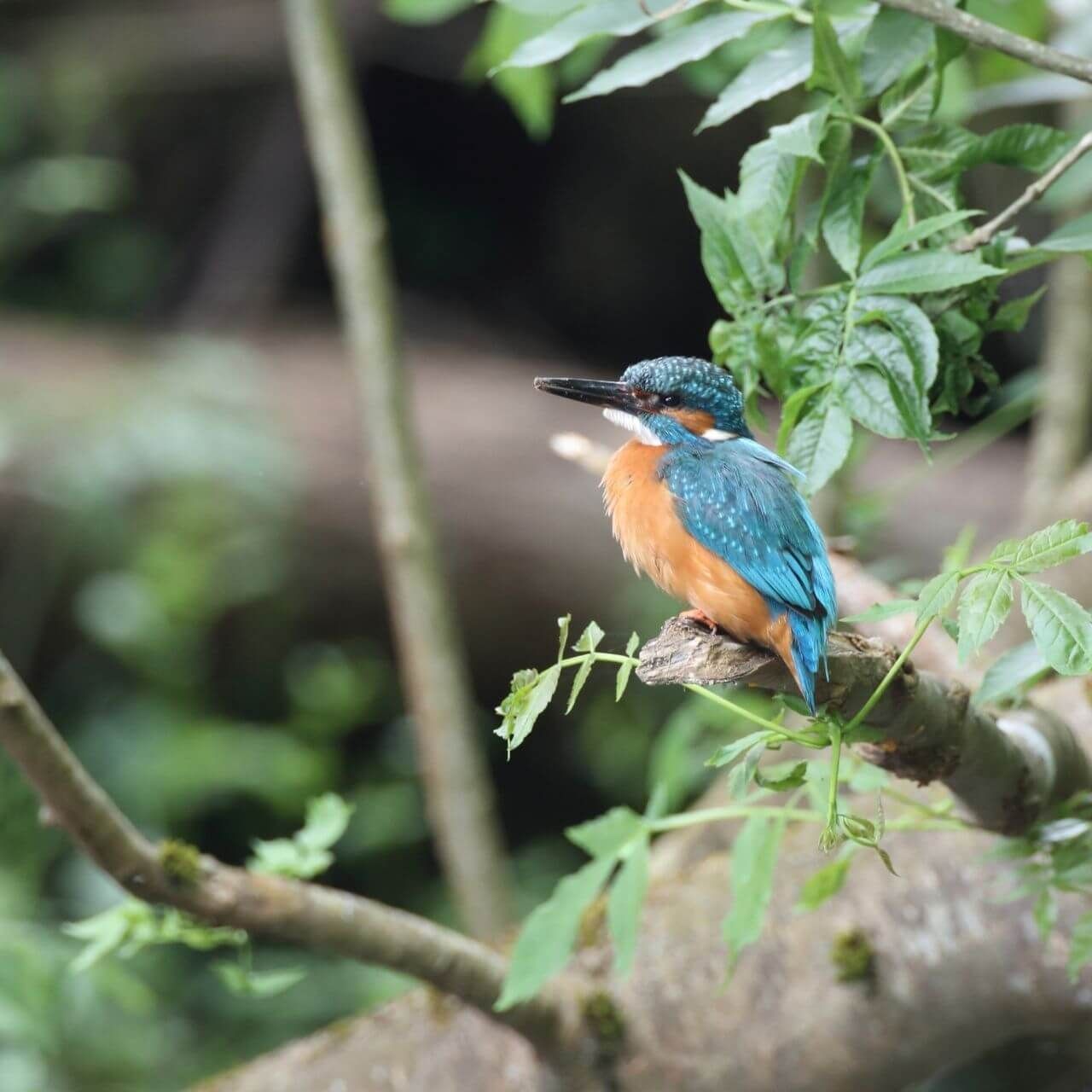
Kingfishers live on every continent except Antarctica.
They are most common in forests. They often live near still or slow-moving water, like lakes and streams. They can also be found in other habitats, including grasslands and even deserts.
What do kingfishers eat?
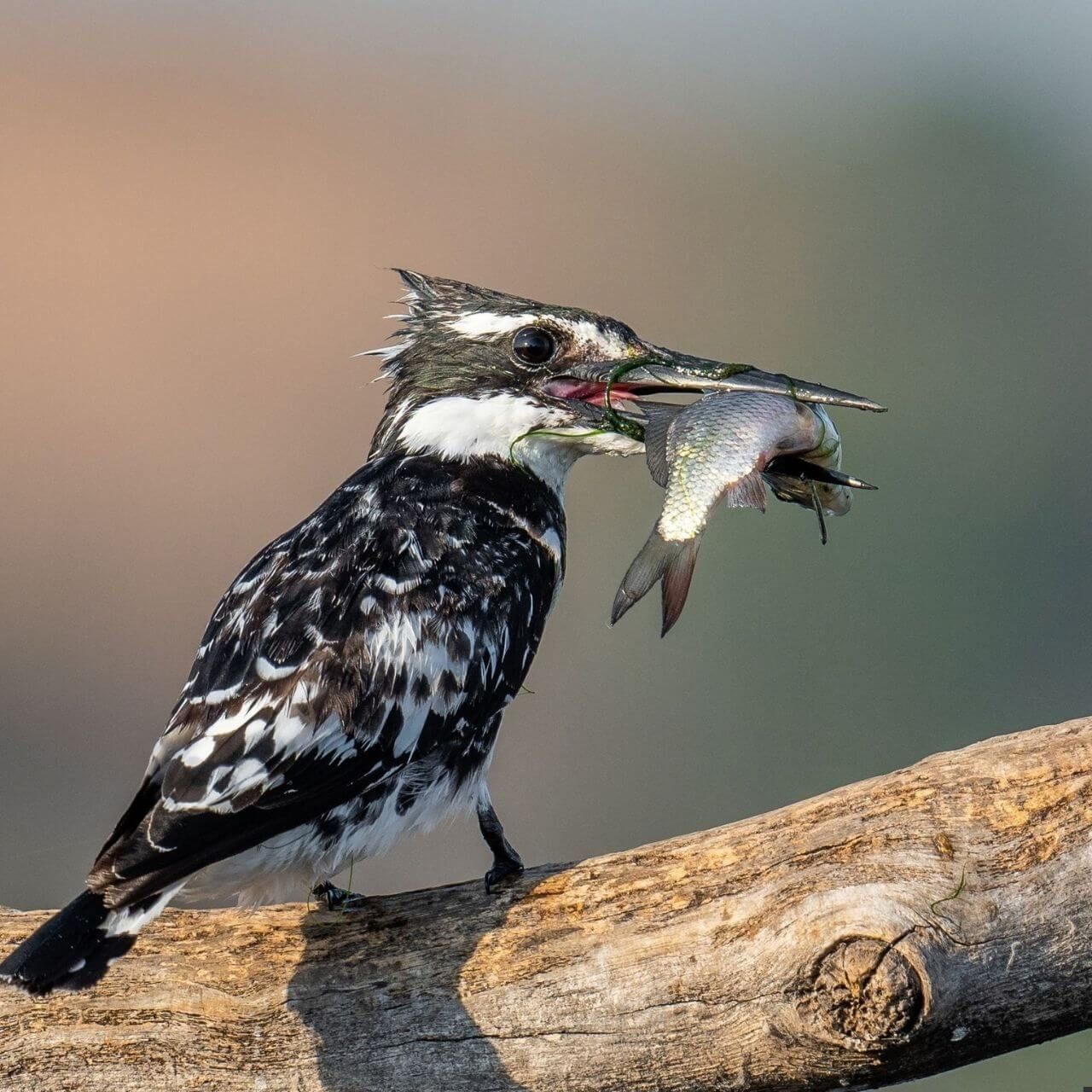
Many kingfishers are piscivores. They mostly eat fish.
However, not all kingfisher species eat fish. Some species eat frogs and small reptiles, like lizards and snakes. Some eat small mammals, crustaceans like crayfish, and insects.
What do kingfishers have in common?
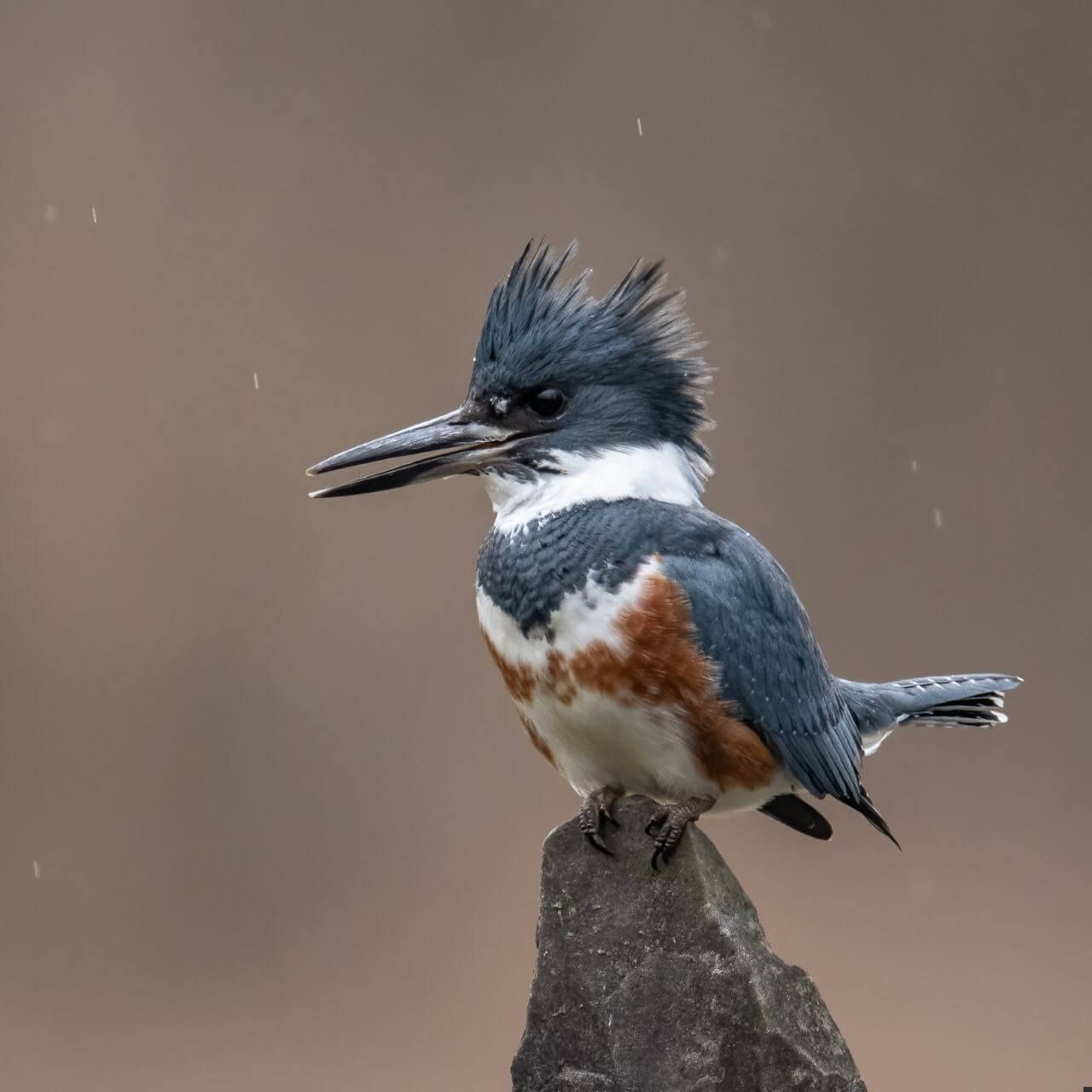
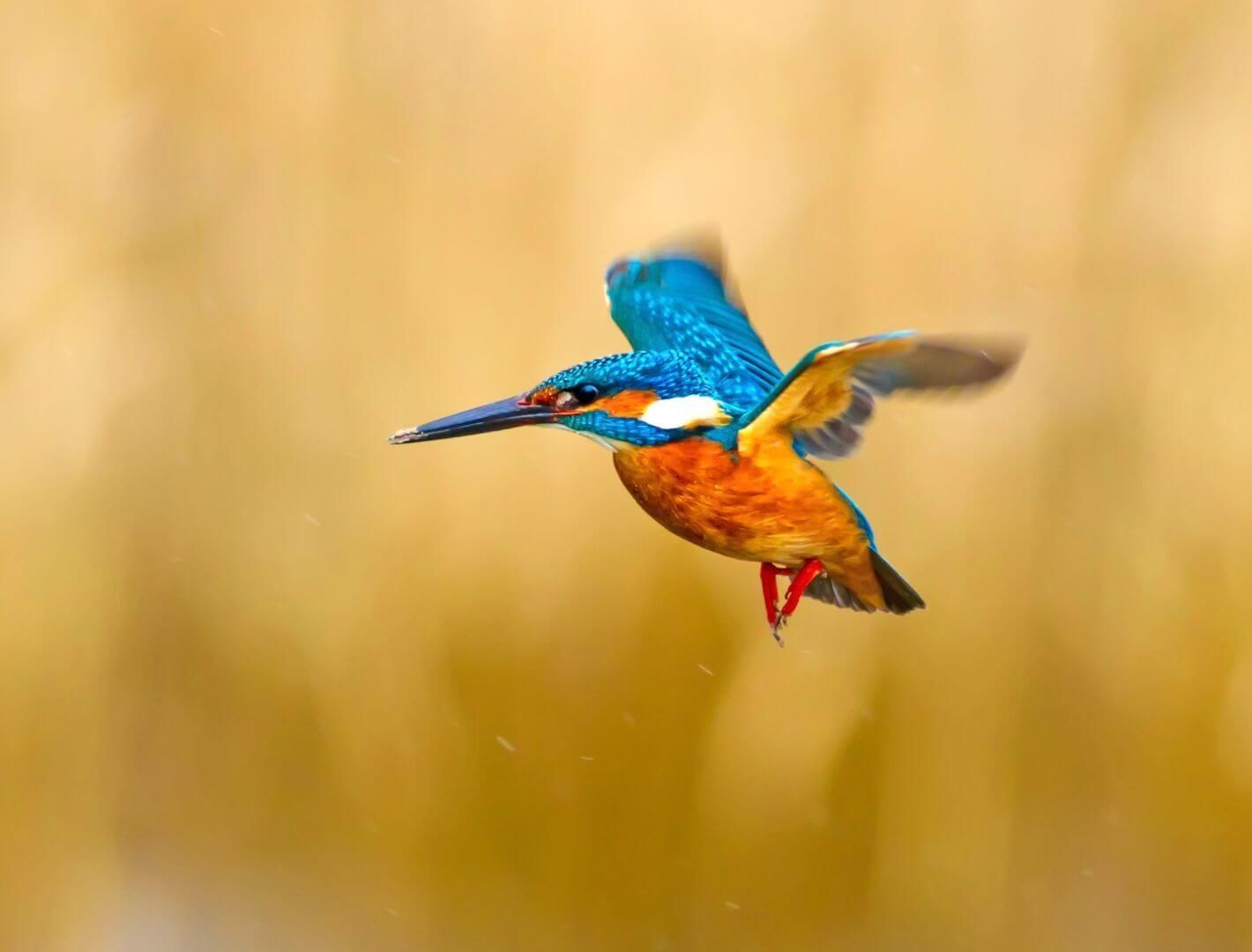
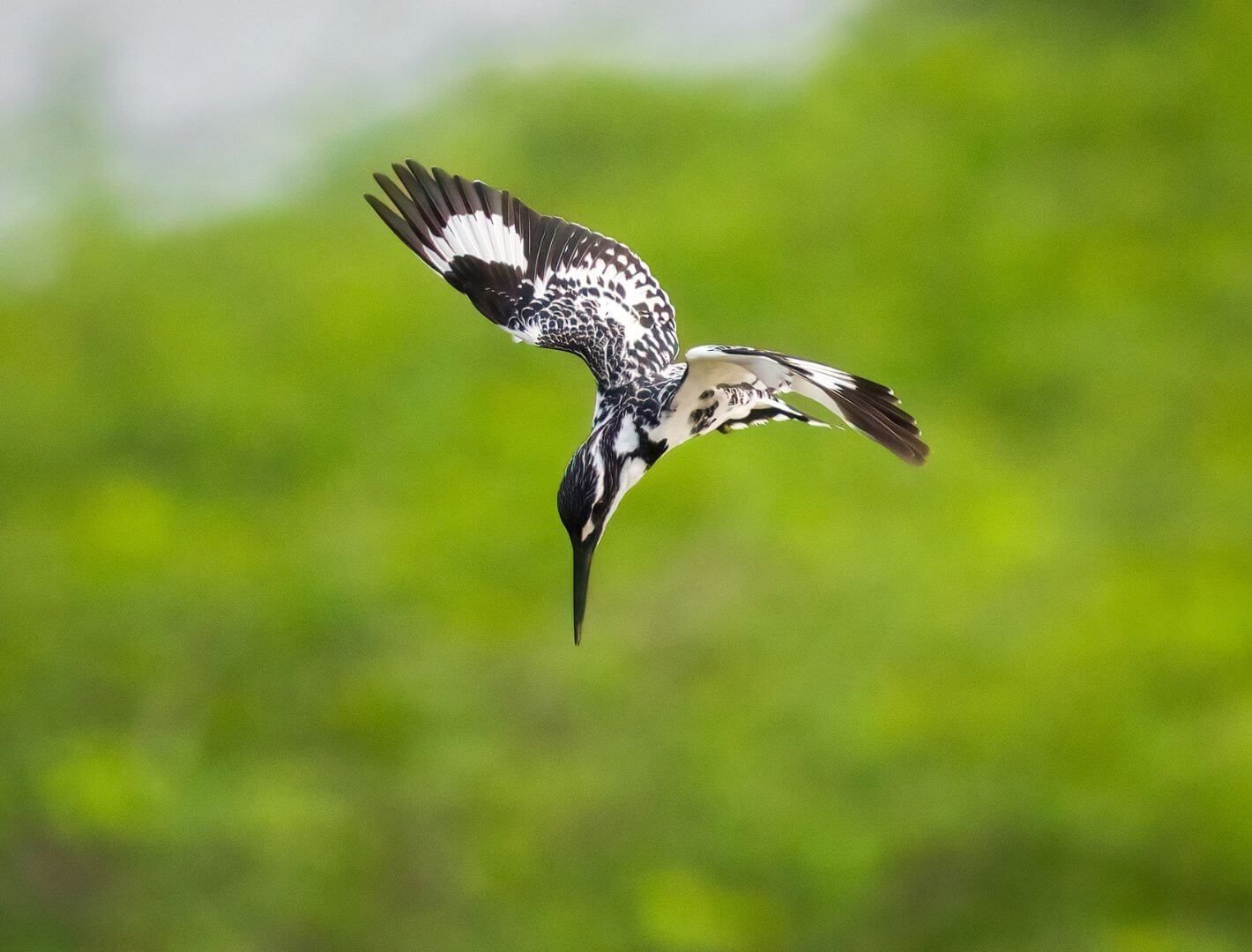
Kingfishers have many fascinating traits, such as...
- Long, narrow beaks
- Waterproof feathers
- Short, strong legs
- Nictitating membranes to protect their eyes
How many kingfishers are there?
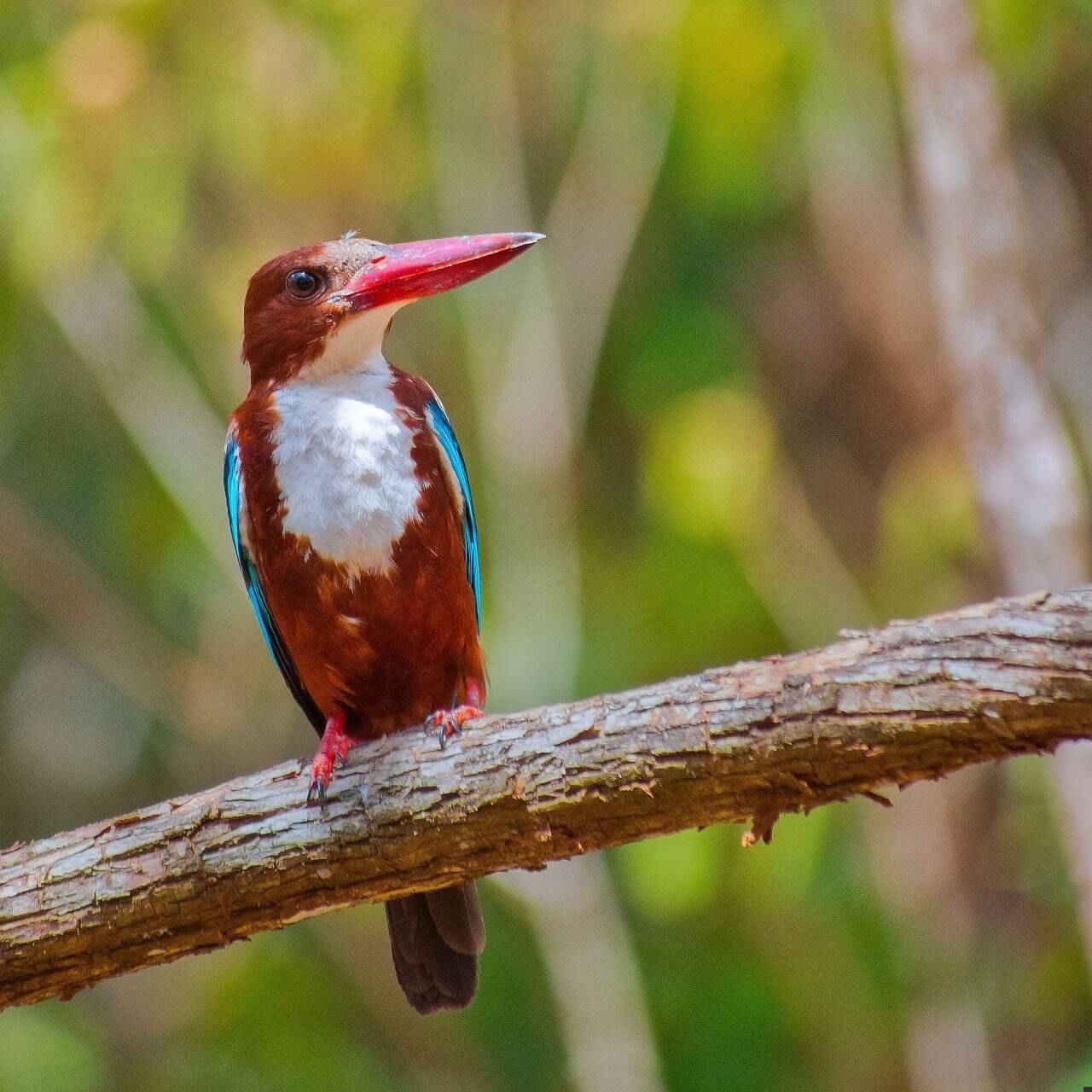
Scientists have identified 118 kingfisher species.
Many kingfisher species are not endangered. They have large, healthy populations. Unfortunately, several species are endangered. Some are even extinct in the wild. Their greatest threats are habitat loss, water pollution, and invasive species.
Species Spotlight
Laughing Kookaburra
Dacelo novaeguineae
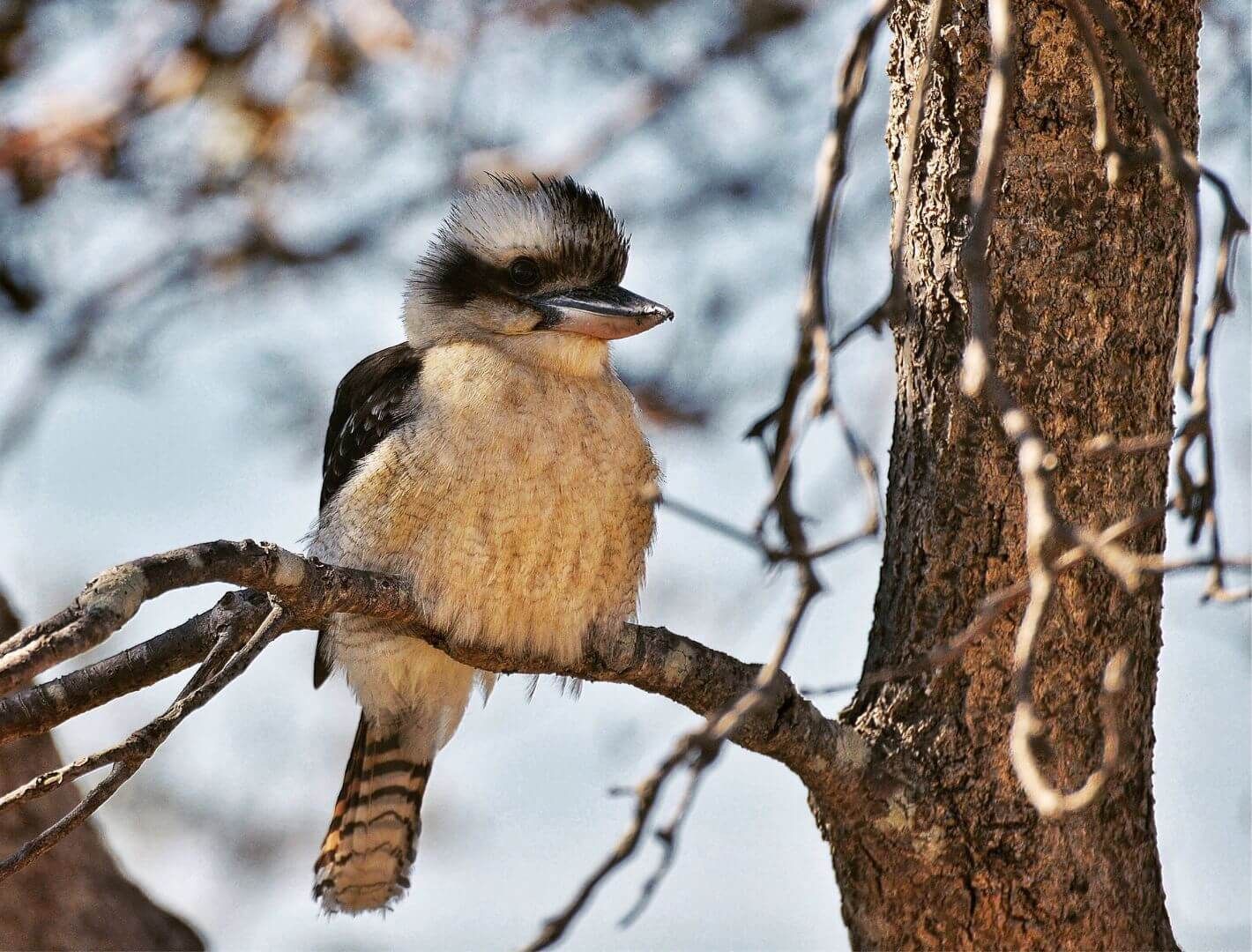
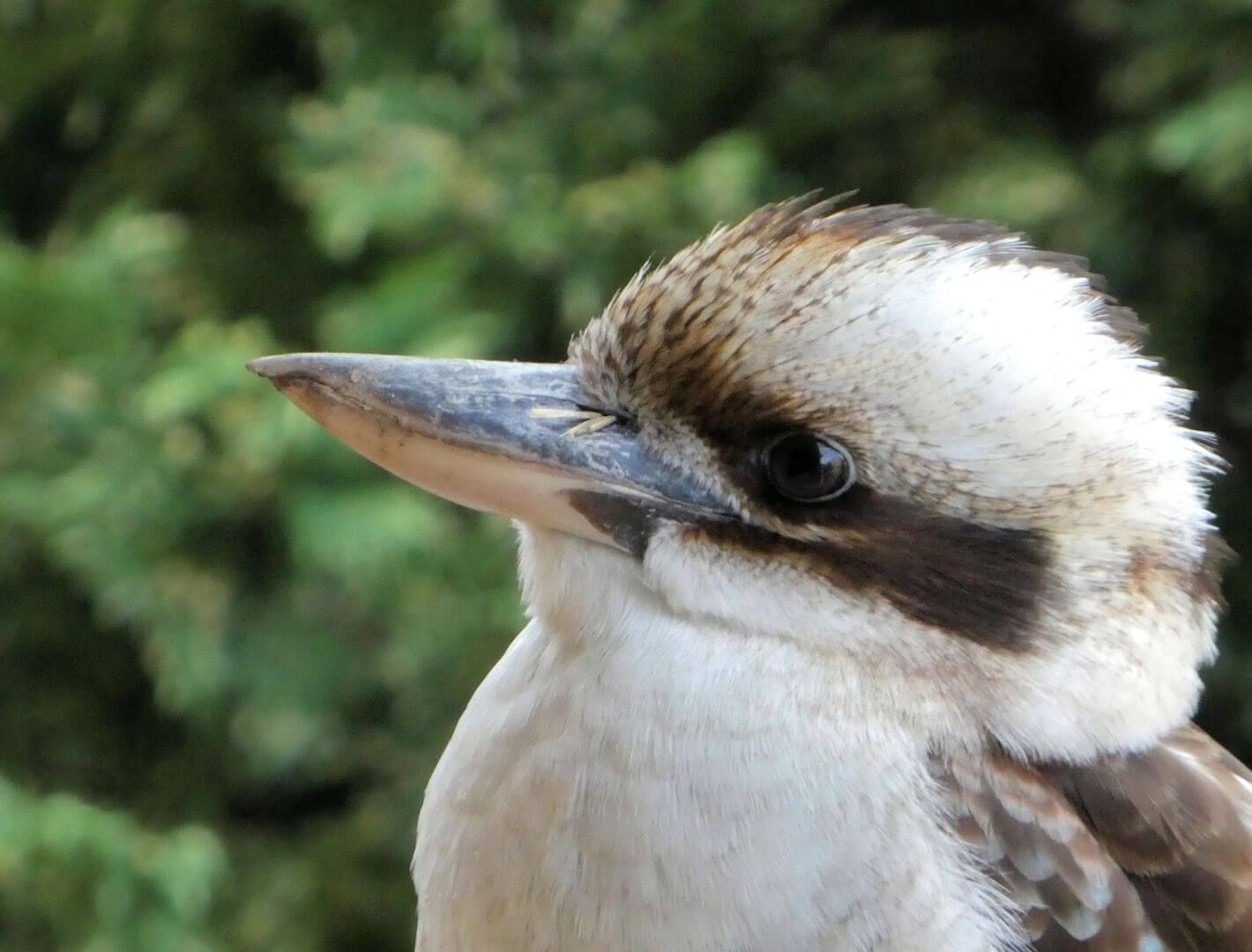
You may be surprised to hear a cackling monkey as you walk down the street in Australia. It would be surprising because, well, monkeys do not live in Australia. The sound echoing from the trees is not a monkey. Instead, it is the world’s largest kingfisher species, the laughing kookaburra.
The laughing kookaburra stands up to 1.5 feet tall. It’s mostly brown and white, with a blue patch on its wings. Unlike other kingfishers, laughing kookaburras do not hunt fish. Their thick bill is better for catching small animals, like mice, insects, frogs, and snakes. They return to their perch with their catch and beat it against the branch. This breaks up the bones, making prey easier to swallow. Kookaburras hunt alone, but they usually live in small family groups.
Kookaburra families create a territory where they hunt and nest. Unlike most other kingfishers, they breed cooperatively. Cooperative breeding occurs when one pair breeds and other family members feed and protect the offspring. Kookaburra breeding pairs often mate for life. The other group members are typically their offspring from previous years. The chicks have a better chance of survival because the family works as a team to raise them. They communicate with their family and ward off other kookaburras using their monkey-like laugh.
Click here to watch a video of the laughing kookaburra’s iconic sound
BRAIN BLAST
Laughing kookaburras are known for their unusual sounds. What other animals make strange sounds? Make a list and describe the sounds.
Bonus: Ever heard a koala's bellow? Start there!
Conservation Corner
Saving the Guam Kingfisher
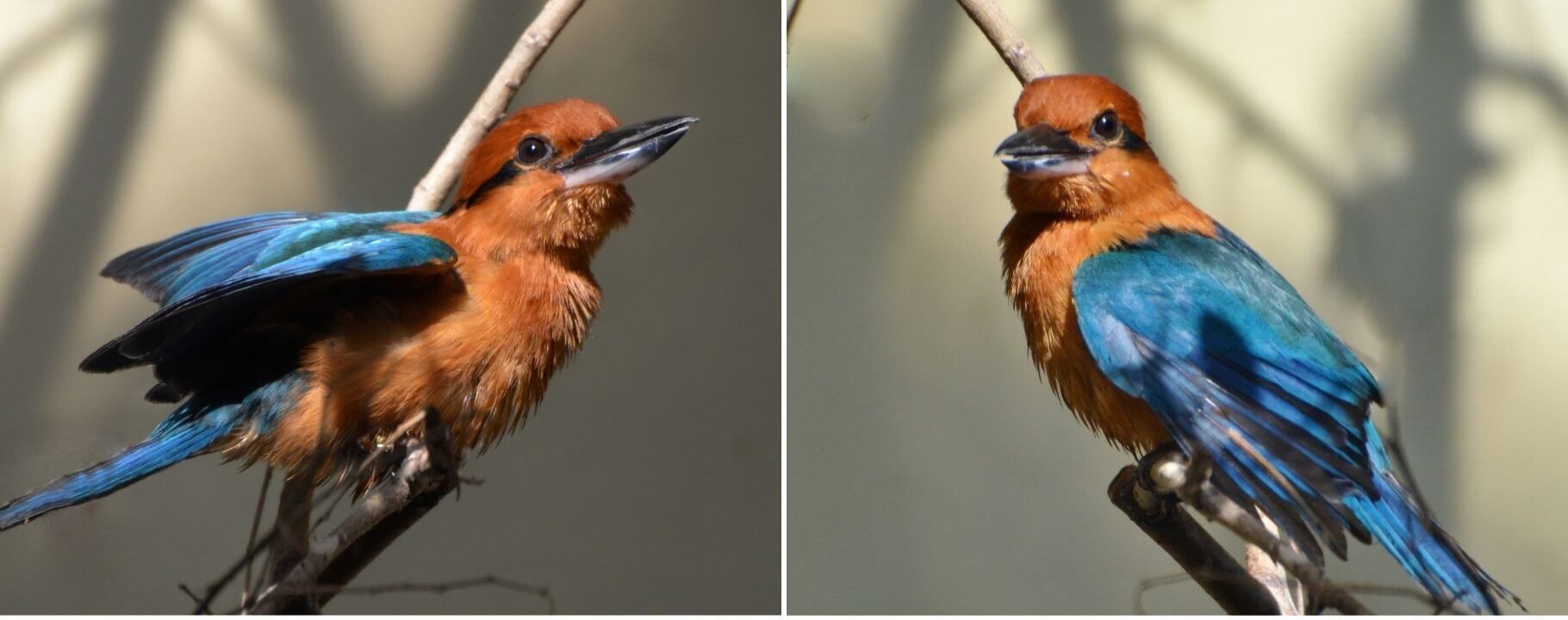
On the small island of Guam, Guam kingfishers are known as siheks. Unfortunately, siheks have not actually been seen on the island since the 1980s. These small kingfishers and many other birds became endangered or extinct due to the invasive brown tree snake.
Brown tree snakes arrived on the island in the 1940s. Scientists believe they accidentally stowed away in shipping containers sent to Guam. Before their arrival, no snakes lived on the island. The birds and other small animals had no adaptations to avoid the new snake predator. Their populations quickly shrank and, for some animals, disappeared completely.
In the 1980s, the sihek population became dangerously low. Scientists collected 29 siheks from the island. They brought them to 25 zoos and breeding centers in Guam and the United States. Since then, their captive population has grown to nearly 150 birds. The breeding program’s goal is to release siheks back into the wild. However, more than 1 million brown tree snakes still live in Guam.
Instead of releasing siheks onto Guam, scientists decided to release them on an island in the Palmyra Atoll. This island is nearly 4,000 miles away from Guam. Though it is far, it has no brown tree snakes. It is the perfect place to see how siheks born at a zoo would adjust to life in the wild.
In 2024, they released 9 siheks to the island. Scientists closely monitor their behaviors. The birds adjusted well. They even laid eggs in 2025, though no chicks hatched. Scientists hope that 2026 will bring the first sihek chicks to hatch in the wild in nearly 40 years.
Kingfisher Conundrum
Identify each statement about kingfishers as true or false.
Kingfisher Challenge
Design and test paper airplanes to explore a kingfisher's aerodynamic and streamlined shape.
Learn More!
Glossary
Adaptation
The process by which a species becomes more fit for its environment over the course of several generations. It is a result of natural selection.
Beak
The extended jaw of a bird (also known as a bill).
Carnivore
An animal that eats other animals.
Cooperative Breeding
Occurs when one pair breeds and other family members help feed and protect the offspring.
Diurnal
To be most active during the daytime.
Gland
An organ in many animals that produces a substance (ex. sweat glands, venom glands, preening glands).
Invasive Species
An organism that has established a population somewhere it is not native.
Monogamous
An animal that has only one mate.
Nest
A structure made by birds (and other animals) used as a shelter.
Nictitating Membrane
Transparent or translucent eyelid-like structure designed to protect eyes while still allowing the animal to see.
Piscivore
An animal that mostly eats fish.
Predator
An animal that hunts other animals for food.
Preen
[Of birds] cleaning and organizing feathers with its beak.
Preening Gland
A gland located near a bird's tail that produces oil used to clean feathers and make them waterproof.
Prey
An animal that is hunted and eaten by another animal.
Solitary
To live alone.
Species
A closely related group of animals with similar characteristics that are capable of reproducing (example: tigers).
Streamlined
Shaped in a way that moves easily through water.
Territorial
Referring to an animal that defends an area (its territory) from other members of its species.