
Puffins

Let's Learn About Puffins
Word of the Week
Molt
For birds, molting occurs when they replace old feathers with new feathers. Molting allows them to have healthy and strong feathers as they age and grow.
Some birds molt gradually throughout the year. Other birds, like puffins, molt all their feathers at once.
Fast Facts
Where do puffins live?
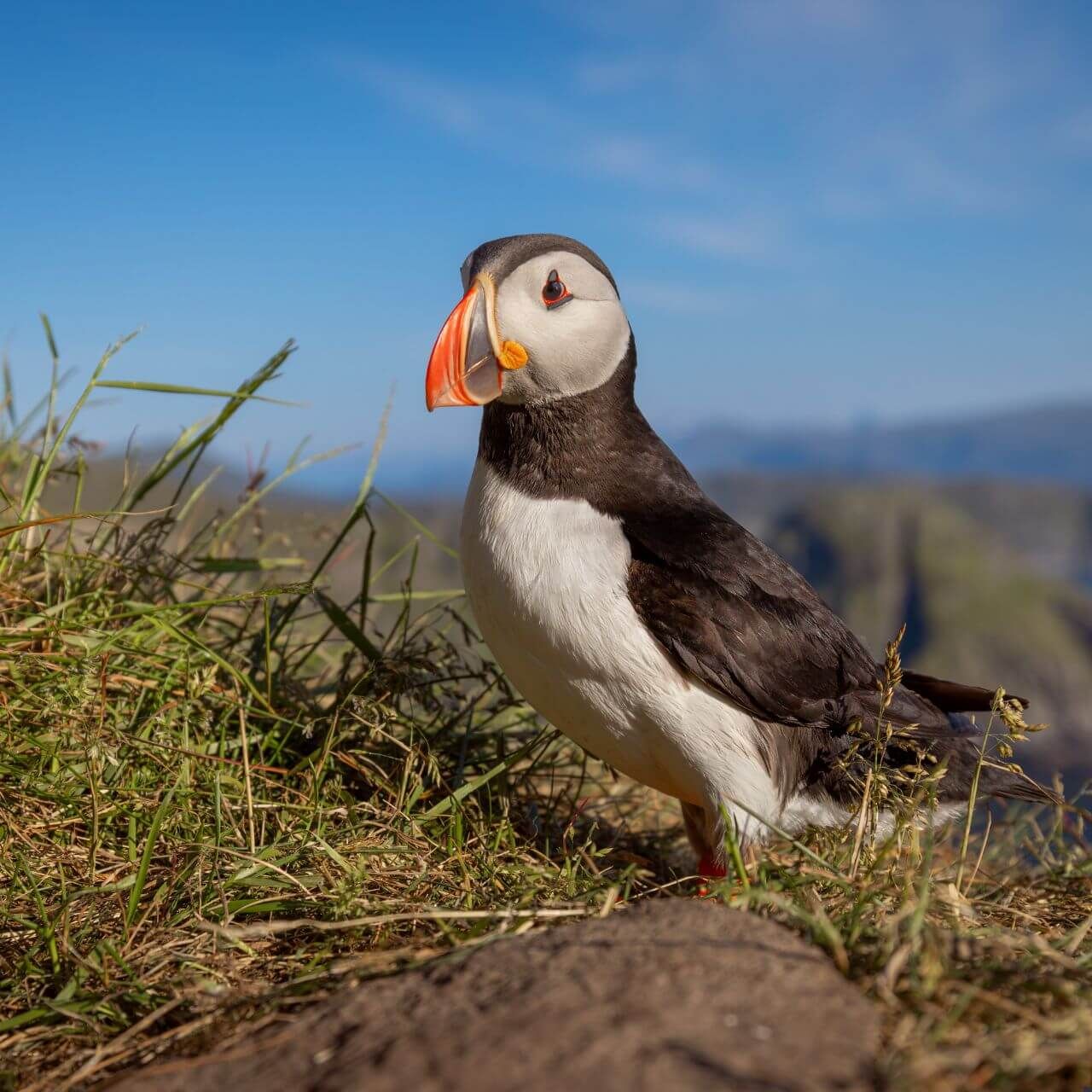
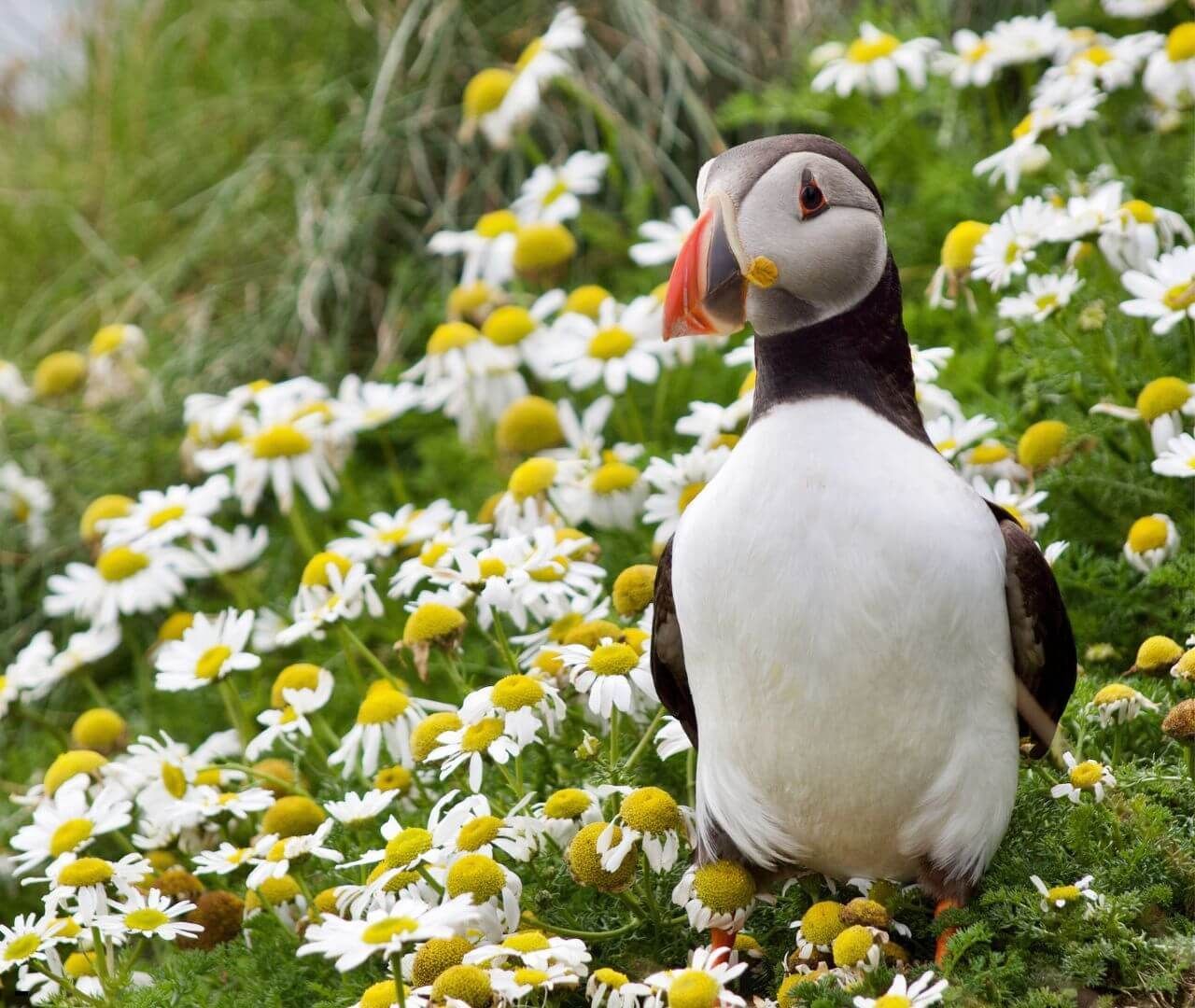
Puffins live in the Arctic, the region near the North Pole. The Atlantic puffin lives around the Atlantic Ocean. The horned puffin and tufted puffin live around the Pacific Ocean.
Puffins are seabirds. They spend most of the year miles from land. They return to the shore during the breeding season to raise their offspring.
What do puffins eat?
Puffins are carnivores.
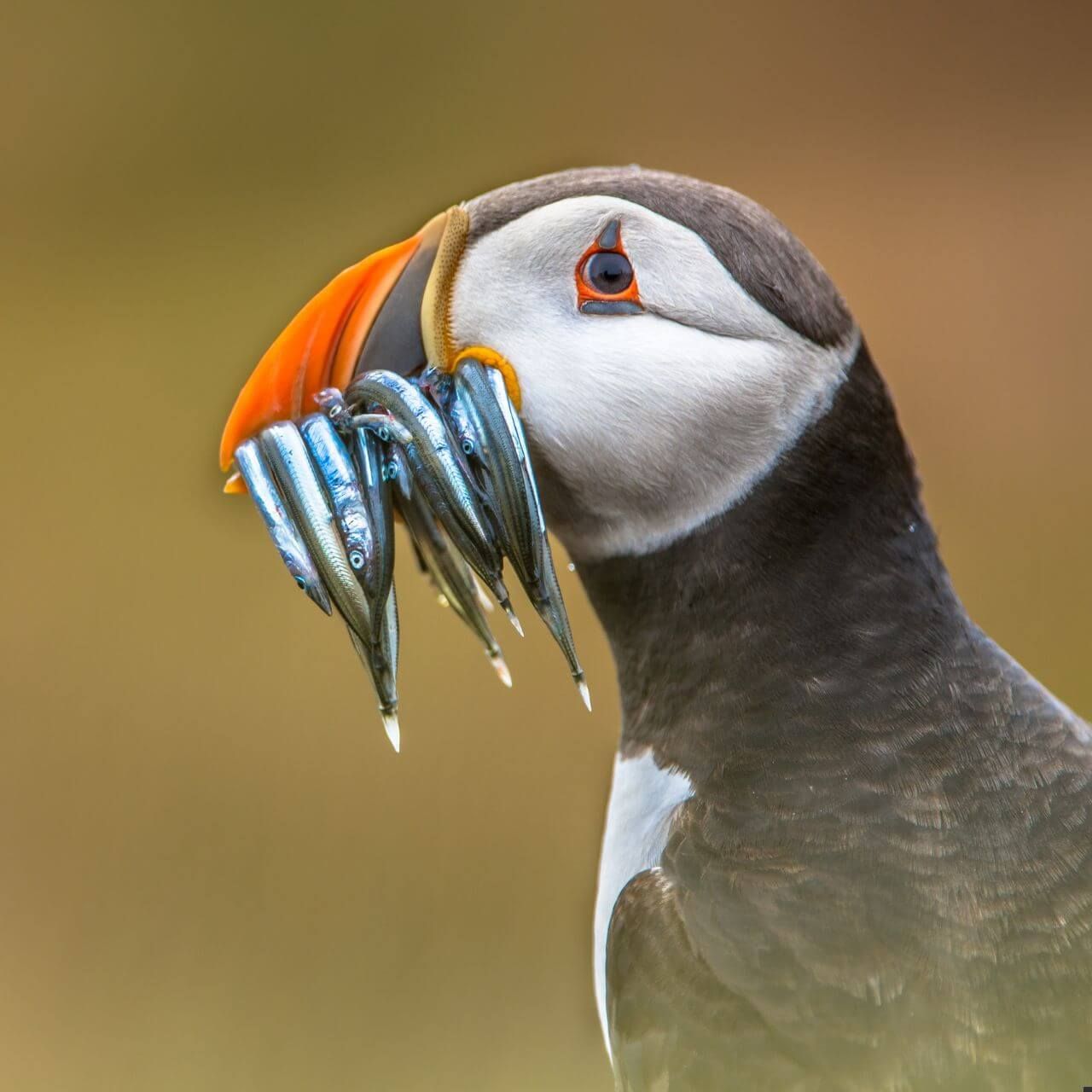
Most of their diet is small fish, like sand eels, herring, and capelin. They also eat shrimp, molluscs, and worms when available. They dive using their short but powerful wings. The inside of their beak has spikes to prevent the slippery fish from squirming out.
What do puffins have in common?
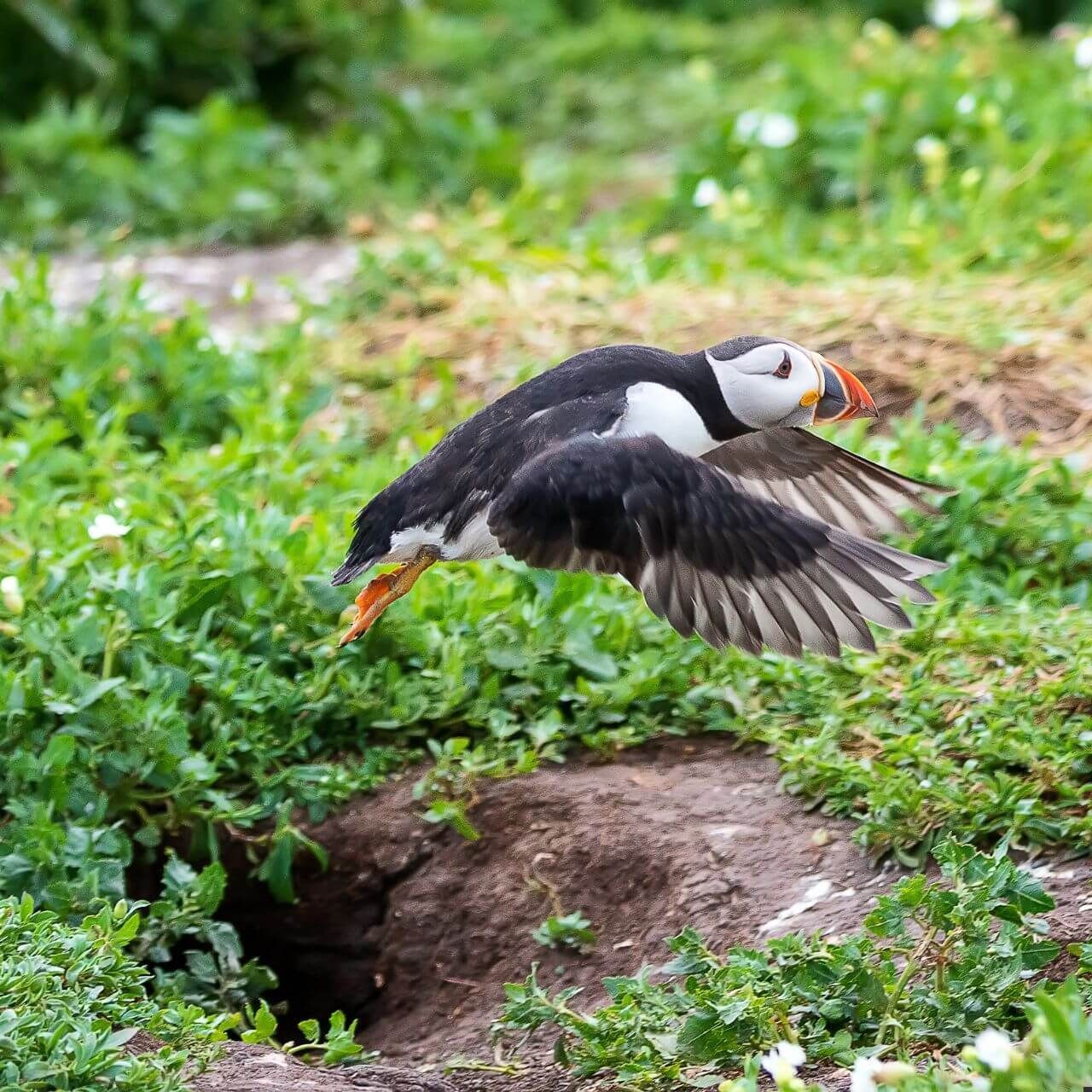
All three puffin species have many similarities, such as...
- White belly and black back (countershading).
- Short wings.
- Tall, colorful beak.
- Webbed feet.
How many puffins are there?
There are three species of puffins.
The horned puffin and tufted puffin are listed as Least Concern by the
IUCN. This means they are not at risk of extinction. The Atlantic puffin is listed as Vulnerable. This means they face threats, but are not at risk of extinction in the near future. All puffins face threats, like climate change and invasive species.
Species Spotlight
Tufted Puffin
Fratercula cirrhata
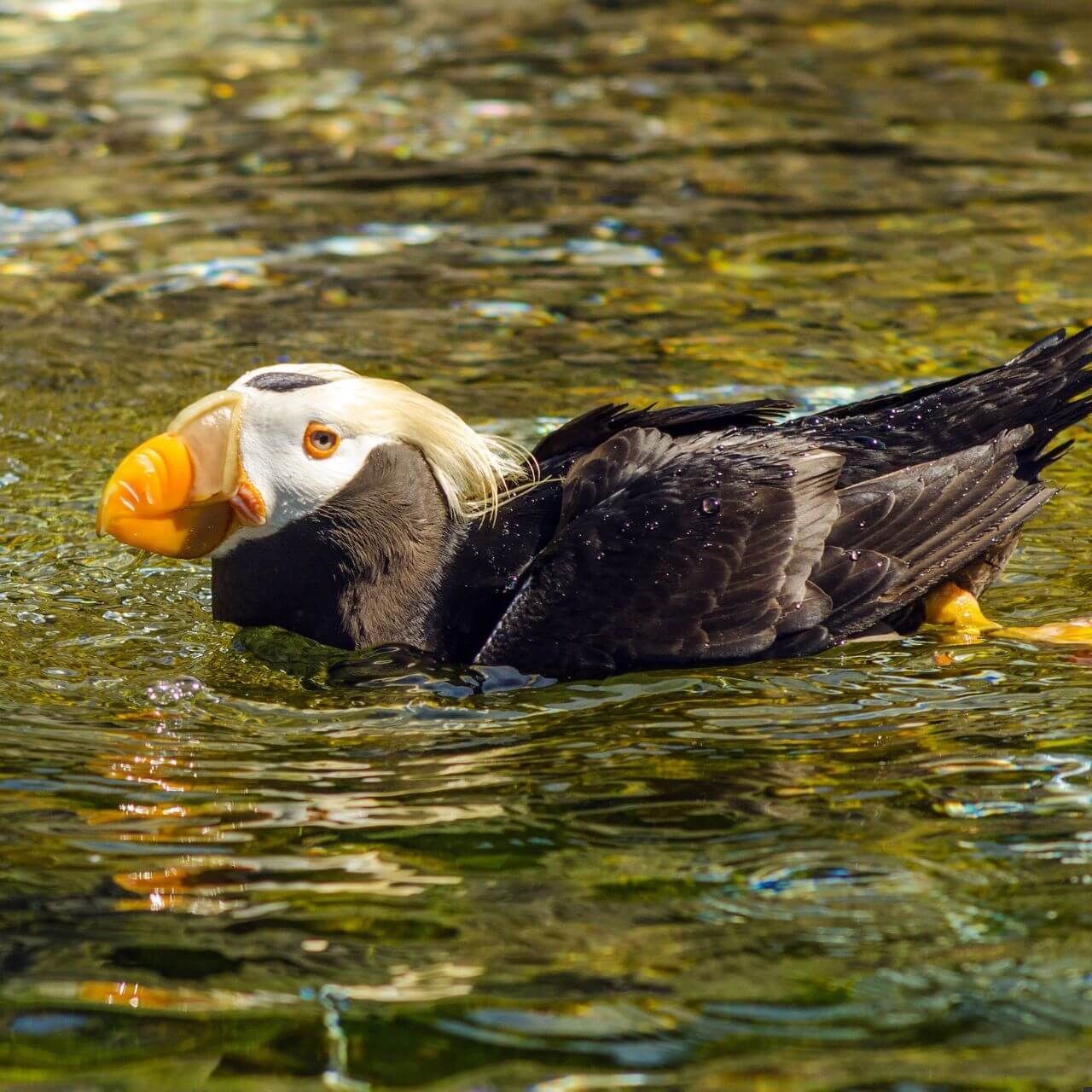
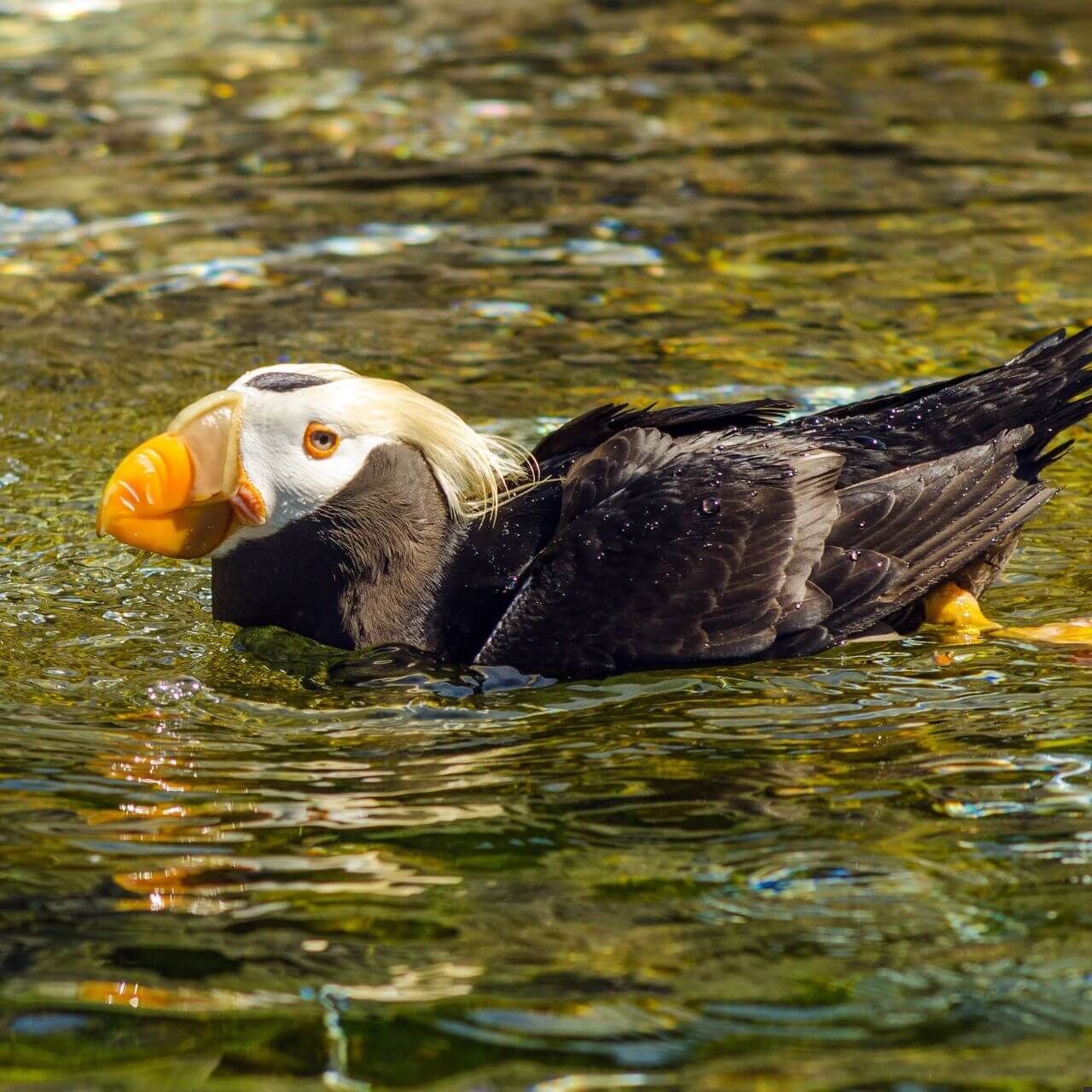
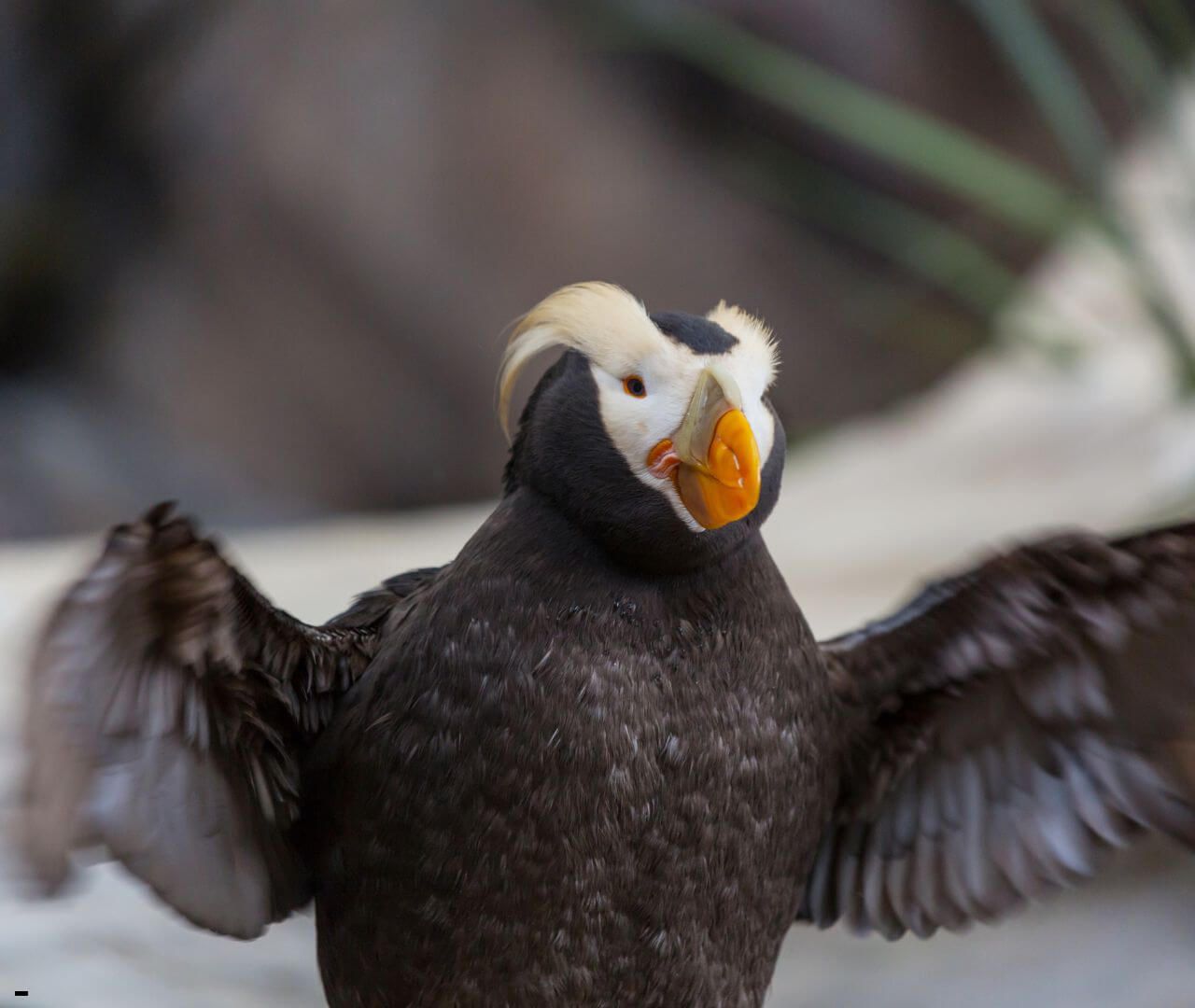
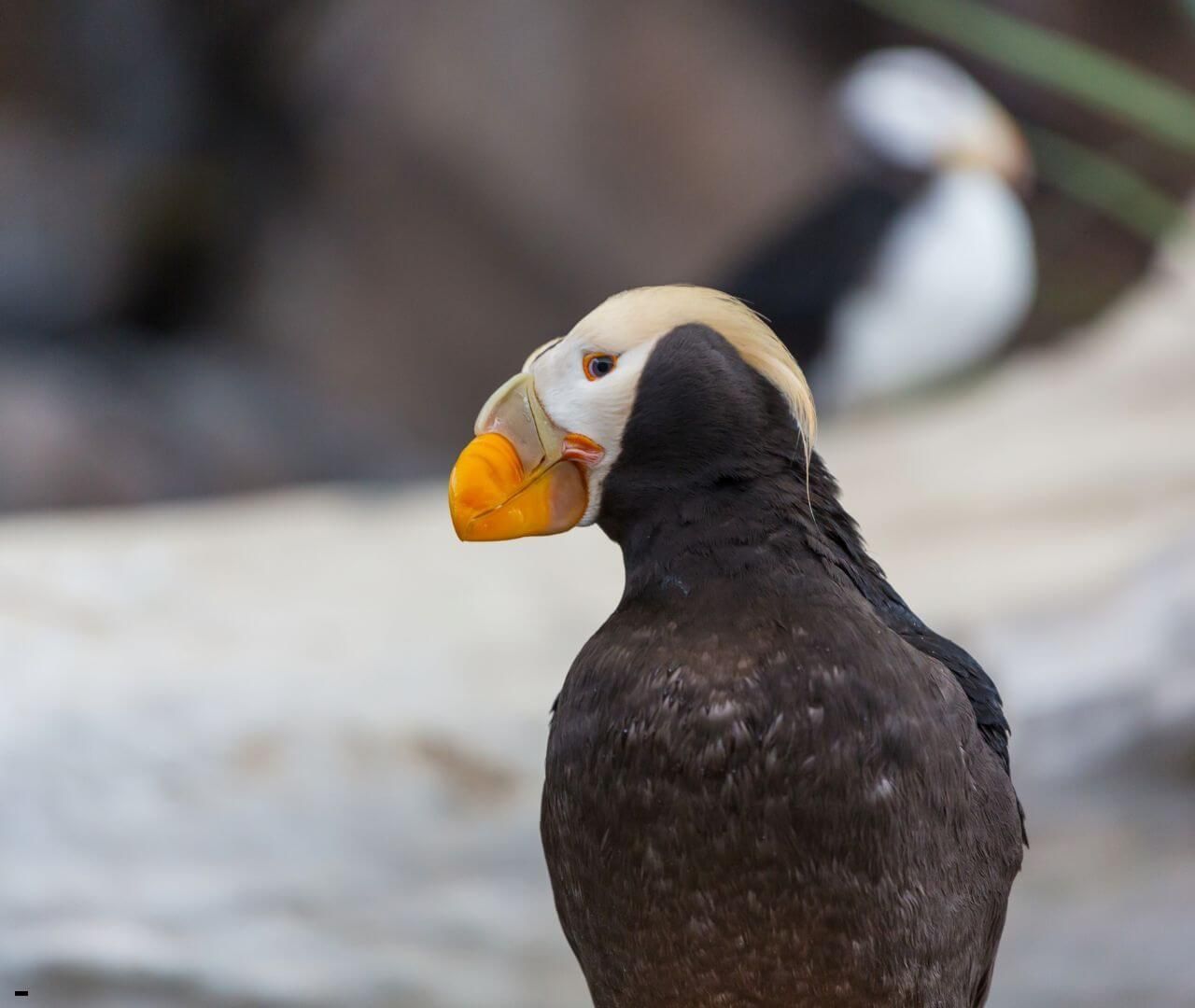
The tufted puffin is famous for their white, eyebrow-like feathers. These feather tufts are exactly how they got their name. However, they do not always appear this way. Tufted puffins spend most of their year out at sea with their non-breeding plumage. During this time, they are mostly black. They do not have their iconic white head feathers. They are rarely seen by people when out at sea.
Like all puffins, tufted puffins only come to shore during the breeding season. At the start of summer, they develop their special head feathers. Their feet and beak also become bright orange. They typically return to the same mate and nest burrow each year. Some pairs have mated for more than 20 years.
Tufted puffin pairs spend the entire winter apart from their mate. They bond by billing (rubbing their beaks together) and other displays once reunited. They prepare their burrow where females lay one single white egg. Both parents care for the egg and chick when it hatches. They take turns traveling miles out to sea to collect fish and squid for the chick. After about a month and a half, the chick leaps from the cliff edge into the sea. It will spend three years at sea hunting and growing. The tufted puffin will not return to land until it is time for them to find a mate of their own and raise a chick.
Conservation Corner
Puffling Patrol: Saving Puffin Chicks
Heimaey Island has the largest breeding colony of Atlantic puffins in the world. This small island is located off the southern coast of Iceland. It is home to roughly 4,500 people and, in the summer, about 8 million puffins. Unfortunately, the puffin population on Haimaey has shrunk. It has decreased by 1/3 since 2002. Like all puffins, they are threatened by climate change and overfishing.
The puffins here face another threat. Puffin chicks, called pufflings, typically leave the nest and head out to sea at night. They follow the moon’s bright light. On the island of Heimaey, the chicks get confused by the lights of the city. They fly the wrong direction. In the city, the lost pufflings cannot find food and are attacked by stray cats.
Fortunately, the people of Heimaey have a plan to protect the pufflings. Teams of children and adults venture out at night on what they call “puffling patrol.” They work together to search for lost pufflings. Once found, the puffins are brought to the local aquarium. Each puffin is measured and tagged. Then, they are returned to the sea.
Puffling patrol has occurred on Heimaey for generations. It helps protect the puffin populations and allows scientists to gather information. They have saved and collected data from more than 5,000 puffins. The “puffling patrol” shows how people of all ages can help protect wildlife.
BRAIN BLAST
Research community-based conservation in your area. What animals is your community working to protect? How can you help?
Puffins: Land Vs. Sea
Determine which describes puffins at sea and which describes puffins on land.
Puffin Challenge
Watch the BBC video below about puffins. Then, answer the questions in the packet.
Learn More!
Glossary
Adaptation
The process by which a species becomes more fit for its environment over the course of several generations. It is a result of natural selection.
Arctic
The cold region around the North Pole.
Beak
The extended jaw of a bird (also known as a bill).
Billing
[For puffins] Tapping or chattering bills together, typically during courtship.
Bird
A group of endothermic (warm-blooded) vertebrates that have wings and feathers and also lay eggs!
Camouflage
The ability for an organism to blend into their surroundings usually to hide from prey or predators.
Carnivore
An animal that eats other animals.
Countershading
A type of camouflage characterized by the back of the animal being darker than the belly of the animal.
Fledge
[For bird chicks] To develop flight feathers and the ability to fly and live independently.
Invasive Species
An organism that has established a population somewhere it is not native.
Molt
The process of shedding and regrowing feathers.
Monogamous
Having one mate per breeding season.
Nest
A structure made by birds (and other animals) used as a shelter.
Predator
An animal that hunts other animals for food.
Preen
[Of birds] cleaning and organizing feathers with its beak.
Prey
An animal that is hunted and eaten by another animal.
Seabird
A bird that typically lives at sea or along the coast.
Serrated
Having a jagged or saw-like edge.
Solitary
To live alone.
Species
A closely related group of animals with similar characteristics that are capable of reproducing (example: tigers).