
Secretarybirds

Let's Learn About Secretarybirds
Word of the Week
Regurgitation
Regurgitation is the act of bringing food that was swallowed back up into the mouth.
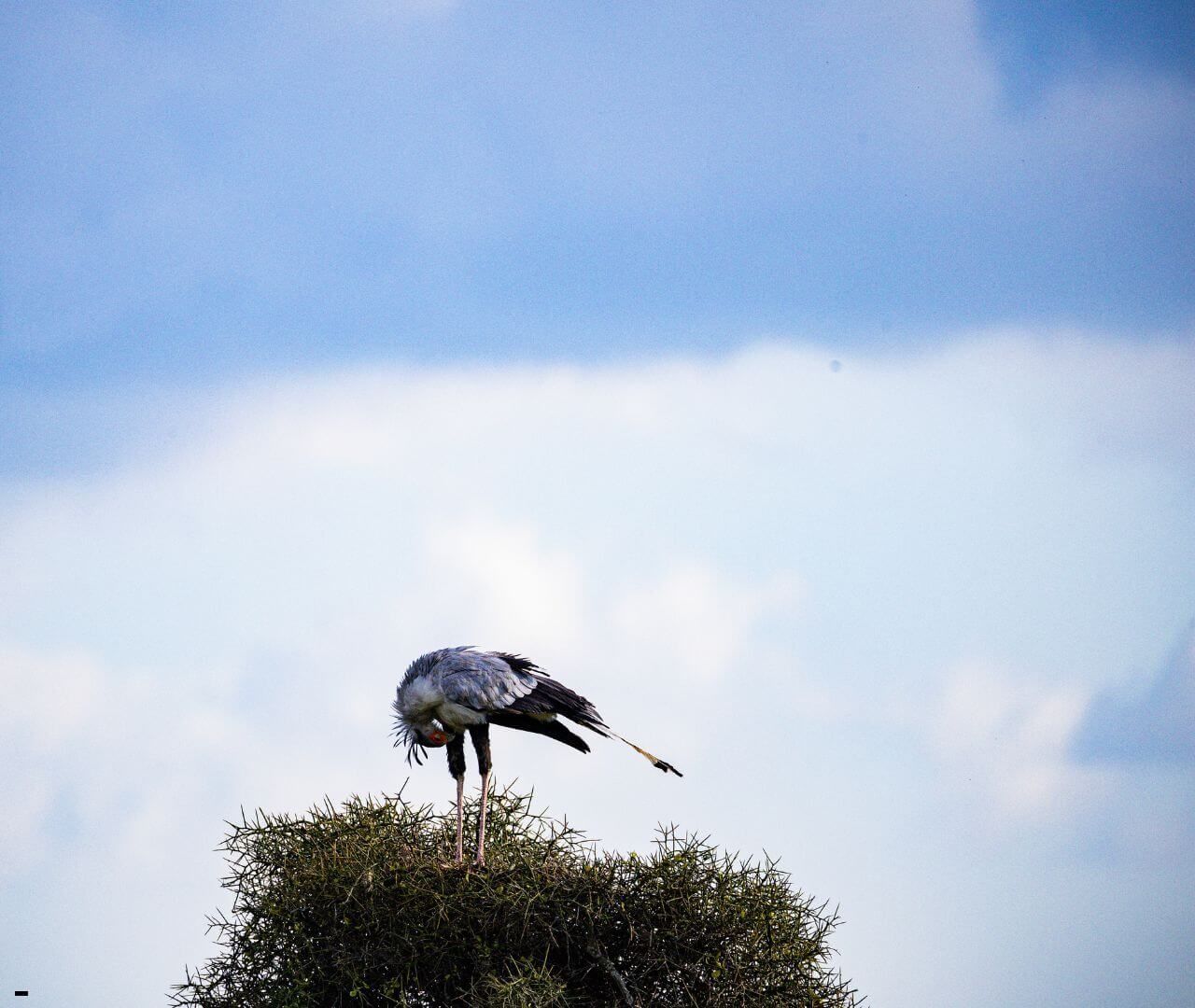
Many birds regurgitate food for their chicks. Some birds, like owls and secretarybirds, regurgitate pellets with the parts of their prey they cannot digest.
Fast Facts
Where do secretarybirds live?
Secretary birds live in Africa.
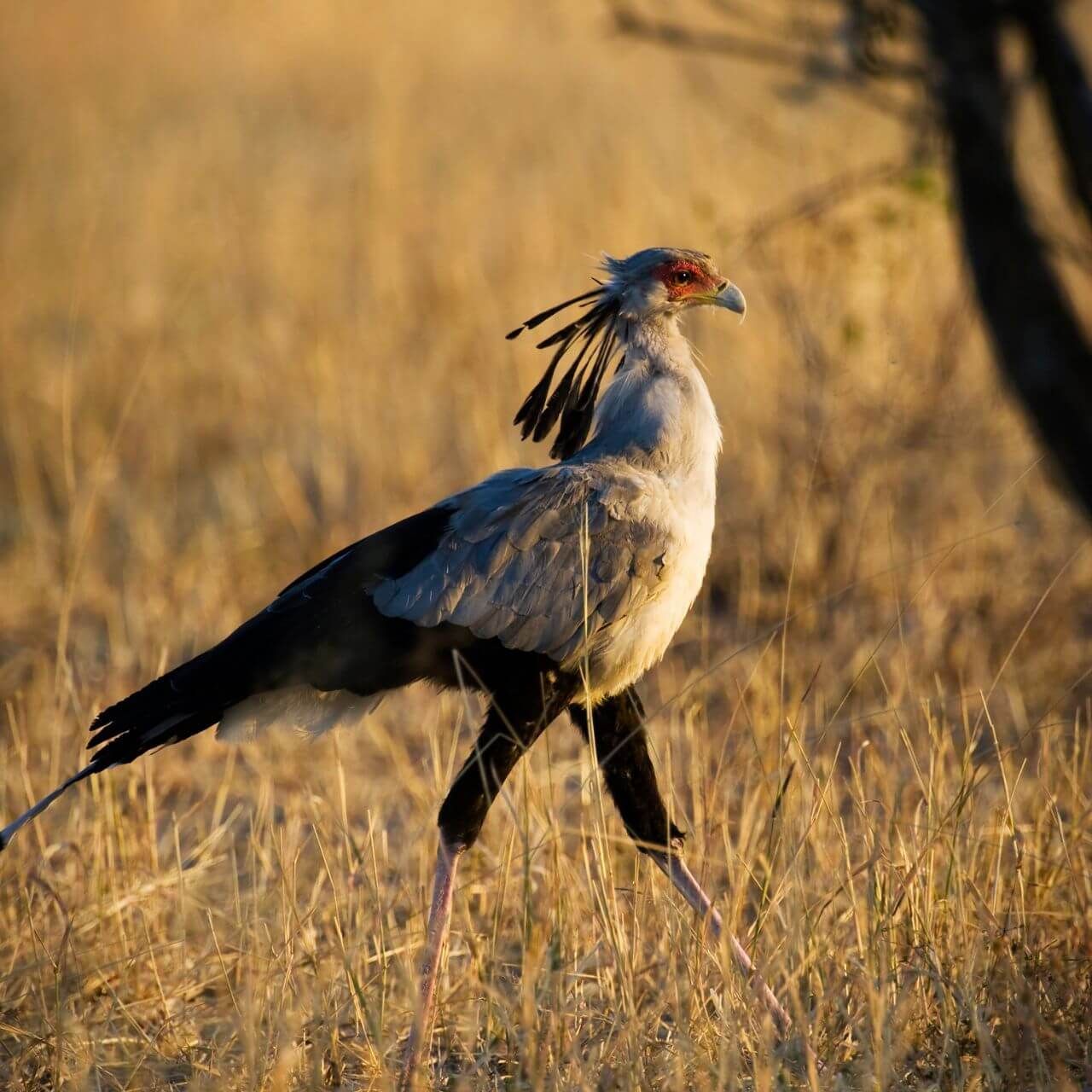
They are found in savannas, grasslands, and shrublands. They are not found in dry deserts or dense rainforests. They prefer open areas with tall grasses.
What do secretarybirds eat?
Secretarybirds are carnivores.
They eat small mammals, such as rodents, frogs, lizards, eggs, and more. They also feed on insects and other invertebrates, like millipedes, spiders, and even small crabs.
Many people believe that secretarybirds are snake-specialists. While secretarybirds do eat snakes, it is not the main part of their diet.
What traits do secretarybirds share?
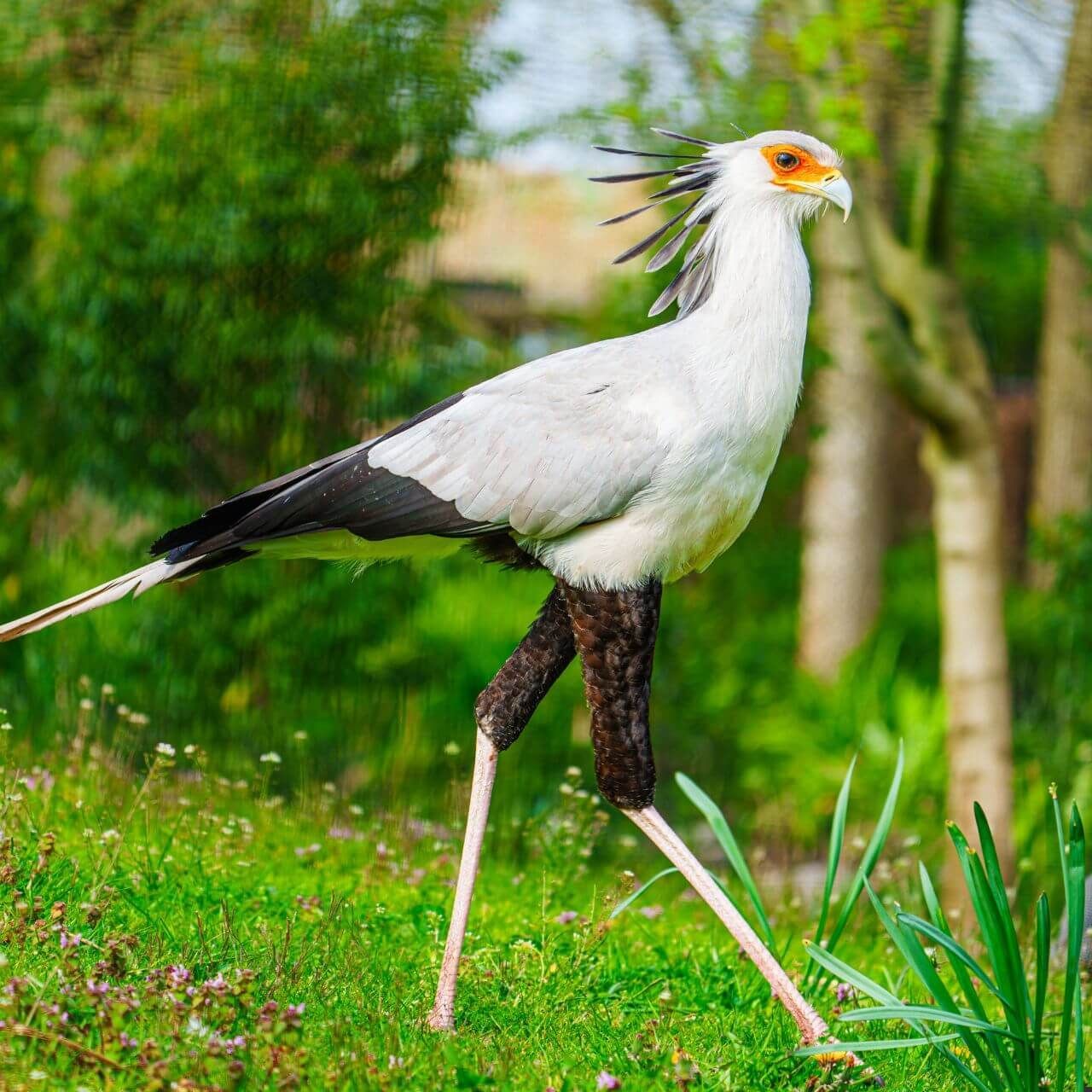
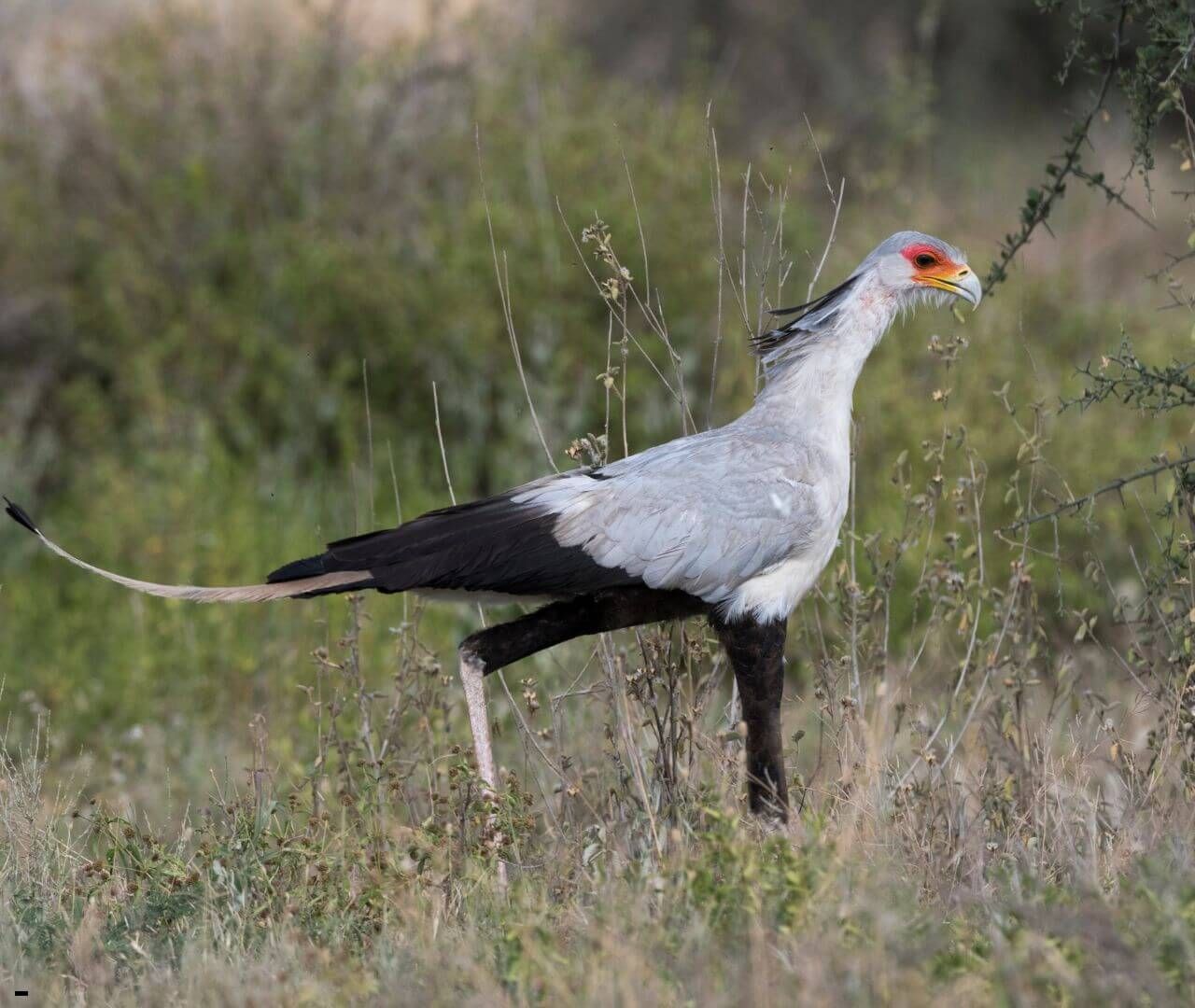
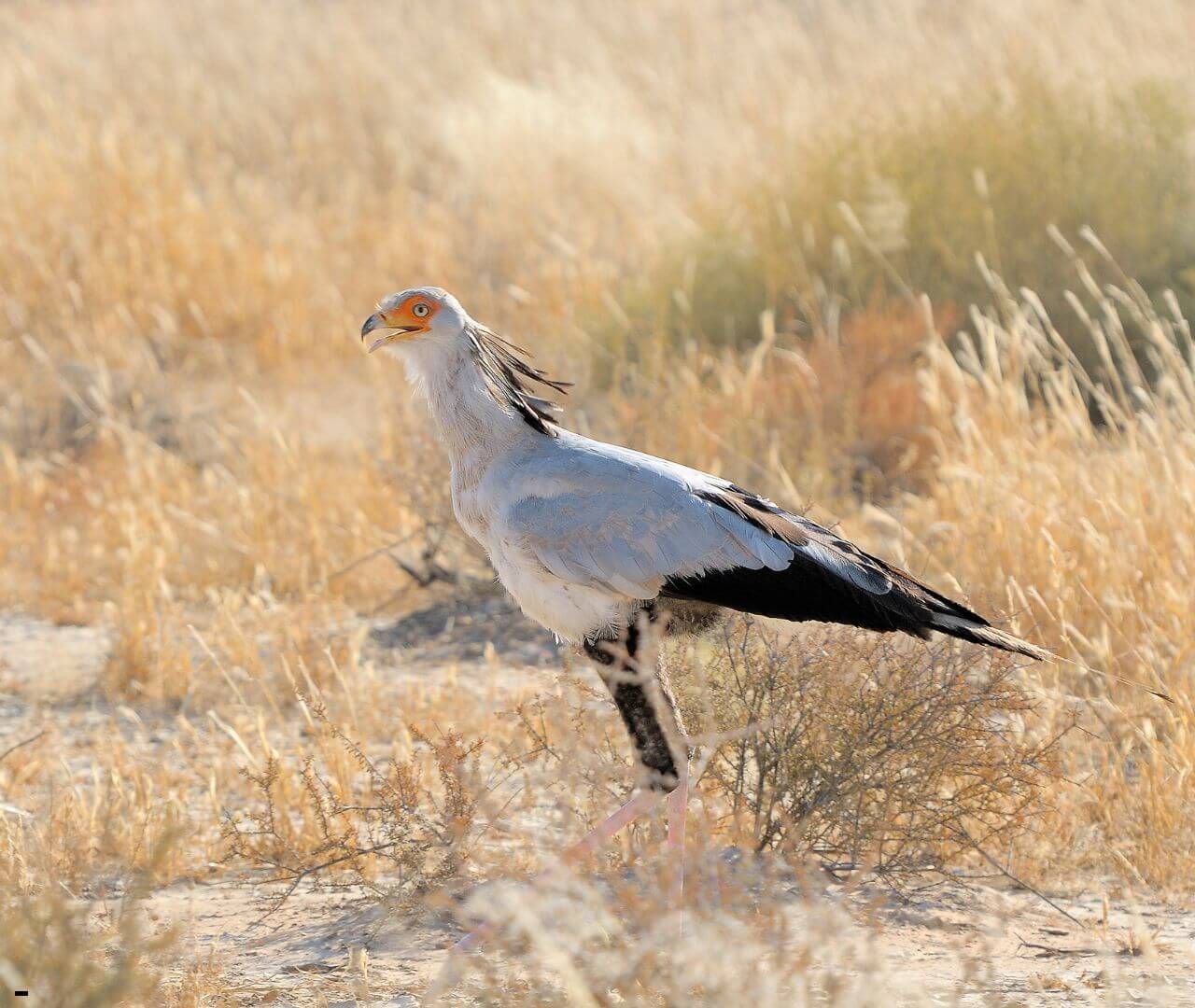
Secretarybirds have unique traits, such as...
- Black and white feathers.
- Long legs.
- Small talons.
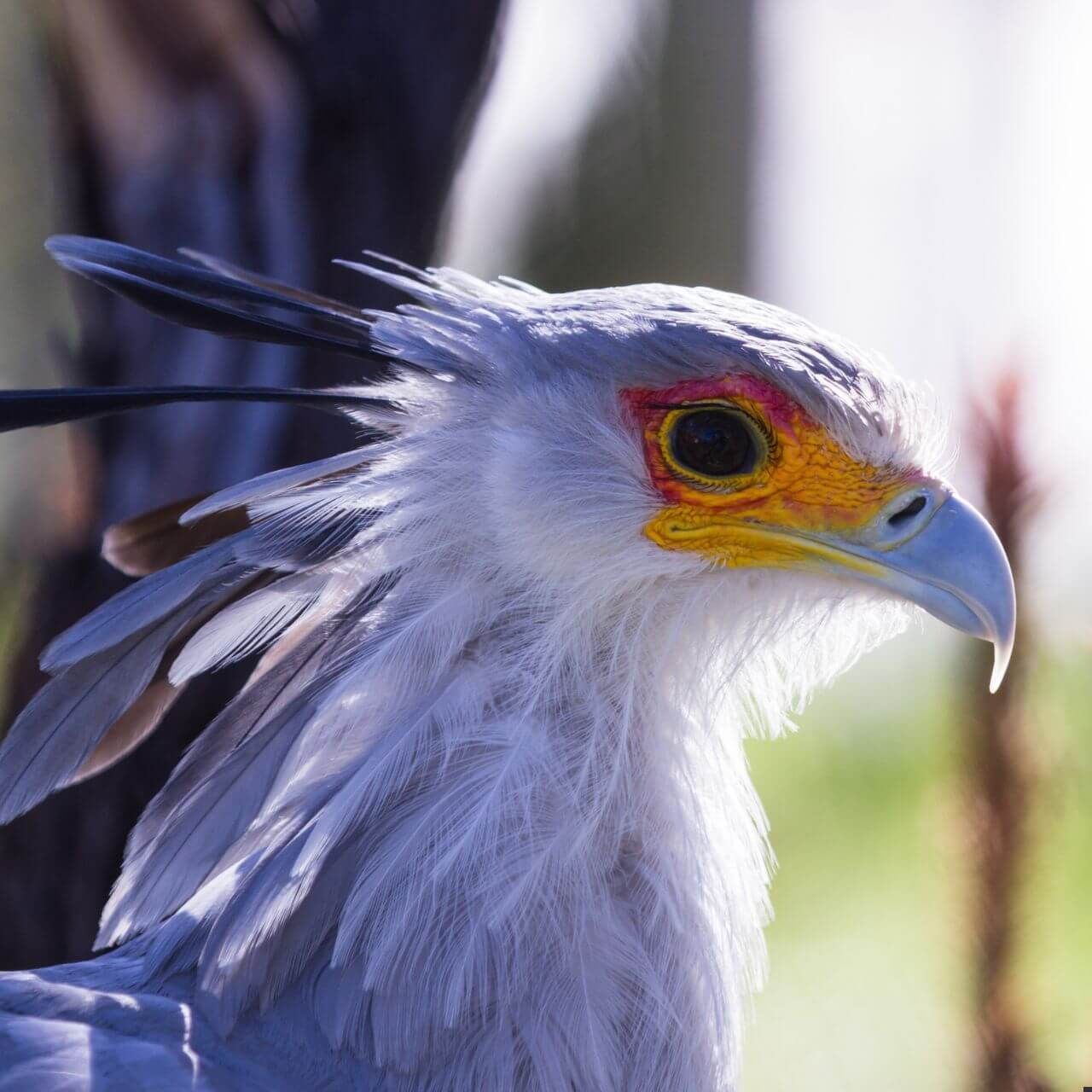
- Sharp, hooked beak.
- Crest of feathers on head.
- Long eyelashes.
How many secretarybirds are there?
There is only one species of secretarybird. It is classified as endangered by the IUCN.
Secretarybirds are threatened by changes to their habitat. Trees and shrubs are taking over the grasslands where they live. Many open areas are also being converted to farmland or are at risk of fires.
Species Spotlight
Terrestrial Traits
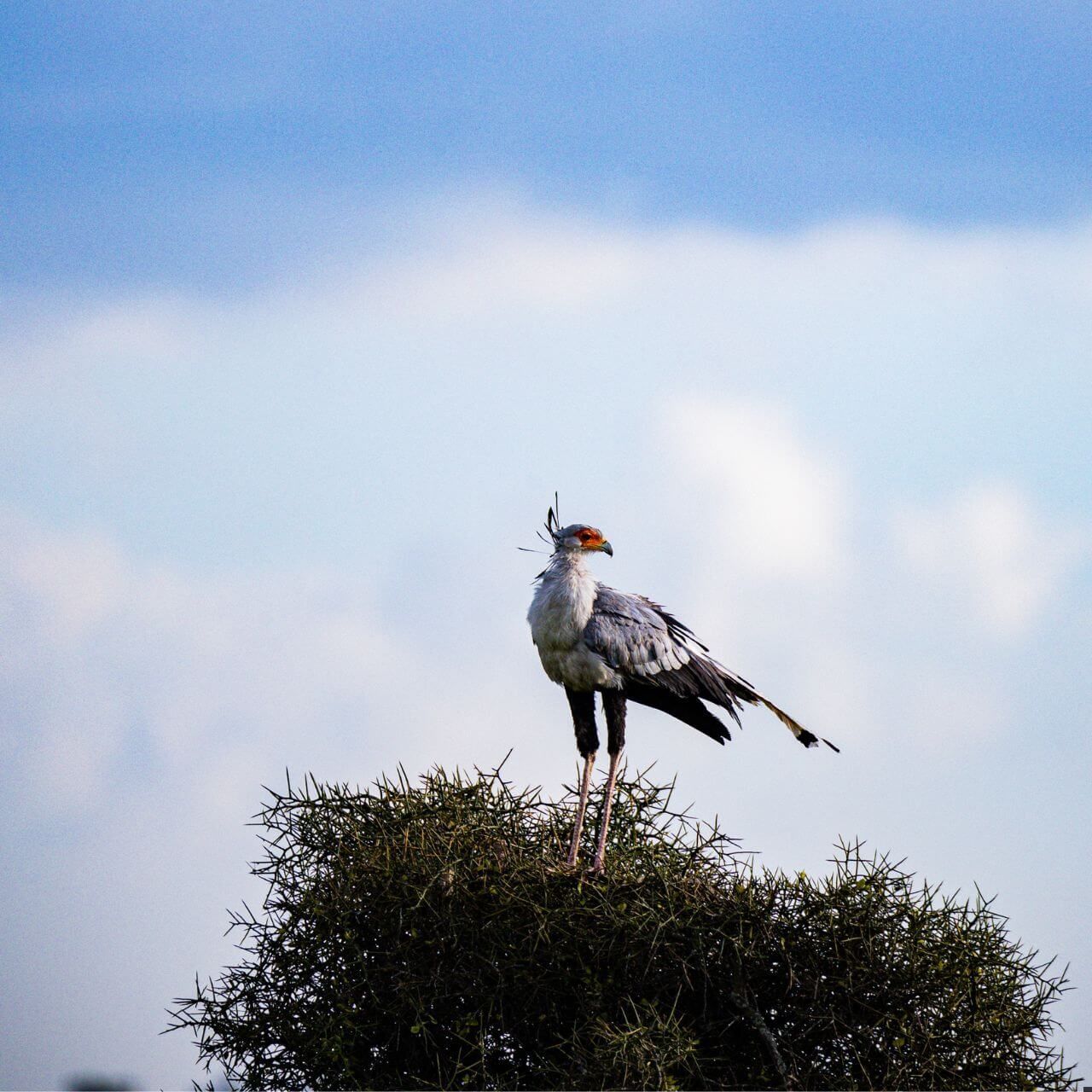
Secretarybirds are a bird of prey, along with eagles and hawks. They have many similarities. They have a hooked beak for tearing meat. They have large eyes and a powerful sense of sight. They have sharp talons to catch prey. However, secretarybirds have some other traits that make them unique for a bird of prey.
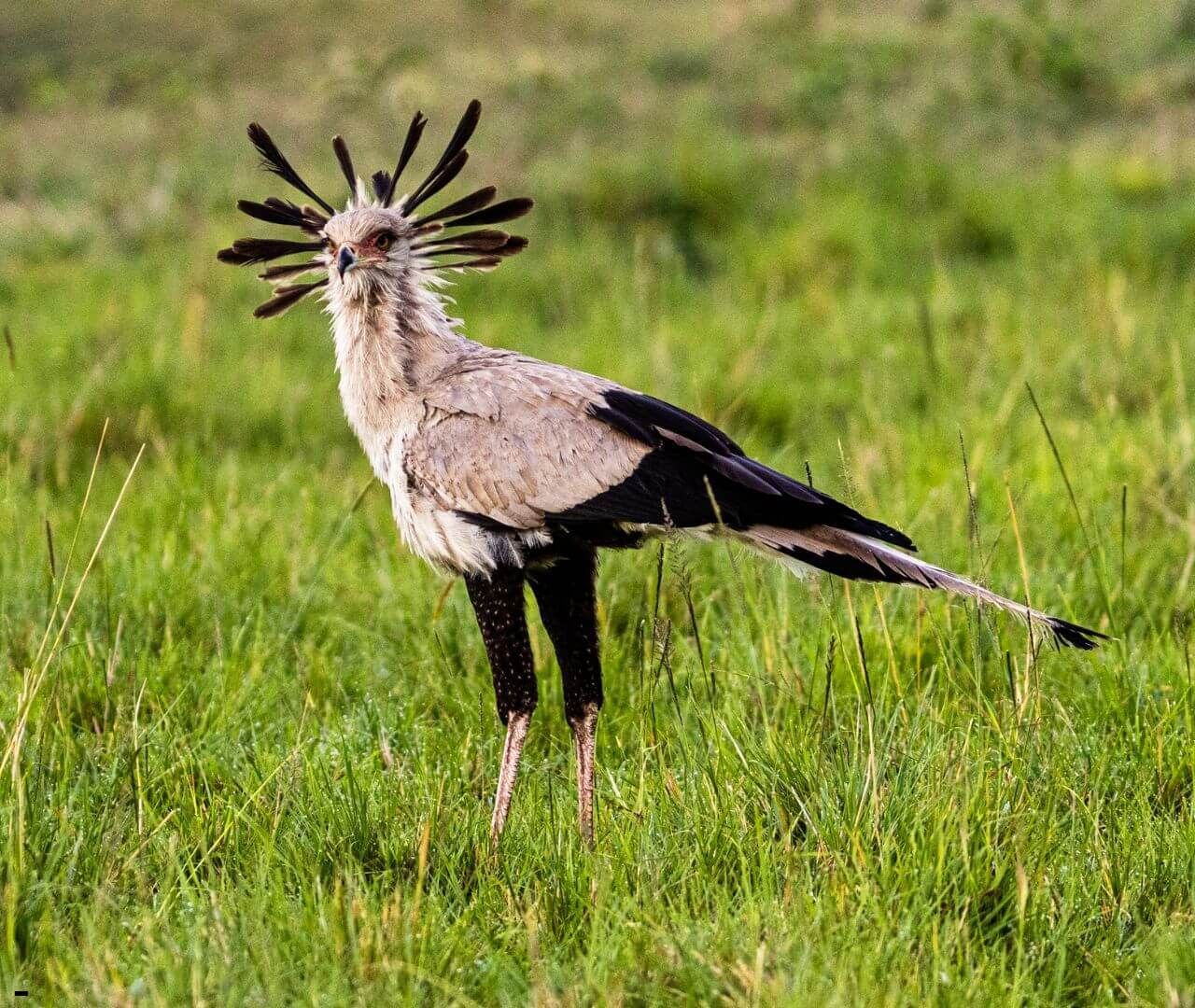
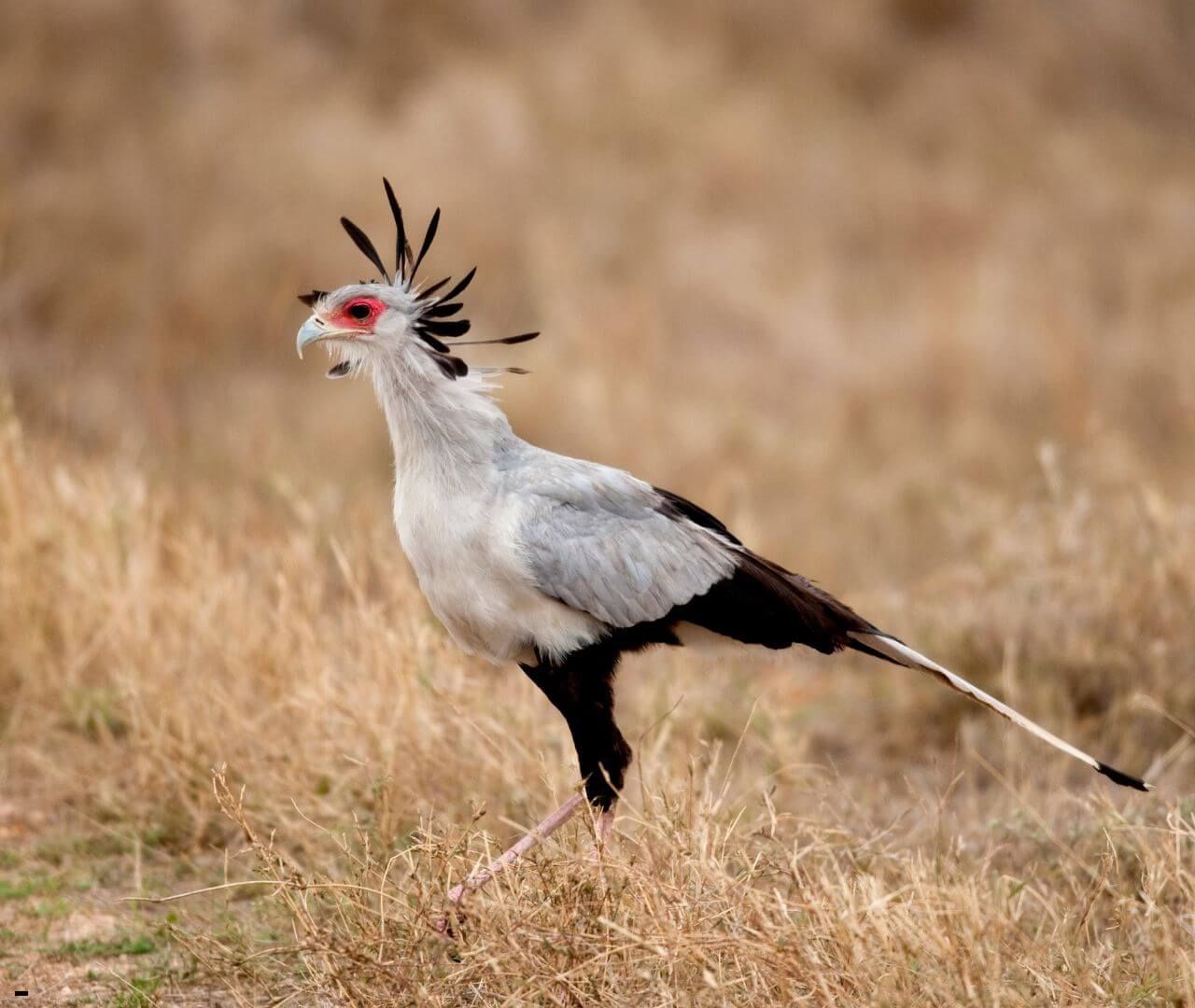
Unlike other birds of prey, secretarybirds have long, skinny legs. This odd trait is useful when hunting. Eagles and hawks typically search for prey from the sky. Secretarybirds typically hunt from the ground. They are mostly terrestrial. Their long legs (and long neck) help them peer over tall grasses. Once they find their prey, they show off another strange behavior.
Secretarybirds have weak talons compared to other birds of prey. They cannot crush prey like an eagle or hawk. Instead, they use their talons to stomp prey. Their stomps must be quick to avoid being bitten. This is especially important because they sometimes eat venomous snakes, like cobras!
Secretarybirds also lift their head feathers to intimidate or distract prey when hunting. They may also raise their wings. Other birds of prey sneak up on their prey, so they don’t typically need to intimidate or distract.
Secretarybirds and other birds of prey have similarities because of their similar diet. However, secretarybirds have some unique traits because they hunt using a different method. A secretarybird’s long legs, small talons, and intimidation displays are all important traits for a terrestrial predator.
BRAIN BLAST
Think of other birds that are terrestrial (live on the ground). What traits do they have in common with secretarybirds? What traits make them different?
Conservation Corner
Studying Secretarybirds
Scientists know amazing facts about secretarybirds. They know secretarybirds live in many parts of Africa. They know they hunt small animals in grasslands and savannas. They also know that secretarybird populations are shrinking. Their main threats are habitat loss and livestock grazing. To protect secretarybirds, scientists need to learn even more.
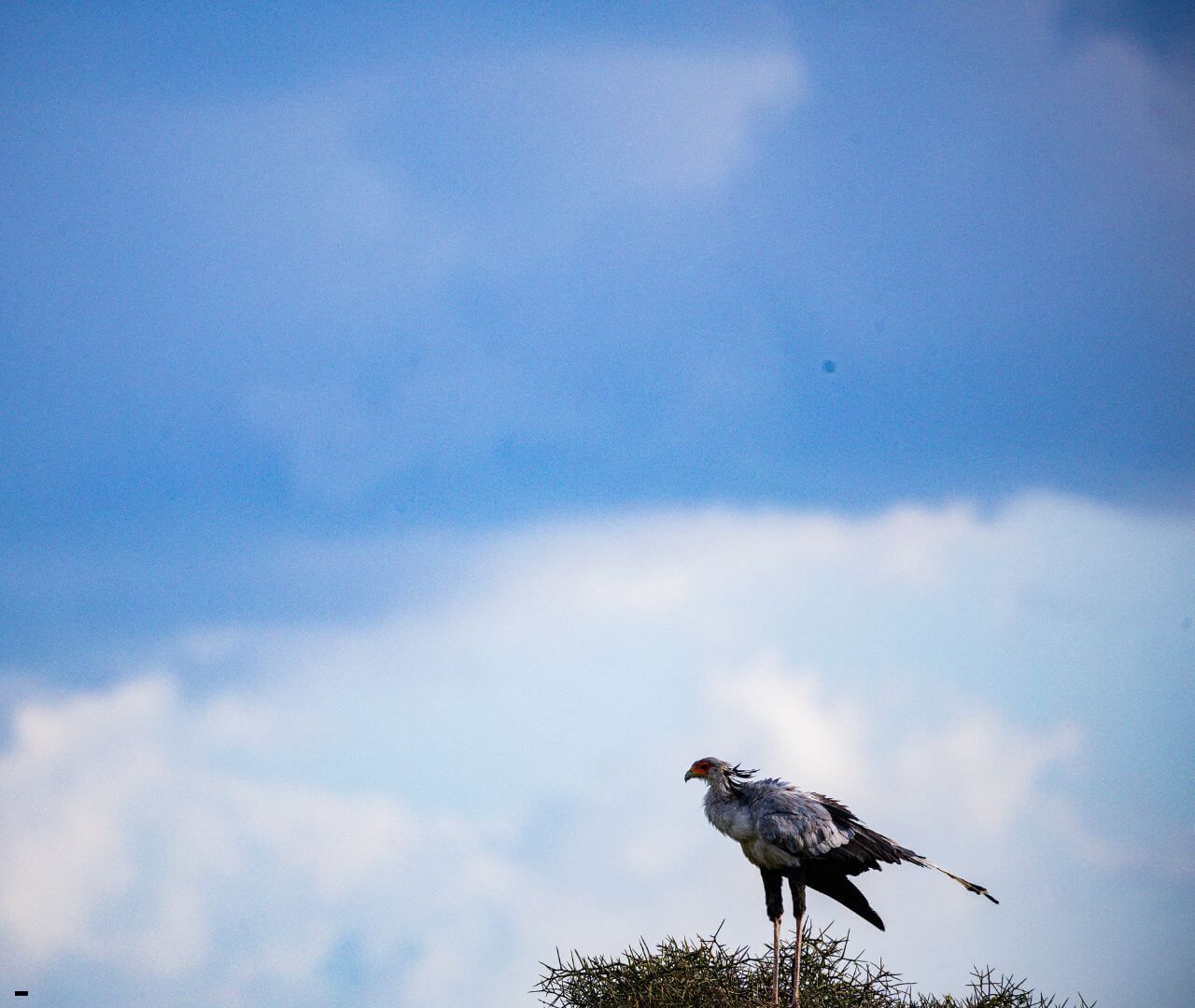
Scientists from BirdLife and other organizations have several research projects. They want to learn exactly where secretarybirds hunt and nest. They gather information in two ways. Scientists place trackers on secretary birds to track their movements. They also encourage local people to record any secretarybird sightings. Working with local communities has many benefits. It is easier and cheaper than placing trackers. It helps scientists gather data from different areas. It also educates and inspires local people to care for native wildlife.
With this new information, scientists can accurately estimate secretarybird population sizes. They can also focus on protecting the areas where they hunt and nest. They don’t have to waste resources on areas that are not as important to secretarybirds. With this new information, it will be easier to protect secretarybirds and their habitat for years to come.
Secretarybird Structures
Match each secretarybird body part to its purpose.
Secretarybird Challenge
Comparing Secretarybirds and Eagles
Learn More!
Glossary
Bird of Prey
A group of carnivorous birds with sharp, hooked beak and talons.
Carnivore
An animal that eats primarily meat.
Competition
An interaction between organisms where both are working to obtain the same resource.
Conservation
The act of preserving the environment.
Crest
[For birds] Head feathers used for communication, distraction, or another purpose.
Diurnal
To be most active during the daytime.
Endangered
An organism that is threatened with extinction.
Fledge
[For bird chicks] To develop flight feathers and the ability to fly and live independently.
Habitat Loss
When habitats are destroyed or changed into human-managed land such as farms or cities.
Incubate
To warm an egg or chick by sitting on them in the nest.
Monogamous
Having one mate per breeding season.
Pellet
[For owls, secretarybirds] Regurgitated bundle containing the indigestible parts of prey.
Predator
An animal that hunts other animals for food.
Prey
An animal that is hunted and eaten by another animal.
Regurgitation
The act of bringing food that was swallowed back up into the mouth.
Roost
When a bird settles in to sleep or rest for a period of time.
Savanna
An ecosystem characterized by having an open tree canopy (where the trees do not touch) and a rainy and dry season.
Species
A closely related group of animals with similar characteristics that are capable of reproducing (example: there is 1 species of gray wolf).
Talon
Strong, claw-like feet of birds of prey used for hunting.
Terrestrial
A plant or animal that lives on land.