
Woodpeckers

Let's Learn About Woodpeckers
Word of the Week
Zygodactyl
[In birds] Zygodactyl feet have two toes that face forward and two toes that face backward. Zygodactyl feet are good for gripping.
Woodpeckers and parrots have zygodactyl feet.
Fast Facts
Where do woodpeckers live?
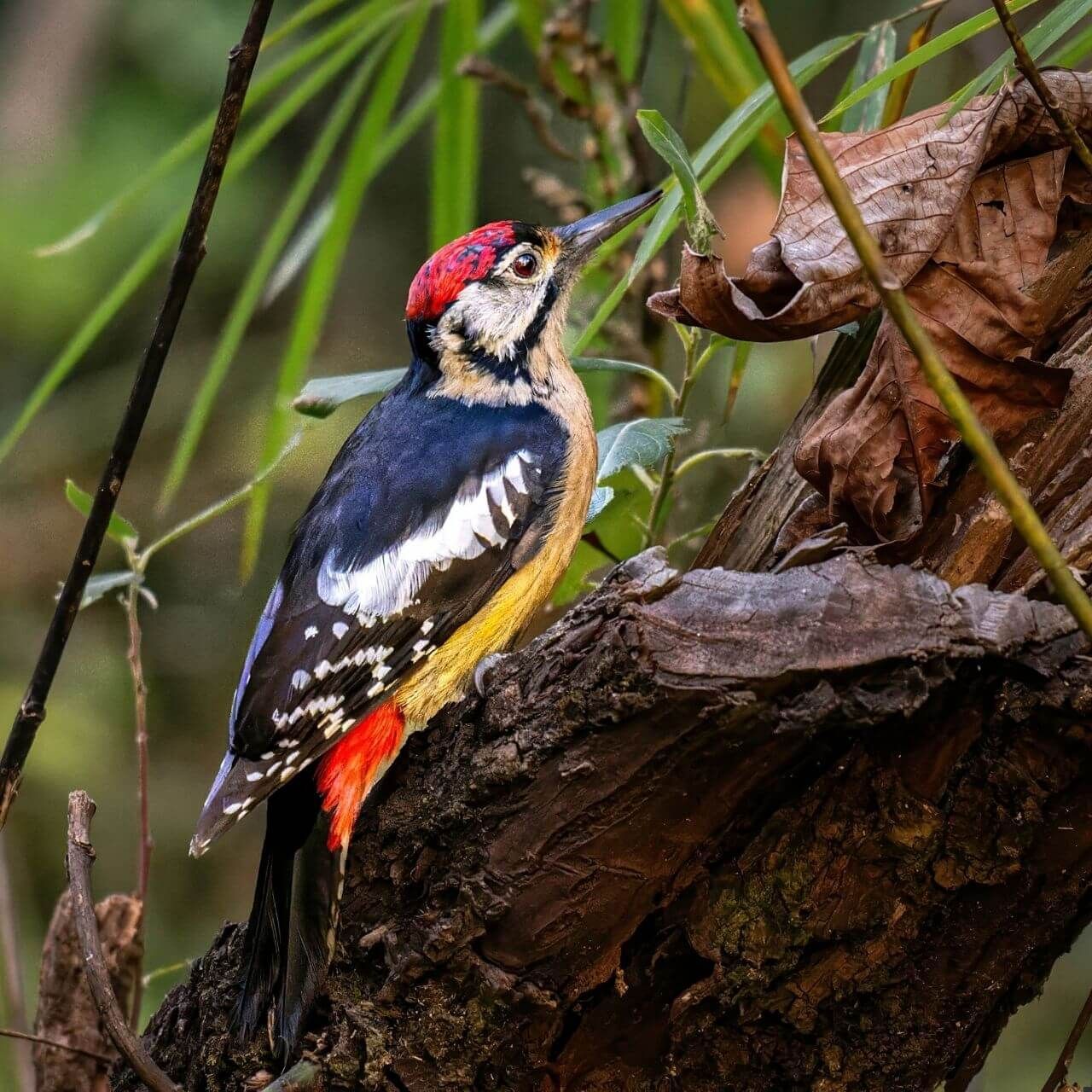
Woodpeckers live on every continent except Antarctica and Australia. They are also not found on many islands, like Madagascar and New Zealand.
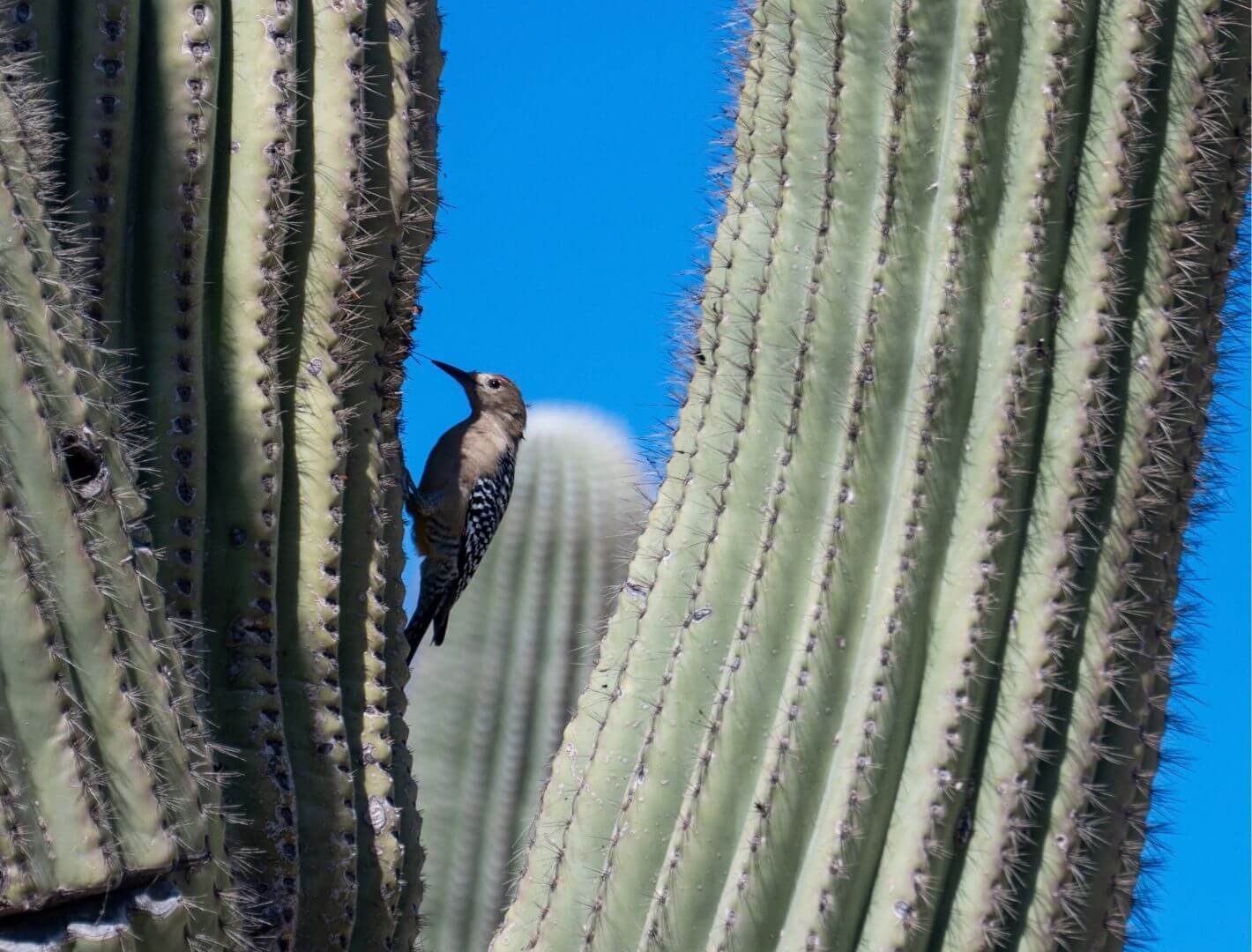
Most woodpecker species live in forests or woodlands. They are common in habitats that have lots of trees. Some unique species, like Gila woodpeckers, are adapted to desert life.
What do woodpeckers eat?
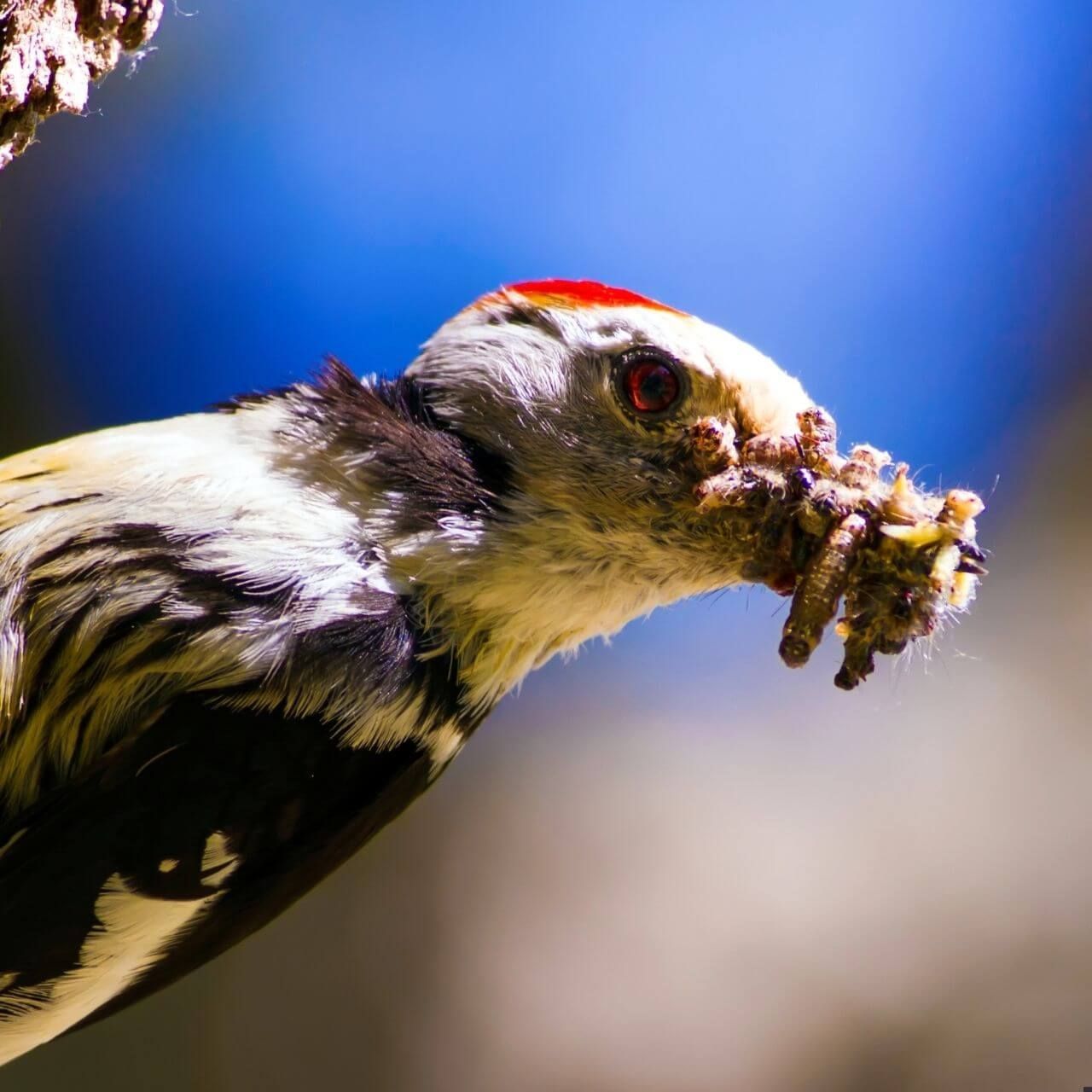
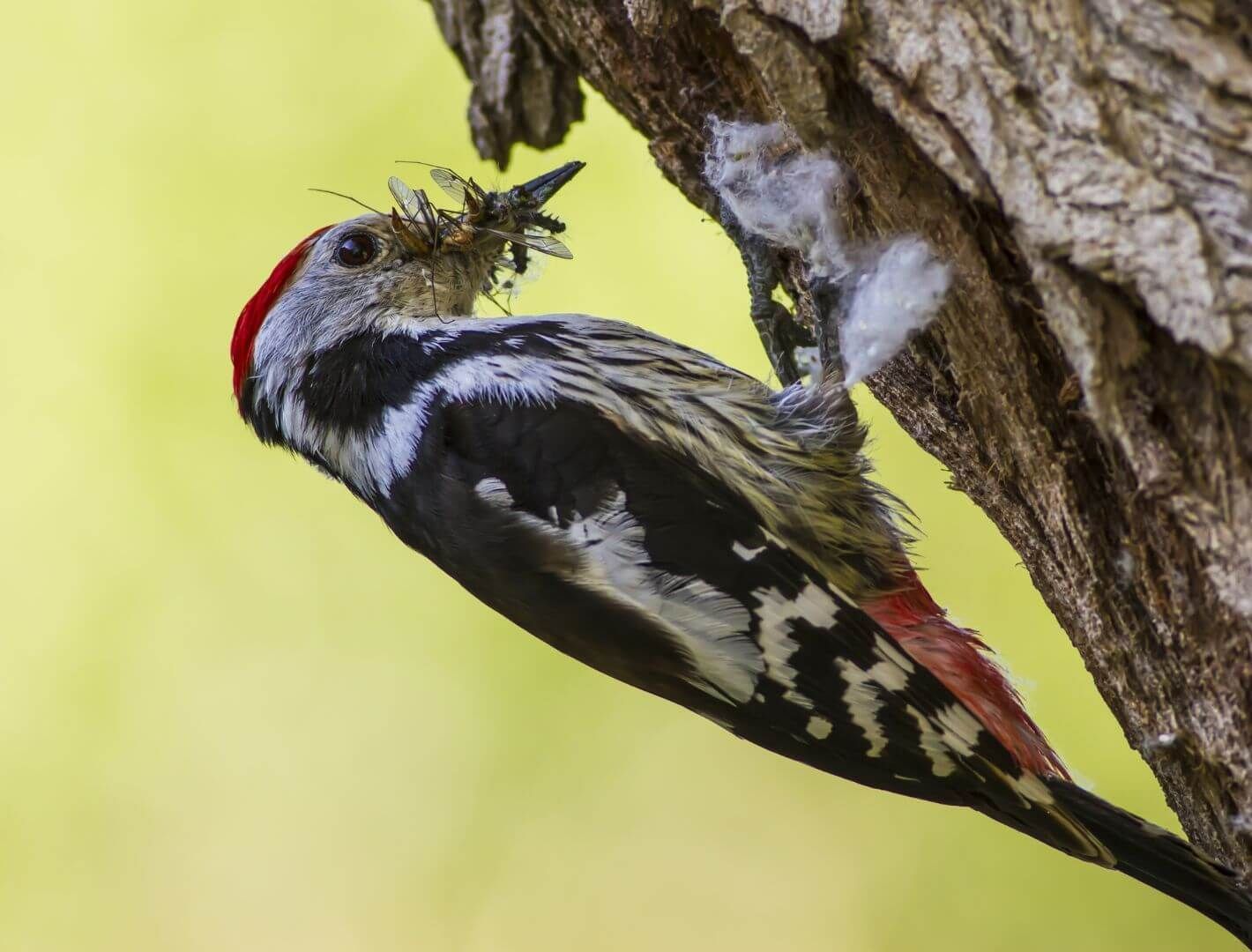
Most woodpeckers are insectivores. They mostly eat insects.
They commonly feed on ants, termites, beetles, and beetle larvae (grubs). Some species also eat fruit, nuts, and small vertebrates, like lizards.
What traits do woodpeckers share?
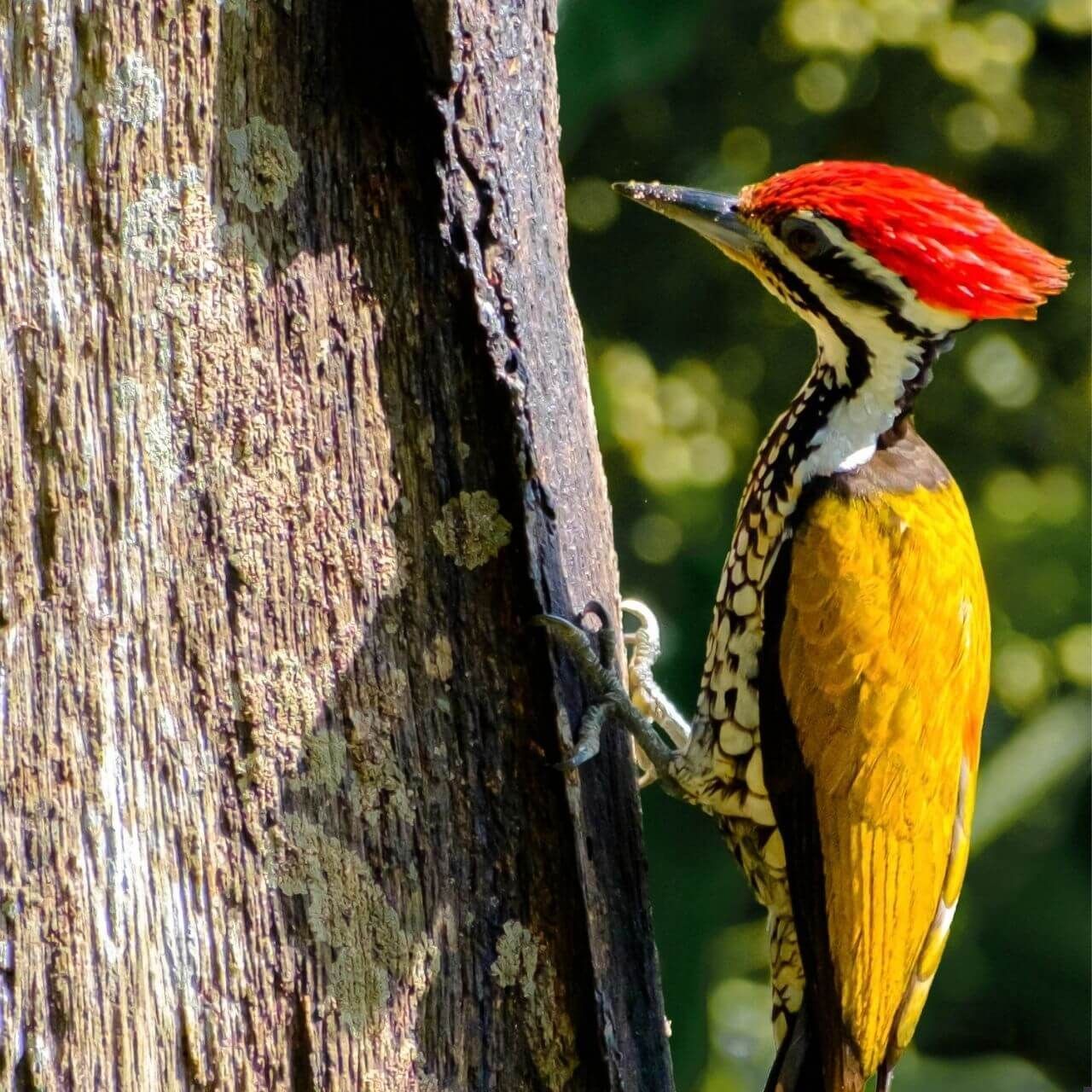
Woodpeckers are a unique group of birds. They share traits, such as...
- A sharp, strong beak for pecking
- Zygodactyl feet for gripping
- A sticky, barbed tongue for grabbing prey
- Nictitating membranes to protect their eyes
How many woodpeckers are there?
There are roughly 200 species of woodpeckers.
Many woodpeckers have healthy populations and are not threatened with extinction. However, some species are endangered due to deforestation. Woodpeckers struggle to find food and nesting sites when forests are destroyed.
Species Spotlight
Gila Woodpecker
Melanerpes uropygialis
Gila [hee-luh] | Saguaro [suh-wahr-oh]
Most woodpeckers live in habitats with lots of trees, like forests or woodlands. They use these trees to find food and build nests. However, some woodpeckers live in other habitats, even in deserts. Deserts have few trees because rainfall is very low. So how does a woodpecker survive there?
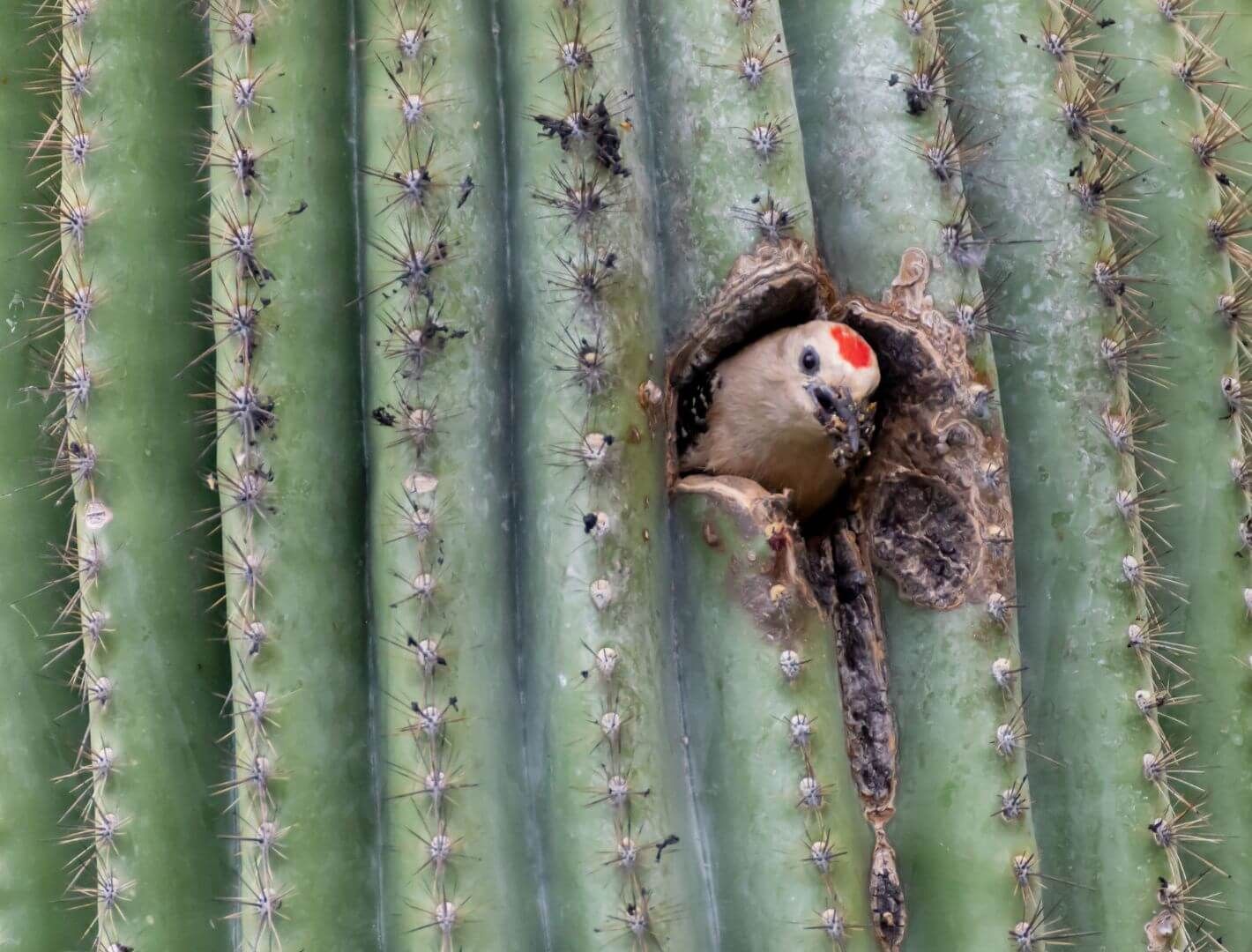
Instead of trees, some deserts have enormous cacti. Saguaro cacti in the Sonoran Desert commonly stand more than 50 feet tall. They are the perfect place for Gila woodpeckers to find food and build a nest. Gila woodpeckers feed on insects hiding on the cacti. They also feed on berries and cactus fruit. Like all woodpeckers, they peck nest holes using their sharp beak.
However, nesting in a cactus is a little different than nesting in a tree. The inside of the cactus is gooey. It can take several months for the cactus to form a hard scab inside the hole. Gila woodpeckers must wait for the scab to form before they lay eggs. The wait is often worth it. Gila woodpecker eggs and chicks are especially protected from predators. Imagine how challenging it would be for a predator to climb a giant cactus!
Once the chicks leave the nest, other animals use the hardened cavity. Songbirds, kestrels, and even the world’s smallest owl, the elf owl, use Gila woodpecker holes. When the cactus eventually dies, the soft, gooey parts decompose. The hardened woodpecker nest remains. It often looks like a shoe, earning it the name “cactus boot.”
BRAIN BLAST
Research saguaro cacti and determine what other animals use Gila woodpecker nests.
Conservation Corner
How Saving a Flower Can Save a Woodpecker
Imagine trying to protect an endangered animal. One of the first things you will need to do is make their habitat healthy. Without a healthy habitat, the animal cannot find food or shelter. The habitat will be better for your endangered animal once native plants regrow, and rivers and streams are cleaned. Amazingly, that animal is not the only one that will benefit!
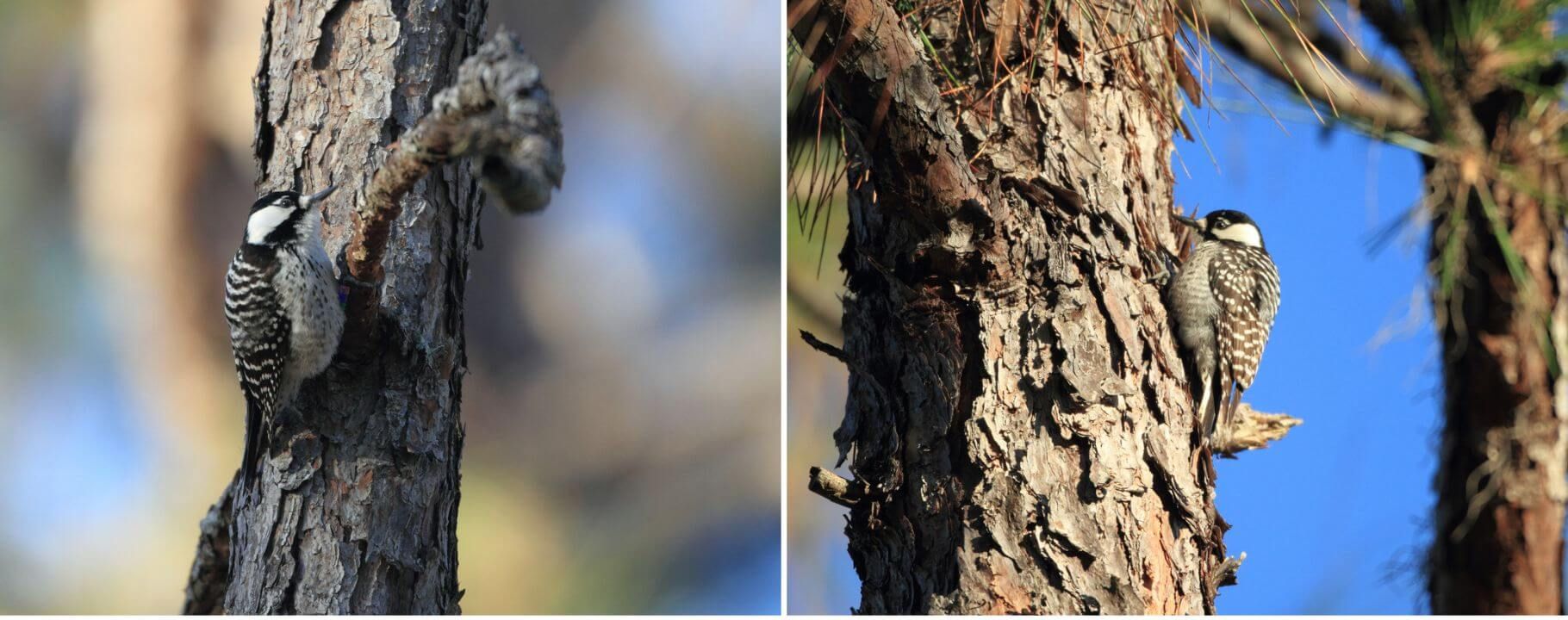
For the endangered red-cockaded woodpecker, this may be the key to their survival. The red-cockaded woodpecker prefers forests with sparse, spread-out pine trees. In the 1900s, companies turned their forests into pine tree plantations. Many animals and small plants could not survive in the now dense forest. The red-cockaded woodpecker disappeared completely from the area in 1994.
Over the years, the pine tree plantations were cut down for paper and lumber. The forest thinned out. Then, in 2017, a scientist was exploring a part of the forest and discovered an endangered flower. It was a beautiful orchid that now had enough sunlight to grow. The government protected the small patch of forest. The area would remain thinned out so the orchid and other plants could regrow.
But the orchid was not the only species that benefited from the newly protected forest. Native birds slowly returned. Scientists started devising a plan to reintroduce the red-cockaded woodpecker to the forest. It would not be easy. They would need to add nest boxes for the woodpeckers to use until they can create their own. They hope that the woodpeckers will return to the forest by 2028. The forest will fill again with sounds of woodpeckers pecking, all thanks to protecting an orchid flower.
City skyline
Woodpecker Wordsearch
Use the hints to complete the woodpecker wordsearch.
Woodpecker Challenge
Communicating With Drumming
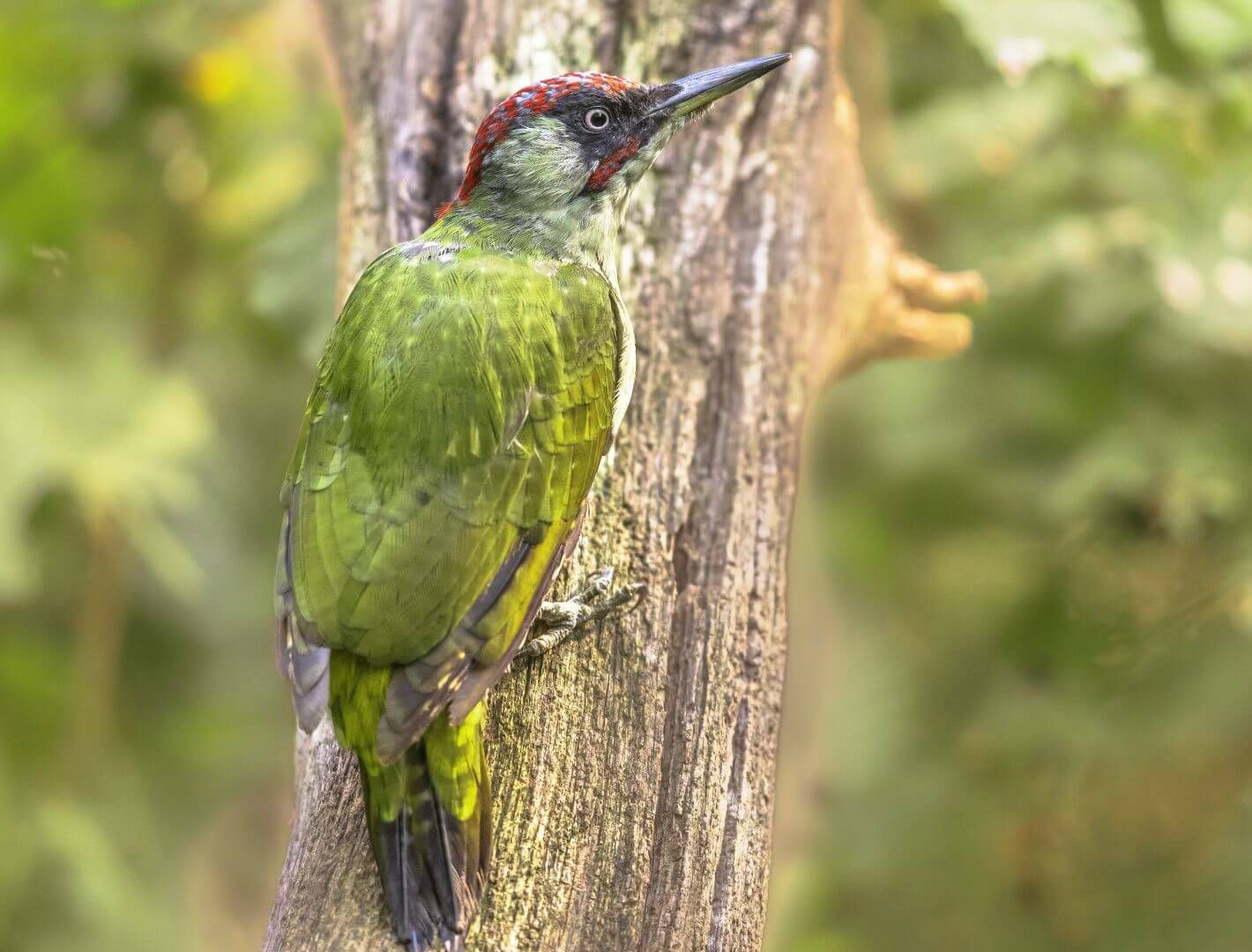
Woodpeckers peck for many reasons. They peck to find food, build nests, and communicate. In this challenge, you will explore how woodpeckers use drumming sounds to communicate.
Learn More!
Glossary
Adaptation
The process by which a species becomes more fit for its environment over the course of several generations. It is a result of natural selection.
Barb
A sharp object with backward-facing spines that make it challenging to pull out once pierced through another object.
Beak
The extended jaw of a bird (also known as a bill).
Cooperative Breeding
Occurs when one pair breeds and other family members help feed and protect the offspring.
Deforestation
The process of removing trees by cutting them down to use their wood or burning them to make room for something else.
Granary
[In zoology] A structure built or used by animals to store seeds or nuts.
Insectivore
Diet consisting primarily of insects, like an anteater!
Monogamous
Having one mate per breeding season.
Predator
An animal that hunts other animals for food.
Prey
An animal that is hunted and eaten by another animal.
Shelter
A structure that provides animals with safety from predators, bad weather, or other dangers.
Solitary
To live alone.
Species
A closely related group of animals with similar characteristics that are capable of reproducing (example: tigers).
Territorial
Referring to an animal that defends an area (its territory) from other members of its species.
Tree Cavity
A hole in a tree trunk, typically formed by a pecking bird or a fallen branch.
Zygodactyl
[In bird feet] Having two middle toes face forward and two outside toes face backward. Zygodactyl feet are good for gripping.