
Barracudas

Let's Learn About Barracudas
Word of the Week
Opportunistic Predator
Opportunistic predators prey on any animal that is available and easy to catch. They often eat a wide variety of species. Their diet changes based on which animals are available to eat at any given time.
Barracudas, wolves, and hyenas are all opportunistic predators.
Fast Facts
Where do barracudas live?
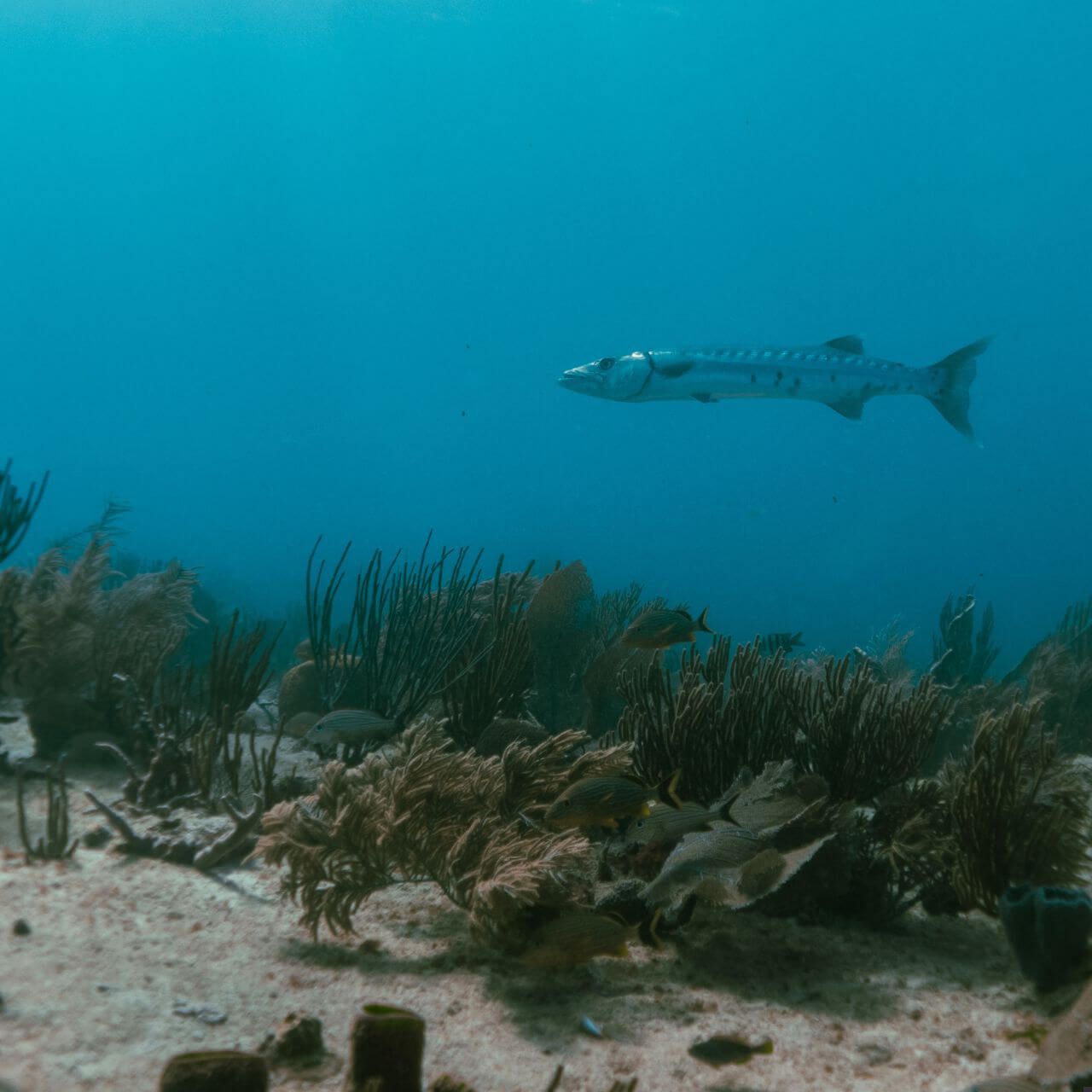
Barracudas live in tropical and subtropical oceans all around the world.
They live in seagrass beds and mangrove forests when they are young. They move to coral reefs in deeper water when they get larger.
What do barracudas eat?
Barracudas are carnivores. They eat meat.
Barracudas mostly eat fish. They eat jacks, groupers, snappers, and other similar fish. They also eat small schooling fish, such as anchovies and herring.
What traits do barracudas share?
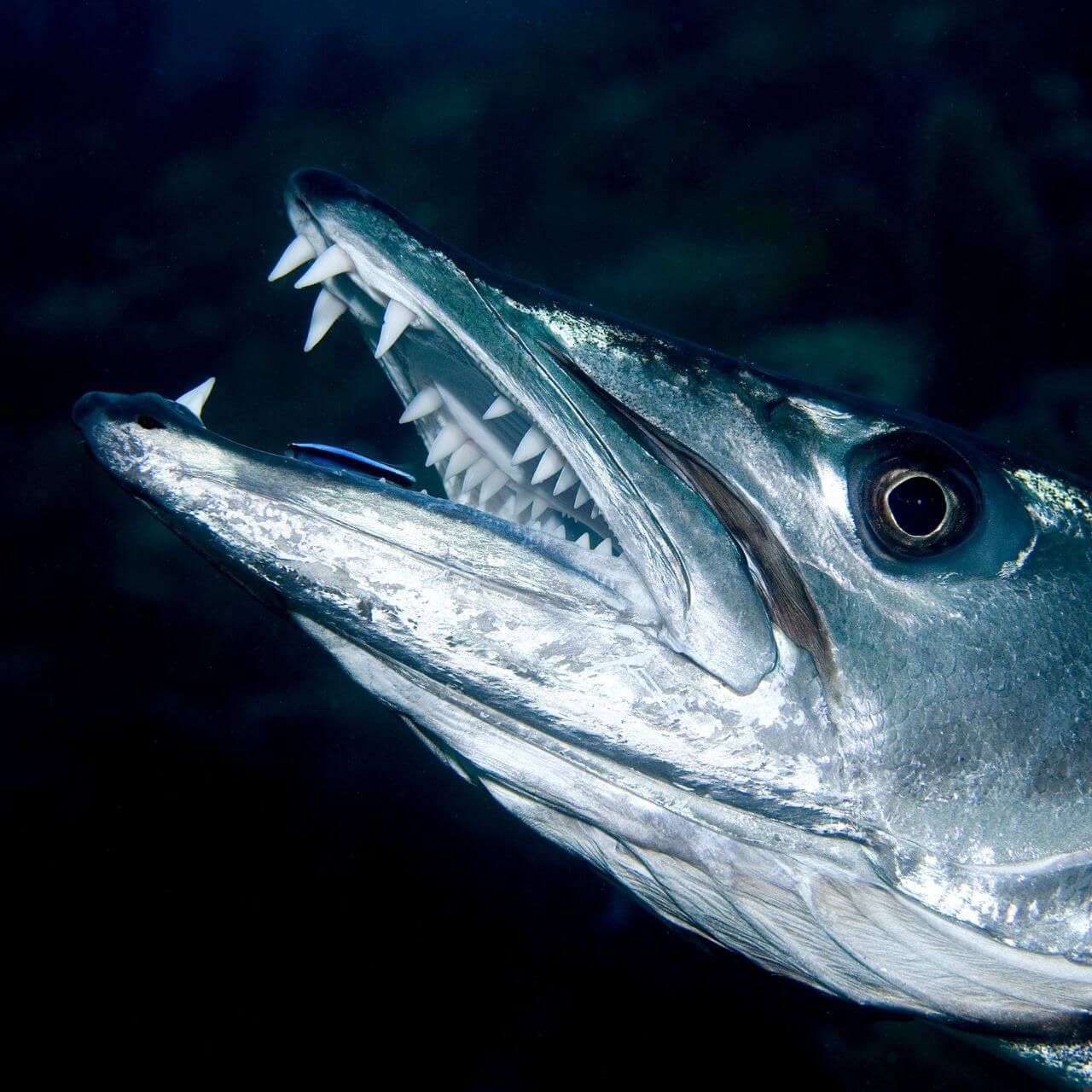
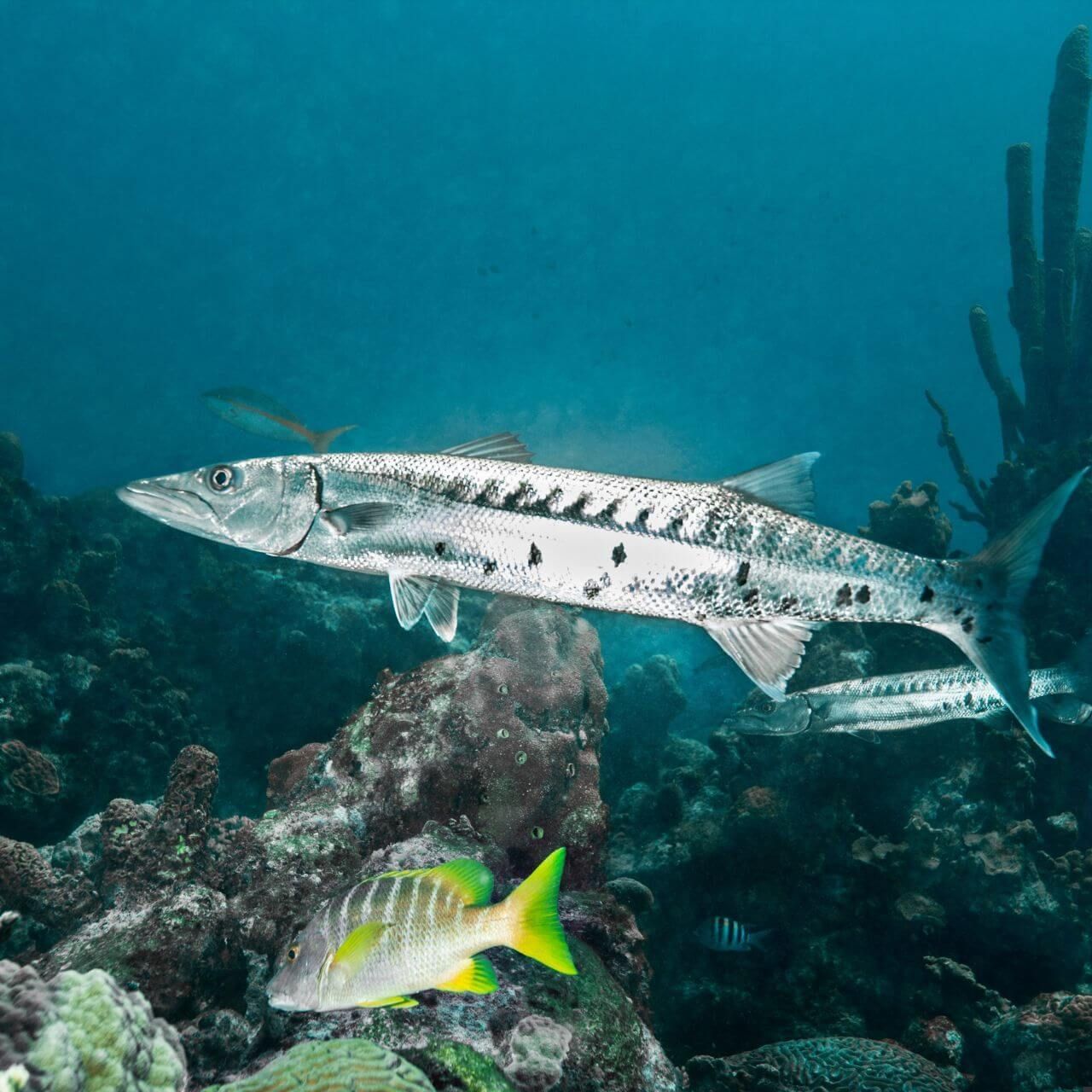
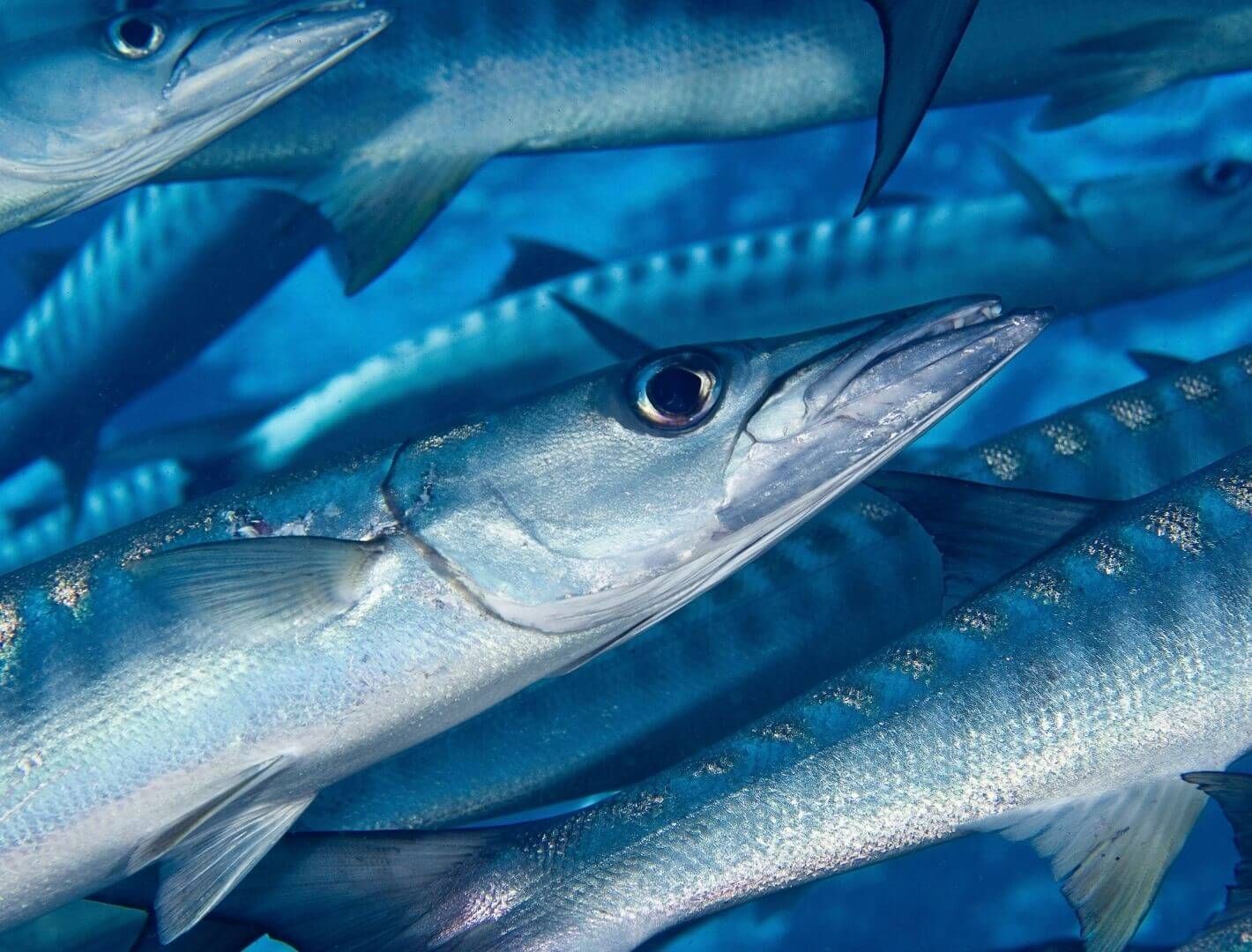
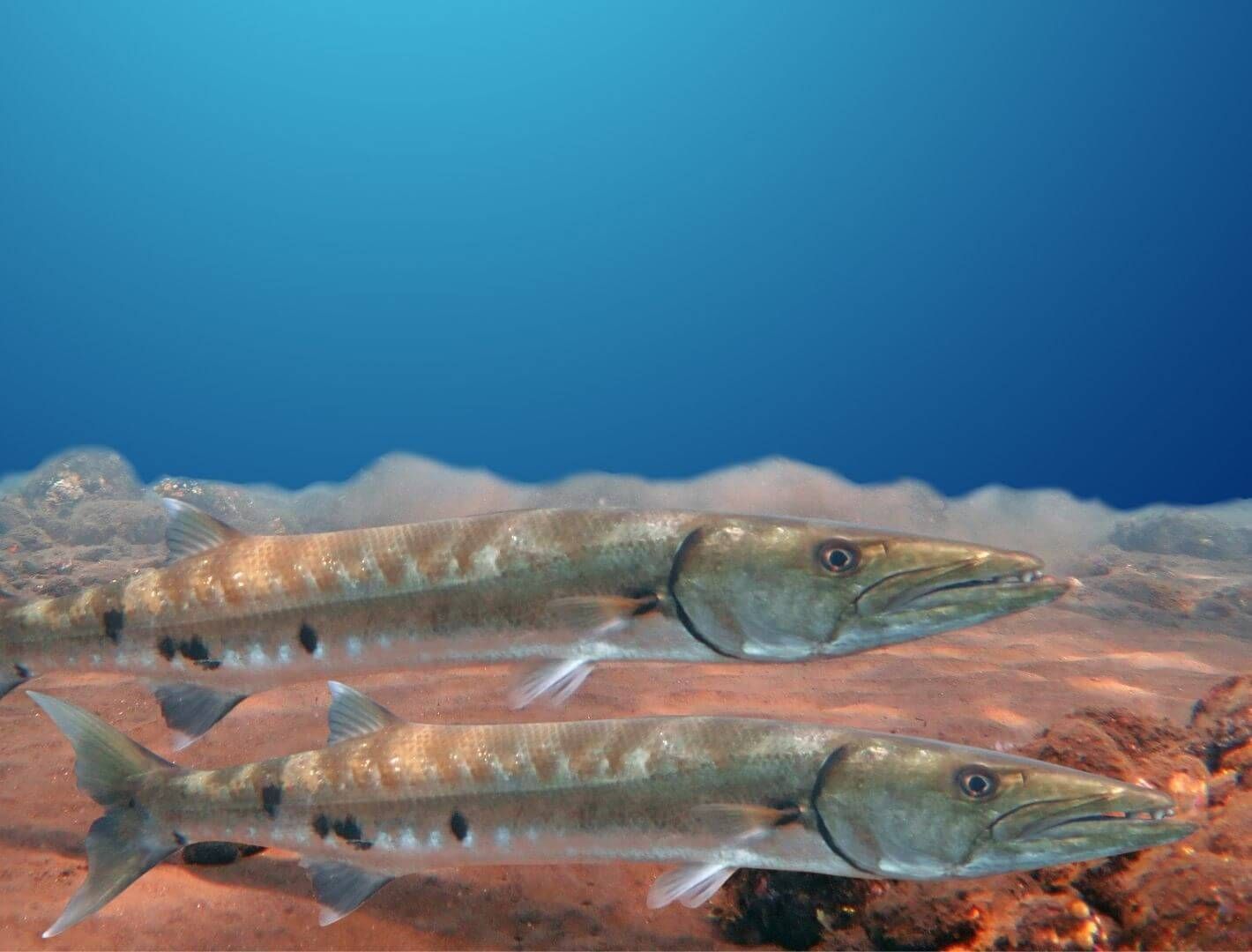
Barracudas have many traits in common, such as...
- Narrow, streamlined bodies
- A pointed snout
- Sharp, unevenly sized teeth
- A muscular body capable of swimming at high speeds
How many barracudas are there?
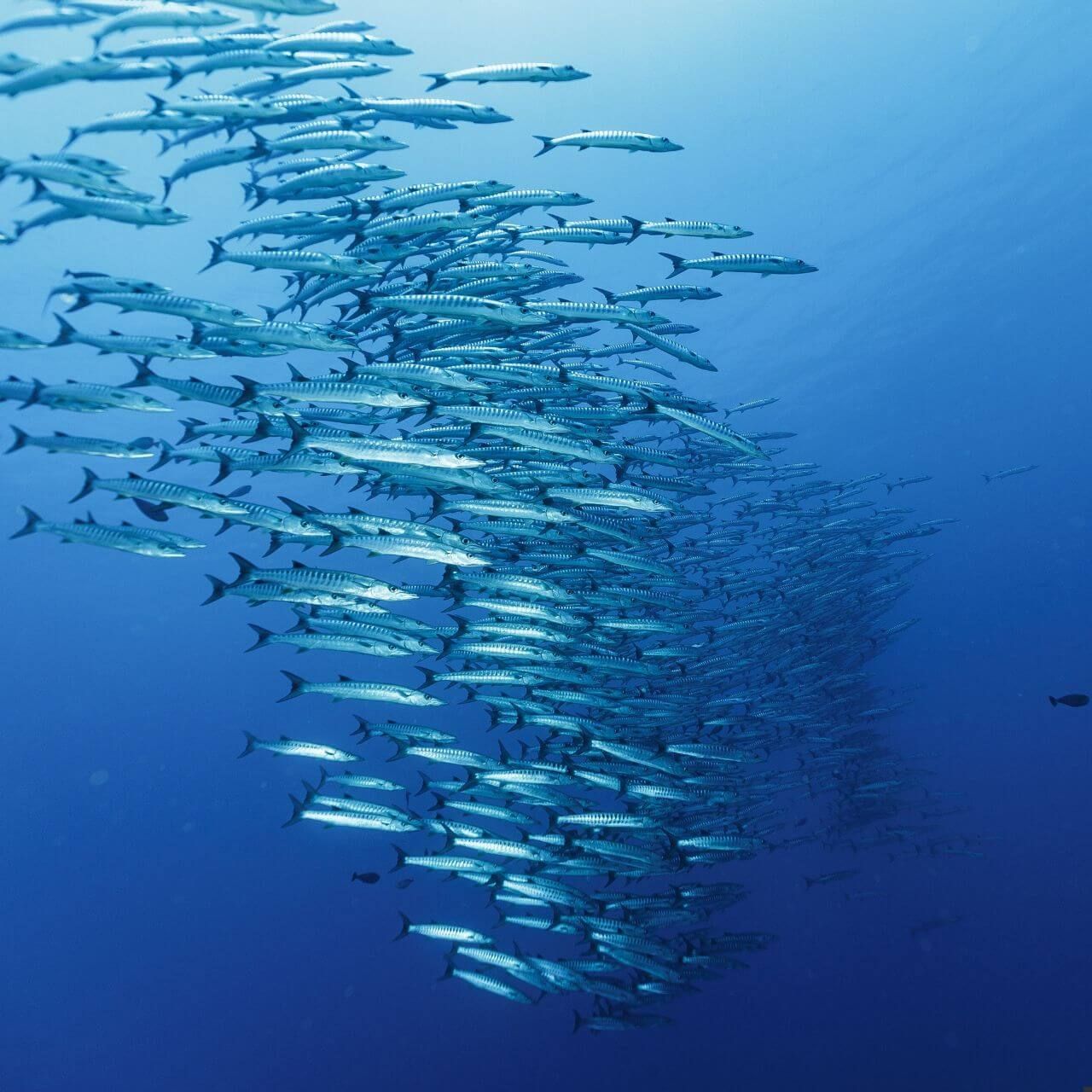
There are between 20 and 30 species of barracudas.
Most barracudas are not endangered. They face similar threats to other coastal fish, like habitat loss and overfishing. Marine Protected Areas (MPAs) have been created in many of the regions barracudas inhabit. Learn more in the Conservation Corner below.
Species Spotlight
Great Barracuda
Sphyraena barracuda
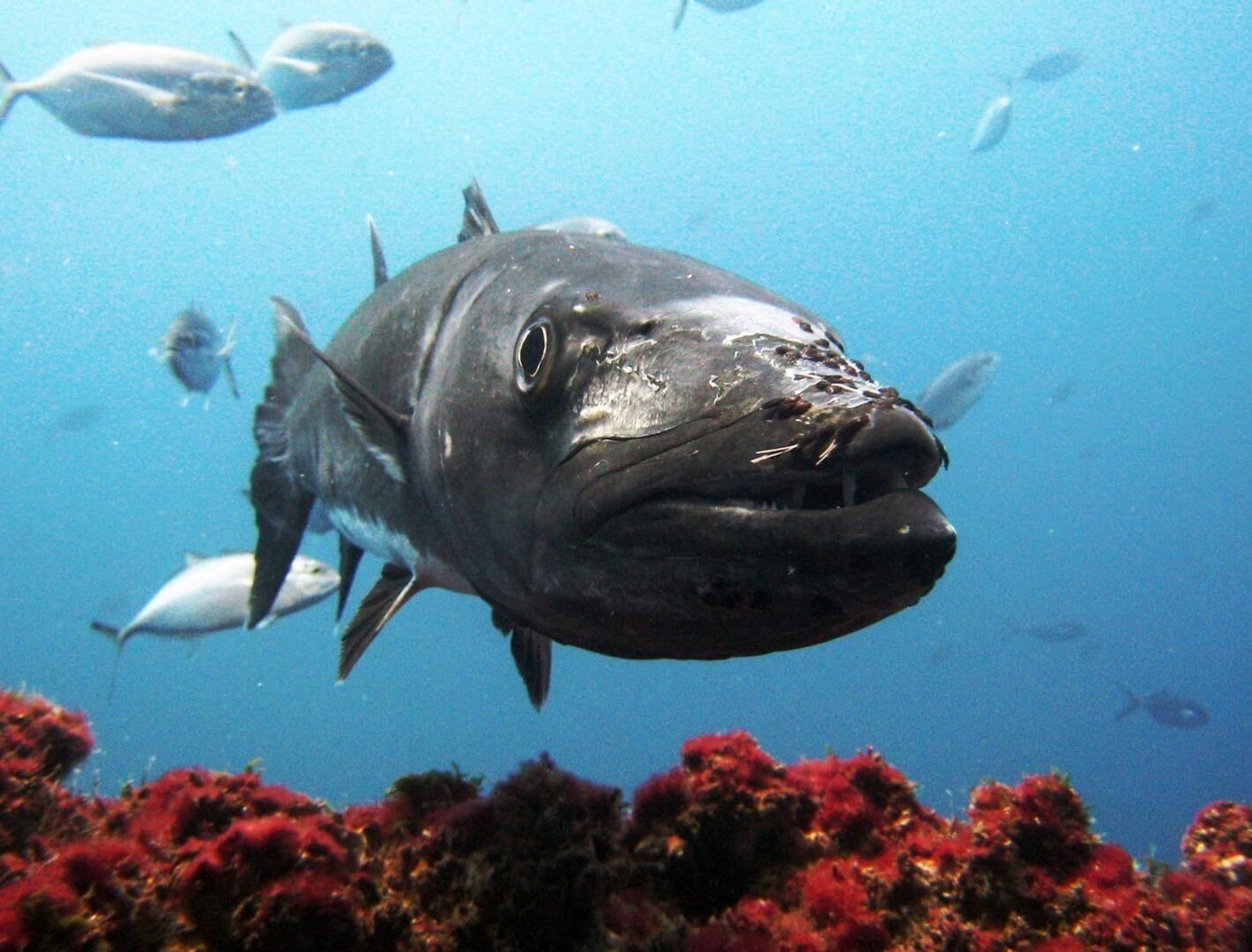
Animals with “great” in their name are usually large in size. For example, great apes and greater flamingos are some of the largest of their kind. The great barracuda got its name for being one of the largest barracuda species. The largest great barracuda on record was more than 5 feet long and weighed more than 100 lbs.
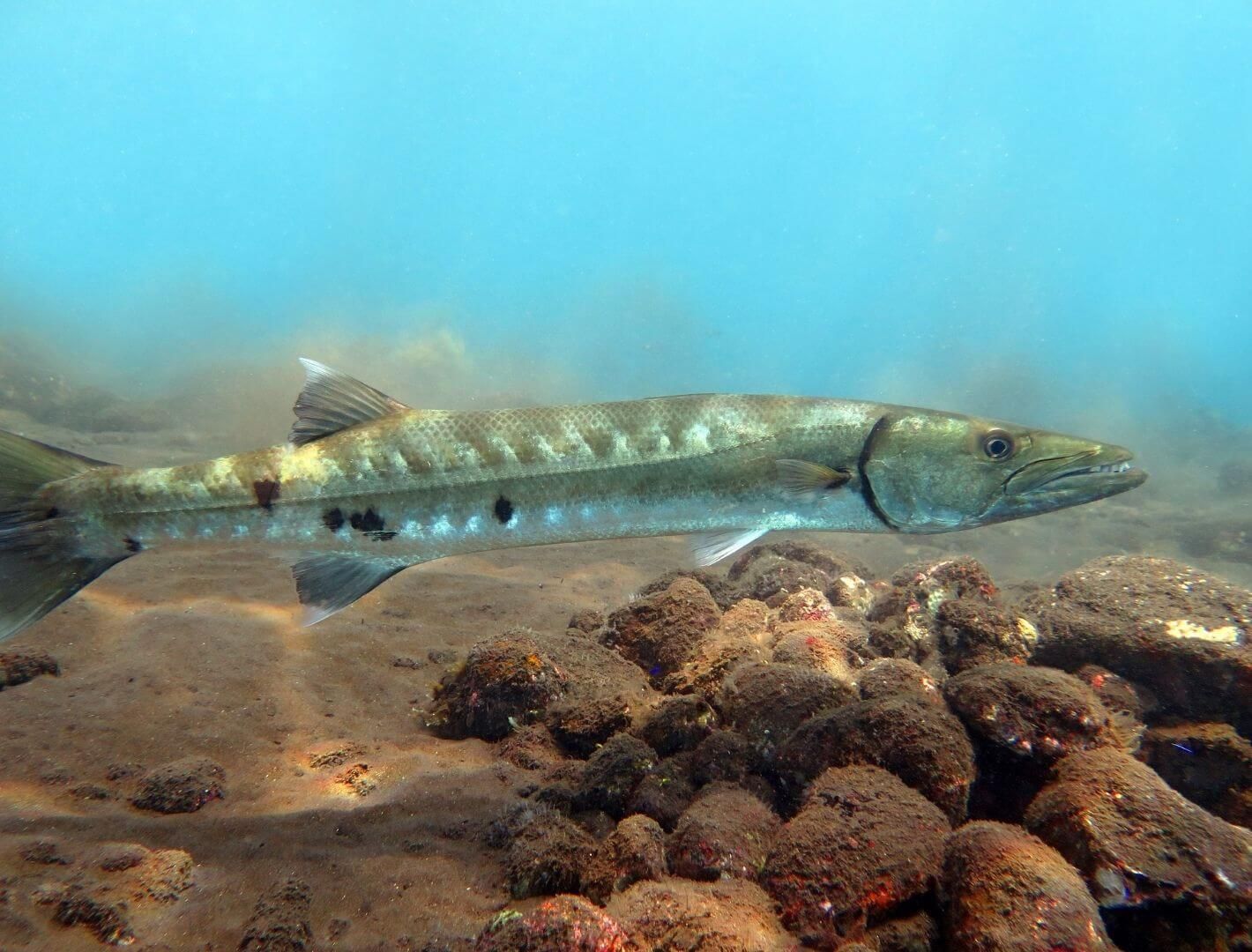
Other than being especially large, great barracudas are similar to other barracuda species. Like all barracudas, the great barracuda has a narrow, streamlined body. They also have a pointy snout. Their lower jaw is longer than their upper jaw, which shows off their sharp, pointy teeth. Their teeth easily grab and slice through prey.
Great barracudas feed on many species of fish. They eat jacks, groupers, tuna, and small schooling fish, like anchovies. They are an apex predator once they reach adult size. This means they are at the top of the food chain. However, young barracudas are vulnerable to predators. They are eaten by sharks and other large fish. They hide from predators in seagrass beds and mangrove forests. As they grow, they move into open water. They eventually settle in deeper reefs where they spend their adult life.
Conservation Corner
Marine Protected Areas (MPAs)
Most barracuda species are not endangered. However, they face many of the same threats that other fish face. One of their main threats is habitat loss. Barracudas live in mangrove forests, seagrass beds, and coral reefs. These habitats are being destroyed in many parts of the world. Barracudas are also threatened by overfishing. They are captured for sport and food.
There are few conservation projects specifically focused on barracudas. However, many conservation projects work to stop habitat loss in coastal ecosystems. Other projects focus on stopping overfishing of all fish species in the region. These projects protect barracudas and all of the animals in the area.
One of the best ways to protect ocean habitats is to create Marine Protected Areas (MPAs). MPAs limit or prohibit fishing and harmful boat activities. Many countries create MPAs around mangrove forests, seagrass beds, and coral reefs. Protecting the habitat protects all animals in the region, including barracudas. Scientists are currently working to learn about where barracudas travel so new MPAs can be created in those areas.
Barracuda Challenge
Exploring Barracuda Hunting Adaptations
Learn More!
Glossary
Adaptation
The process by which a species becomes more fit for its environment over the course of several generations. It is a result of natural selection.
Ambush
The act of sneaking up on prey.
Bycatch
The accidental capture of marine life, typically by unsustainable fishing equipment.
Carnivore
An animal that primarily eats meat.
Fish
A group of ectothermic (cold-blooded) animals that live primarily or entirely in water, have fins instead of limbs, and breathe using gills.
Habitat Loss
Occurs when habitats are destroyed and changed into human-managed land such as cropland, towns, or dams.
Lateral line
A line of sensory receptors on the sides of fish that detect movement, vibrations, and changes in water pressure.
Opportunistic Predator
An animal that preys on any animal that is available and easy to catch.
Plankton
Free-floating (often microscopic) organisms in the ocean or other bodies of water.
Predator
An animal that hunts other animals for food.
Prey
An animal that is hunted and eaten by another animal.
Solitary
To live alone.
Spawn
A type of reproduction that occurs when animals release eggs and sperm into water.
Species
A closely related group of animals with similar characteristics that are capable of reproducing (example: tigers).
Sportfishing
Fishing for large fish for competition or fun.
Toxin
A naturally occurring substance that can harm humans and other organisms.
Tropical
A region near the equator that has warm temperatures year-round.