
Lionfish

Let's Learn About Lionfish
Word of the Week
Spawn
Spawning is a type of reproduction that occurs when animals release eggs and sperm into water.
Frogs, coral, many fish (including lionfish), and other animals spawn.
Fast Facts
Where do lionfish live?
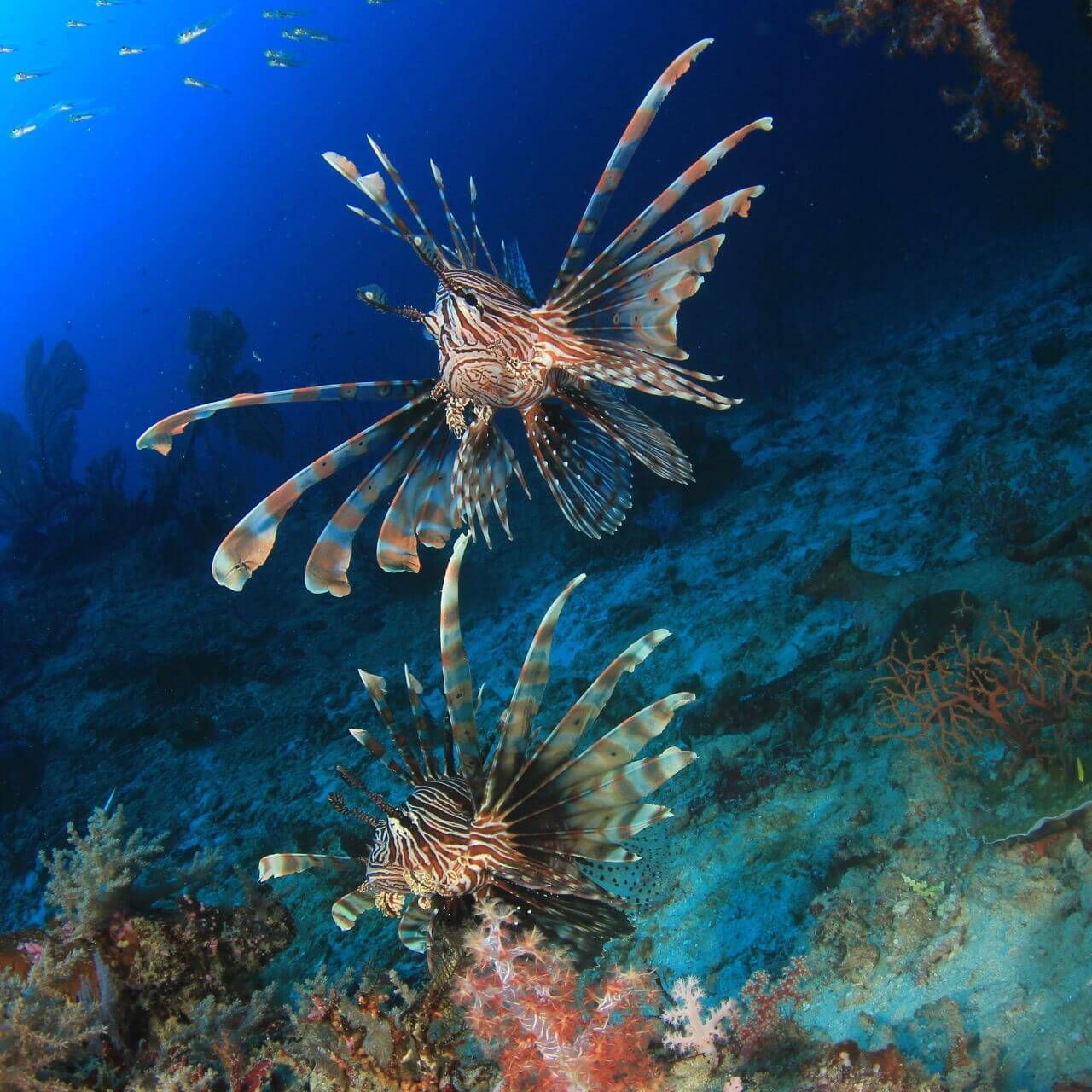
Lionfish are native to the Indo-Pacific. The Indo-Pacific is the tropical region where the Indian Ocean meets the Pacific Ocean.
Lionfish live in coral reefs, lagoons, and rocky areas.
What do lionfish eat?
Lionfish are carnivores. They are meat-eaters.
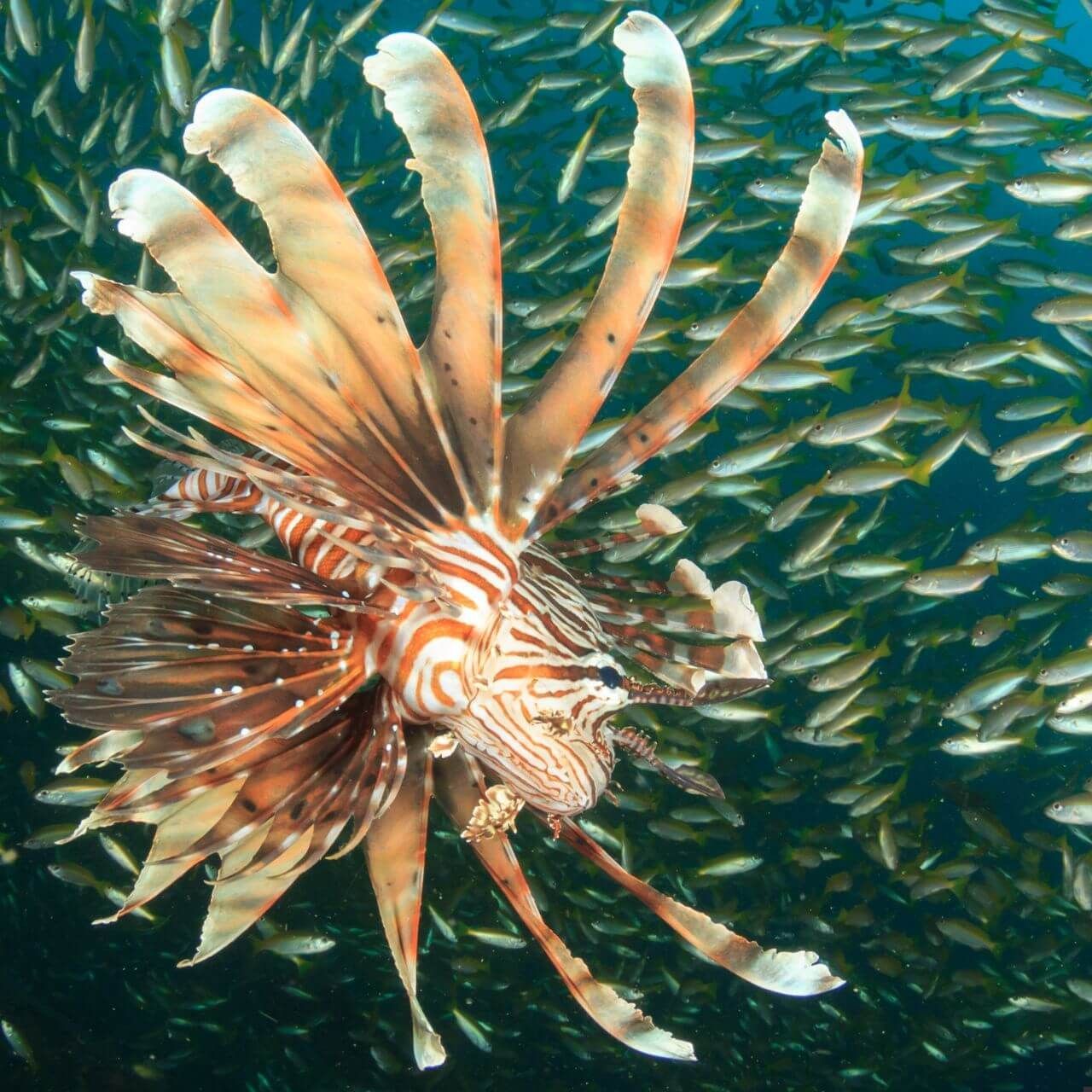
They eat small fish, such as snappers, small groupers, and parrotfish. They also eat animals like shrimp, crabs, octopuses, and more.
What traits do lionfish share?
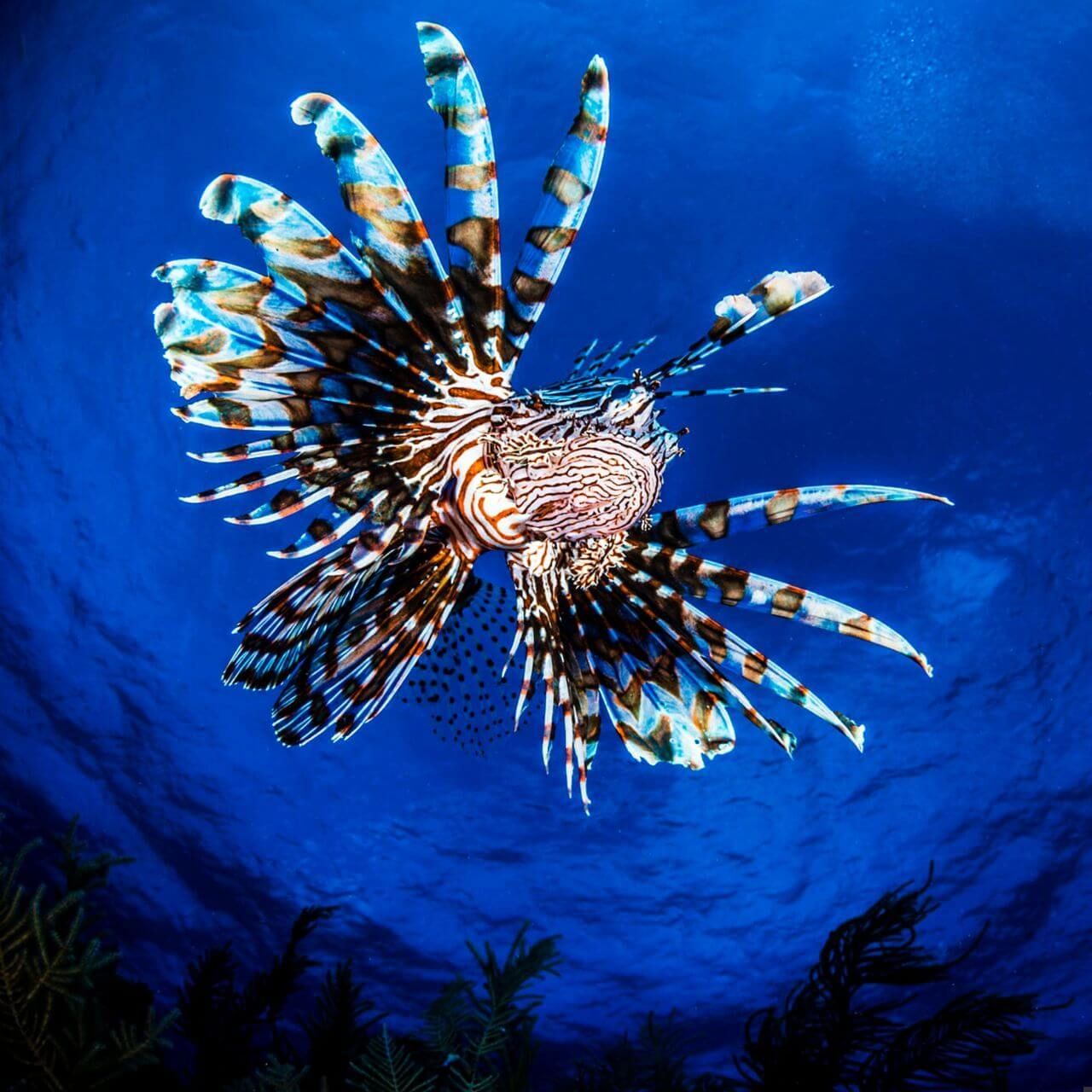
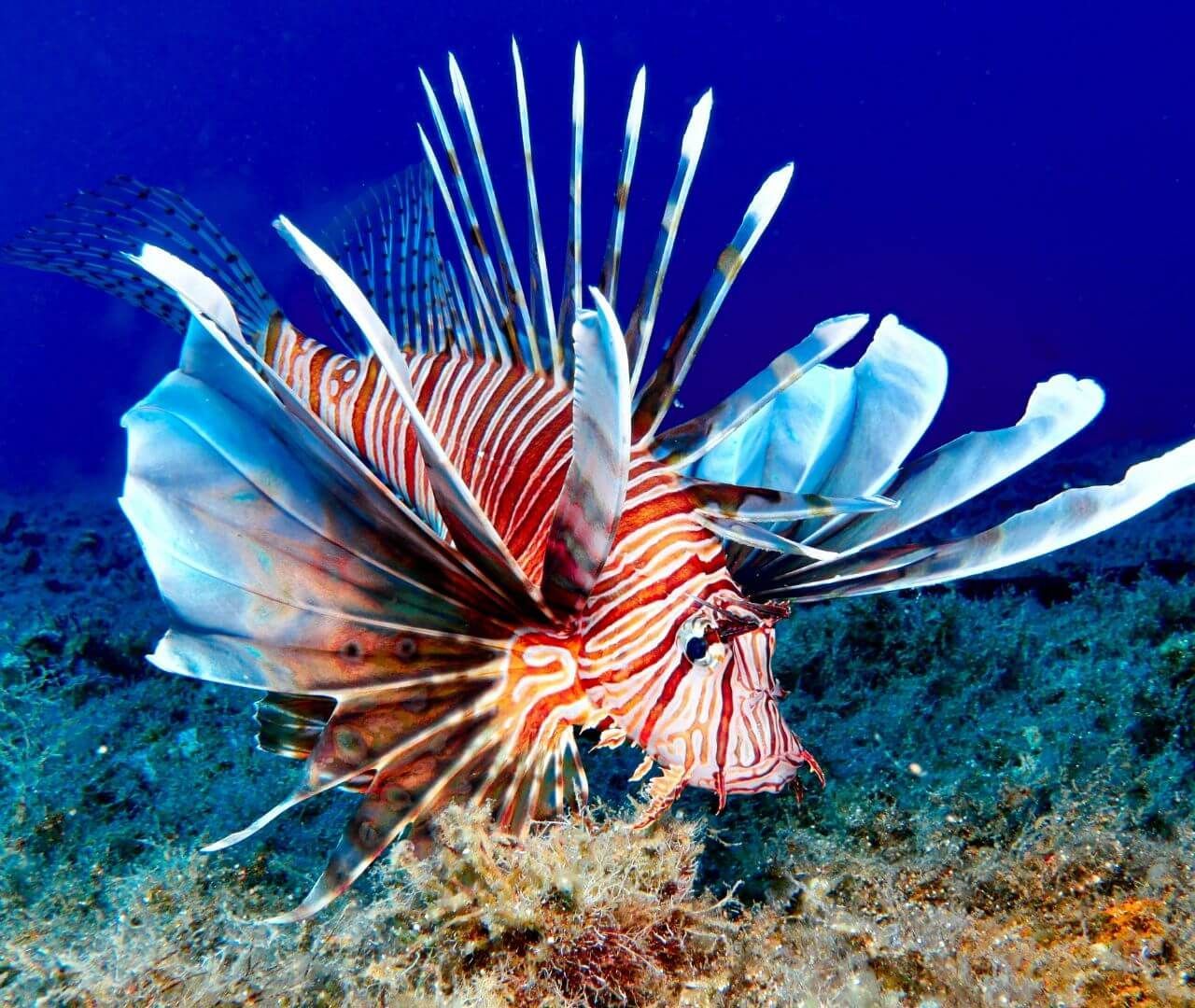
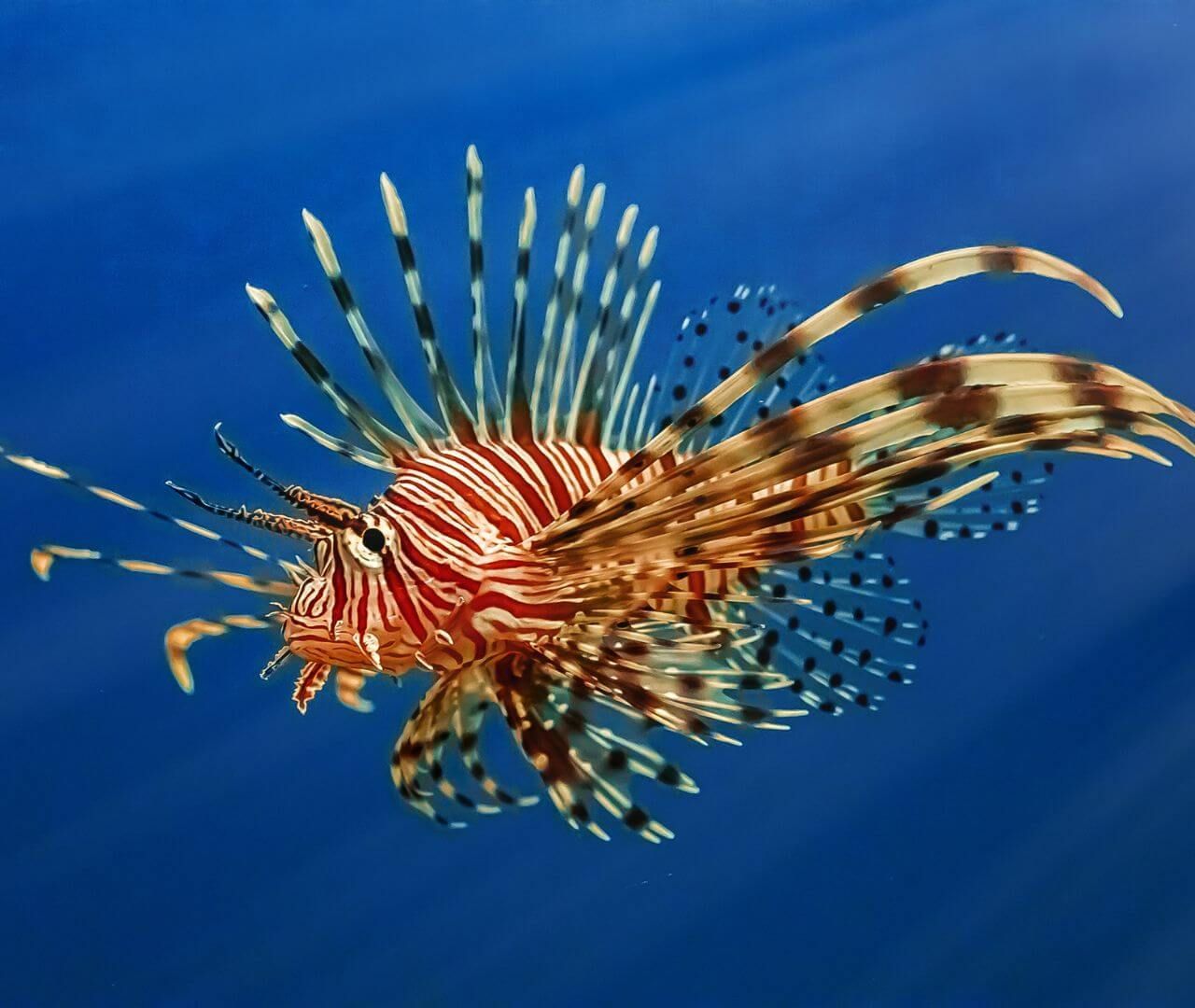
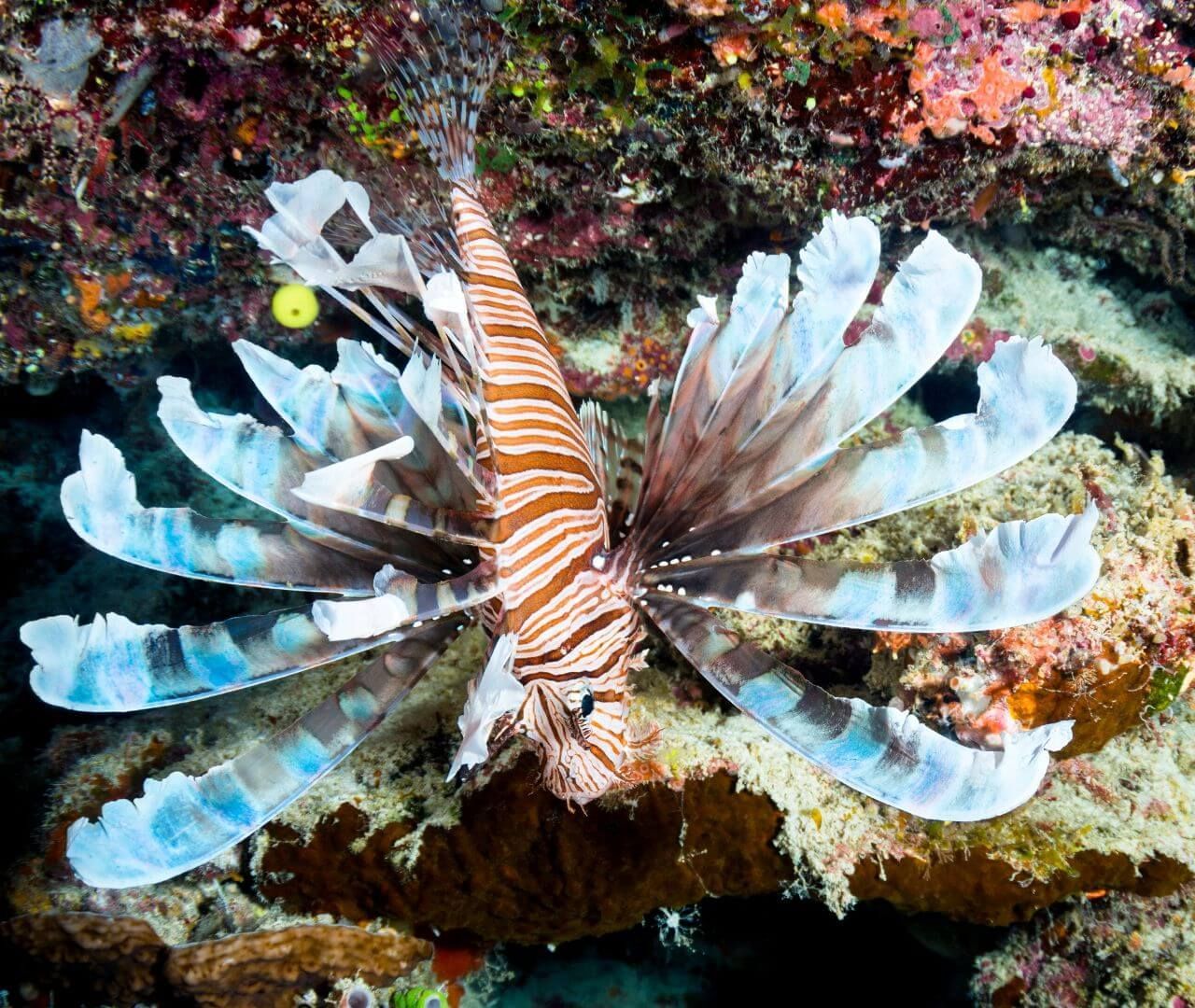
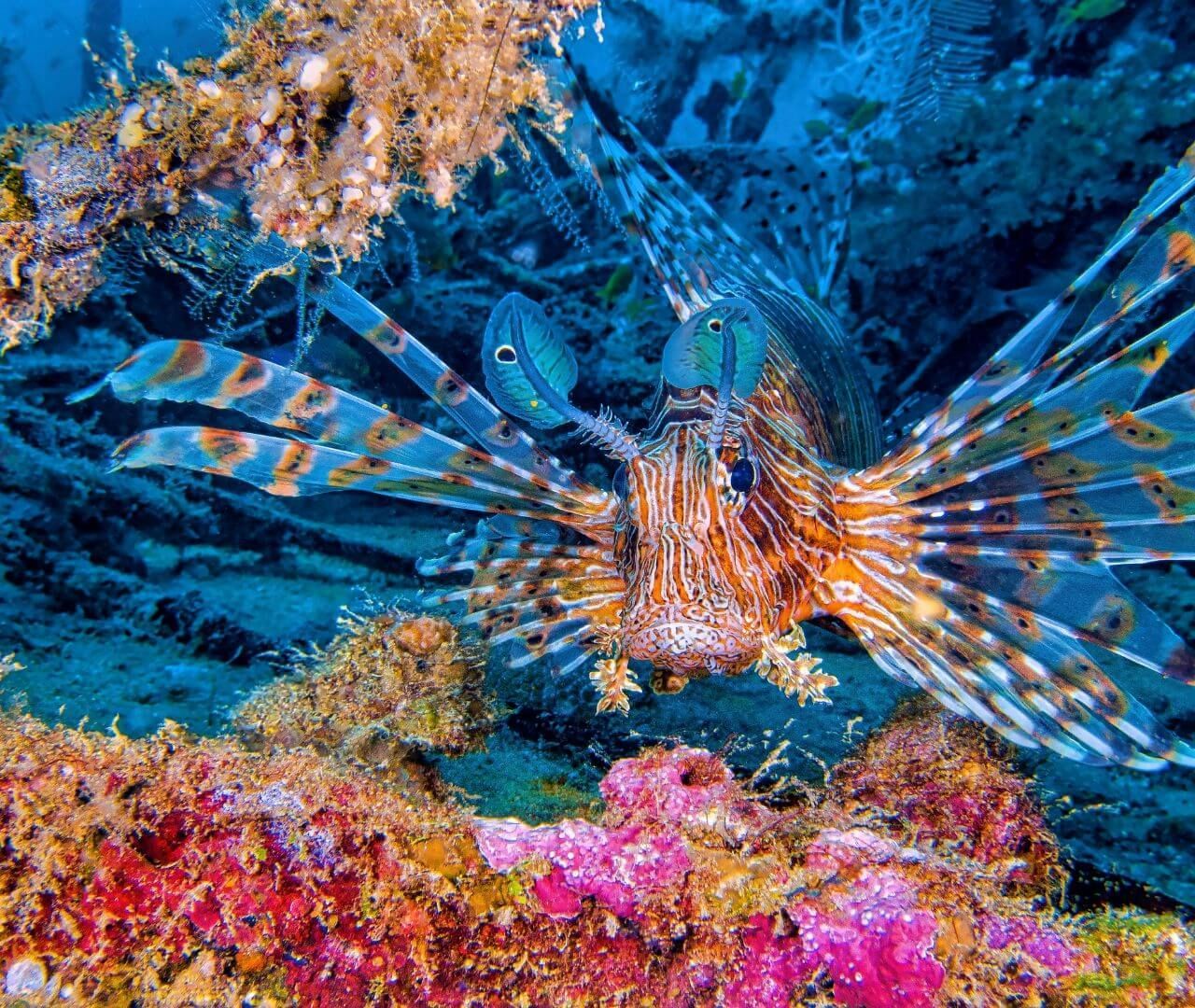
Lionfish have many traits in common, such as...
- Long, fan-like fins.
- Orange or red stripes.
- Venomous spines on their back.
- Tentacles over their eyes.
- A large mouth.
How many lionfish are there?
There are 12 species of lionfish.
Lionfish are not threatened with extinction. In fact, they cause other animals to become endangered in areas where they are invasive. Invasive lionfish feed heavily on native species. Their populations grow quickly because they have few predators and produce thousands of eggs.
Species Spotlight
Red Lionfish
Pterois volitans
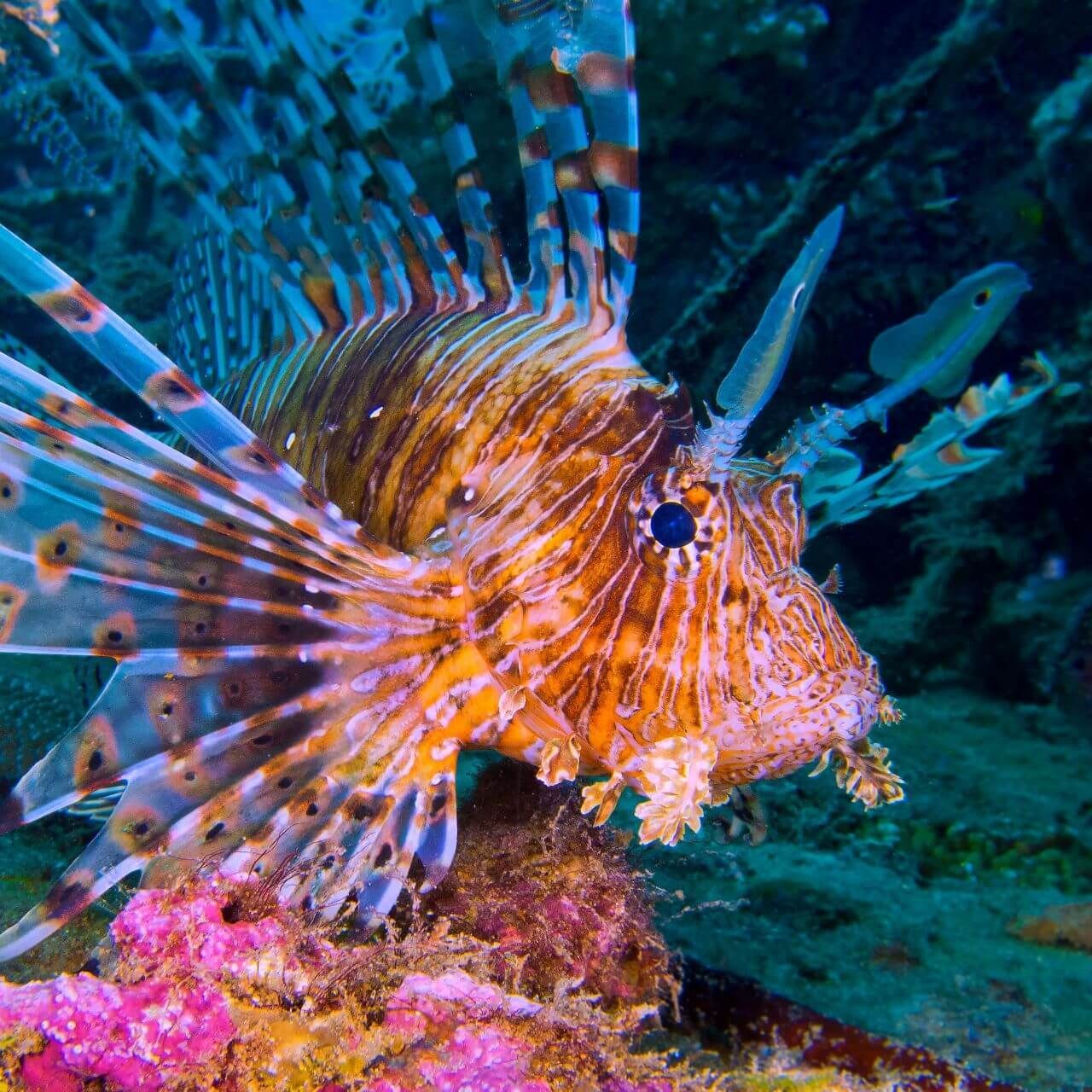
Red lionfish are very impressive. They are one of the largest lionfish species. They grow to 1.5 feet in length. They have long, beautiful fins and a striped body. They have a wide mouth used for sucking in prey. While they may be pretty, they can also be very problematic.
Red lionfish are native to coral reefs and rocky areas in the Indian Ocean and Pacific Ocean. However, in the 1980s, they were spotted on the other side of the world. Red lionfish became invasive in the coral reefs in the Atlantic Ocean near Florida. Scientists believe they were released into the ocean by aquarium owners. It didn’t take long for their populations to grow.
In this new area, few predators could eat them because of their venomous spines. They reproduced quickly and frequently. Their eggs drifted across the Caribbean and up the coast of the United States. Today, red lionfish rule the reefs. They feed on any animal small enough to fit inside their enormous mouth. Dozens of native species are threatened with extinction because of the red lionfish.
However, not all hope is lost. Visit our Conservation Corner to learn more about how scientists are working with local communities to save their reefs.
Conservation Corner
Removing Invasive Lionfish
When swimming in coral reefs near Florida, you will likely see lionfish. In fact, it may be one of the only fish you see. Lionfish became invasive here in the 1980s. They eat native fish, causing many of them to become endangered or leave the reef. Lionfish must be removed to save the reef. In many regions, scientists and local communities work together.
Fishing for lionfish presents two challenges. Catching a fish covered in venomous spines is dangerous. Scientists also had to decide what to do with lionfish once caught. Fortunately, there are solutions to both.
Spearfishing is the safest way to catch lionfish. Spearfishers dive in coral reefs using long, pointed spears to catch lionfish. They slide the lionfish directly into buckets or bags without needing to touch the fish. Though they are dangerous to touch, they are perfectly safe to eat. In fact, many people say lionfish are delicious! Spearfishers make money by selling lionfish meat to markets and restaurants. This encourages people to hunt lionfish. Some regions even have competitions and challenges to remove them.
Some competitions result in thousands of lionfish removed in just a few days. Once lionfish are removed, native species are able to recover. Lionfish removal programs are a great example of how community efforts can save threatened ecosystems.
Lionfish Challenge
Explore a Lionfish's Unique Anatomy
Learn More!
Glossary
Adaptation
The process by which a species becomes more fit for its environment over the course of several generations. It is a result of natural selection.
Aquarium Trade
The buying, selling, and shipping of ocean animals for public or personal aquarium tanks.
Carnivore
An animal that primarily eats meat.
Conservation
The preservation of something.
Coral Reef
An ocean habitat made of many individual corals typically found in warm, shallow waters.
Extinct
A species that once existed that has no living individuals.
Fish
A group of ectothermic (cold-blooded) animals that live primarily or entirely in water, have fins instead of limbs, and breathe using gills.
Gills
The respiratory organ that allows fish, amphibians in their larval phase, and crustaceans to absorb oxygen molecules from water.
Indo-Pacific
The tropical region where the Indian Ocean meets the Pacific Ocean.
Invasive Species
An organism that has established a population somewhere it is not native.
Predator
An animal that hunts other animals for food.
Prey
An animal that is hunted and eaten by another animal.
Species
A closely related group of animals with similar characteristics that are capable of reproducing (example: tigers).
Spawn
A type of reproduction that occurs when animals release eggs and sperm into water.
Tropical
A region near the equator that has warm temperatures year round.
Venom
A toxin that causes harm when injected, typically with a stinger or fangs.