
Marlins

Let's Learn About Marlins
Word of the Week
Rostrum
A rostrum is a long snout-like structure on some groups of insects, dolphins, fish, and other animals.
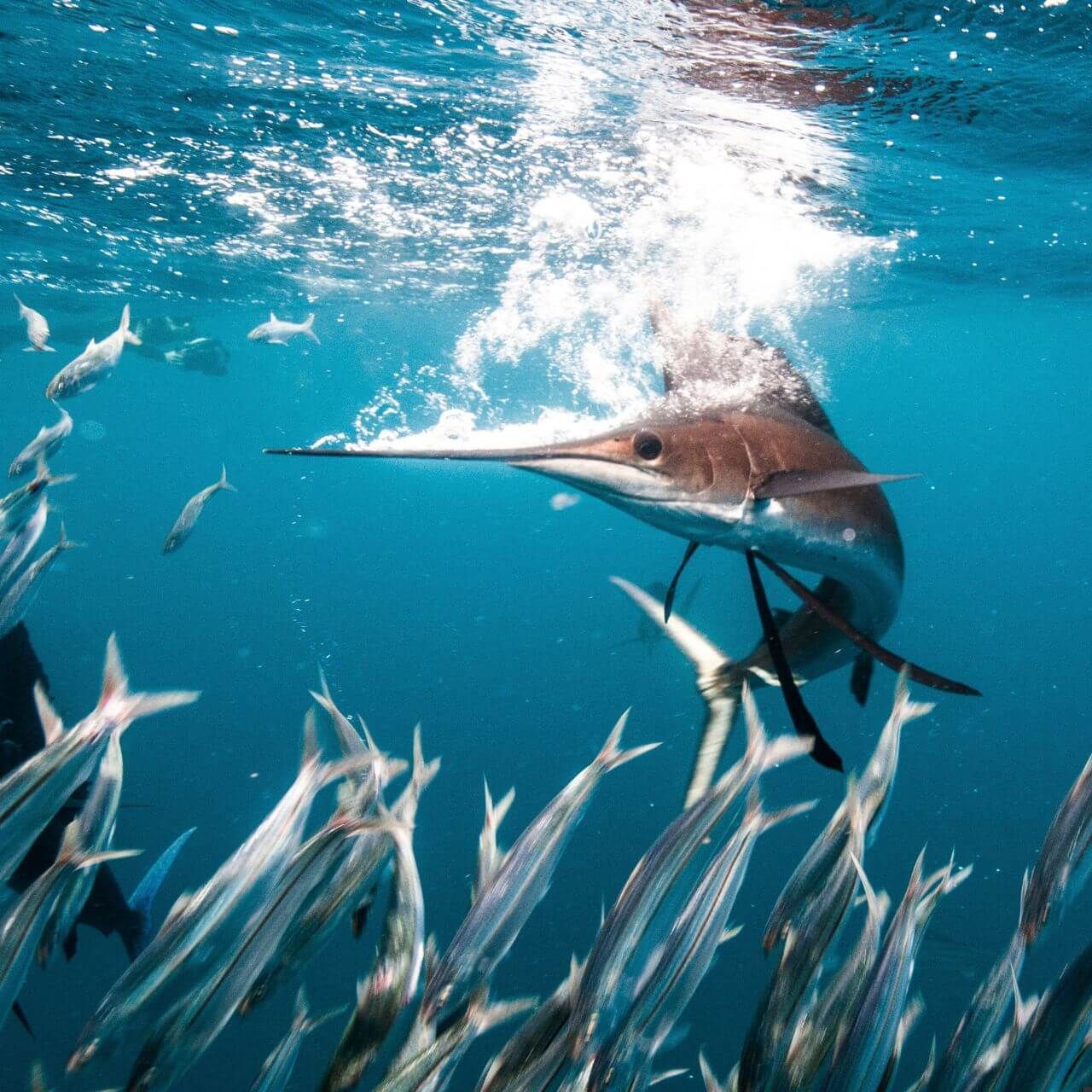
Marlins have a long rostrum, also called a bill, that is used to stun fish and other prey when hunting.
Fast Facts
Where do marlin live?
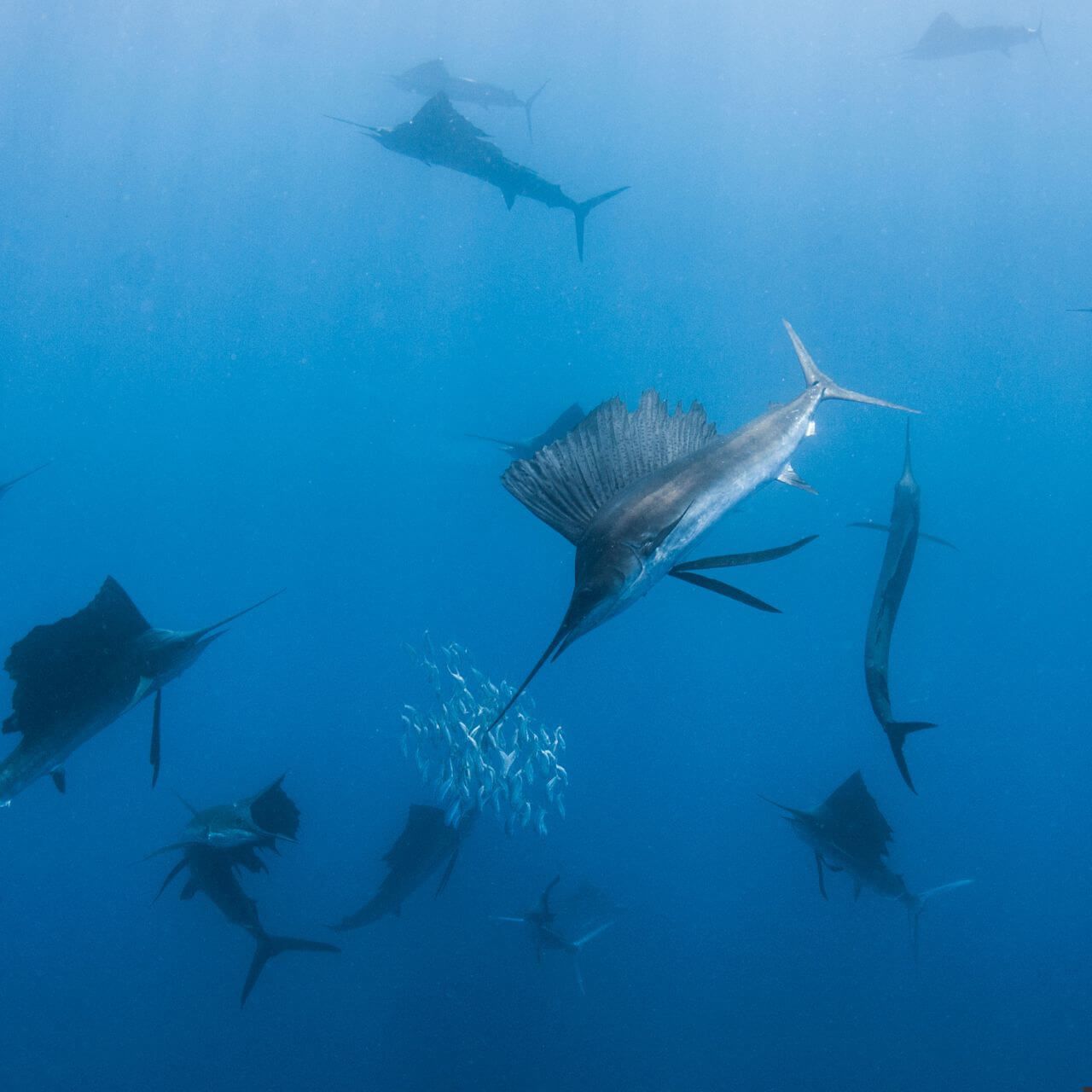
Marlins are mostly found in the open ocean.
They live in the Atlantic, Pacific, and Indian Oceans. Some species are found only in one ocean, while others migrate between oceans. They are found in coral reefs or protected lagoons when they are young.
What do marlin eat?
Marlins are carnivores. They are meat-eaters.
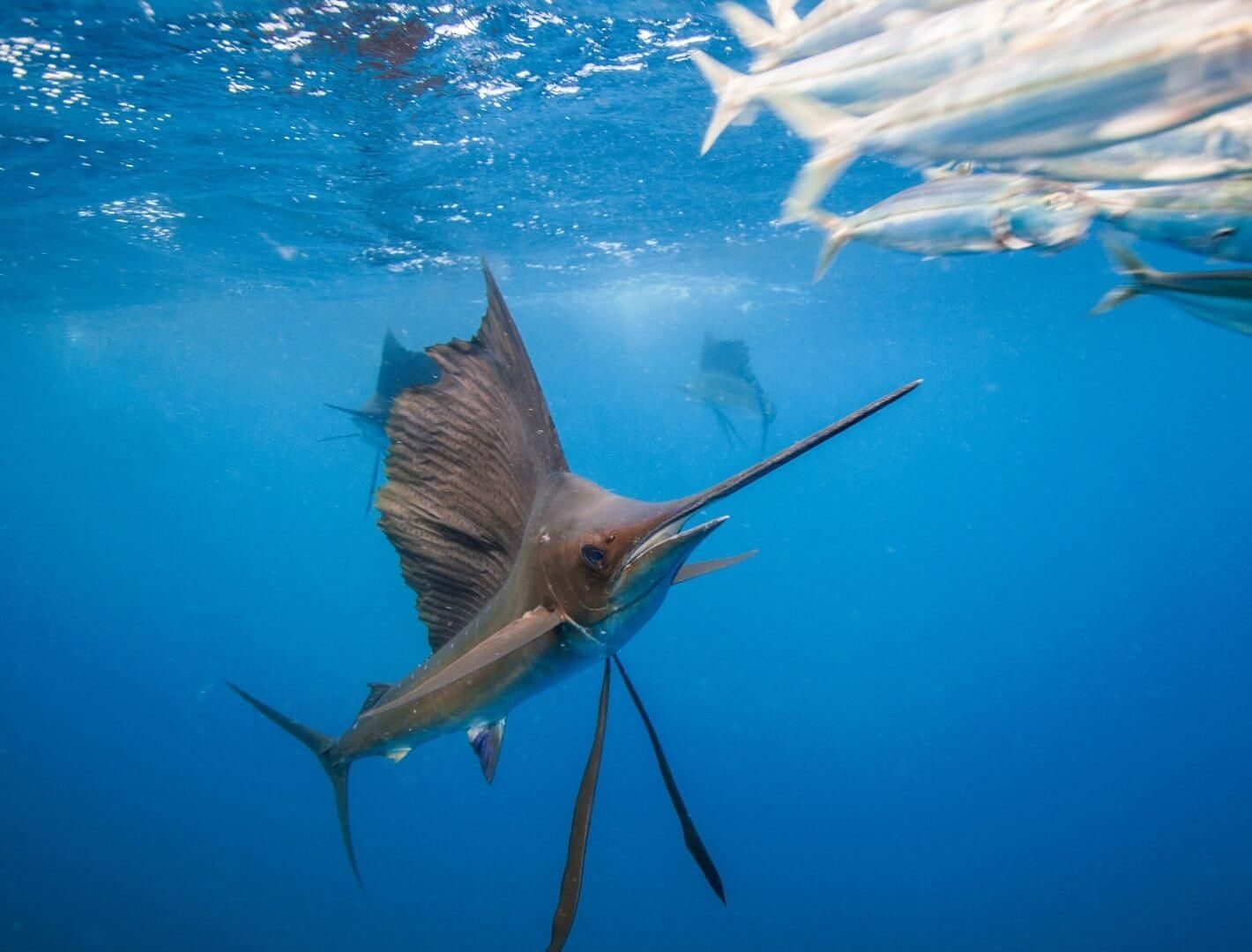
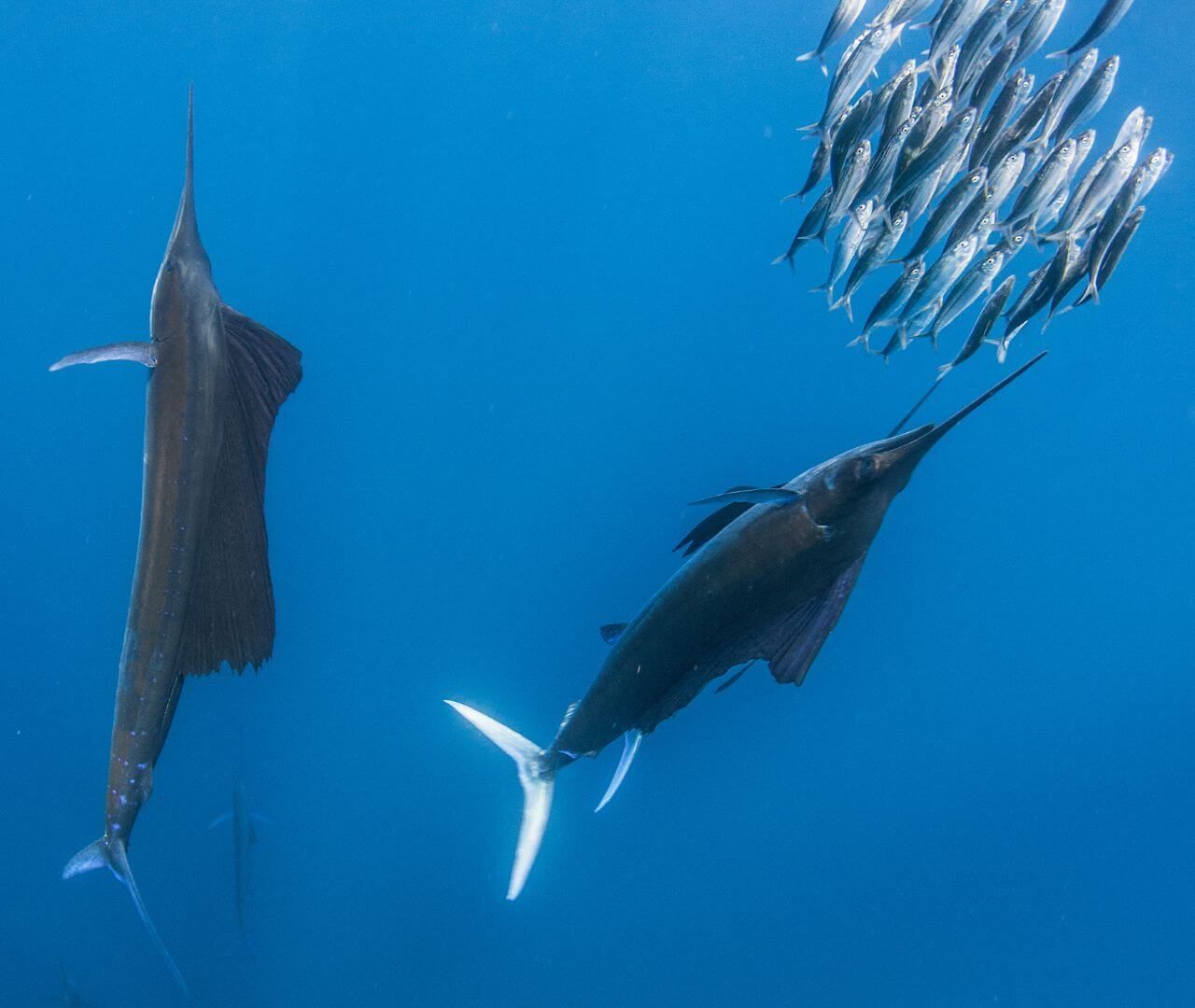
Marlins mostly eat fish, like mackerel, tuna, and flying fish. They also eat squid, octopuses, and other small animals.
What traits do marlins share?
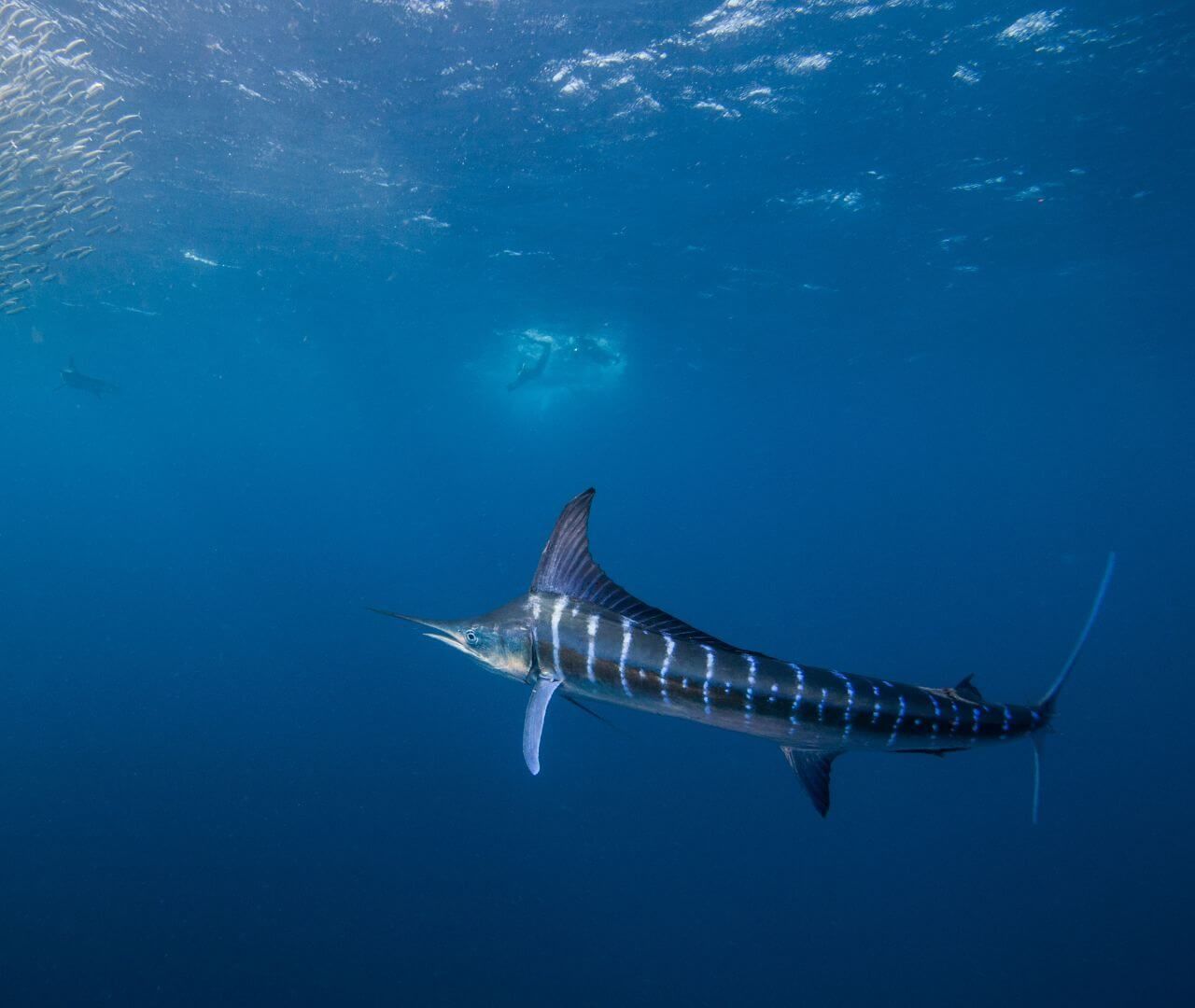
Marlin species have several traits in common. They all...
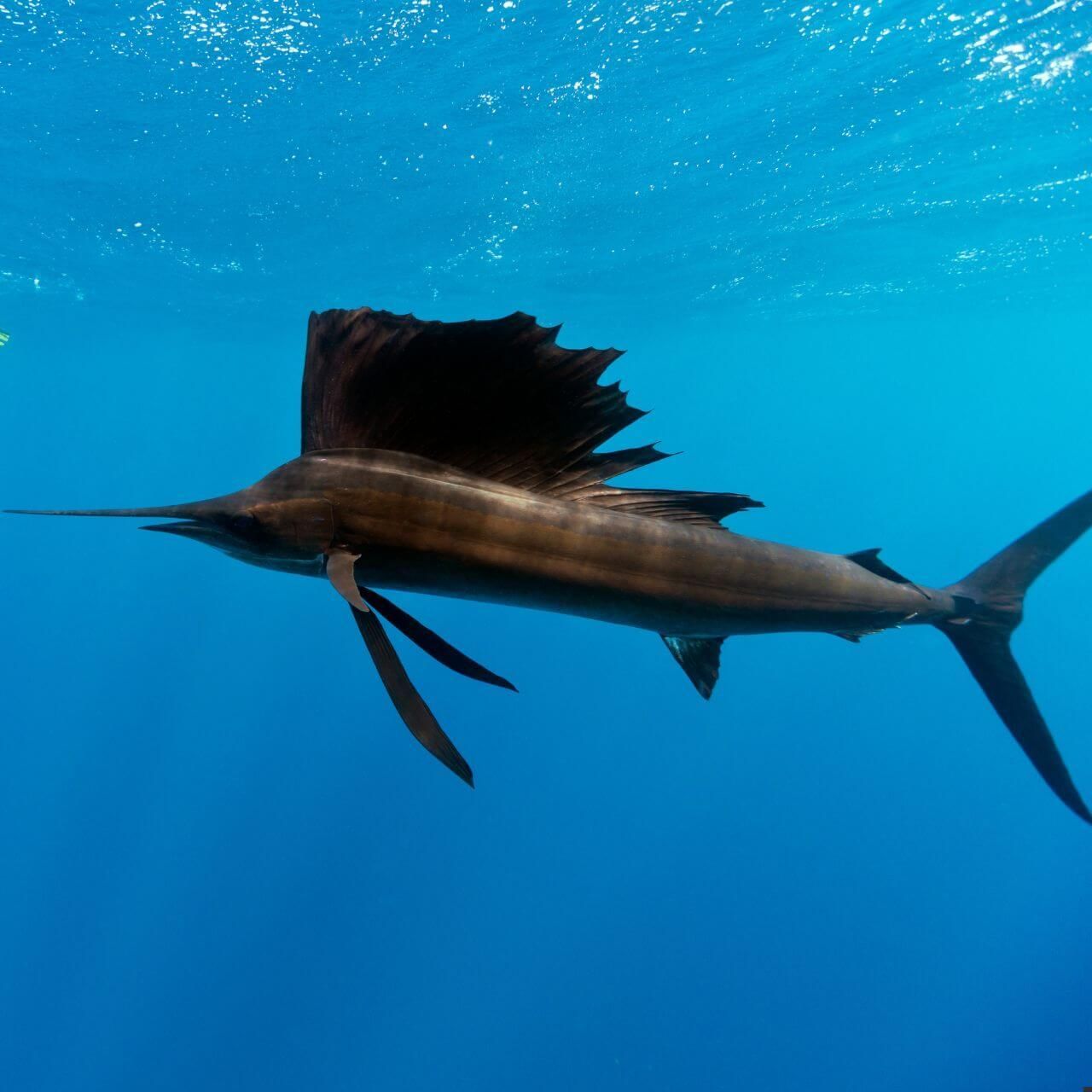
- Have a long, pointed rostrum.
- Stun fish and other prey using their rostrum.
- Have powerful, streamlined bodies.
- Swim quickly with large, muscular tails.
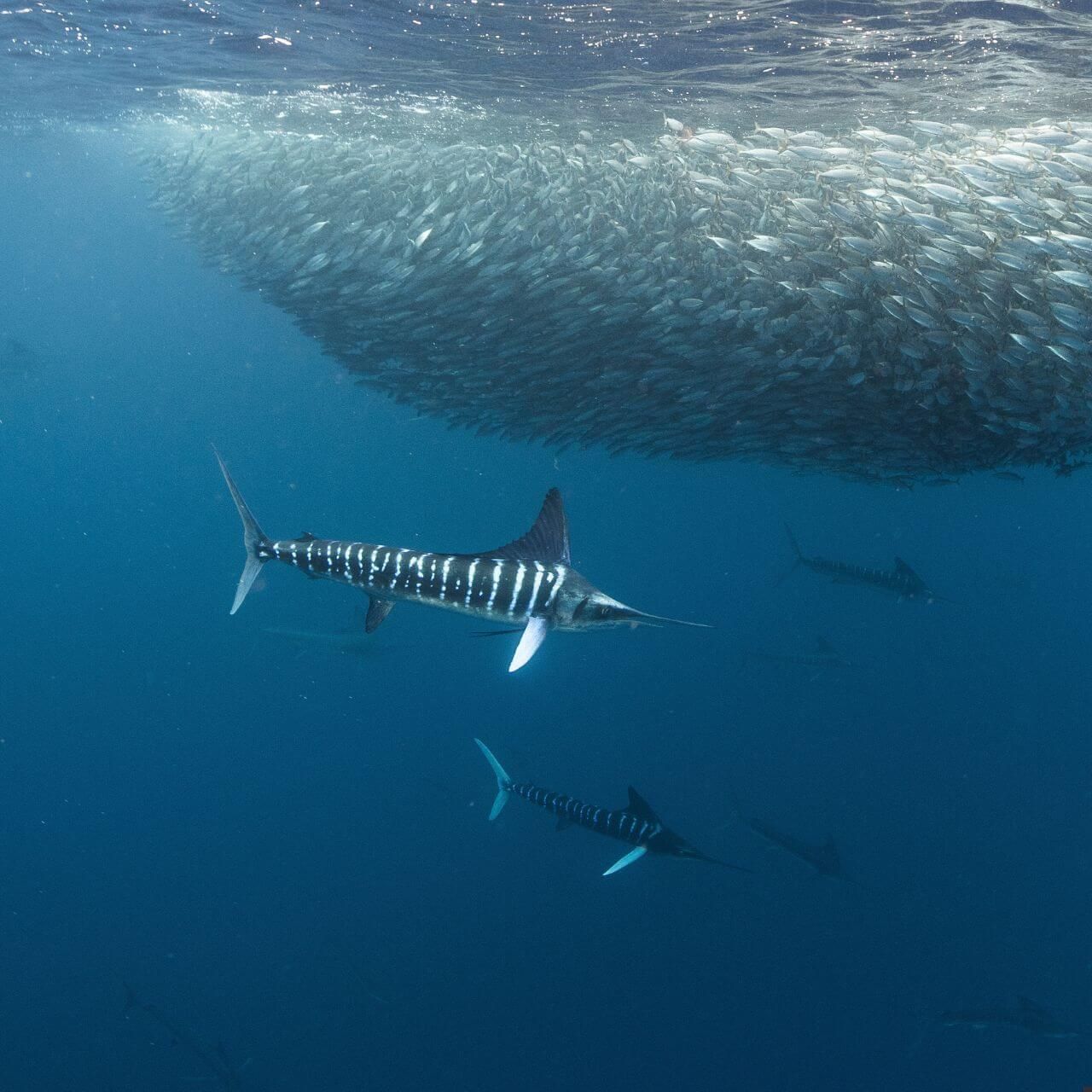
- Change color to communicate.
How many marlin are there?
There are about 10 species of marlins. Scientists disagree about how many species exist.
Some marlins are threatened with extinction because of overfishing. Their prey is overfished, making it challenging to find food. They also become entangled in long fishing lines and nets.
Species Spotlight
Sailfish
Istiophorus spp.
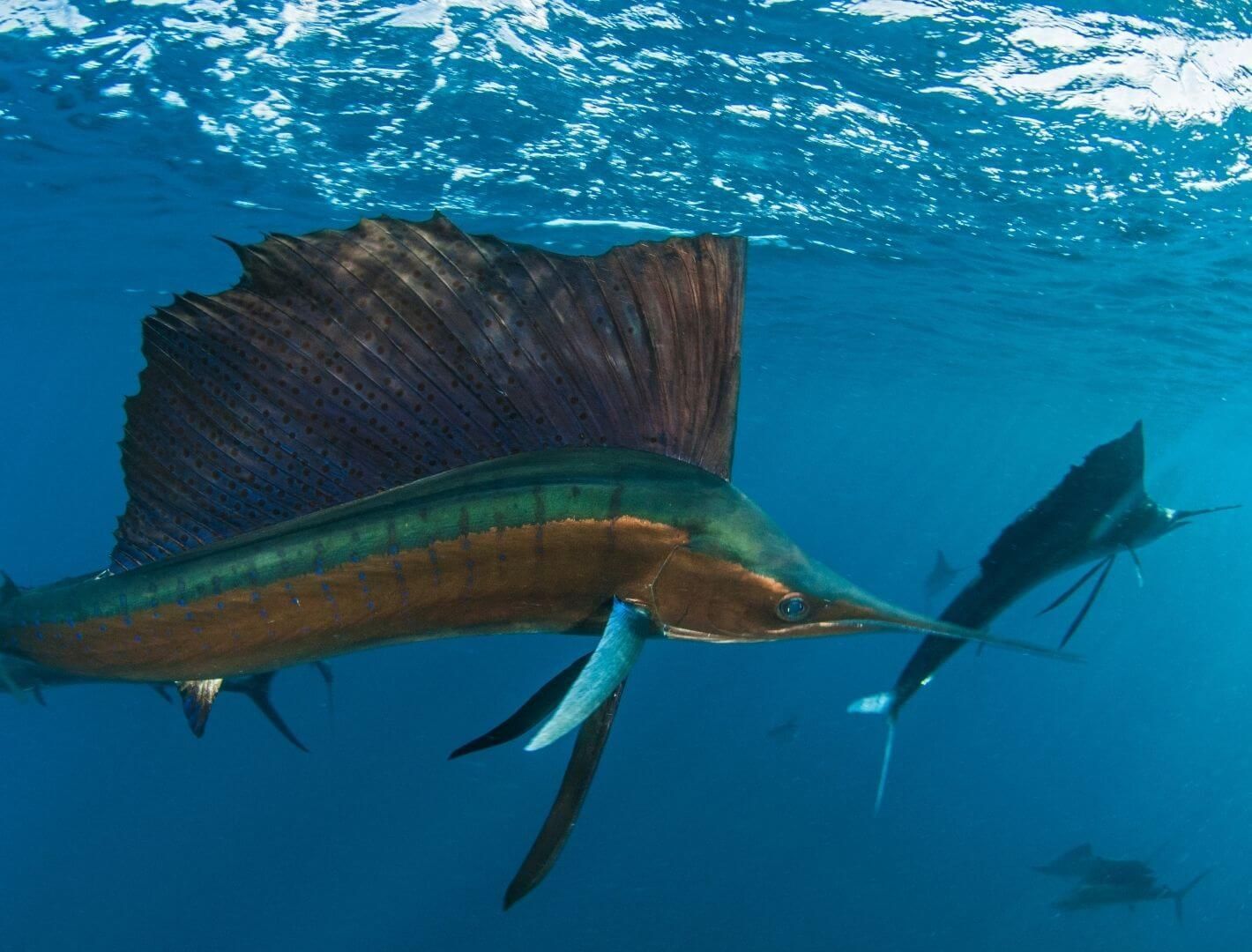
Several animals hold world records for “fastest” animals. The fastest flying animal (also the fastest animal in the world!) is the peregrine falcon. The fastest land animal is the cheetah. The fastest swimming animal is a type of marlin called a sailfish. They have many adaptations that help them swim quickly.
Sailfish have a muscular body and tail used to push themselves forward. Their sharp bill and streamlined body easily cut through the water. They keep their crest folded down when swimming. Sailfish use their fins to make sharp turns when swimming at top speeds. They use their fast speed and quick turns to chase and catch prey, like small fish and squid.
There is a lot of debate about exactly how fast sailfish swim. Some reports claim they swim faster than 70 miles per hour (mph). That’s as fast as your car goes on the freeway! However, other reports say they swim closer to 35 mph.
Measuring a sailfish’s top speed is challenging. Scientists often measure their speed when they are hooked on a fishing line. They measure how fast the line is pulled from the reel. Fishing for marlins may seem harmful to their populations, but it can actually be helpful. Visit our Conservation Corner below to learn more.
Conservation Corner
Sportfishing
What does it mean if something is “unsustainable?” Something is unsustainable when it harms plant and animal populations or nature as a whole.
Several species of marlins are threatened by unsustainable fishing. They are often caught as bycatch. Bycatch occurs when animals are accidentally tangled or caught in fishing gear. Marlins often get tangled in longline fishing nets used to catch tuna. Longline fishing nets are the most dangerous threat to marlins.
Marlin are also a popular prize in sportfishing. Sportfishing occurs when fish are caught in a competition or for fun. Many competitive anglers (people who fish) fish their whole lives, hoping to catch a marlin. Sportfishing can harm marlin populations. However, it can also help scientists learn about them when done sustainably.
Many countries require sport-fishers to release marlins after they are caught. They use special hooks that are easy to remove from the marlin’s mouth. Catching marlins also helps scientists gather data. They learn more about marlin size, migration patterns, populations, and behavior. Sportfishing also encourages people to learn about and appreciate marlins. If you ever have the opportunity to fish in the open ocean, keep an eye out for marlins and make sure to use sustainable fishing methods.
Marlin Matchup
Complete each sentence about marlins using words from the word bank.
Marlin Challenge
You are participating in a scientific study to learn more about marlins. You join a team of sport fishers on fishing trips for one month to catch and collect data from marlins.
Learn More!
Glossary
Adaptation
The process by which a species becomes more fit for its environment over the course of several generations. It is a result of natural selection.
Aquatic
Living in water.
Billfish
A group of predatory, saltwater fish consisting of marlins and swordfish.
Breeding
The act of reproducing.
Carnivore
An animal that eats primarily meat.
Cooperative Hunting
A strategy where animals work as a team to catch prey.
Fish
A group of ectothermic (cold-blooded) animals that live primarily or entirely in water, have fins instead of limbs, and breathe using gills.
Gills
The respiratory organ that allows fish, amphibians in their larval phase, and crustaceans to absorb oxygen molecules from water.
Migration
The process of an animal moving to a new location during a specific time of the year.
Plankton
Small organisms that free-float through in the ocean or freshwater, such as krill, fish eggs, and microscopic algae.
Predator
An animal that hunts other animals for food.
Prey
An animal that is hunted and eaten by another animal.
Rostrum
A beak-like structure on the snout of animals like marlins, swordfish, and some crustaceans.
Spawn
A type of reproduction that occurs when animals release eggs and sperm into water.
Species
A closely related group of animals with similar characteristics that are capable of reproducing (example: tigers).
Sportfishing
Fishing for large, predator fish for competition or fun.
Streamline
A narrow design that easily cuts through water.