
Pufferfish

Let's Learn About Pufferfish
Word of the Week
Neurotoxin
Neurotoxins are harmful poisons that affect an animal's nervous system. They prevent the brain from communicating with muscles, organs, and the rest of the body.
Pufferfish, blue-ringed octopuses, and some rattlesnakes have neurotoxins in their poison and venom.
Fast Facts
Where do pufferfish live?
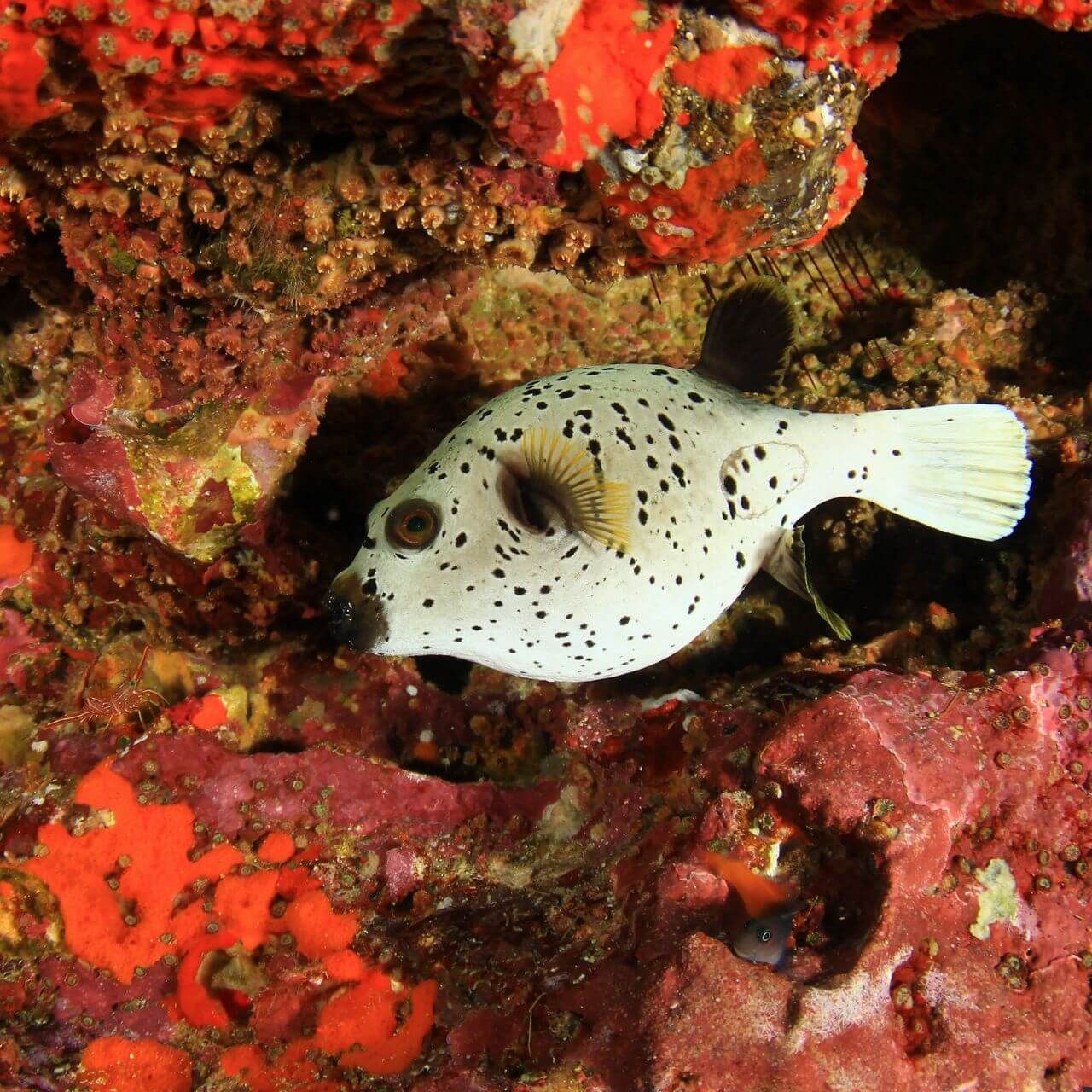
Pufferfish live in warm, tropical regions of the Atlantic, Pacific, and Indian Oceans.
They live in shallow water, especially around coral reefs. A few species are found in cooler temperate waters, but no pufferfish live in cold climates. Surprisingly, several species are found in freshwater.
What do pufferfish eat?
Pufferfish eat different food depending on the species and where they live.
Most pufferfish species feed on algae or small invertebrates. They eat mollusks, such as clams, mussels, and snails. They eat crustaceans, such as crabs and shrimp. They also feed on worms.
What traits do pufferfish share?
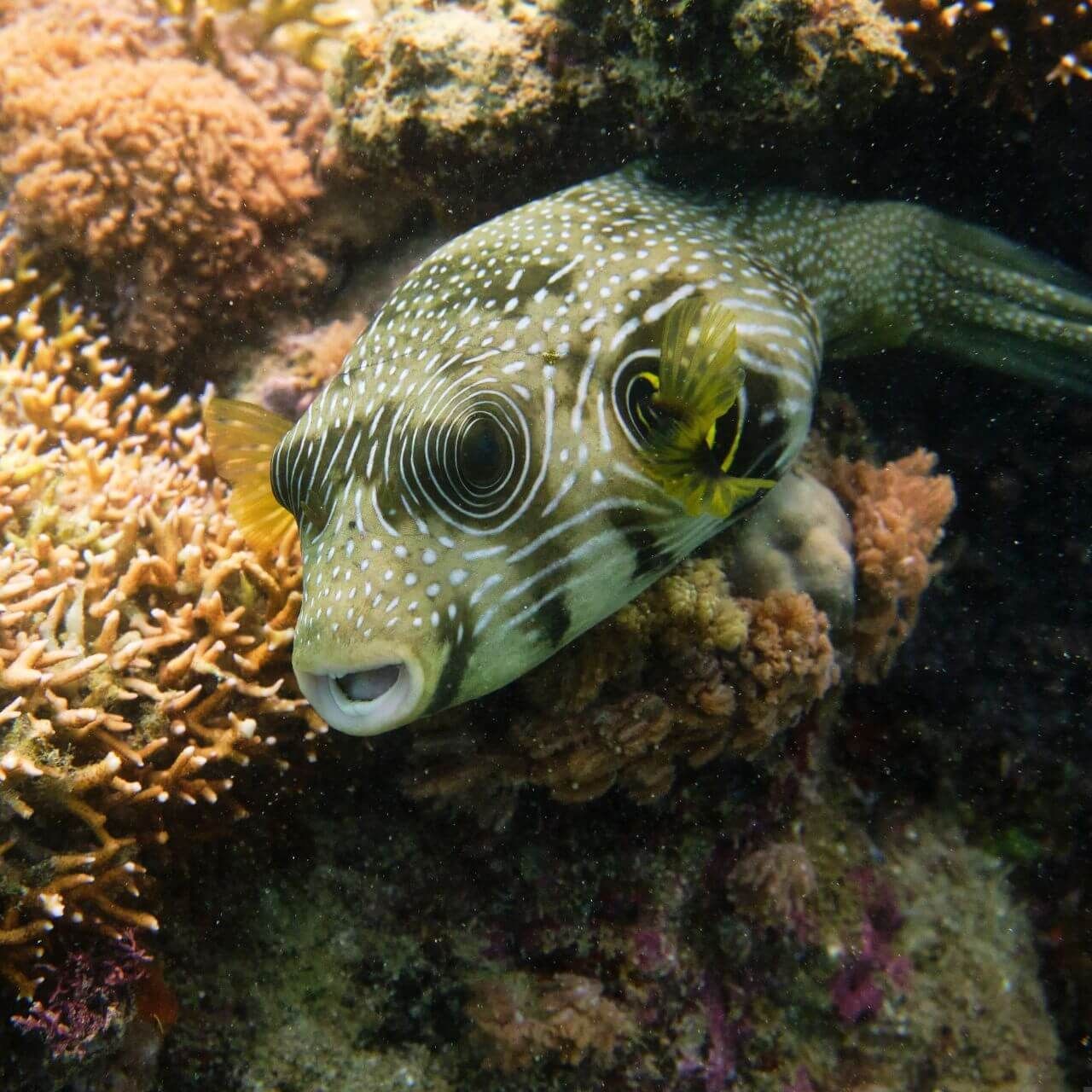
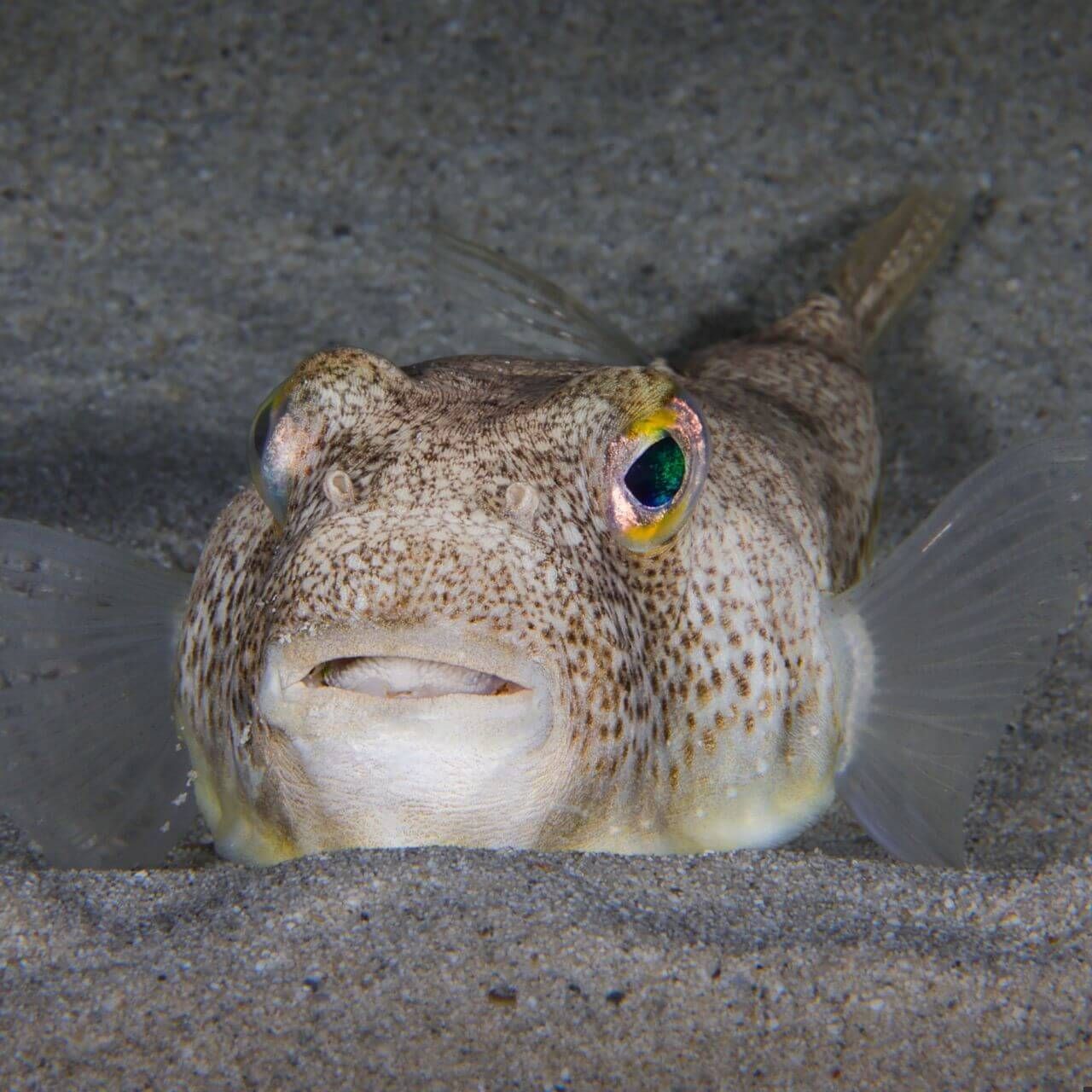
Pufferfish have many interesting traits in common, including...
- The ability to inflate like a balloon
- Four large teeth
- Spiny skin instead of scales
- Toxic organs
How many pufferfish are there?
There are about 200 species of pufferfish.
Some pufferfish are endangered. They are threatened mostly by habitat loss of coral reefs. Pufferfish are invasive in some regions. They live in places they are not native to. Invasive pufferfish harm native species by outcompeting them for food and space in the habitat.
Species Spotlight
Starry Pufferfish
Arothron stellatus
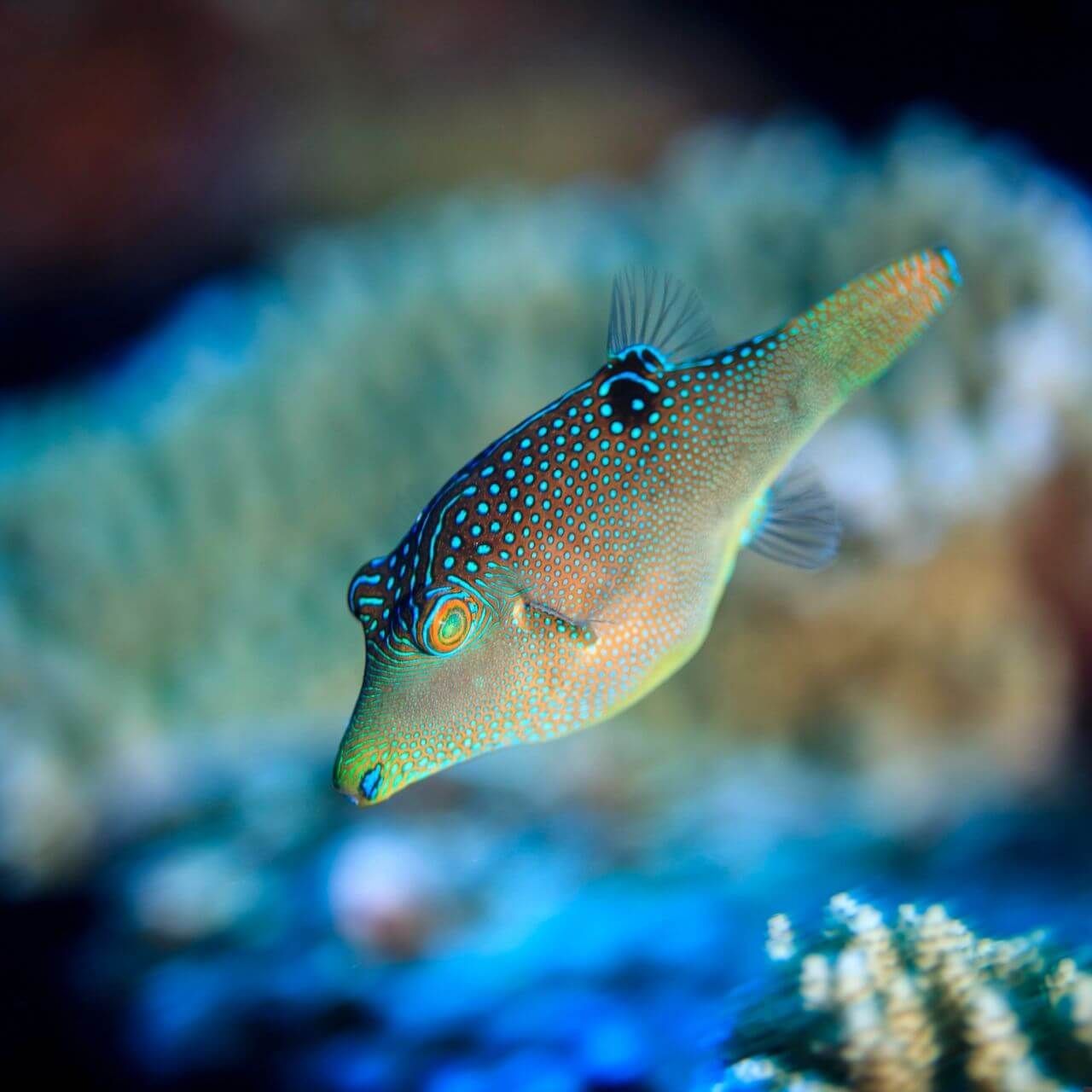
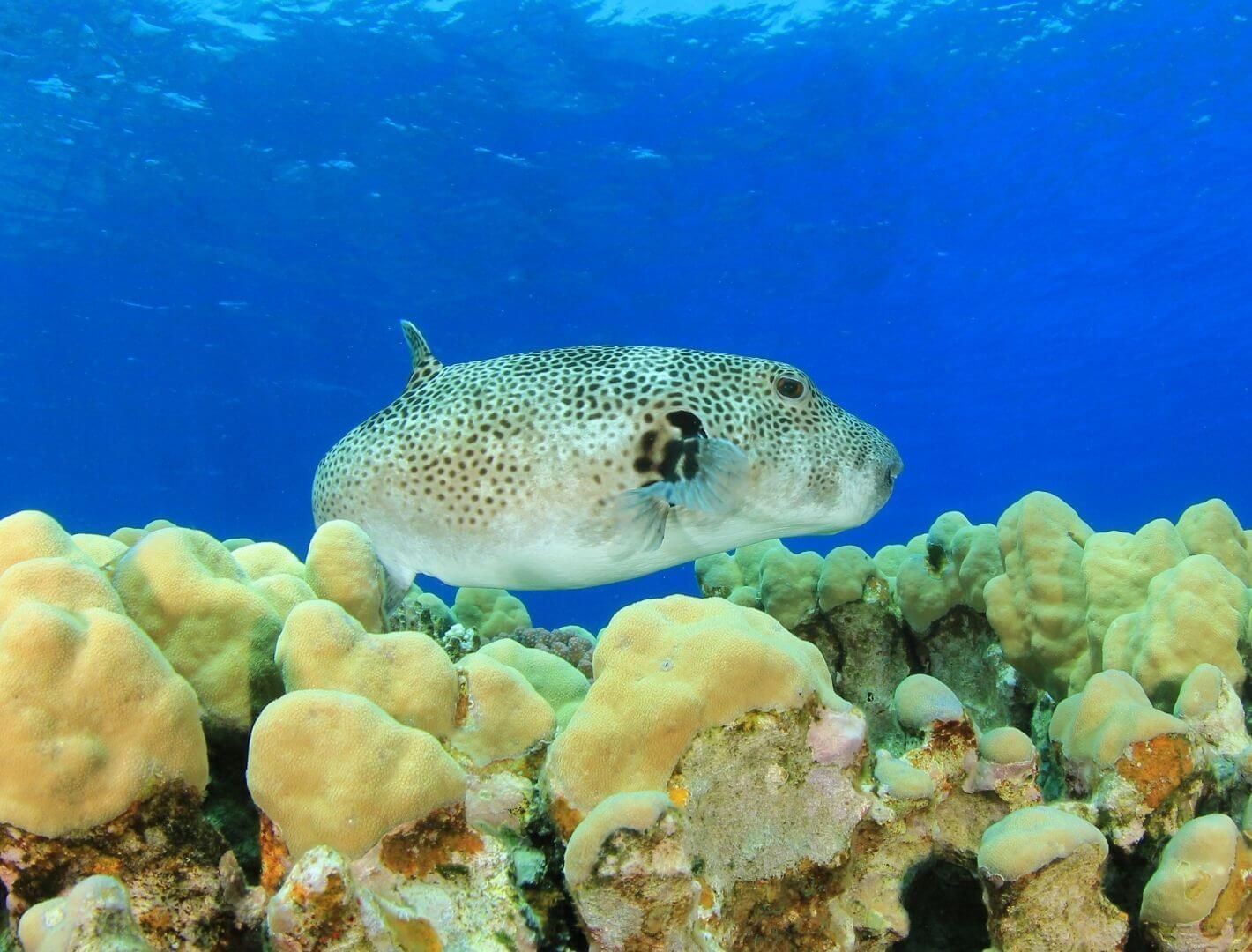
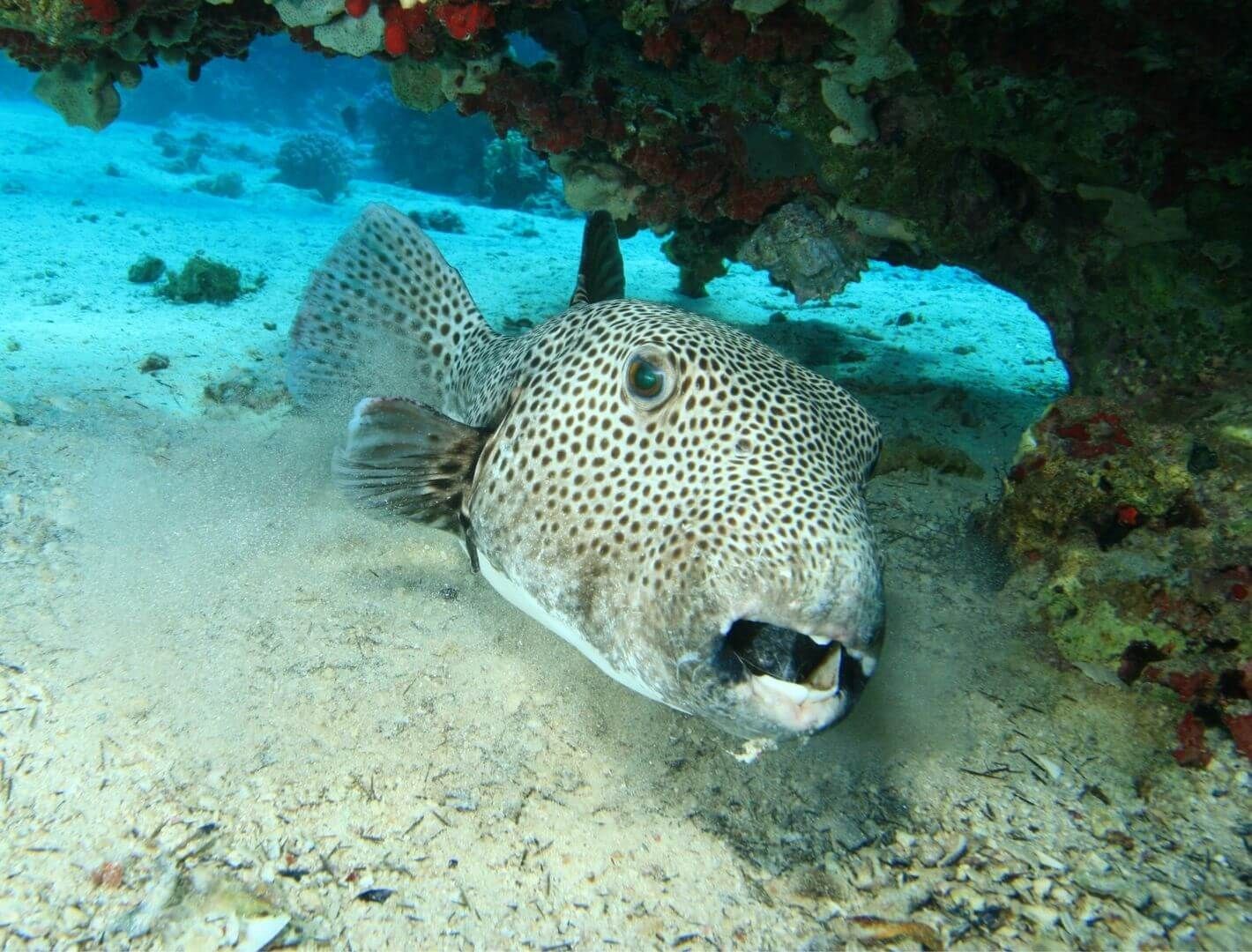
The starry puffer is named for its pattern that looks like the night sky. It is also called the stellate pufferfish. The starry puffer is one of the largest pufferfish in the world. It measures nearly 4 feet long when fully grown. It lives in shallow, tropical oceans around Australia and southern Asia. Starry puffers are usually seen swimming around coral reefs or resting on the sand. They are solitary (they live alone) and territorial. This prevents other puffers from stealing their food.
Starry puffers mostly eat animals with hard shells, like clams and crabs. They also eat sponges and coral polyps. They crack open the hard shells with their four large teeth. Biting through hard shells wears down their teeth. It would be challenging for them to eat if their teeth wore down too much. Fortunately, their teeth grow continuously, so they are always ready for a snack.
The starry puffer has few predators because of its large size. If threatened, they inflate like a balloon by filling their stomach with water. Their organs also contain a powerful toxin that can harm or even kill predators. All of these helpful adaptations make starry puffers one of the most successful animals on the reef.
BRAIN BLAST
Do you know any other animals whose teeth grow continuously? What do they eat and how do they keep their teeth from overgrowing?
Conservation Corner
Protecting or Removing Pufferfish
Pufferfish conservation is complicated. In many areas, native pufferfish and their habitats need protection. In other areas, pufferfish are invasive. They live somewhere they are not native. Their populations grow rapidly and damage the ecosystem. In these areas, they need to be removed instead of protected.
In places where pufferfish are native, they are threatened by habitat loss. Their coral reef homes are being destroyed. Scientists work with local governments to create laws to protect coral reefs. In some regions, they also work with local communities to monitor pufferfish populations. For example, a dive company in Costa Rica created a course for divers. The course trains them to identify and record pufferfish observations. This data helps scientists determine if pufferfish in the area need more protection.
In places where pufferfish are invasive, local communities work to remove them. Invasive pufferfish take food and habitats from native fish. They also damage fishing gear. Some coastal communities offer money to people who catch and remove pufferfish. However, these efforts do not always work. In one region, they removed more than 200,000 lbs of pufferfish, but there was no change to their population. Their populations continue to grow because they reproduce so quickly.
Pufferfish conservation depends heavily on where they are and whether they are supposed to be there.
Pufferfish Challenge
Learn More!
*This video shows some clips of a porcupinefish instead of a true pufferfish. Can you tell which is which?*
Glossary
Adaptation
The process by which a species becomes more fit for its environment over the course of several generations. It is a result of natural selection.
Algae
A group of plant-like organisms typically found in water.
Ambush
The act of sneaking up on prey.
Camouflage
The ability of an organism to blend into its surroundings, usually to hide from prey or predators.
Coral Reef
An ocean habitat made of many individual corals typically found in warm, shallow waters.
Countershading
A type of camouflage characterized by an animal’s back being dark in color and its belly being light.
Crustacean
A subphylum of invertebrates with hard exoskeletons and jointed legs. It includes crabs, lobsters, shrimp, etc.
Fish
A group of ectothermic (cold-blooded) animals that live primarily or entirely in water, have fins instead of limbs, and breathe using gills.
Mollusk
A phylum of mostly aquatic invertebrates with soft bodies, often protected by a hard shell. It includes clams, snails, octopuses, etc.
Neurotoxin
A poison that harms an animal's nervous system, including its brain and how it communicates with the rest of the body.
Overfishing
Collecting fish from the ocean faster than they can reproduce.
Poison
A toxin that is harmful when touched or eaten and is often produced in glands.
Predator
An animal that hunts other animals for food.
Prey
An animal that is hunted and eaten by another animal.
Spawn
A type of reproduction occurring when animals release eggs and sperm into water.
Species
A closely related group of animals with similar characteristics that are capable of reproducing (example: tigers).
Tetraodontidae
The scientific name of the pufferfish family. It translates to "four-tooth."
Tropical
A region near the equator that has warm temperatures year-round.