
Cuttlefish

Let's Learn About Cuttlefish
Word of the Week
Siphon
A siphon is a tube-like organ used by cephalopods (cuttlefish, octopuses, squid, and nautiluses) to push water out of their mantle.
Cephalopods use their siphon to breathe, swim, and spray ink.
Fast Facts
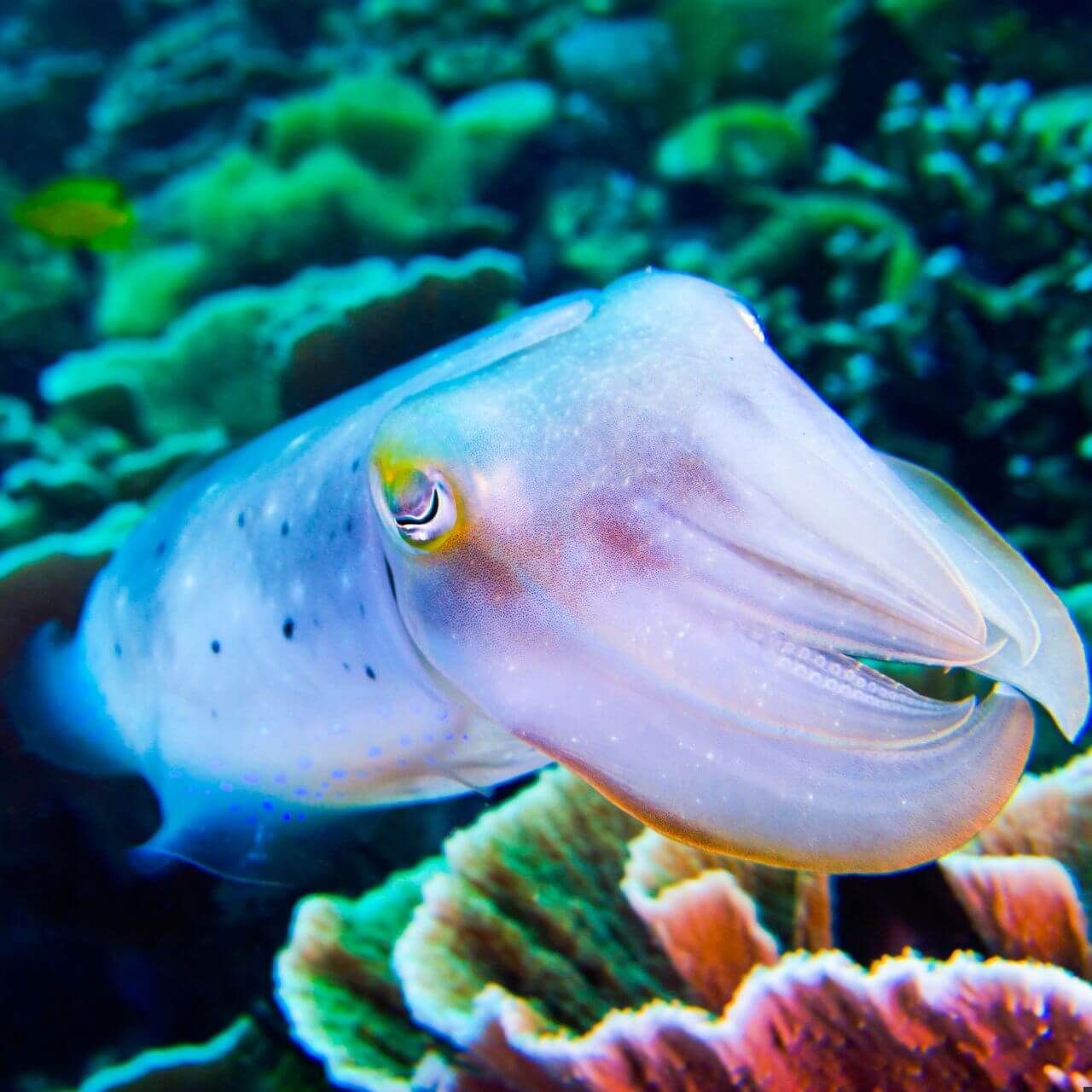
Where do cuttlefish live?
Cuttlefish live in every ocean in tropical and temperate areas.
They are found along the coast of every continent except North America and South America. Cuttlefish are most common in warm, shallow water. However, they have been seen at depths of 2,000 feet.
What do cuttlefish eat?
Cuttlefish are carnivores. They eat meat.
They hunt snails, clams, crabs, and shrimp. They also eat fish, worms, and other cuttlefish.
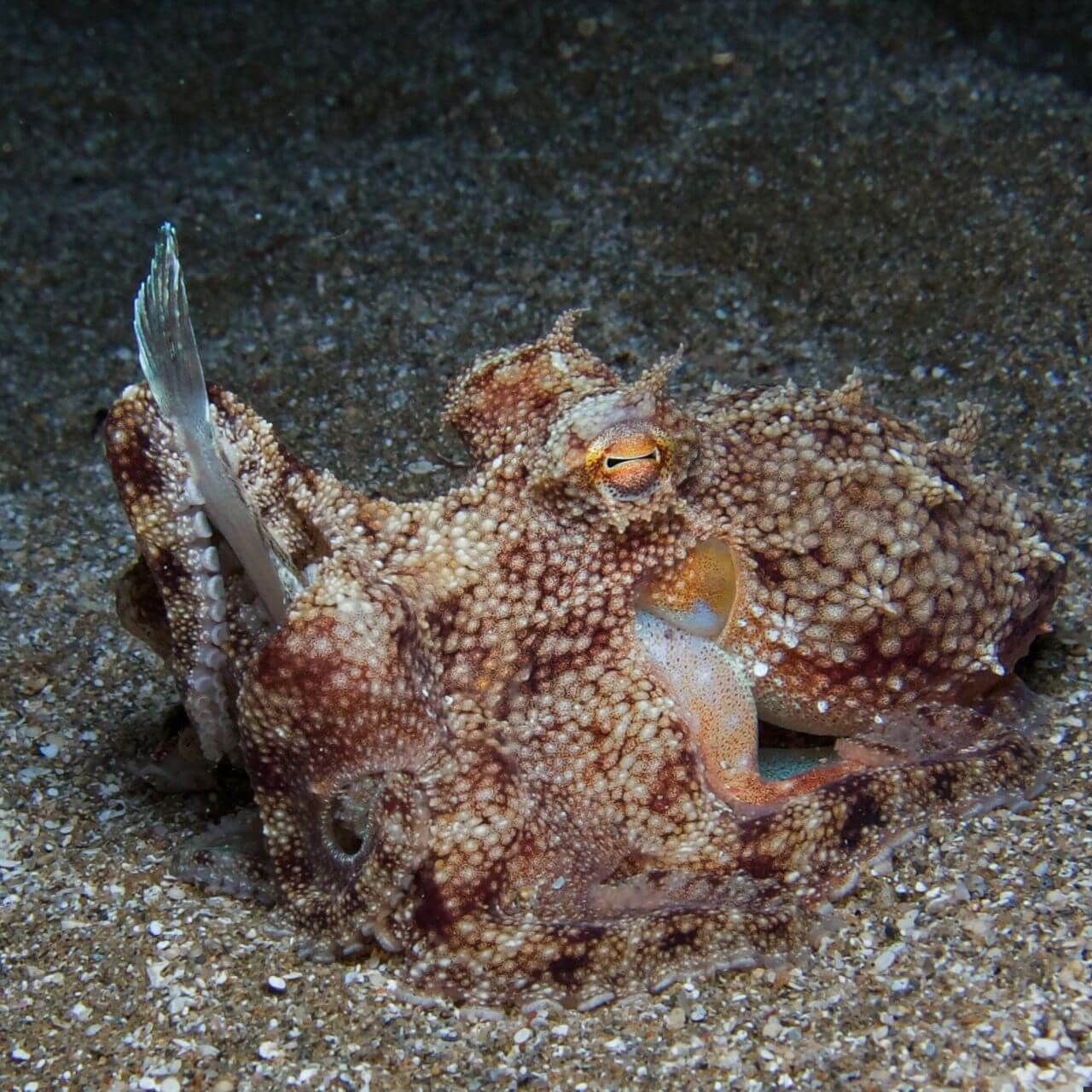
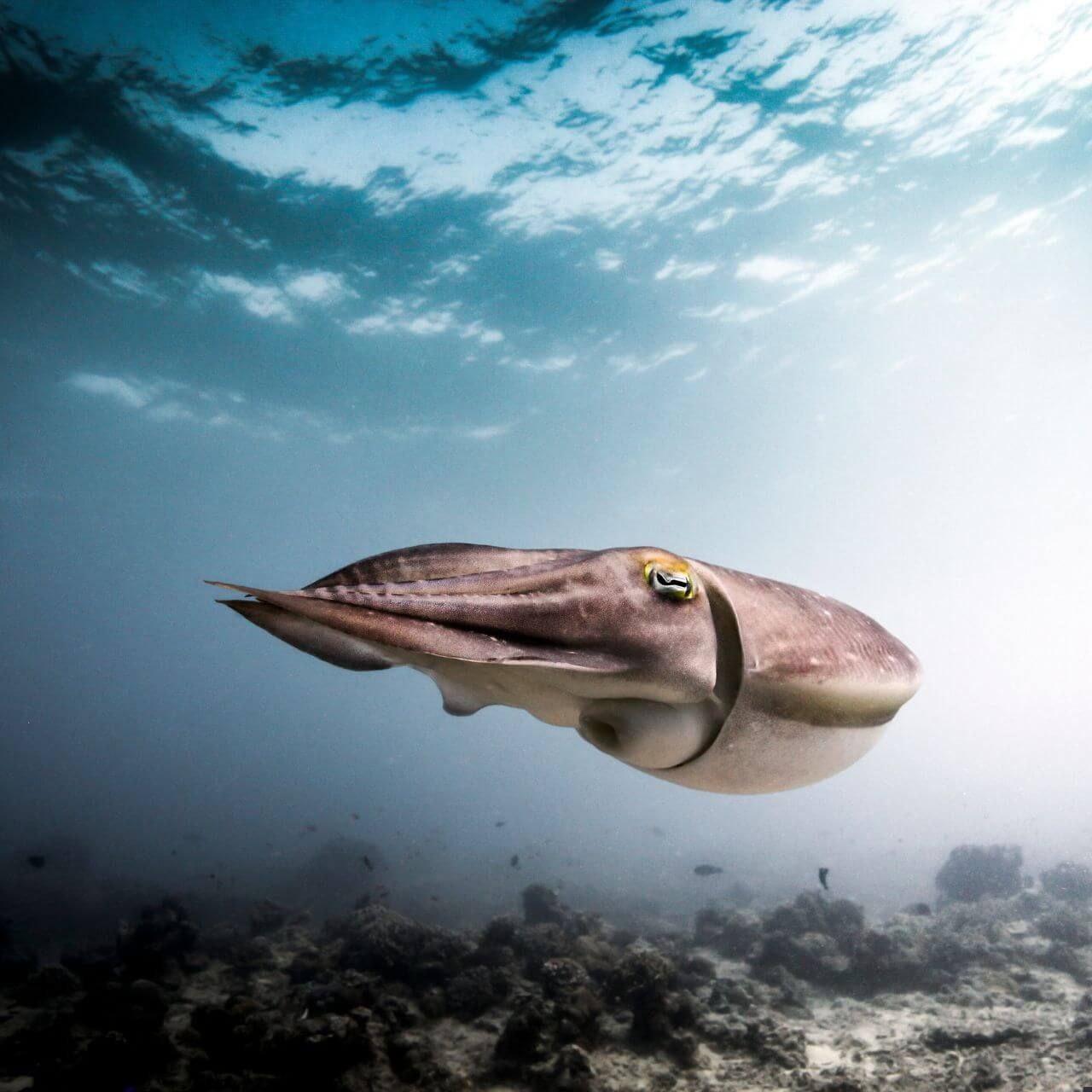
What traits do cuttlefish share?
Cuttlefish have many unusual traits, including...
- Skin that changes color, pattern, and texture
- "W" shaped pupils and a strong sense of sight
- A siphon used for breathing, swimming, and spraying ink
- Eight arms and two tentacles
- Three hearts
How many cuttlefish are there?
There are about 120 species of cuttlefish.
Most cuttlefish are listed as Least Concern by the IUCN. However, they do face threats. They are threatened by overfishing and climate change.
Species Spotlight
Flamboyant Cuttlefish
Ascarosepion pfefferi
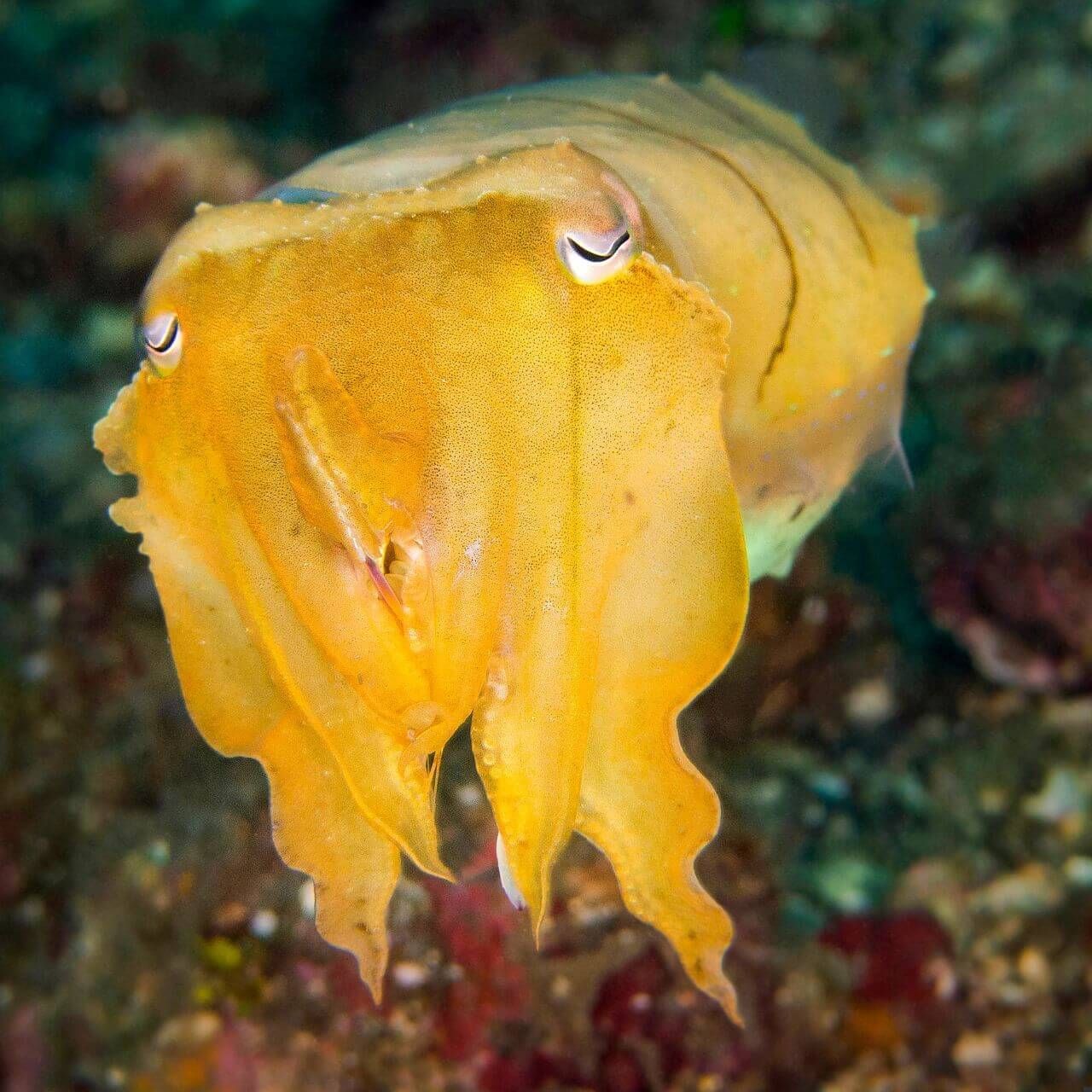
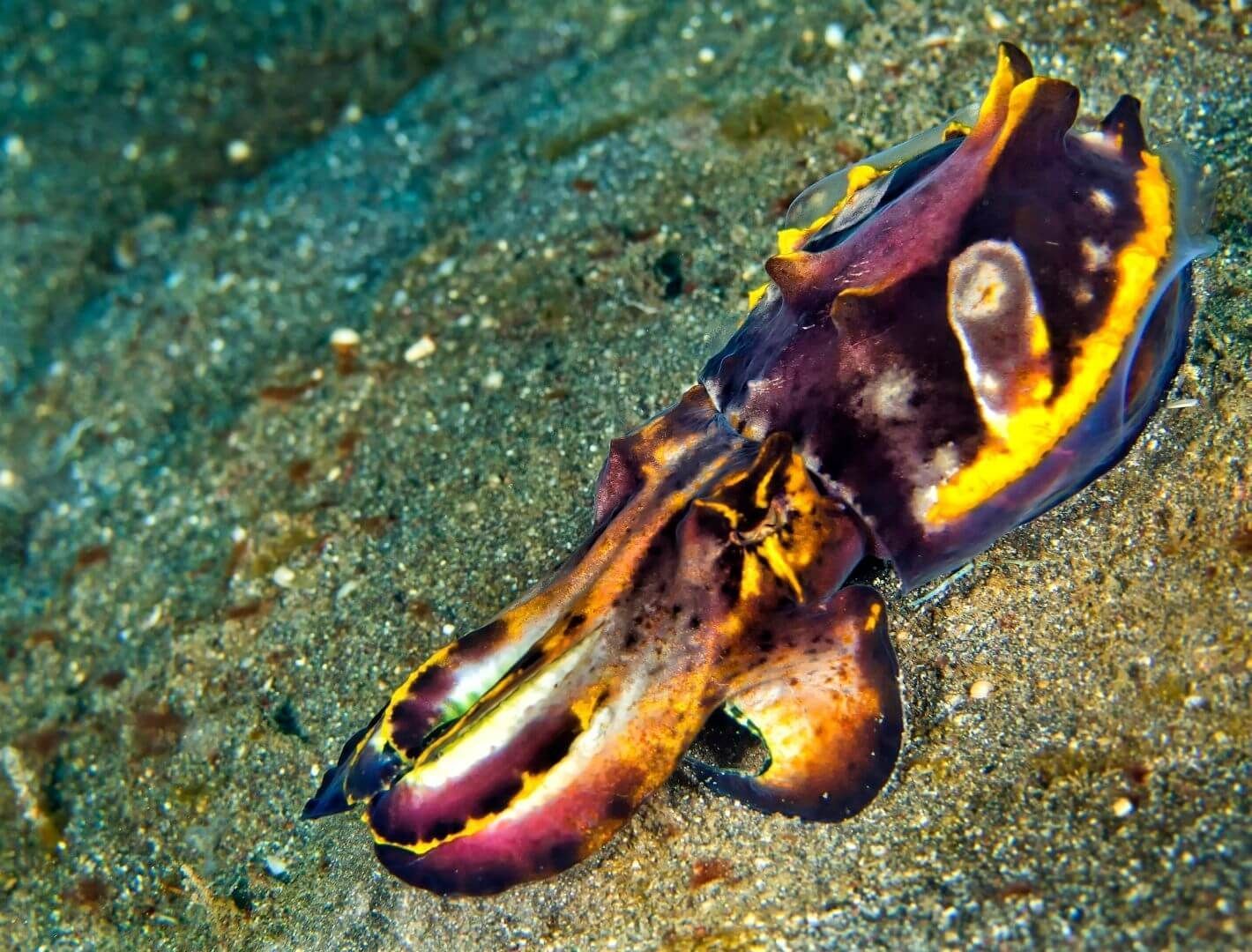
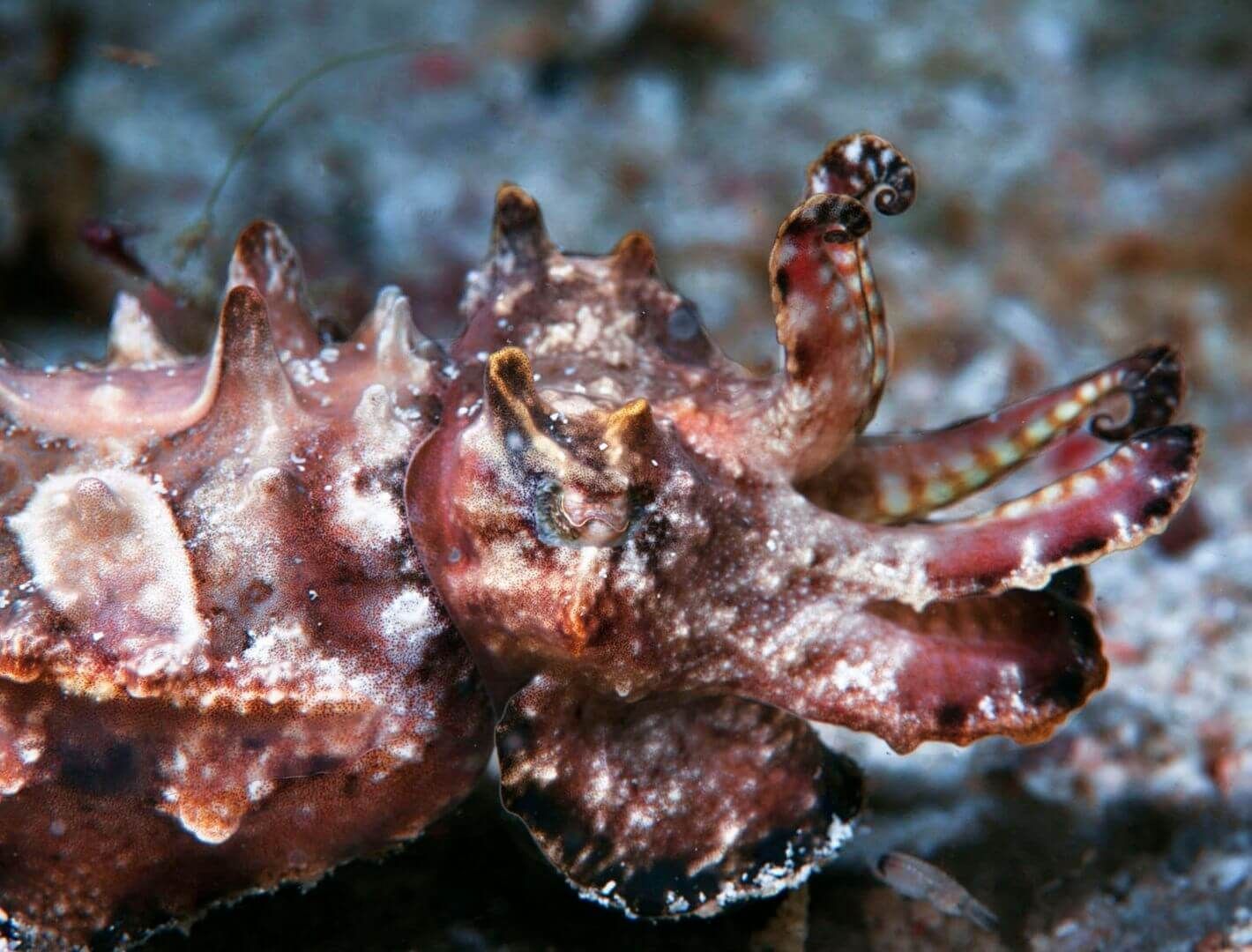
Flamboyant cuttlefish are one of the most famous cuttlefish species. They have fascinating traits, even at only 3 inches long. They move in an unusual way. They rapidly change color. They also have many strategies to defend themselves.
Like other cuttlefish, the flamboyant cuttlefish has eight arms. They use their arms and siphon to swim while searching for prey. They also use their arms to walk across the seafloor. Flamboyant cuttlefish do not float as easily as other species. This makes it challenging to swim. Scientists hypothesize that walking helps them save energy.
Flamboyant cuttlefish have special skin. It helps them hide as they crawl across sand, rocks, and coral. Their skin changes color, pattern, and texture. The impressive camouflage helps them sneak up on prey. It also keeps them hidden from predators. If spotted, they warn predators to stay back by rapidly changing color. The tips of their arms even turn red.
Using bright colors to warn predators is not their only form of defense. They spray a cloud of ink to blind or confuse predators. They are also the only cuttlefish species that is poisonous. They have a dangerous toxin in their muscles. If eaten, predators can get sick or even die. Flamboyant cuttlefish might be small, but they are not to be messed with!
Conservation Corner
The Cuttlefish Coast
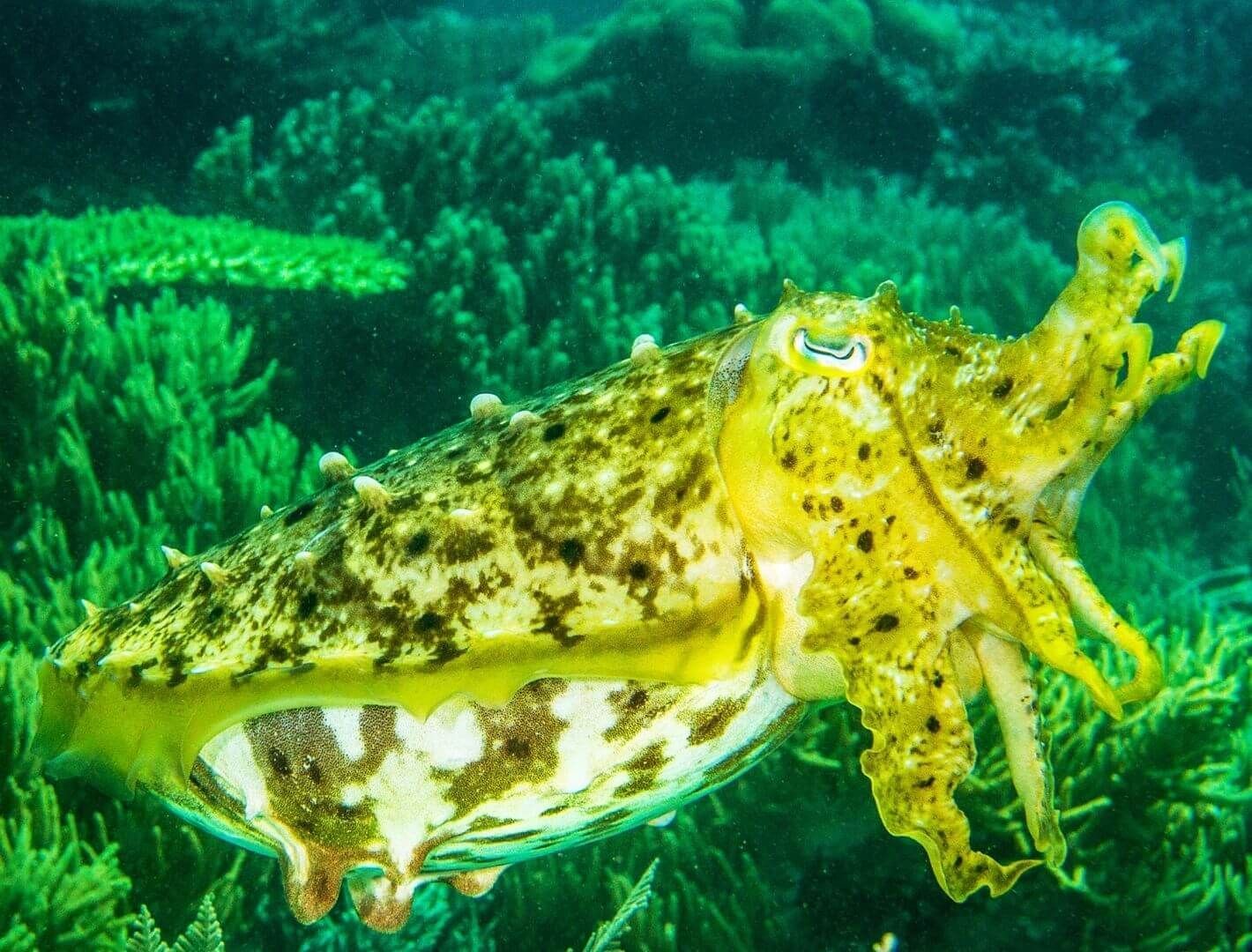
Australia is home to the largest cuttlefish in the world. The giant cuttlefish measures more than 3 feet long. It lives in the ocean in cool, rocky habitats. In the 1990s, scuba divers and scientists made an amazing discovery. They found the largest breeding group of giant cuttlefish ever discovered. The cuttlefish gathered in Spencer Gulf in Southern Australia. It had the perfect conditions for giant cuttlefish to mate and lay eggs. Scientists named the area the Cuttlefish Coast.
Each year, thousands of giant cuttlefish breed in the Cuttlefish Coast. Males compete for mates using impressive color displays. They also use mimicry. Smaller males mimic females to avoid competition with other males. It helps them get closer to females to mate with. This behavior has never been seen anywhere else in the world.
Scientists learned a lot about giant cuttlefish during the breeding seasons. However, fishing and habitat destruction threatened their populations. Scientists needed to find a way to protect the Cuttlefish Coast. They pushed local governments to add the area to Australia’s National Heritage List. In 2023, the Cuttlefish Coast was finally added and became protected! Today, thousands of giant cuttlefish thrive in the protected waters. They continue to be studied and appreciated by all who visit.
This photo was taken by our friend and underwater photographer, Alyssa Blake.
Cuttlefish Challenge
Identify which traits cuttlefish have by following the directions on the packet.
Learn More!
This video explains more about the protected Cuttlefish Coast described in the Conservation Corner.
This video shows the unique mimicry of the giant Australian cuttlefish described in the Conservation Corner.
Glossary
Adaptation
The process by which a species becomes more fit for its environment over the course of several generations. It is a result of natural selection.
Buoyancy
Whether an object sinks or floats in liquid.
Camouflage
The ability for an organism to blend into their surroundings usually to hide from prey or predators.
Carnivore
An animal that eats other animals.
Cephalopod
A class of invertebrates that includes octopuses, squids, cuttlefish, and nautiluses.
Chitin
The hard substance that makes up exoskeletons, like a crab's shell.
Cuttlebone
The hard internal shell found in cuttlefish that allow them to control buoyancy.
Gills
The respiratory organ that allows cephalopods, fish, and other animals to absorb oxygen (breathe!) from water.
Gland
An organ that produces substances useful for survival (ex. sweat glands, venom glands, preening glands).
Ink
A dark-colored substance sprayed by some cephalopods. It is typically used to escape danger.
Invertebrate
An animal that has no bones.
Mantle
The head-like structure of a cephalopod that contains their organs, like their brain, hearts, and gills.
Poison
A toxin that is harmful when touched or eaten and is often produced in glands.
Predator
An animal that hunts other animals for food.
Prey
An animal that is hunted and eaten by another animal.
Siphon
A pump-like body part used by cephalopods to push and pull water for breathing, moving, and spraying ink.
Species
A closely related group of animals with similar characteristics that are capable of reproducing (example: tigers).
Tentacles
[Of cephalopods] The long, extendable structures attached to a cephalopod's mantle used for feeding.
Toxin
A naturally occurring substance that can harm humans and other organisms.
Venom
A toxin that causes harm when injected, typically with a stinger or fangs.