
Jumping Spiders

Let's Learn About Jumping Spiders
Word of the Week
Silk
Silk is a thin, strong, and stretchy substance produced by spiders to make webs, protect eggs, and travel.
Caterpillars also make silk.
Fast Facts
Where do jumping spiders live?
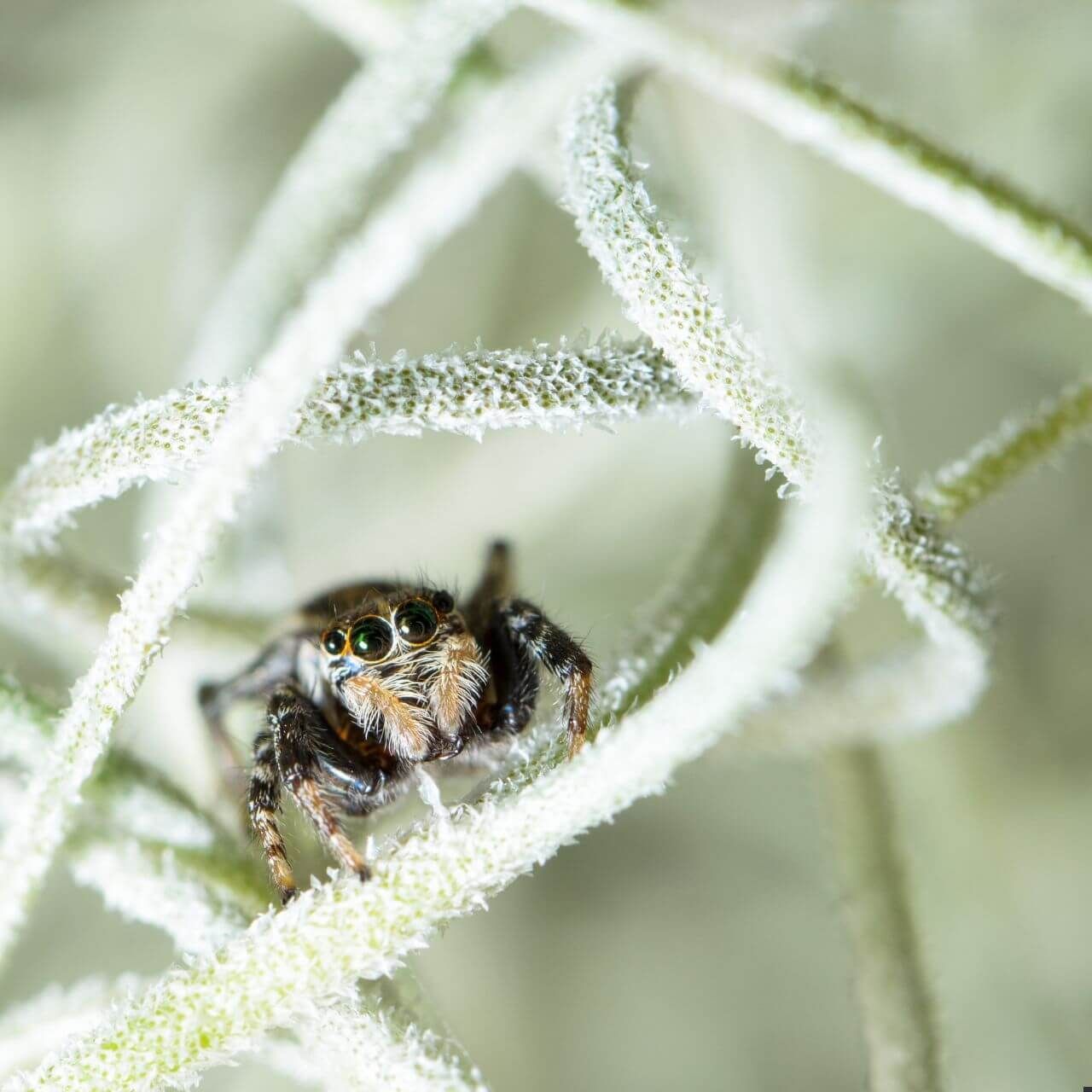
Jumping spiders are found on every continent except Antarctica.
Jumping spiders can be found in nearly every type of habitat, ranging from barren deserts to freezing tundras. One species was even found on the upper slopes of Mount Everest. However, most species live in tropical forests.
What do jumping spiders eat?
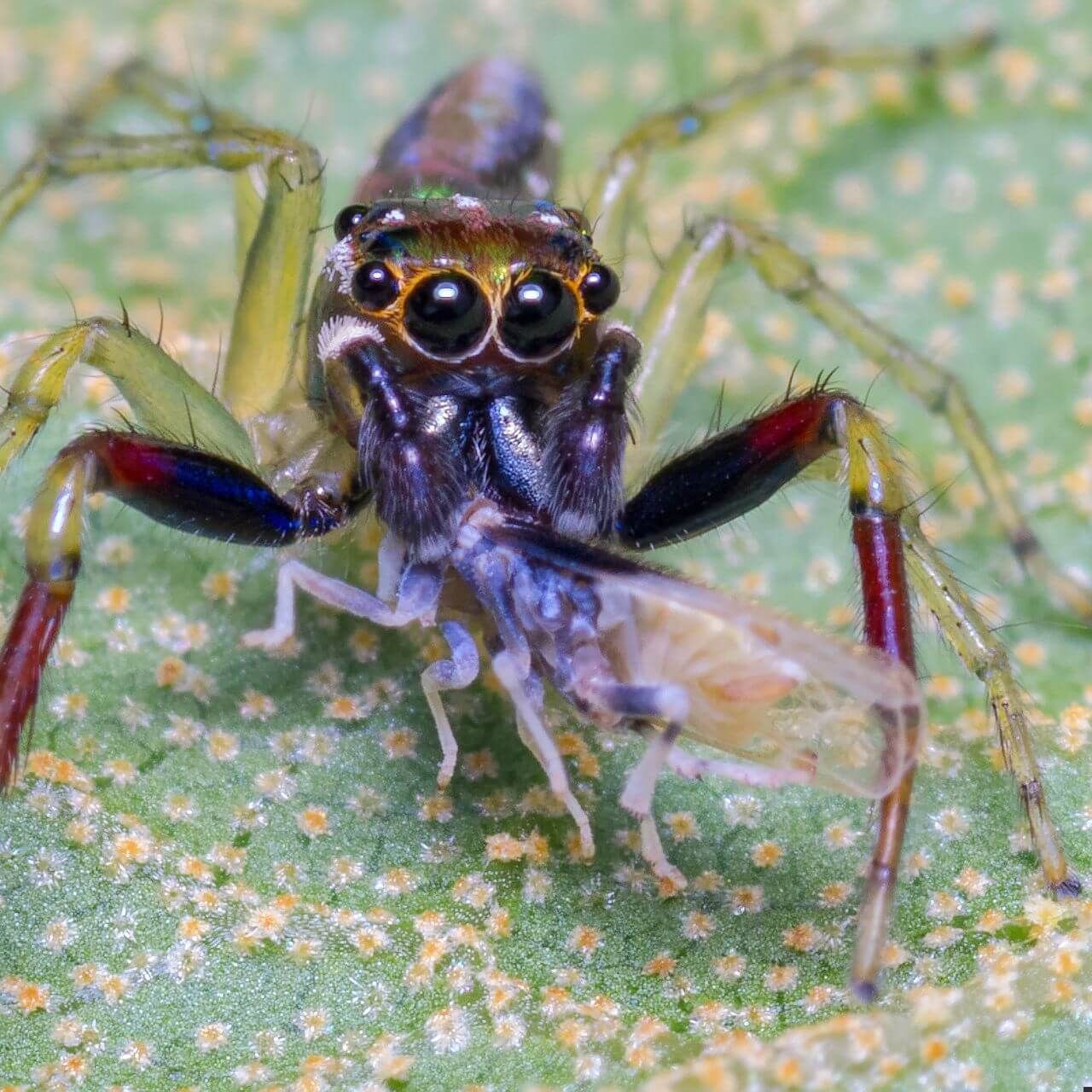
Jumping spiders, like almost all spiders, are carnivores. They are meat eaters.
They mostly eat small invertebrates, like insects and other spiders. Some species occasionally eat plant matter. In fact, one species of jumping spider is an herbivore. It is the only herbivorous spider species.
What do jumping spiders have in common?
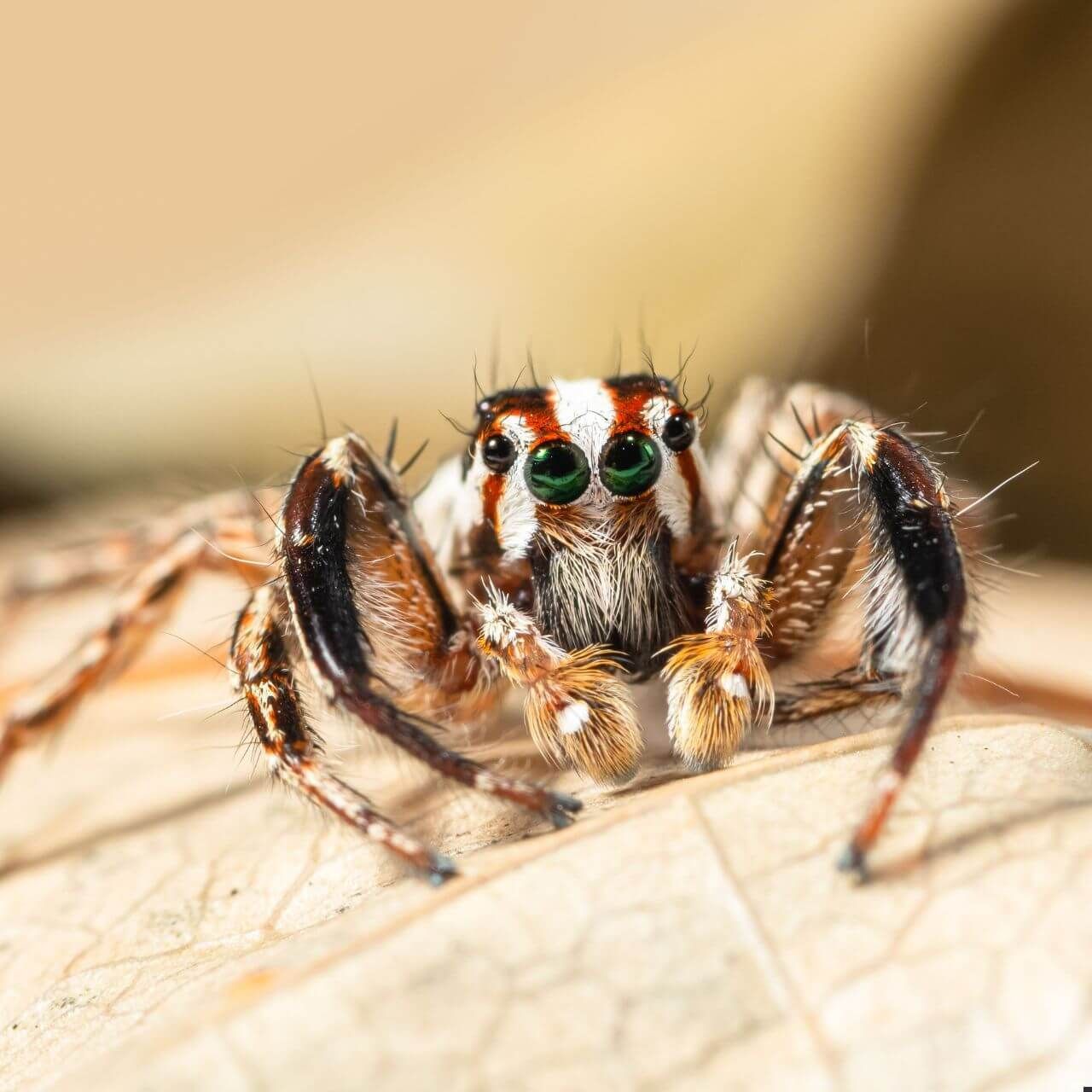
Jumping spiders have many similar traits, including...
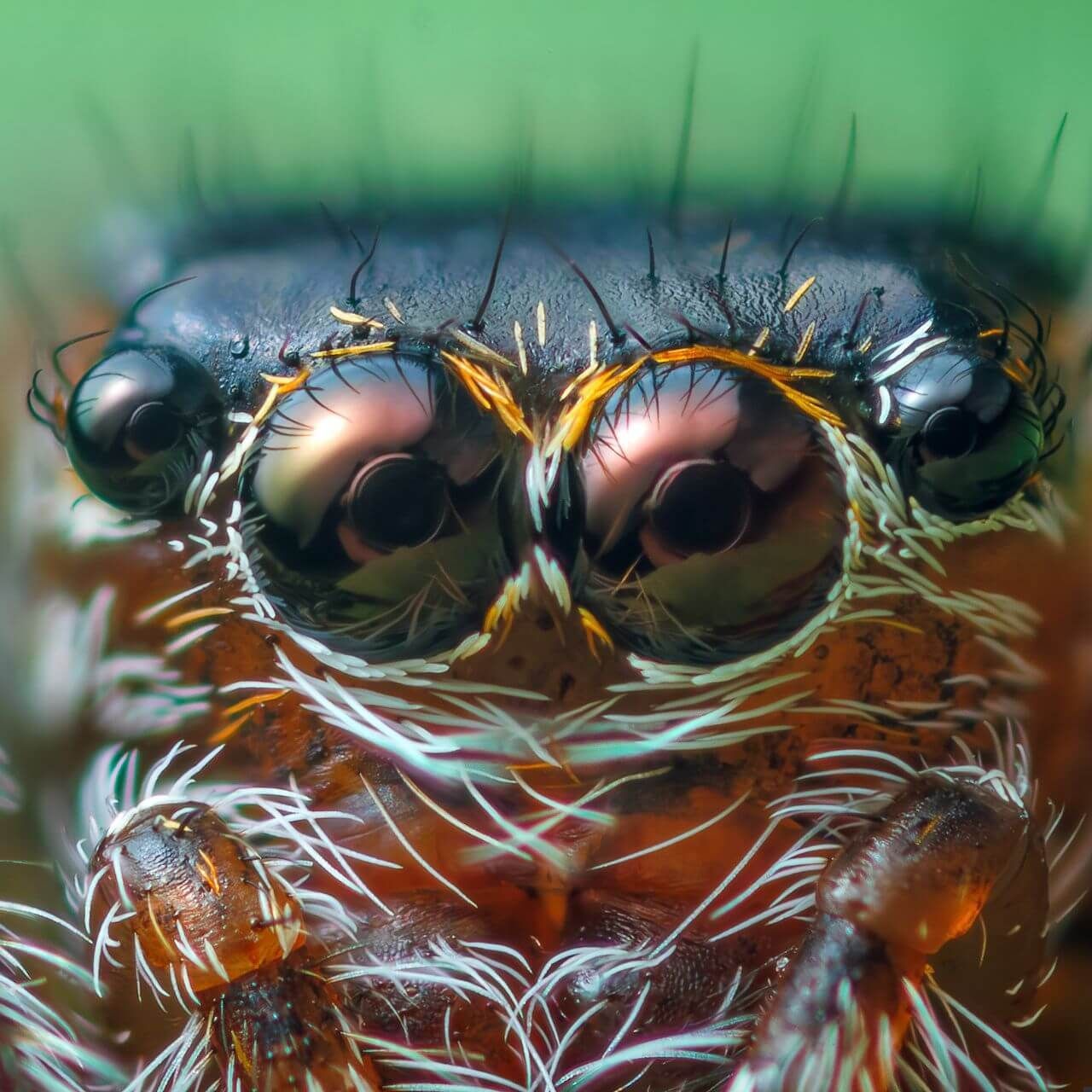
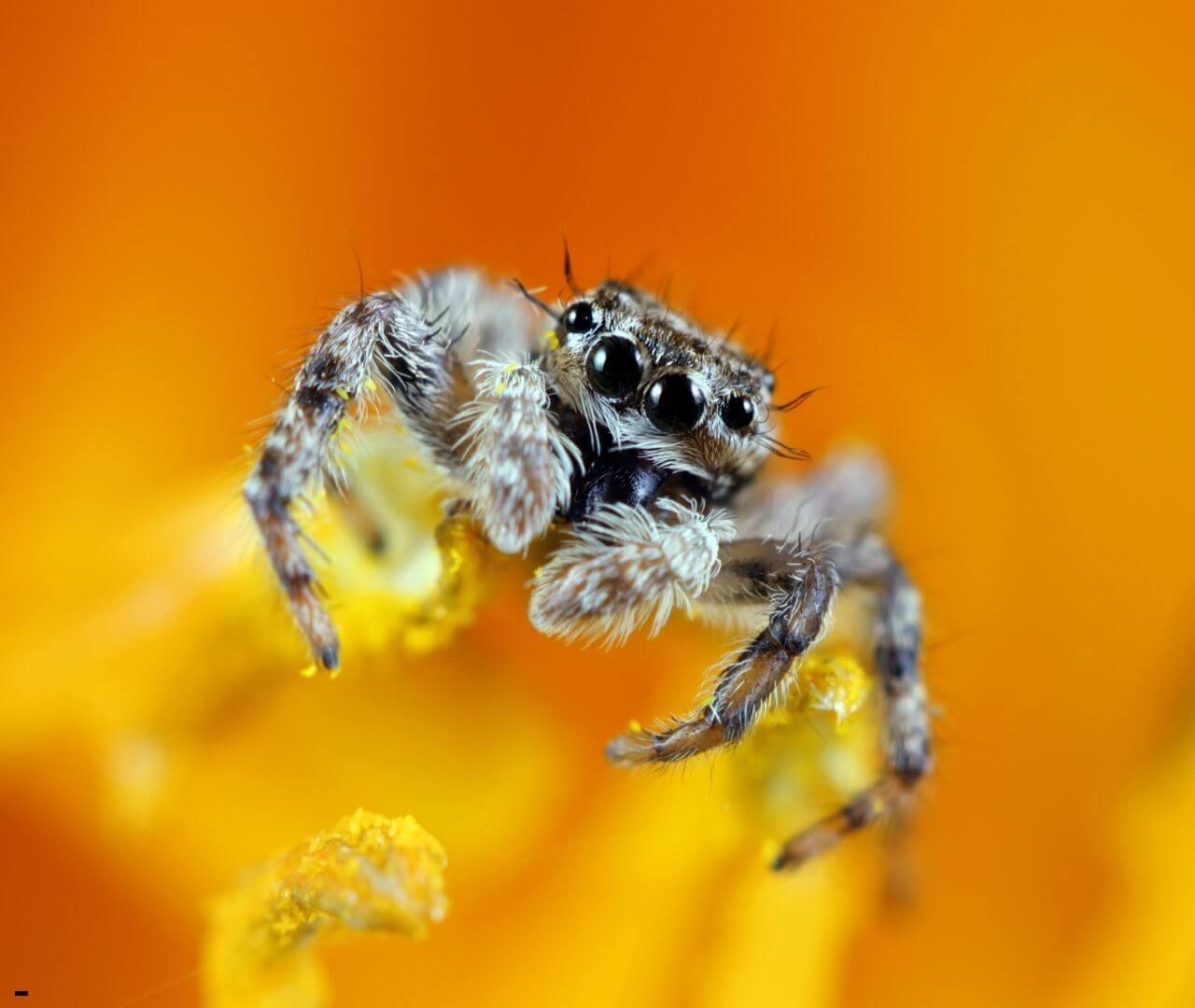
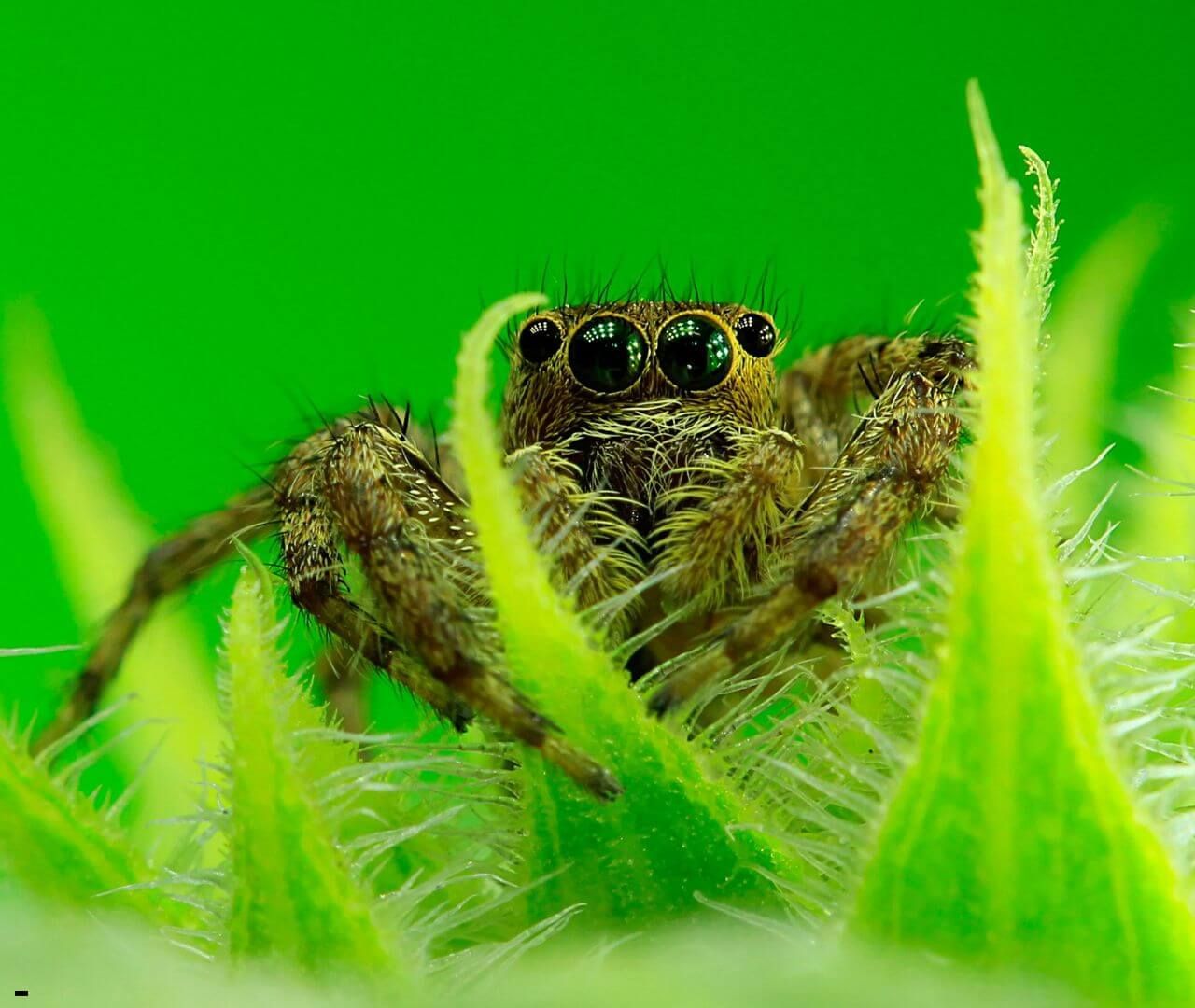
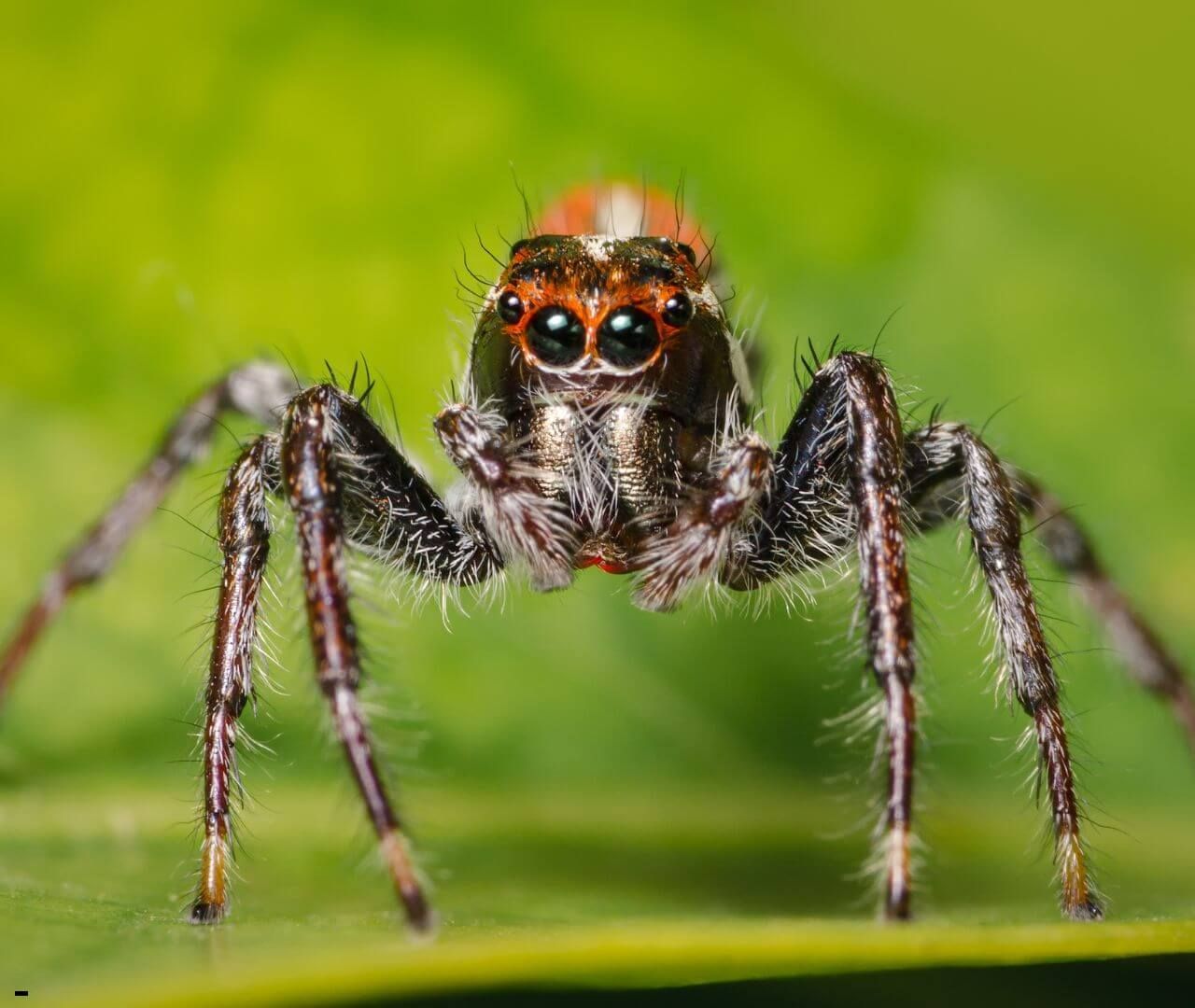
- Eight eyes and a powerful sense of sight
- Powerful and accurate jumping abilities.
- Ambushing hunting strategy.
- Solitary behavior.
How many jumping spiders are there?
There are more than 7,000 species of jumping spiders. It is the largest family of spiders.
Most jumping spiders are not threatened with extinction. Some species are threatened by habitat loss and pollution. Jumping spiders that live on islands are most vulnerable to threats.
Species Spotlight
Peacock Jumping Spider
Maratus ssp.
What do spiders and peacocks have in common? Most of the time, not very much. Spiders are small and have a hard exoskeleton and eight legs. Peacocks are much larger and have feathers, two legs, and wings. However, one spider is surprisingly similar to a peacock. It is the peacock jumping spider. They both use colors, dances, and sounds to attract mates.
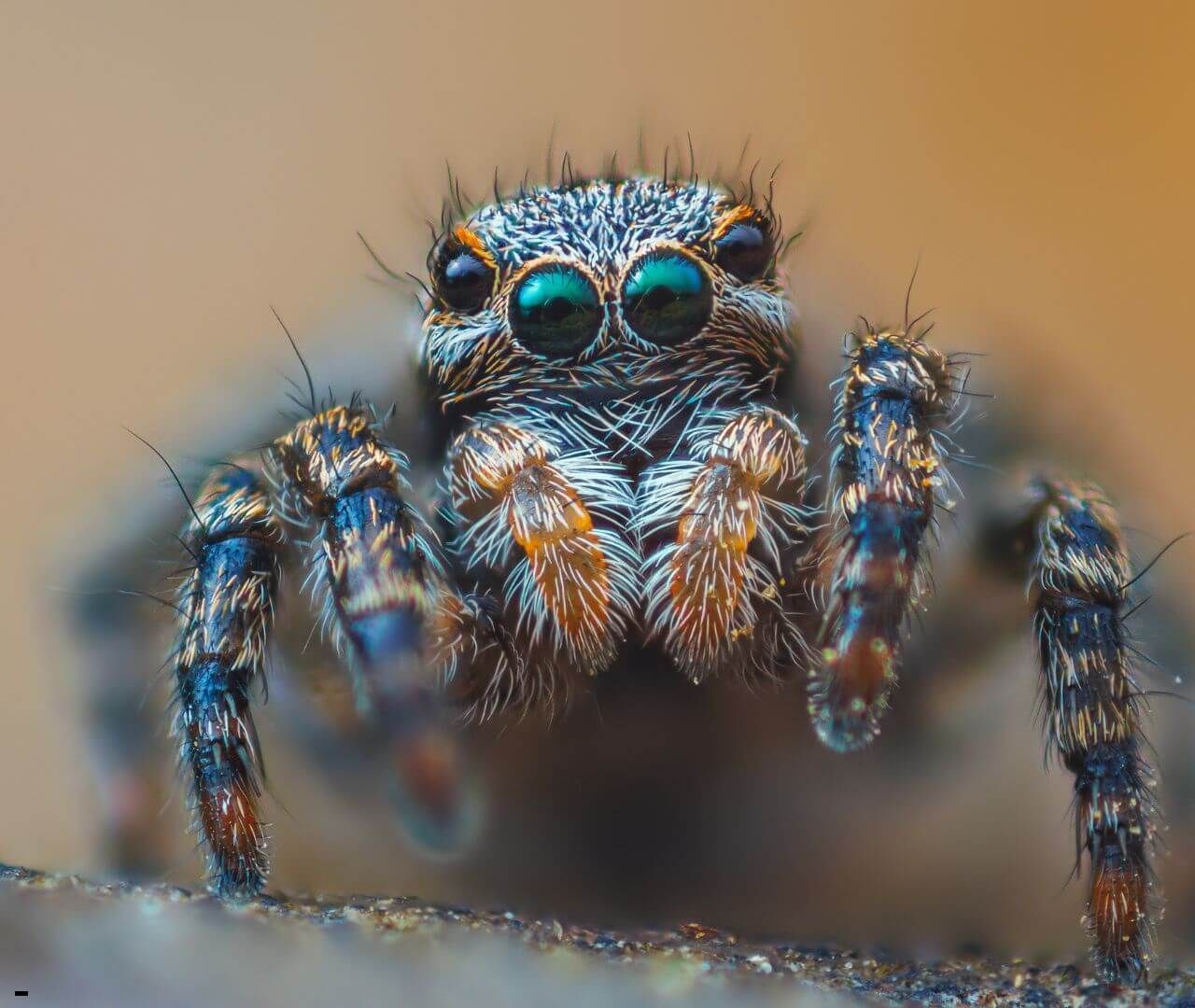
Male peacock jumping spiders have a colorful abdomen. It is similar to a peacock's tail feathers. Their abdomen can be orange, blue, red, or a combination of colors. Males raise their abdomen like a peacock’s tail feathers when courting a female.
As males show off their colors, they also perform a courtship dance. They move back and forth while waving their abdomen side to side. Some species dance with special flaps or by raising their legs. These courtship dances are similar to a peacock’s dance. Peacocks raise and shake their tail feathers when courting a female.
Recently, scientists discovered that some peacock jumping spiders also make sound. They use their legs and abdomen to make buzzing, thumping, or scraping noises. They listened to the rhythm of their songs using high-tech microphones. A peacock’s loud mating call can be heard without a microphone. They also make sounds by rattling their tail feathers.
Peacock jumping spiders and peacocks are different in many ways. However, the way they attract mates is very similar. It’s no wonder the peacock jumping spider got its name!
Conservation Corner
Saving Jumping Spiders
Most species of jumping spiders are not endangered. They have large, healthy populations. However, like all animals, they face threats. The main threats to jumping spiders are habitat loss and pollution. Scientists have a lot to learn about jumping spiders and how to protect them.
Habitat loss occurs when an animal’s natural habitat is destroyed or changed. They are cleared to make space for cities, farms, and roads. Some jumping spiders are able to live there, but not as easily. They struggle to find food and avoid predators. Their populations quickly shrink.
Pollution, like pesticides, also harms jumping spiders. Pesticides are chemicals used on farms to kill pests, such as plant-eating bugs. Jumping spiders commonly live on farms because they eat these bugs. The pesticides used to kill bugs can also kill spiders.
Scientists believe these are the two main threats to jumping spiders. However, there is still a lot to learn. Jumping spiders are hard to study because of their small size. It is challenging to know where they live, how many there are, and if their populations are growing or shrinking. Scientists struggle to protect them without this information.
Fortunately, jumping spiders have recently become more popular. They are featured in cartoons and even kept as pets. People becoming interested in jumping spiders is a great step toward protecting them. It will increase funding for spider research through fundraising and donations. Future generations (like you!) are more likely to become spider scientists who create plans to protect them.
Jumping Spider Selections
Select the word that correctly completes each sentence.
Jumping Spider Challenge
*You will need to work in a pair for this challenge*
Learn More!
Glossary
Adaptation
The process by which a species becomes more fit for its environment over the course of several generations. It is a result of natural selection.
Ambush
The act of sneaking up on prey.
Arachnid
A class of invertebrates with 2 body segments and 8 legs that lacks antennae and wings.
Arthropod
A large group of invertebrates consisting of insects, arachnids, myriapods, and crustaceans.
Carnivore
An animal that primarily eats meat.
Courtship
The act of using specific behaviors to attract a mate.
Diurnal
To be most active during the daytime.
Egg Sac
A protective pouch made of silk where spiders deposit eggs.
Exoskeleton
A hard exterior that supports and protects many species of invertebrates.
Invertebrate
An animal that has no bones.
Predator
An animal that hunts other animals for food.
Prey
An animal that is hunted and eaten by another animal.
Sexual Dimorphism
A significant difference in size, color, or other physical characteristic between males and females of the same species.
Silk
A thin, strong, and stretchy substance produced by spiders to make webs, protect eggs, and travel.
Solitary
Describing an animal that lives alone.
Species
A closely related group of animals with similar characteristics that are capable of reproducing (example: tigers).
Spiderling
A baby spider.
Venom
A toxin that is injected into prey through teeth or a stinger.