
Sea Anemones

Let's Learn About Sea Anemones
Word of the Week
Sessile
Sessile organisms do not move. They stay in one place for long periods of time, or forever!
Plants, coral, and most sea anemones are sessile.
Fast Facts
Where do sea anemones live?
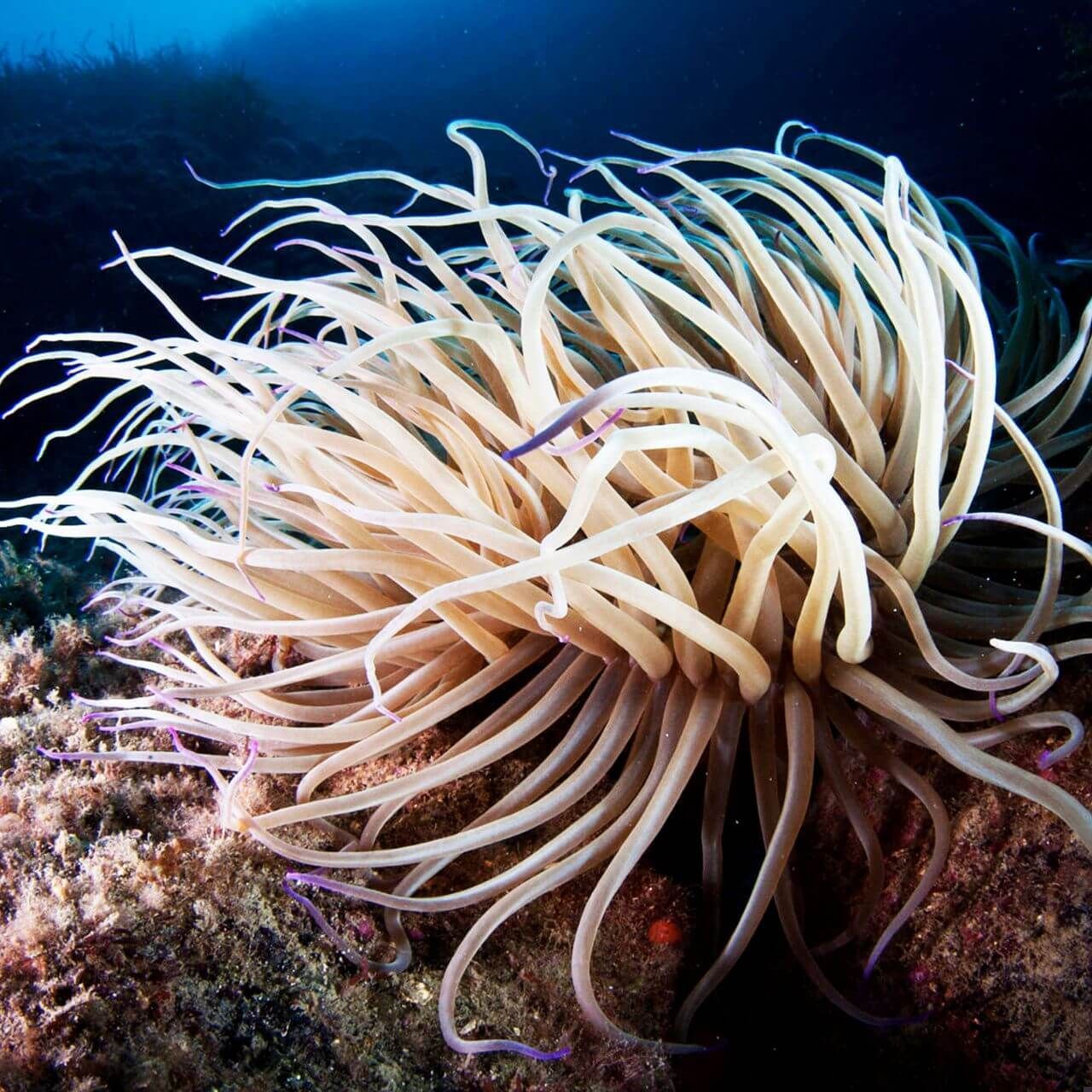
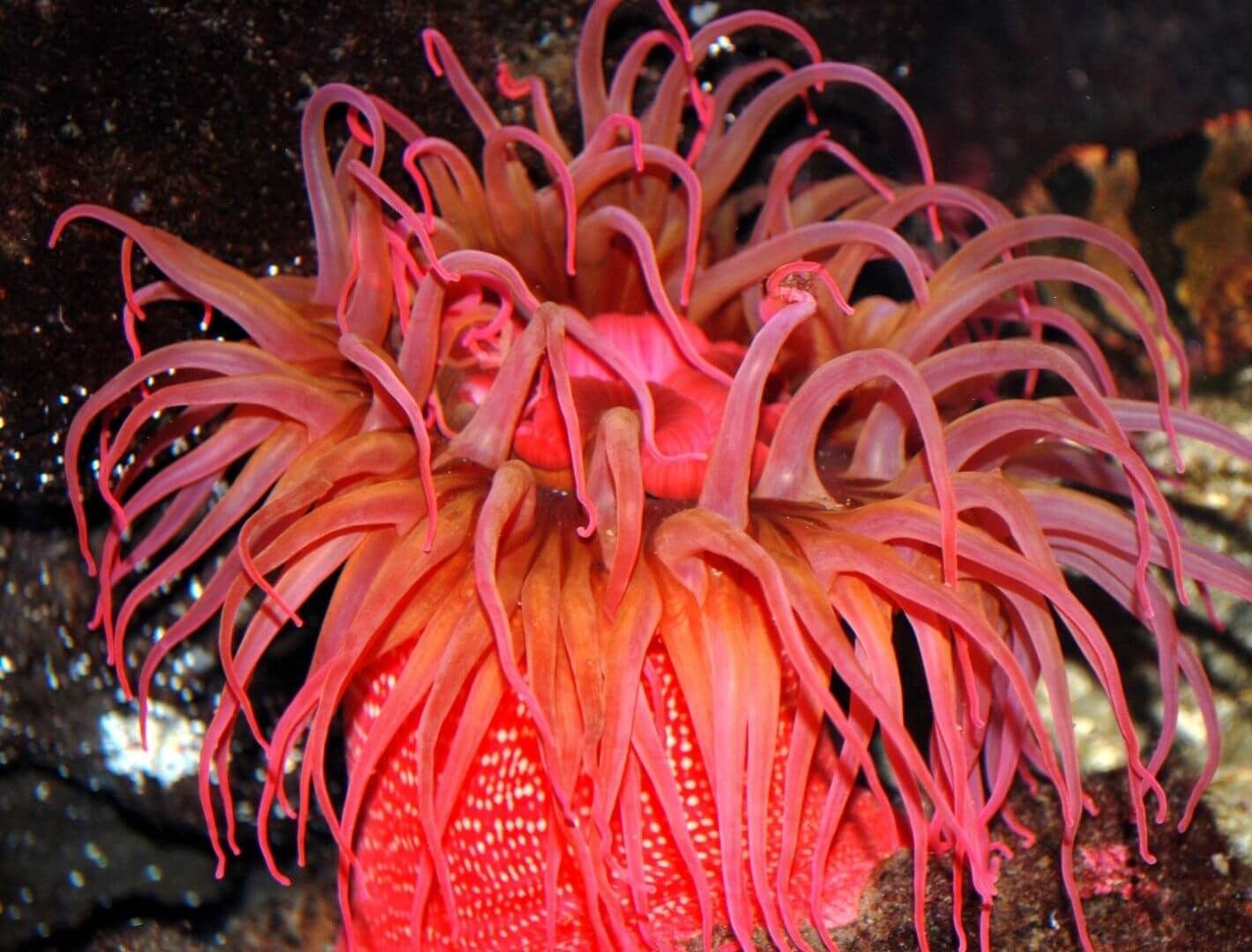
Sea anemones live on the seafloor in nearly every part of the ocean.
Most species are found in warm, shallow water in tropical regions. They often live around coral reefs. Some species are found in freezing water near the Arctic and Antarctica. Some even live in the deep sea.
What do sea anemones eat?
Sea anemones are carnivores. They eat meat.
They mostly eat small, free-floating plankton. They also eat crustaceans, like crabs and shrimp, and fish. They sting prey and guide it toward their mouth (oral disk) with their tentacles.
What do sea anemones have in common?
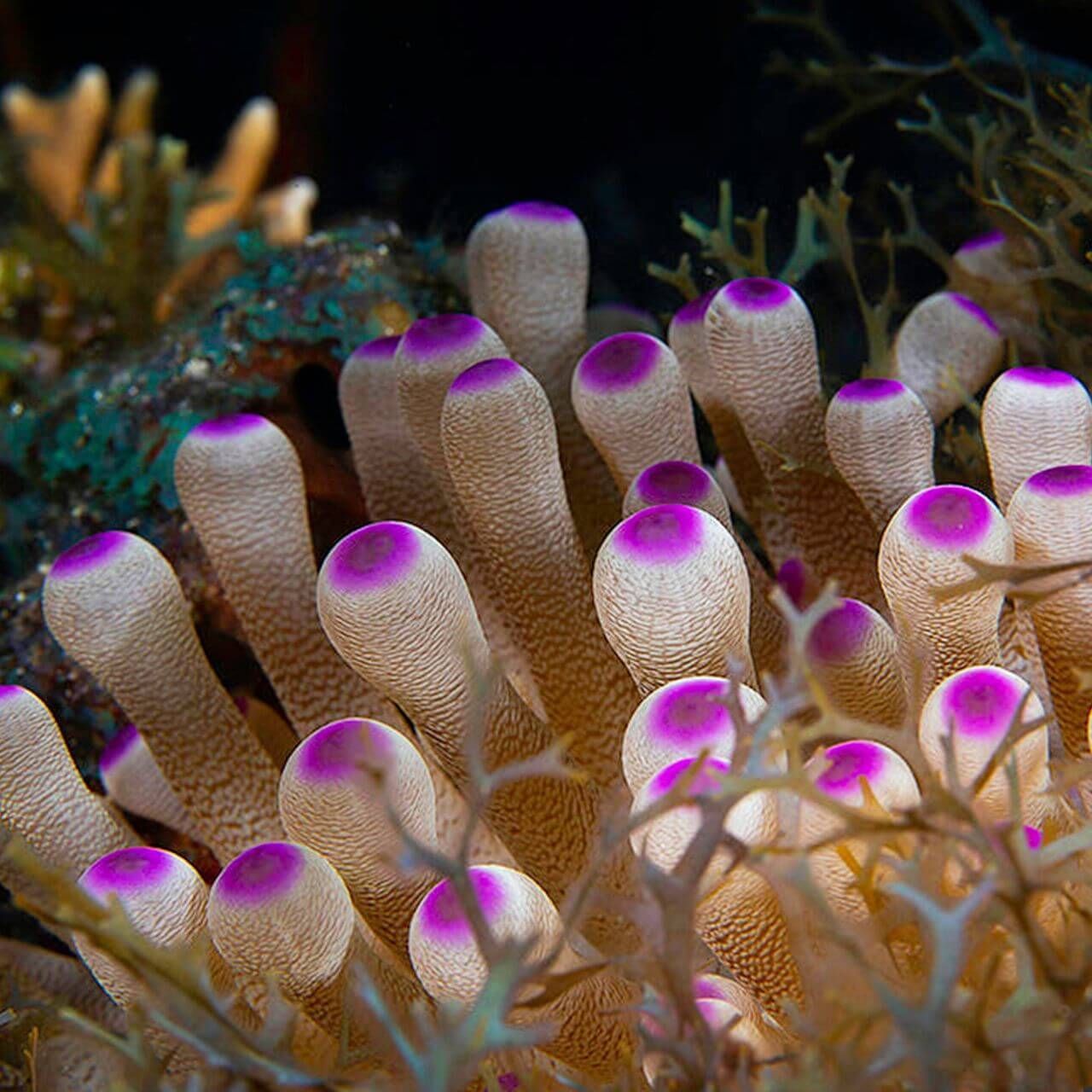
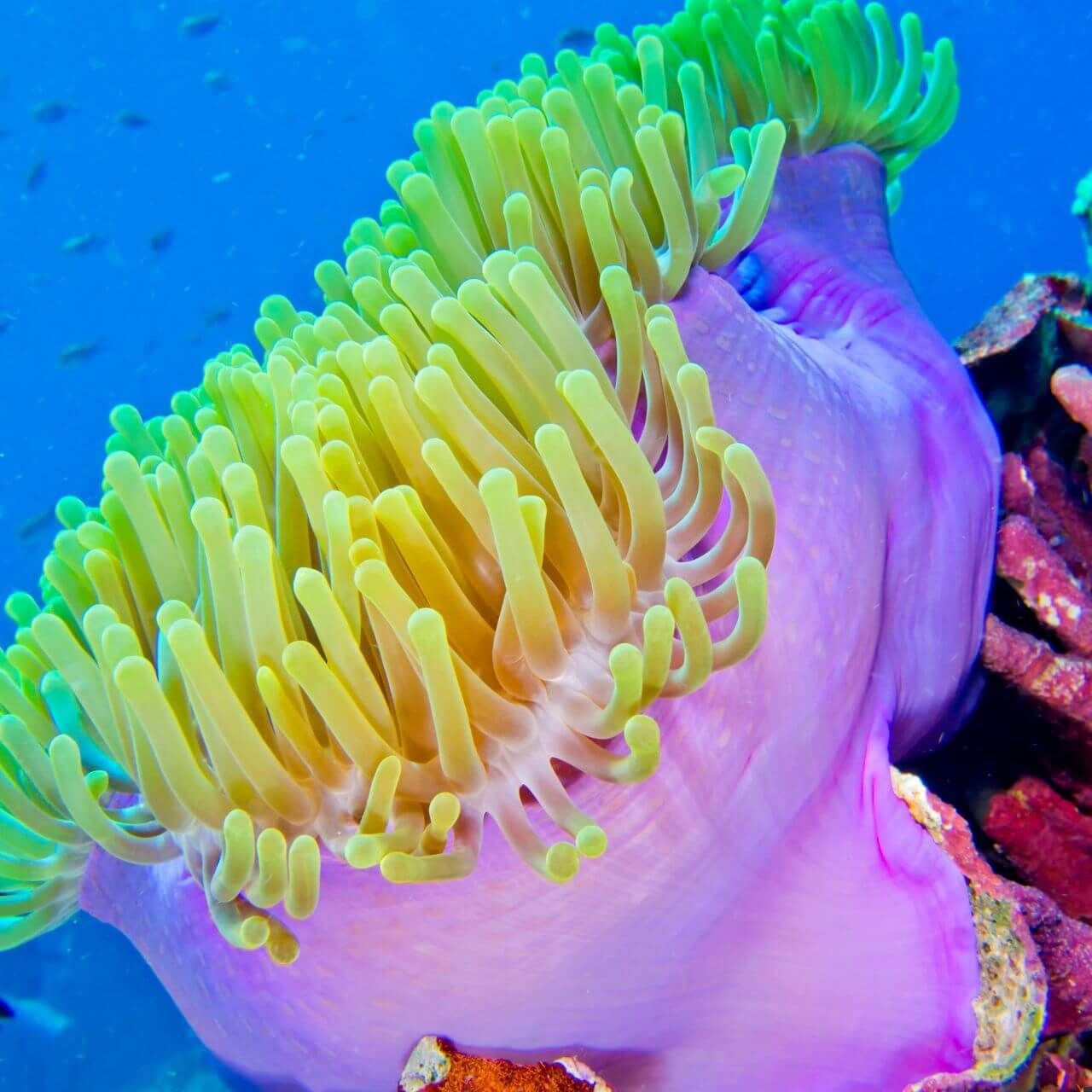
Sea anemones have many unique traits, including...
- Stinging tentacles used to catch prey and defend themselves
- An oral disk where their mouth is located
- A mutualistic relationship with microscopic algae
- The ability to reproduce with or without a mate
How many sea anemones are there?
There are more than 1,000 species of sea anemones.
Most species of sea anemones are not endangered. They face a few threats, including climate change, pollution, and habitat loss.
Species Spotlight
Bubble-Tip Anemone
Entacmaea quadricolor
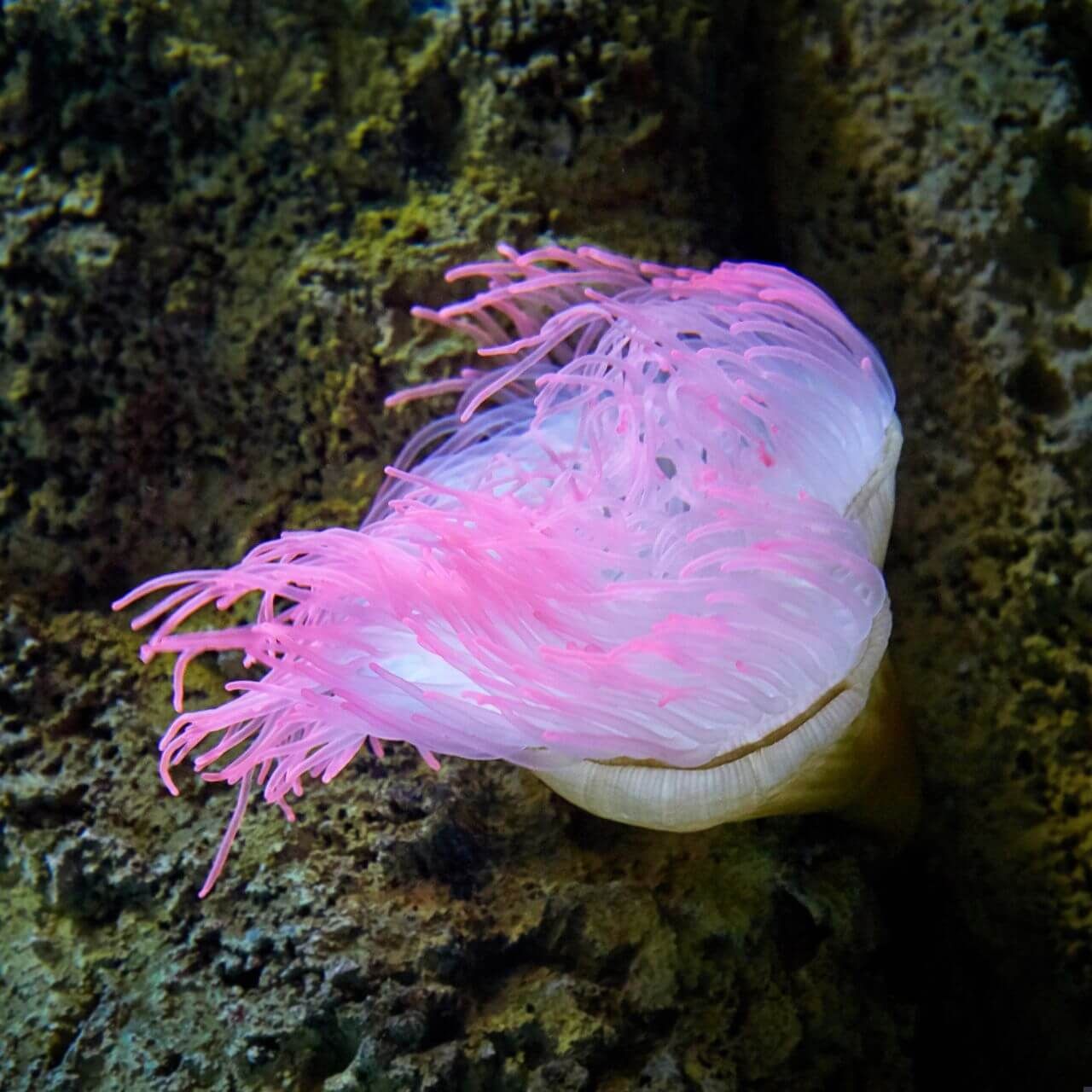
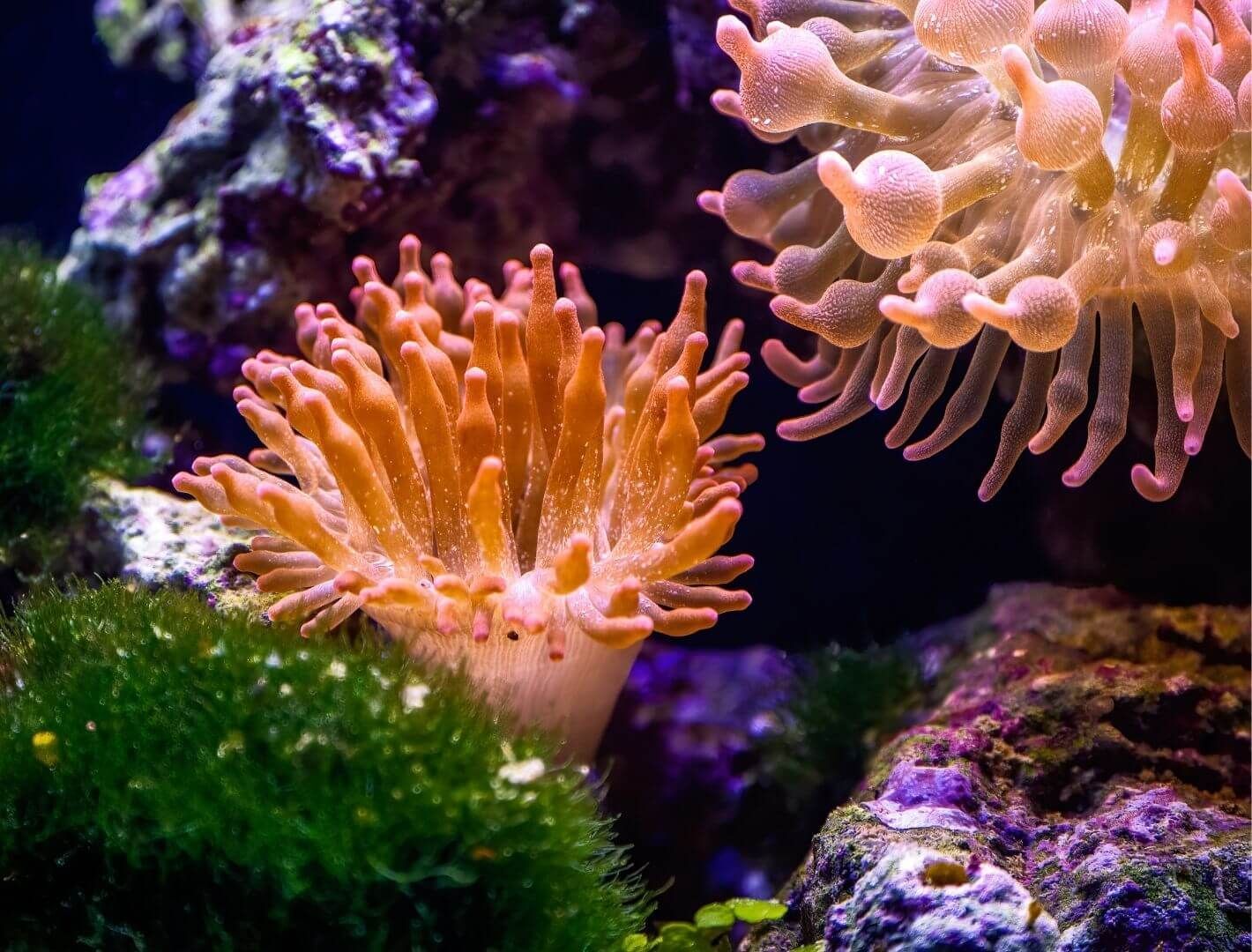
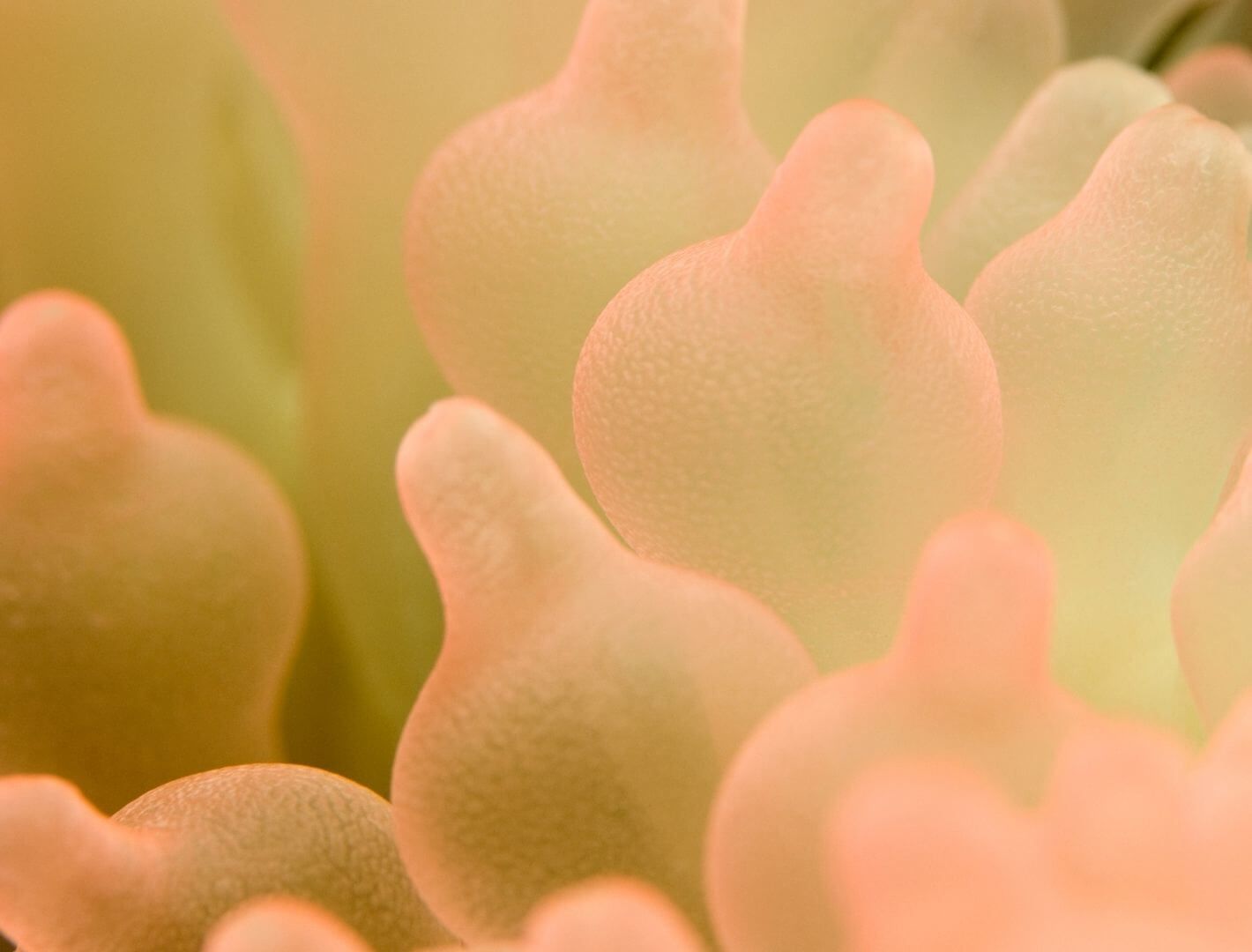
The bubble-tip anemone’s name tells us a lot about it. It describes the rounded tips of its tentacles. Its scientific name tells us something, too! “Quadricolor” means “four colors.” Scientists gave the bubble-tip anemone this name because it can be different colors. Most are green, but they can also be pink, orange, or red.
Bubble-tip anemones get their color from tiny algae. These algae are called zooxanthellae (pronounced zoo-zan-thel-ay). They live inside the sea anemone’s tentacles. Zooxanthellae use photosynthesis to get energy from the sun. The sea anemones take some of the energy from the zooxanthellae. In return, they give the zooxanthellae a place to live. This is a mutualistic relationship. They both get something good from the interaction!
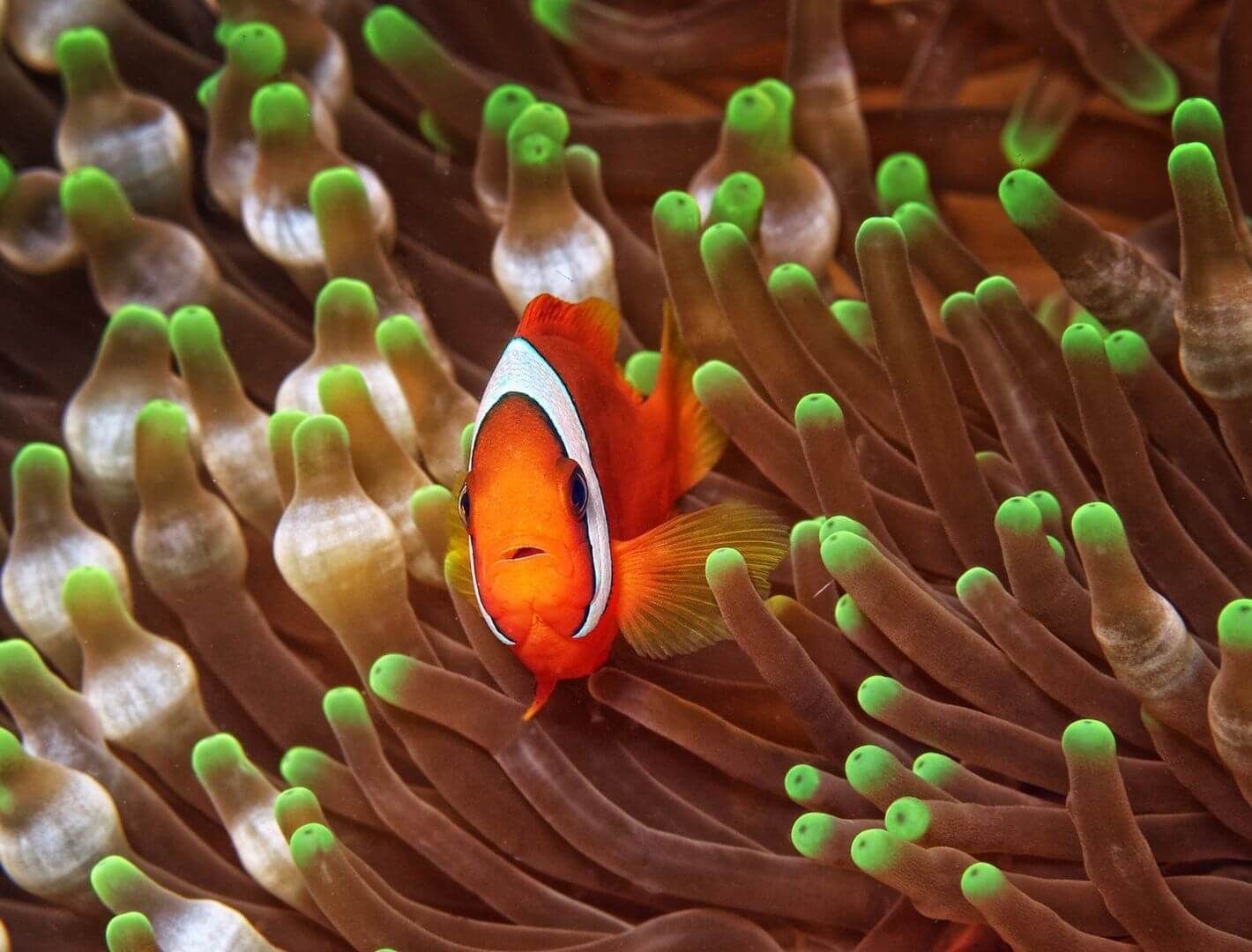
Sea anemones also have mutualistic relationships with other organisms. Many species of clownfish and other anemonefish live with bubble-tip anemones. About half of all anemonefish species live with bubble-tip anemones. The bubble-tip anemone protects them from predators. In return, the anemonefish give the sea anemone food and protection. Who knew that sea anemones had so many useful friends?
Brain Blast
Bubble-tip anemones are named after their appearance. Make a list of other animals named for the way they look. For example, a stonefish looks like a stone.
Conservation Corner
Saving Nemo (And Anemones!)
What is your favorite animal in the ocean? Perhaps a dolphin or whale. Maybe a stingray or eel. Possibly an adorable little fish, like a clownfish. Most people would not pick a sea anemone. They are unusual creatures. Sometimes, people do not seem to care about unusual creatures like sea anemones. When people do not care about an animal, they are less likely to learn about or protect it.
Fortunately for sea anemones, there is a well-loved animal that relies on them. Clownfish became a very popular fish after the release of Finding Nemo. Kids all around the world watched Nemo and his dad return to their sea anemone home. There would be no clownfish without sea anemones, and that made people care.
Today, scientists use the world’s love of clownfish to protect them AND sea anemones. A team of ocean lovers created a clownfish conservation group called Saving Nemo. They found a way that regular people (like you!) can help. Saving Nemo created a program called IC-Anemone. Anyone who sees a sea anemone or clownfish can record their sighting in the iNaturalist app under the IC-Anemone project. Scientists use this information to learn about sea anemone populations and threats. Now you, or anyone you know who spends time in the ocean, can help save sea anemones and clownfish!
Sea Anemone Challenge
How Sea Anemones and Algae Help Each Other Survive
Learn More!
Glossary
Algae
Mostly aquatic plant-like organism that obtain energy from the sun using photosynthesis.
Carnivore
An animal that eats primarily meat.
Climate Change
A change in global weather patterns as a result of greenhouse gases in the atmosphere.
Cnidarian
Group of invertebrates including corals, jellyfish, and sea anemones.
Cnidocyte
The explosive stinging cells found on cnidarian tentacles.
Column
The cylindrical base of a sea anemone's body.
Ecosystem
An area of the planet filled with living and nonliving things that interact.
Invertebrate
An animal that has no bones.
Mutualism
A symbiotic relationship where both organisms benefit.
Oral Disc
The structure on the upper surface of a sea anemone's body that contains their mouth and is surrounded by tentacles.
Pedal Disc
The structure on the bottom of a sea anemone's column that attaches it to the sea floor.
Photosynthesis
The process used by plants and algae to change energy from the sun into sugar (energy) for the organism.
Predator
An animal that hunts other animals for food.
Prey
An animal that is hunted and eaten by another animal.
Sessile
[In zoology] Referring to an animal that does not move.
Symbiosis
A relationship between different organisms where at least one organism benefits.
Tentacles
[In cnidarians] Long, flexible structures usually covered in stinging cells used by cnidarians to catch prey and defending themselves.
Zooxanthellae
Microscopic algae found in some Cnidarians (corals, jellyfish, etc.). They provide the animal with energy through photosynthesis.