
Bighorn Sheep

Let's Learn About Bighorn Sheep
Word of the Week
Horn
Horns are permanent structures on the head of some hoofed animals made of a bony core and covered in a keratin sheath.
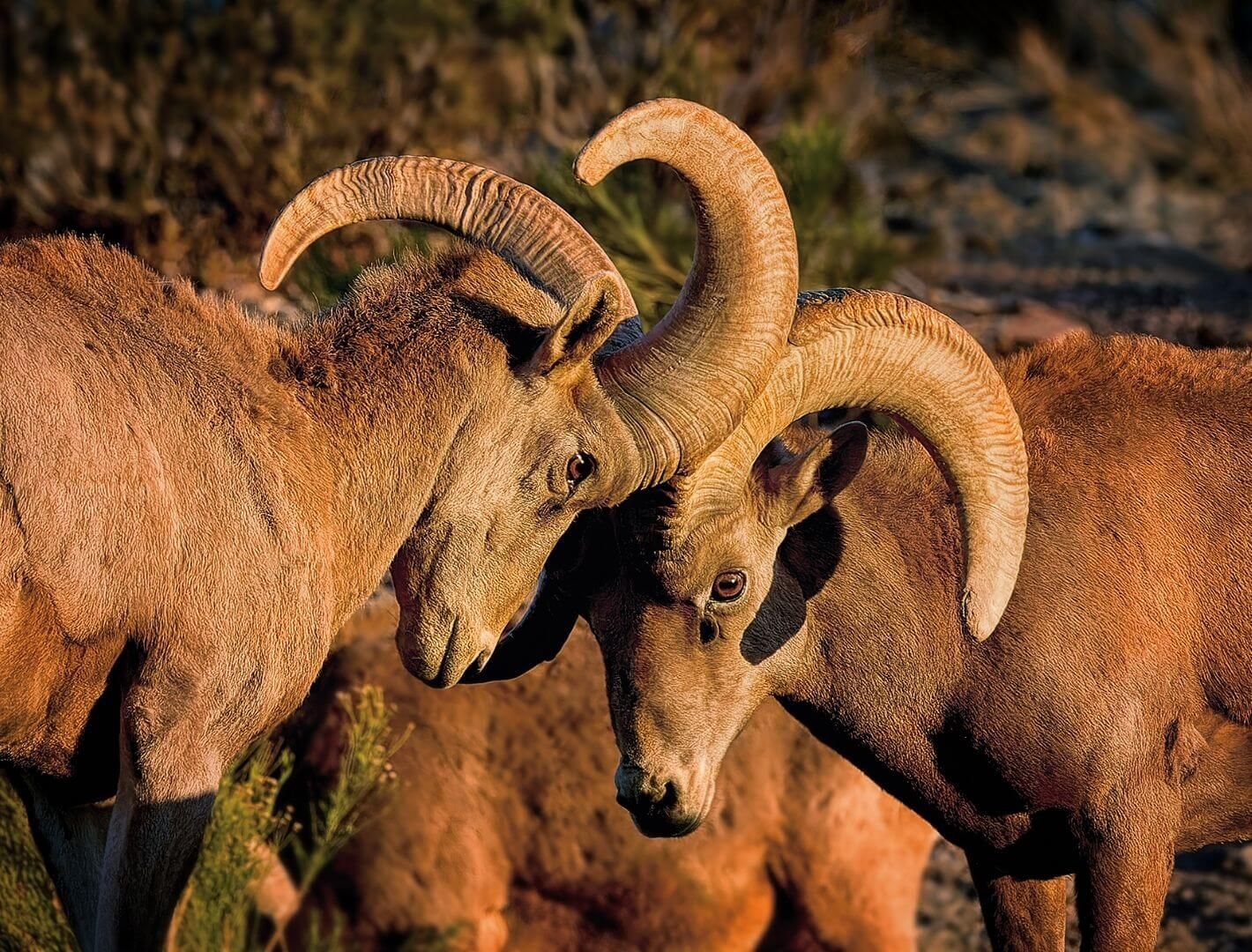
Animals like sheep, goats, and antelopes have horns. They are used for competition, attracting mates, and defense.
Fast Facts
Where do bighorn sheep live?
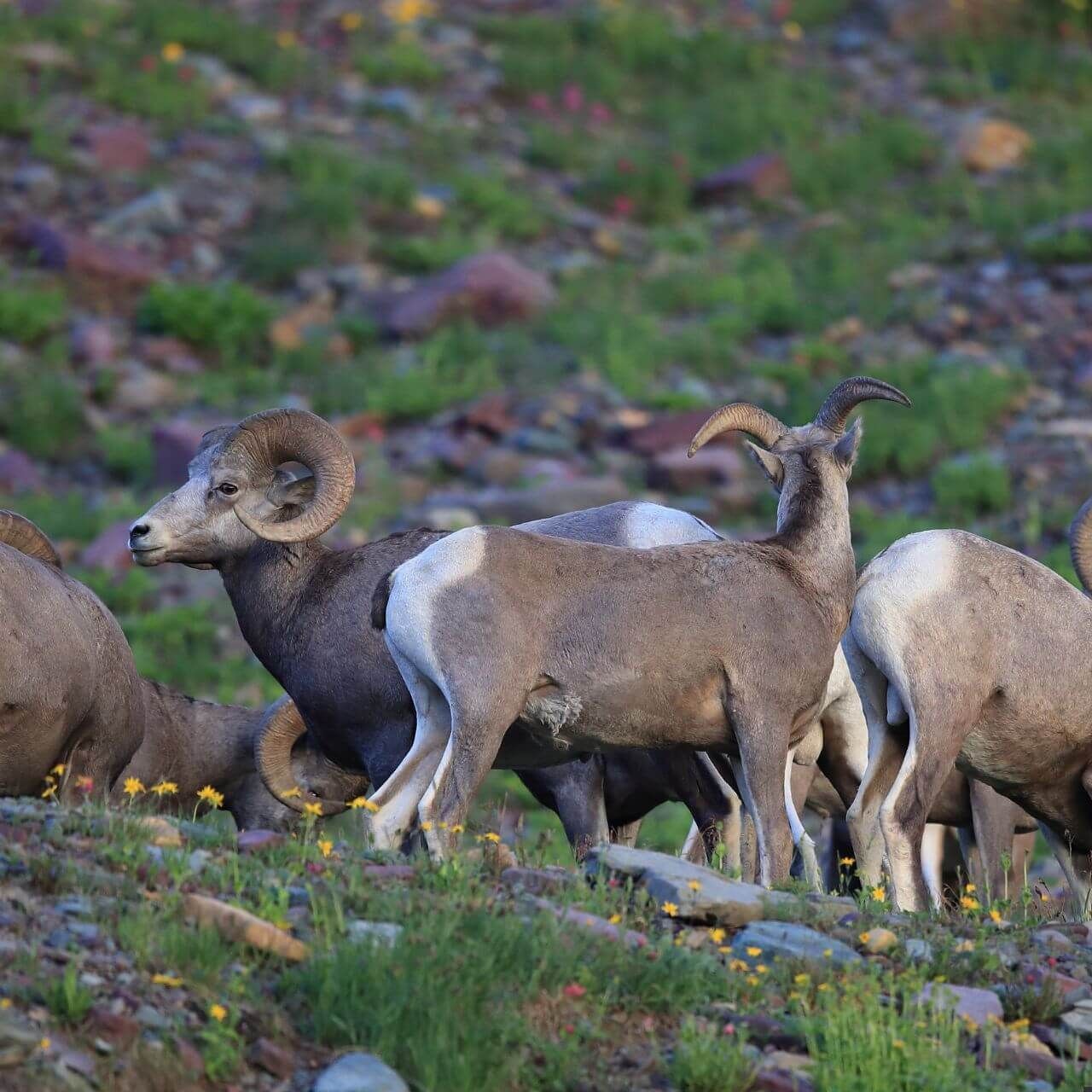
Bighorn sheep are native to North America. They live in the western part of the United States, Canada, and a small part of Mexico.
Different subspecies of bighorn sheep live in different habitats. Some bighorn sheep live in mountains while others live in deserts.
What do bighorn sheep eat?
Bighorn sheep are herbivores, meaning they eat plants.
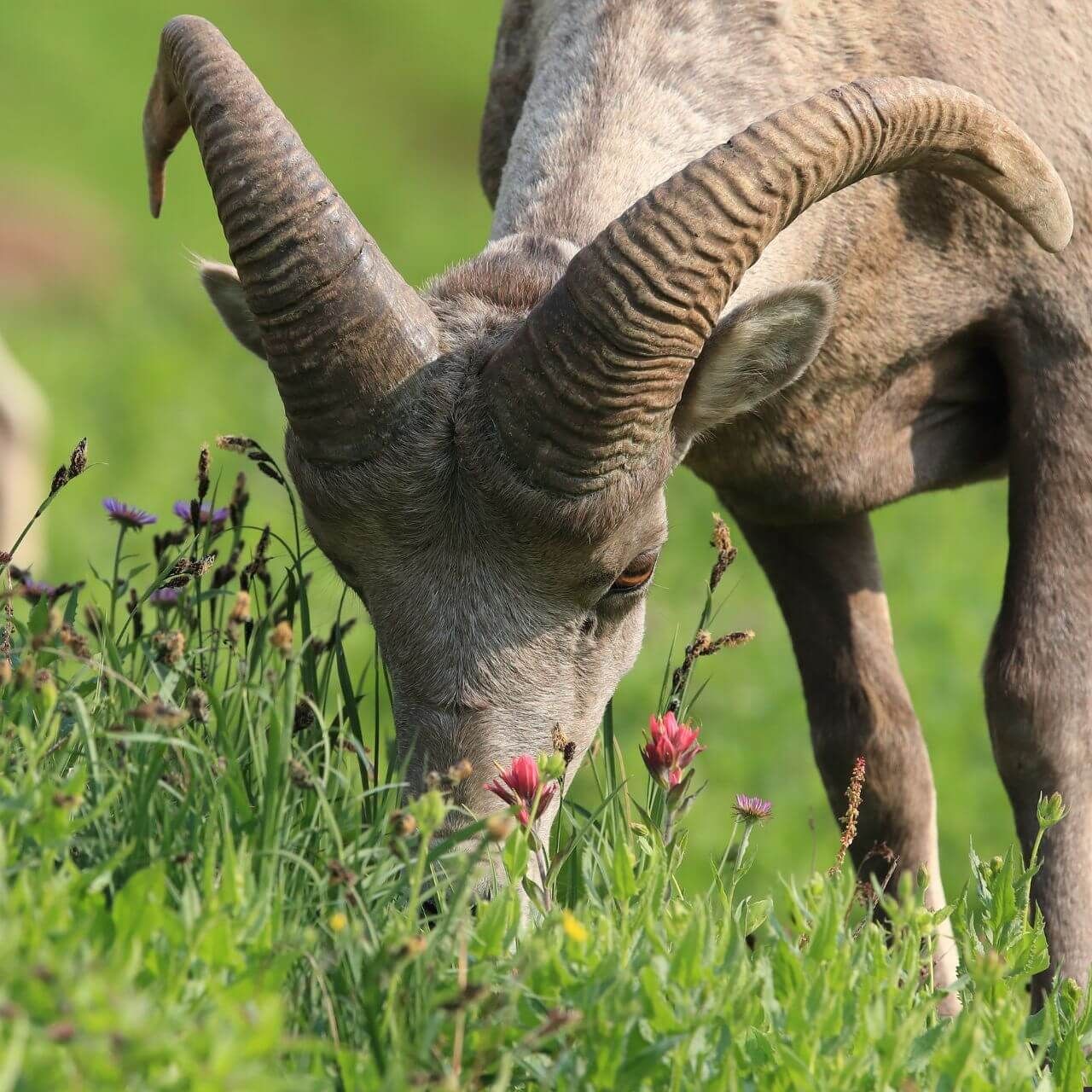
They primarily feed on grasses and shrubs. They use sharp front teeth to slice through vegetation and wide molars to grind it up.
What traits do bighorn sheep have?
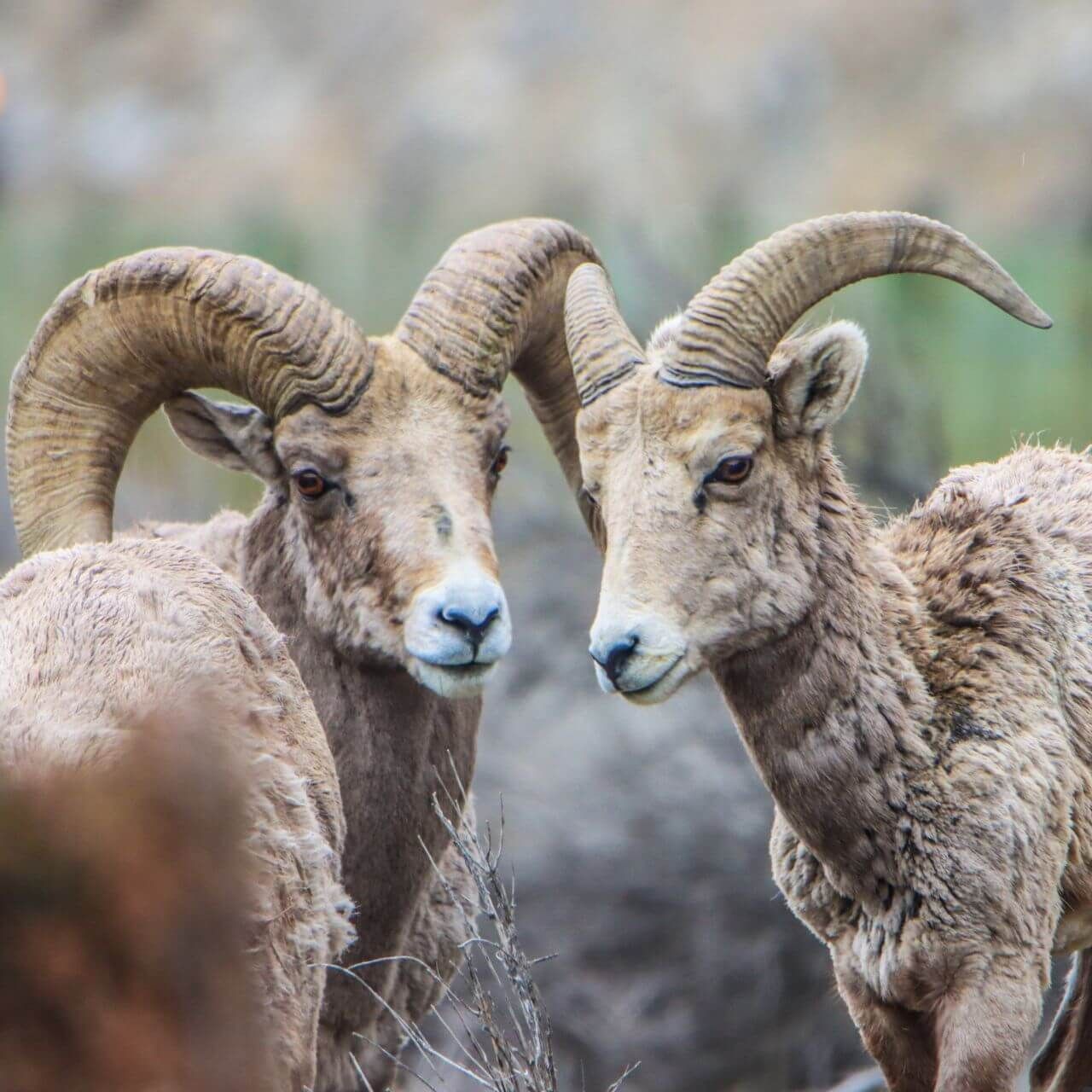
Bighorn sheep have lots of helpful traits, including...
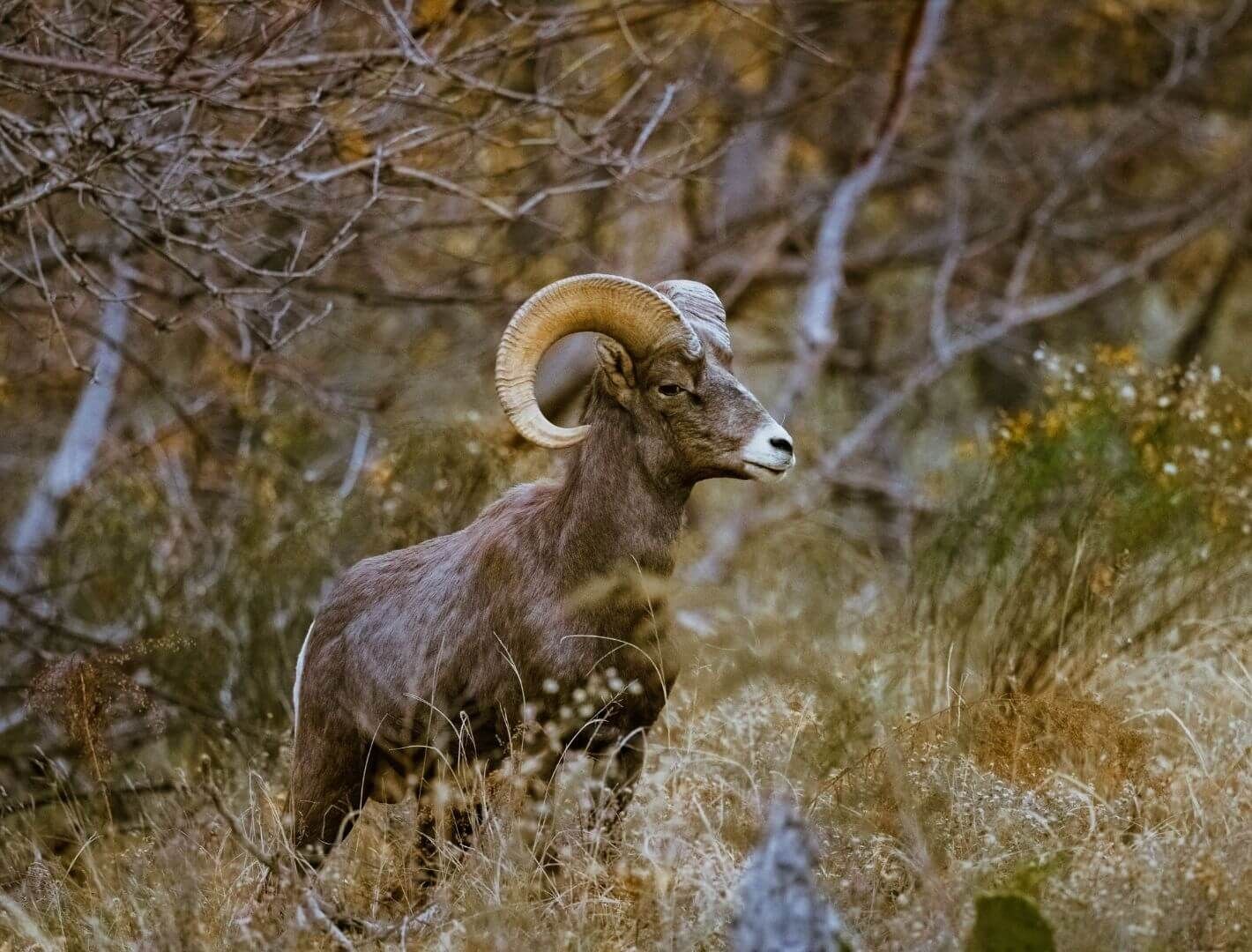
- Brown fur
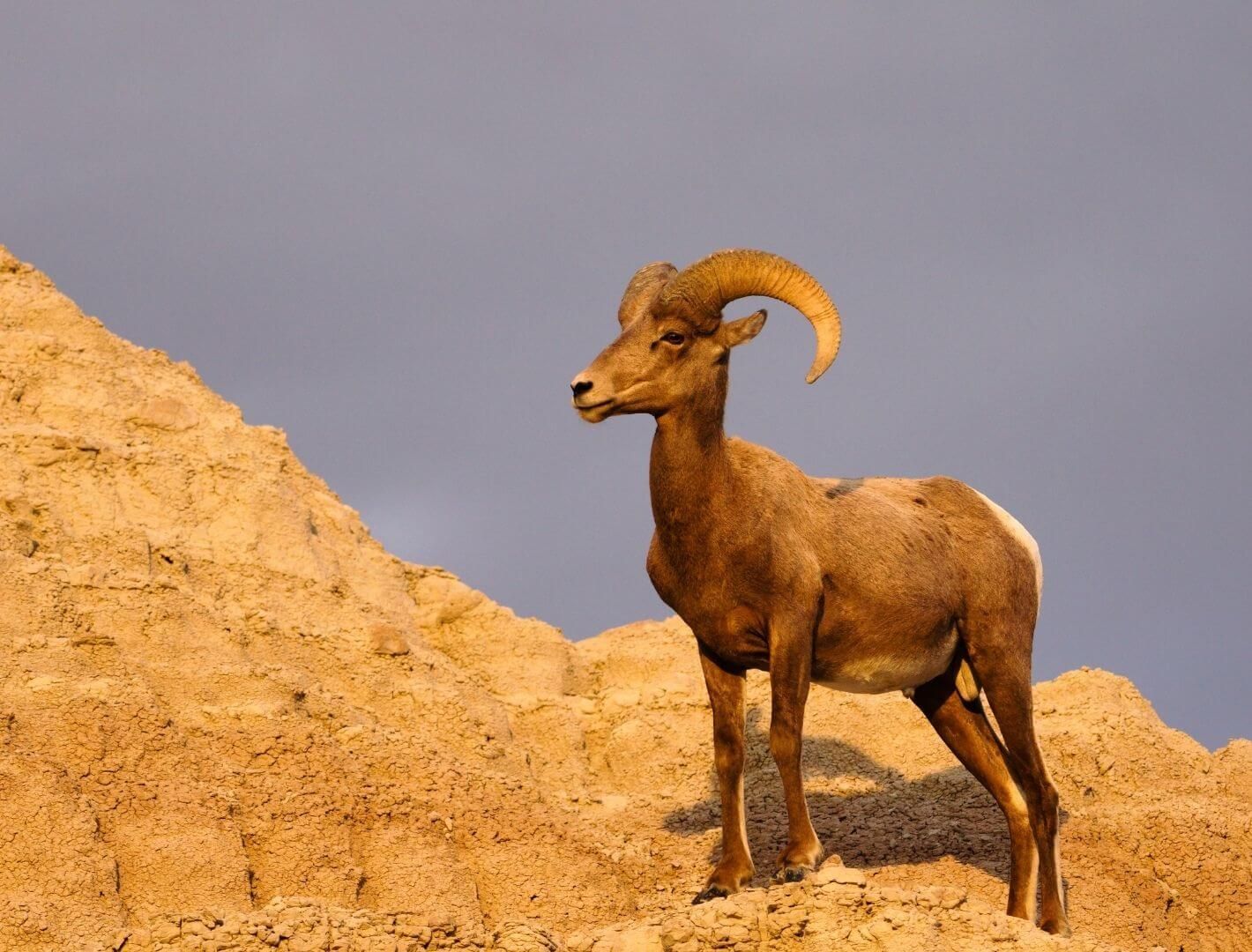
- Large, curved horns.
- Hooves designed for gripping.
- Ruminant digestive system
How many bighorn sheep are there?
There is one species of bighorn sheep with three subspecies.
Bighorn sheep are listed as Least Concern by the IUCN. Historically, millions of bighorn sheep roamed North America. They estimate that nearly 50,000 bighorn sheep live in the wild today.
Species Spotlight
Desert Bighorn Sheep
Ovis canadensis nelsoni
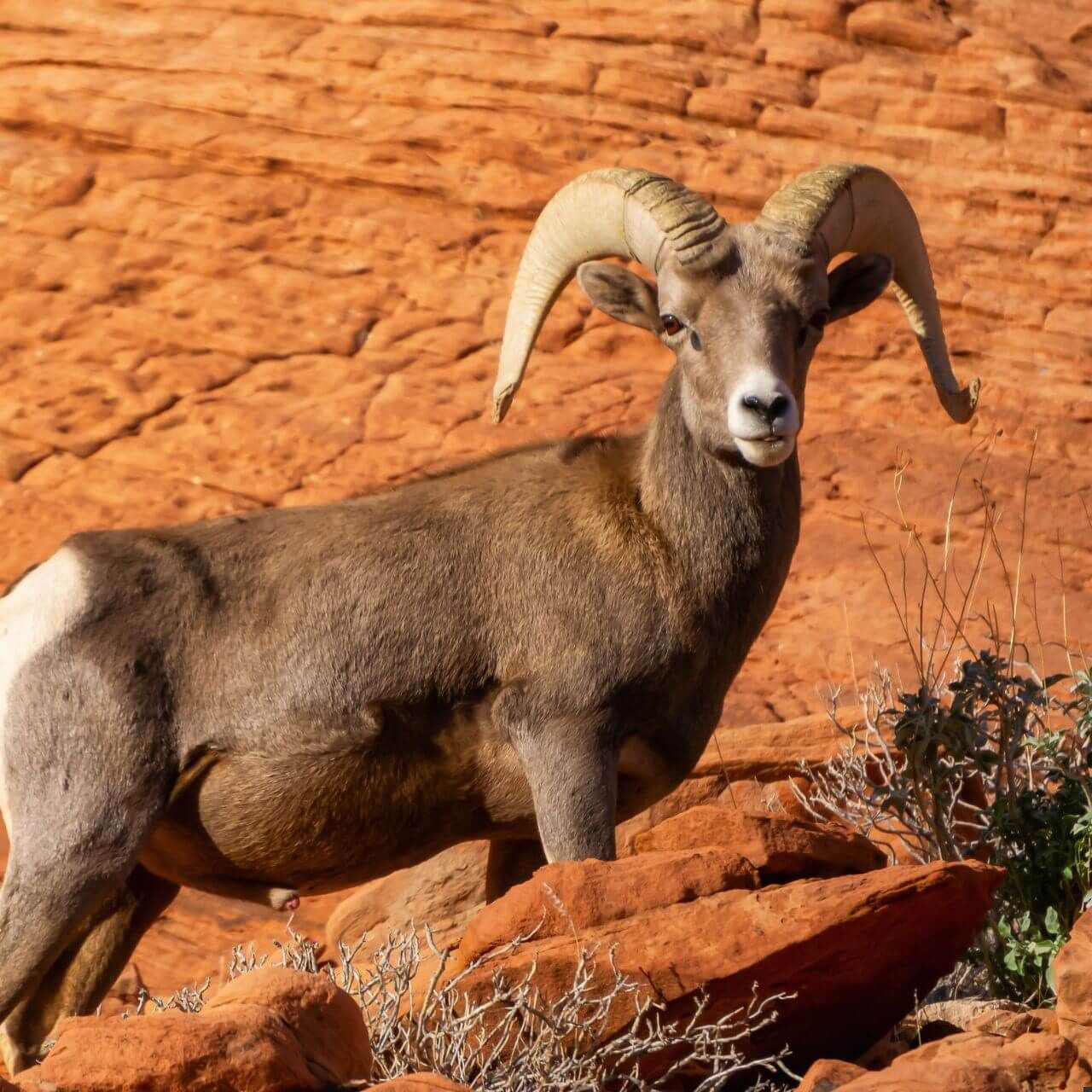
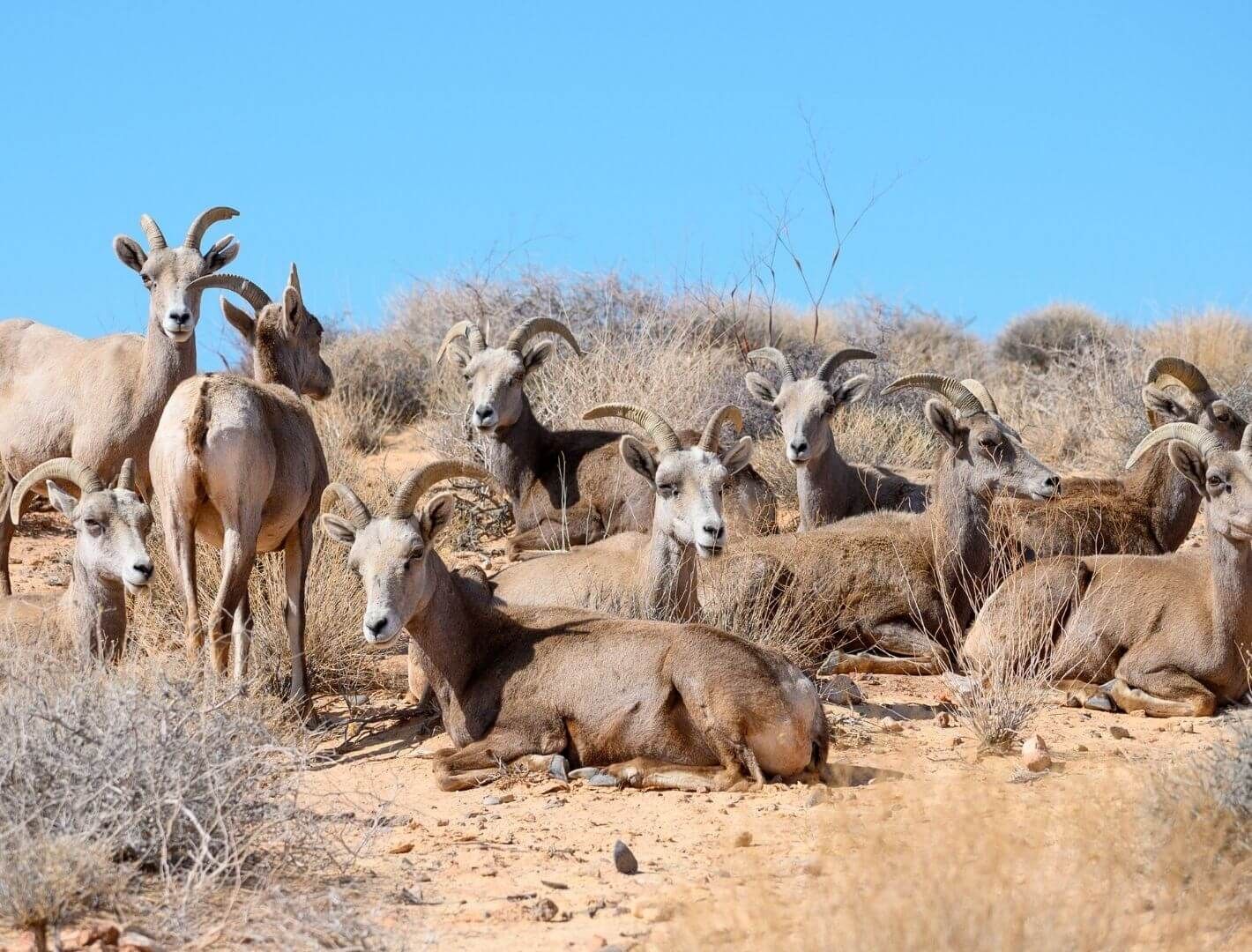
Desert bighorn sheep are the only subspecies to live in a hot, dry desert. They are designed for these extreme conditions. Desert bighorn sheep can go weeks or months without drinking water. They get most of the water they need from their food. Desert bighorn sheep mainly eat grass. When grass is not available, they eat other vegetation, including cacti! They use their horns to rip cacti open to avoid the sharp spines.
Being able to survive in dry conditions helps bighorn sheep avoid predators. Many of their predators, such as mountain lions and coyotes, cannot survive without drinking water. Bighorn sheep also stay hidden from predators using camouflage. Their brown fur blends in with the brown desert landscape. They spend the hottest parts of the day hidden under trees or in caves.
These adaptations make them unique. However, they share many other traits with other bighorn sheep. Like all bighorn sheep, desert bighorn sheep are impressive climbers. Their hooves have two toes. This helps them stand on uneven surfaces. Their hooves are also rough, which gives them a good grip. They can walk across ledges that are 2 inches wide! All of these amazing adaptations make desert bighorn sheep one of the most fascinating animals in the desert.
BRAIN BLAST
Can you think of any other ways a bighorn sheep's horns would help them survive in a hot, dry desert?
Conservation Corner
Bighorn Sheep Helicopter Journey
Millions of bighorn sheep once lived across North America. Their populations shrank quickly as the humans spread across the continent. Humans hunted them for their meat and skin. They brought domestic sheep that ate the bighorn sheep’s food and spread diseases. Bighorn sheep could no longer roam as far as they once did.
Today, scientists are working to increase bighorn sheep populations in several ways. National parks are areas where bighorn sheep are protected from hunting. Parks also keep bighorn sheep herds away from domestic sheep. Bighorn sheep can live with fewer threats inside the protection of the parks.
Scientists are also reintroducing bighorn sheep into areas where they once lived. Moving bighorn sheep can be challenging. They use large nets to catch each sheep. Once captured, they collect data and attach tracking collars. The sheep are transported by helicopter to the new site. There, they are released to roam free.
Watch the video below to learn more about the creative ways scientists are relocating bighorn sheep herds.
Bighorn Sheep Challenge
Design a Zoo Enclosure for Bighorn Sheep
Learn More!
Glossary
Adaptation
The process by which a species becomes more fit for its environment over the course of several generations. It is a result of natural selection.
Antler
The branched, bony structure on the head of adult deer (typically male) that are grown and shed yearly.
Competition
An interaction between organisms where both are working to obtain the same resource.
Cud
Food regurgitated from the stomach of a ruminant to be chewed again.
Ewe
Female sheep.
Gregarious
Living in a large social group.
Herbivore
An animal that eats mostly plants.
Horn
The permanent structures on the head of some hoofed animals (sheep, goats, etc.) made of a bony core and covered in a keratin sheath.
Inherited Trait
A characteristic that is passed from parent to offspring.
Lamb
Baby sheep.
Mammal
A group of endothermic (warm-blooded) vertebrates that are covered in hair, produce milk for offspring, and generally give birth to live offspring.
National Park
An area designated by a government to be protected for wildlife and other natural resources.
Pheromone
A communication chemical used to signal information to members of the same species.
Predator
An animal that hunts other animals for food.
Prey
An animal that is hunted and eaten by another animal.
Ram
Male sheep.
Ruminant
A hooved, herbivorous mammal with a specialized digestive system allowing them to eat plants, regurgitate it, and continue digesting in a different part of their stomach.
Rut
The mating season for animals like deer, bison, sheep, and goats.
Species
A closely related group of animals with similar characteristics that are capable of reproducing (example: tigers).
Subspecies
A group of animals within a species that are genetically different from other groups in the same species (there are 6 subspecies of tigers).