Caribou

Let's Learn About Caribou
Word of the Week
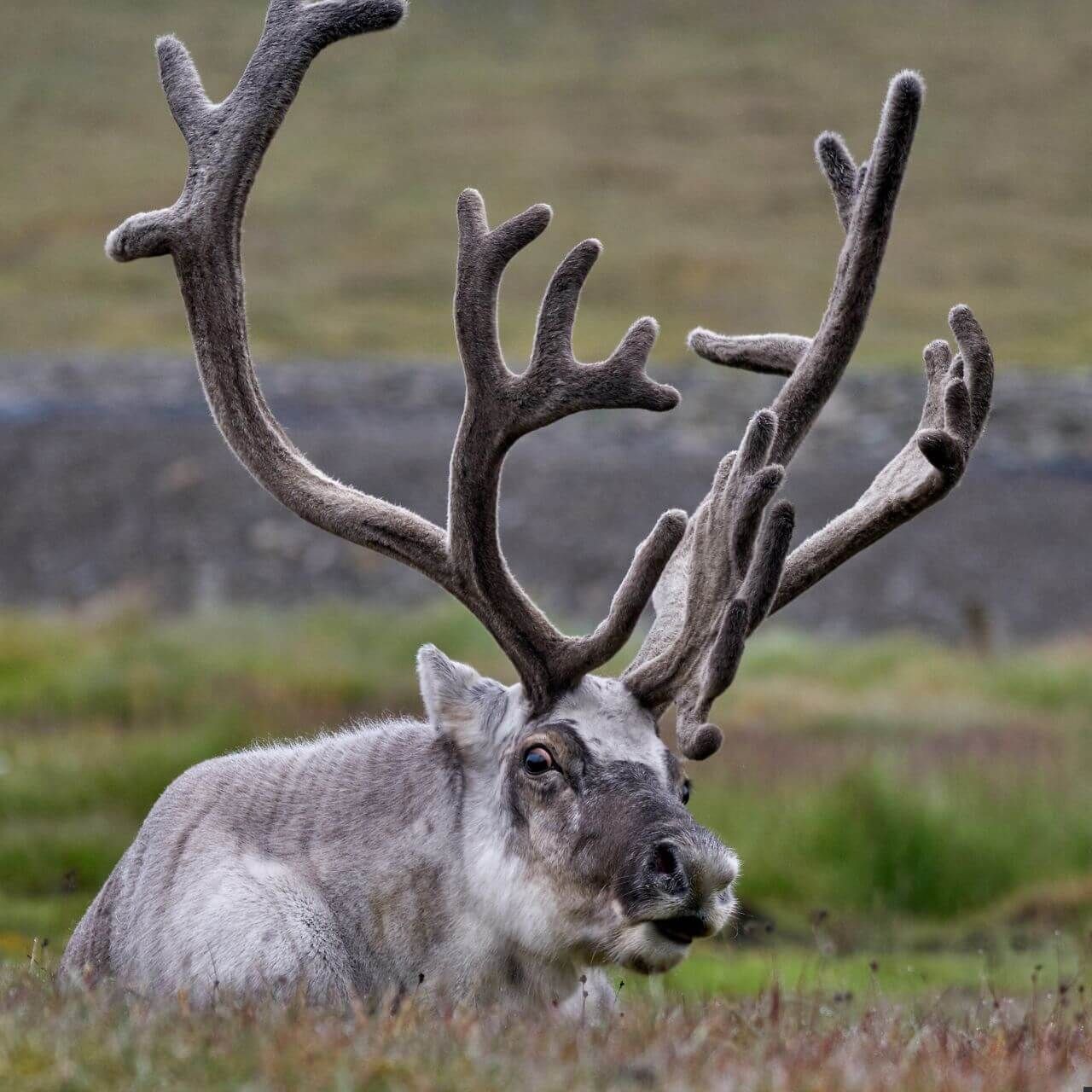
Velvet
As antlers grow, they are covered in a layer of fuzzy skin called velvet. Velvet supplies antlers with blood and nutrients. When antlers are done growing, the velvet dries up and is scraped off.
All members of the deer family have antlers, including moose, elk, and caribou (reindeer).
Fast Facts
Where do caribou live?
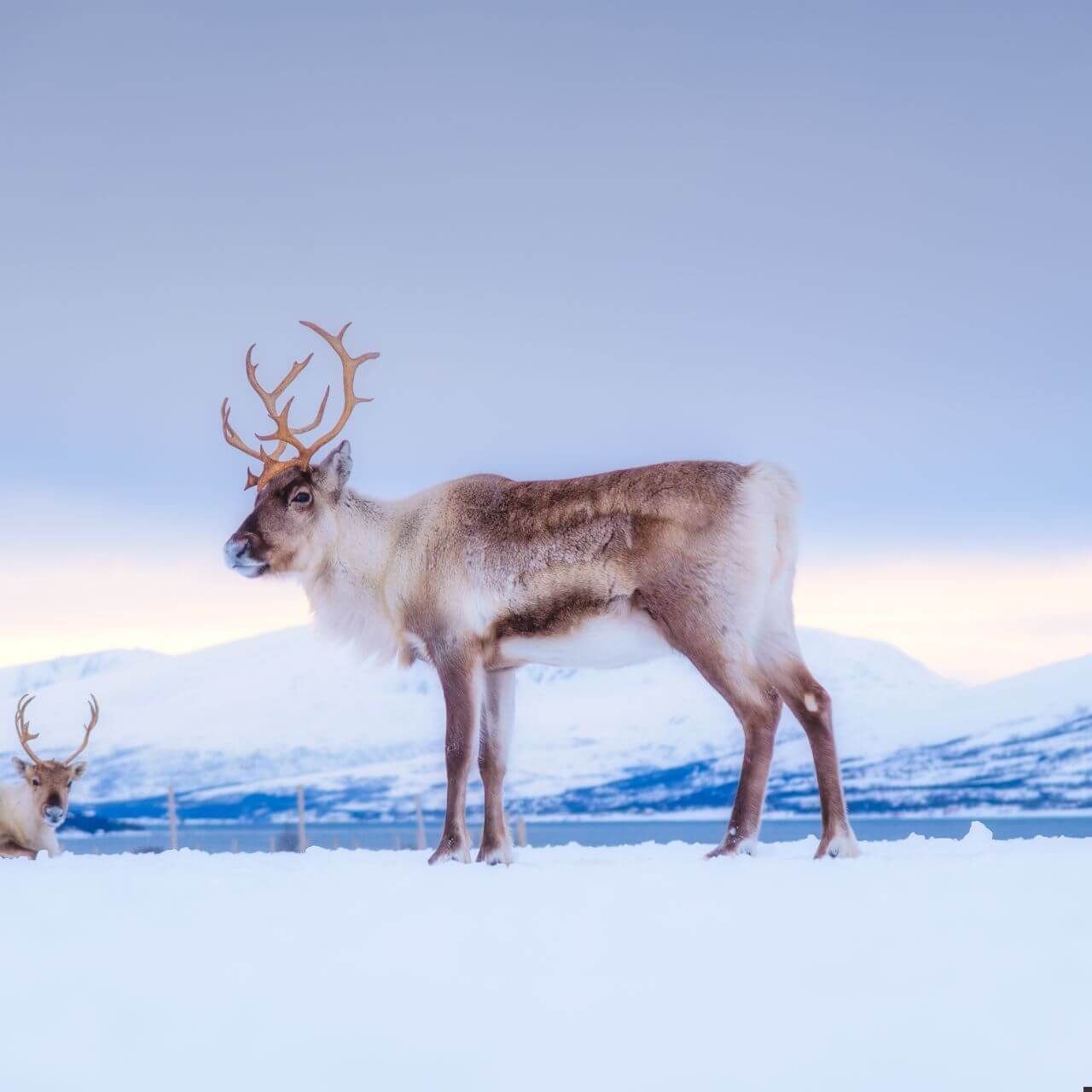
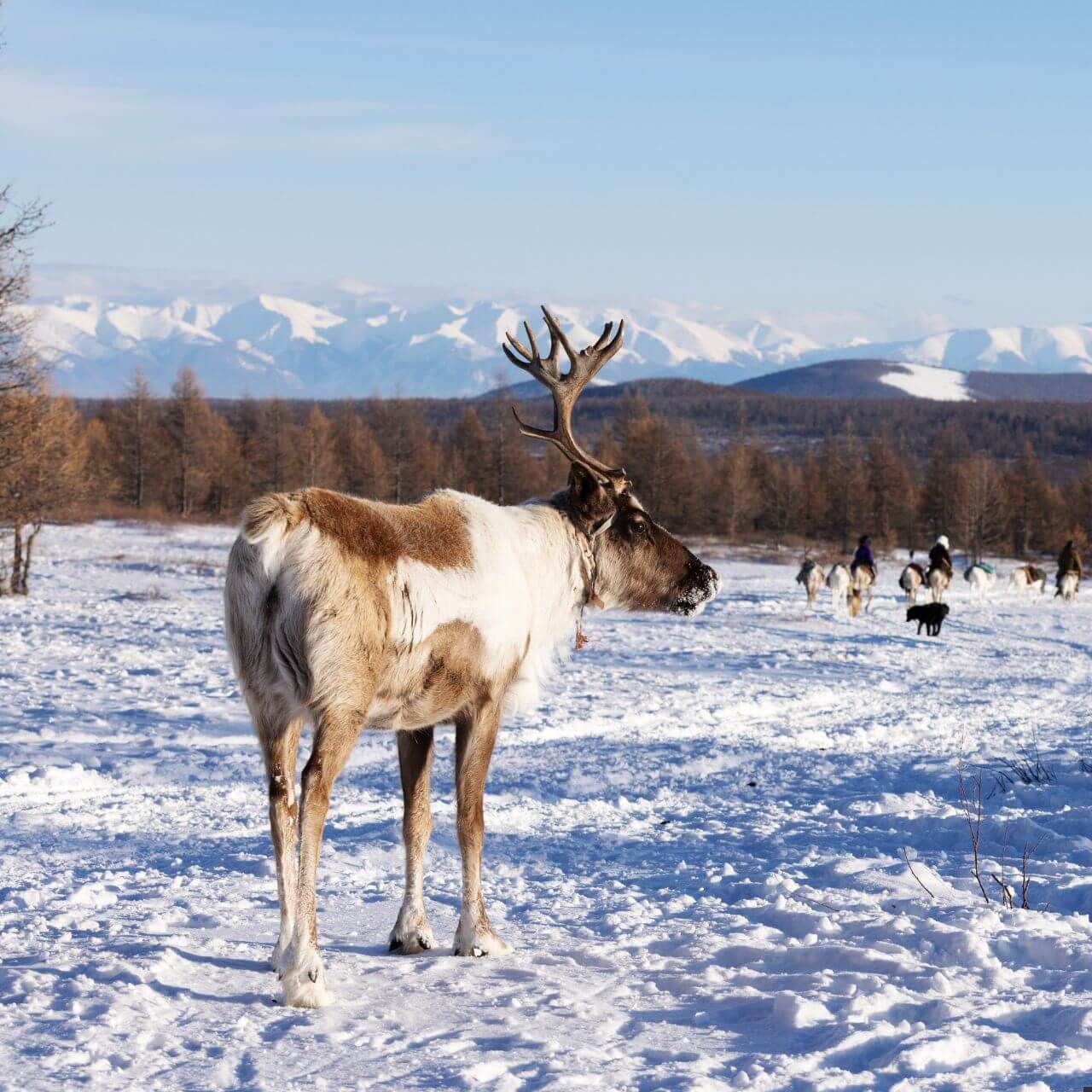
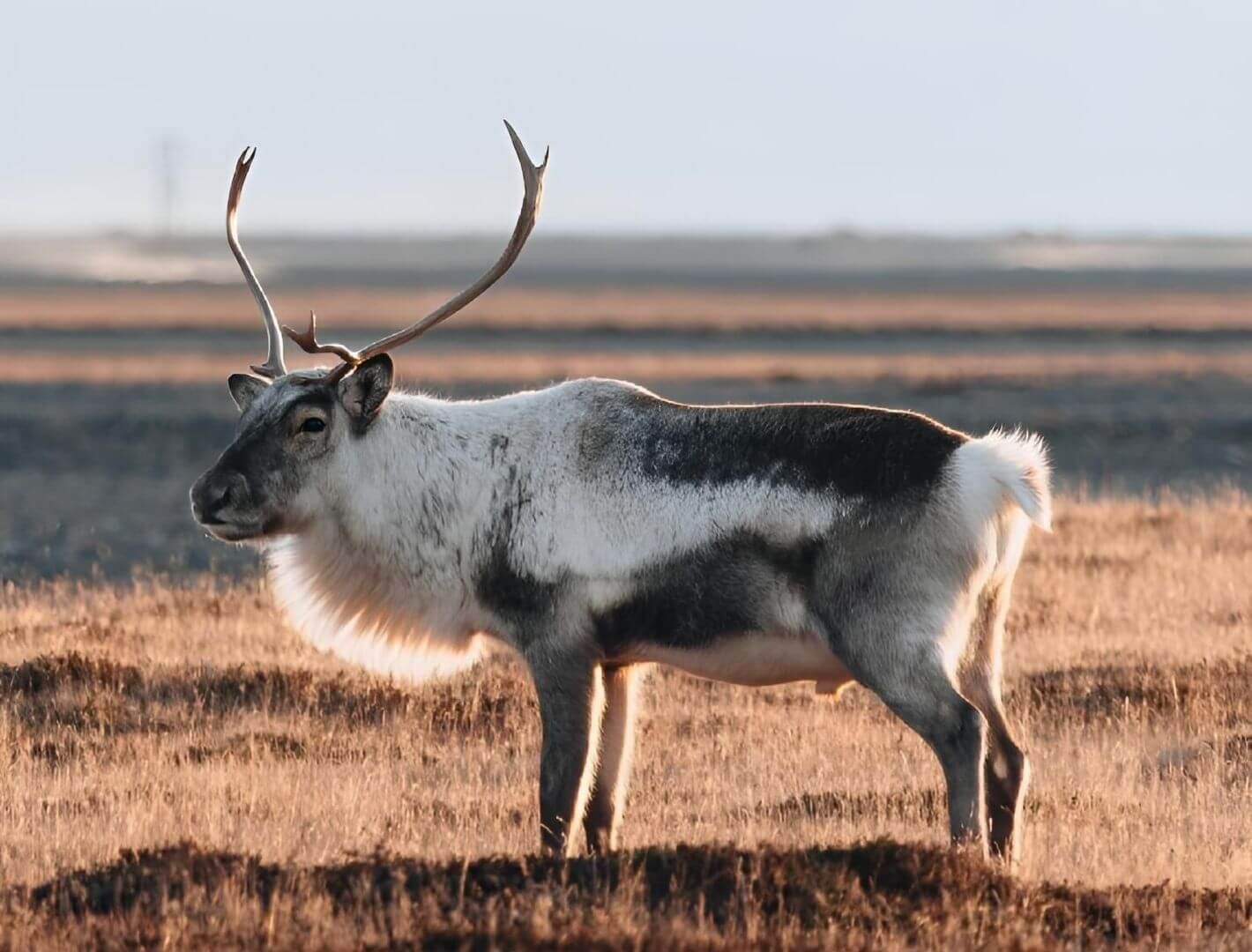
Caribou are found in the Arctic. They live in the northern part of North America, Europe, and Asia.
Caribou live in tundra and boreal forest (taiga) ecosystems. Many caribou populations migrate hundreds of miles each year in search of fresh food.
What do caribou eat?
Caribou mainly eat lichen.
Lichen is an unusual organism. It is formed by a symbiotic relationship between fungi and algae. Some lichens are called reindeer moss, but they are not really moss! Caribou also eat leaves and grasses. They sometimes chew on fallen antlers for extra nutrients.
What traits do caribou have?
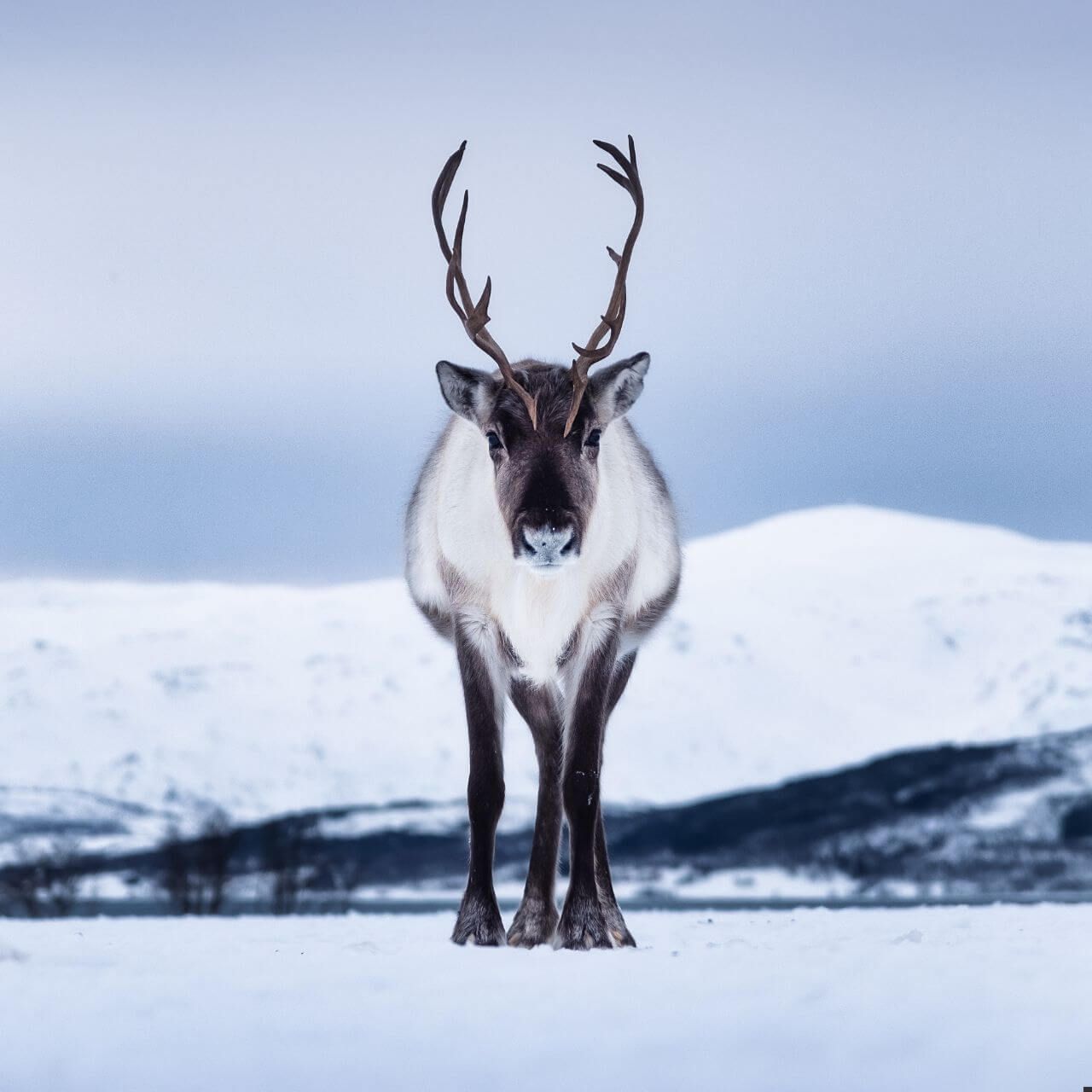
Caribou share many traits with other members of the deer family, such as...
- Large hooves that protect their feet.
- Brownish fur.
- Antlers that shed and regrow yearly.
- A social lifestyle.
How many caribou are there?
Scientists estimate there are more than 2 million caribou in the Arctic.
Though their population is large, many subspecies of caribou are threatened with extinction. Their main threats are habitat loss and climate change.
Species Spotlight
Antlers Vs. Horns
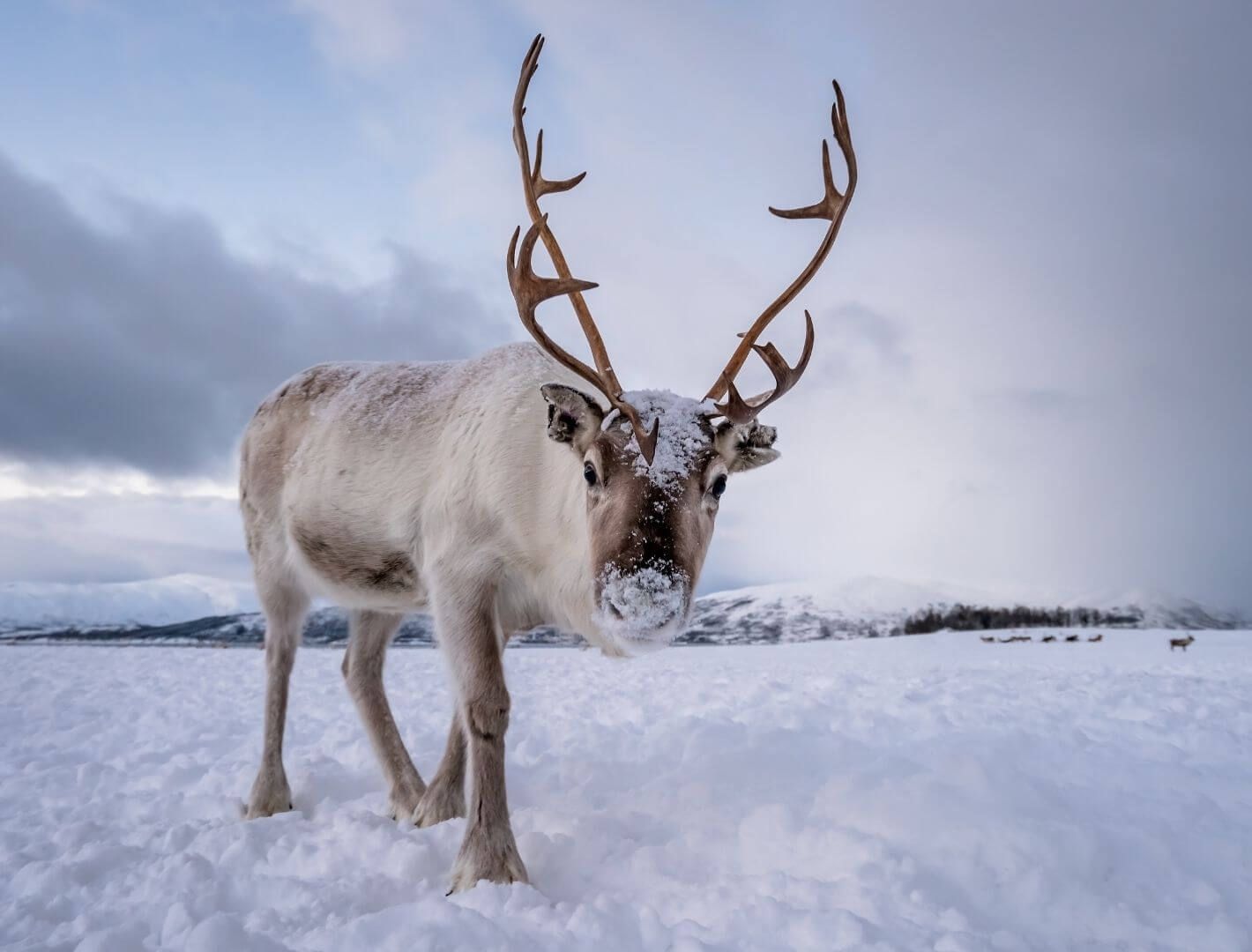
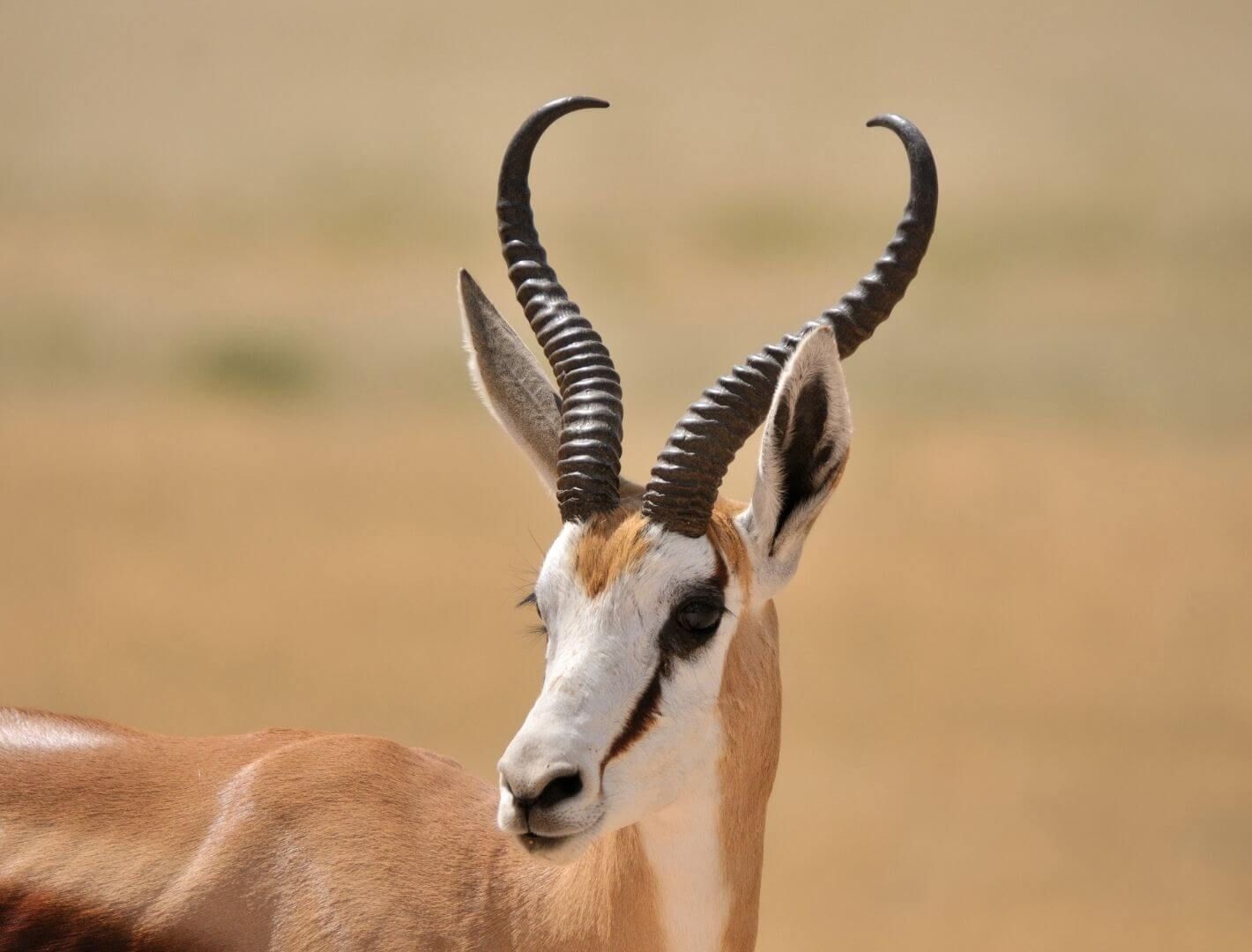
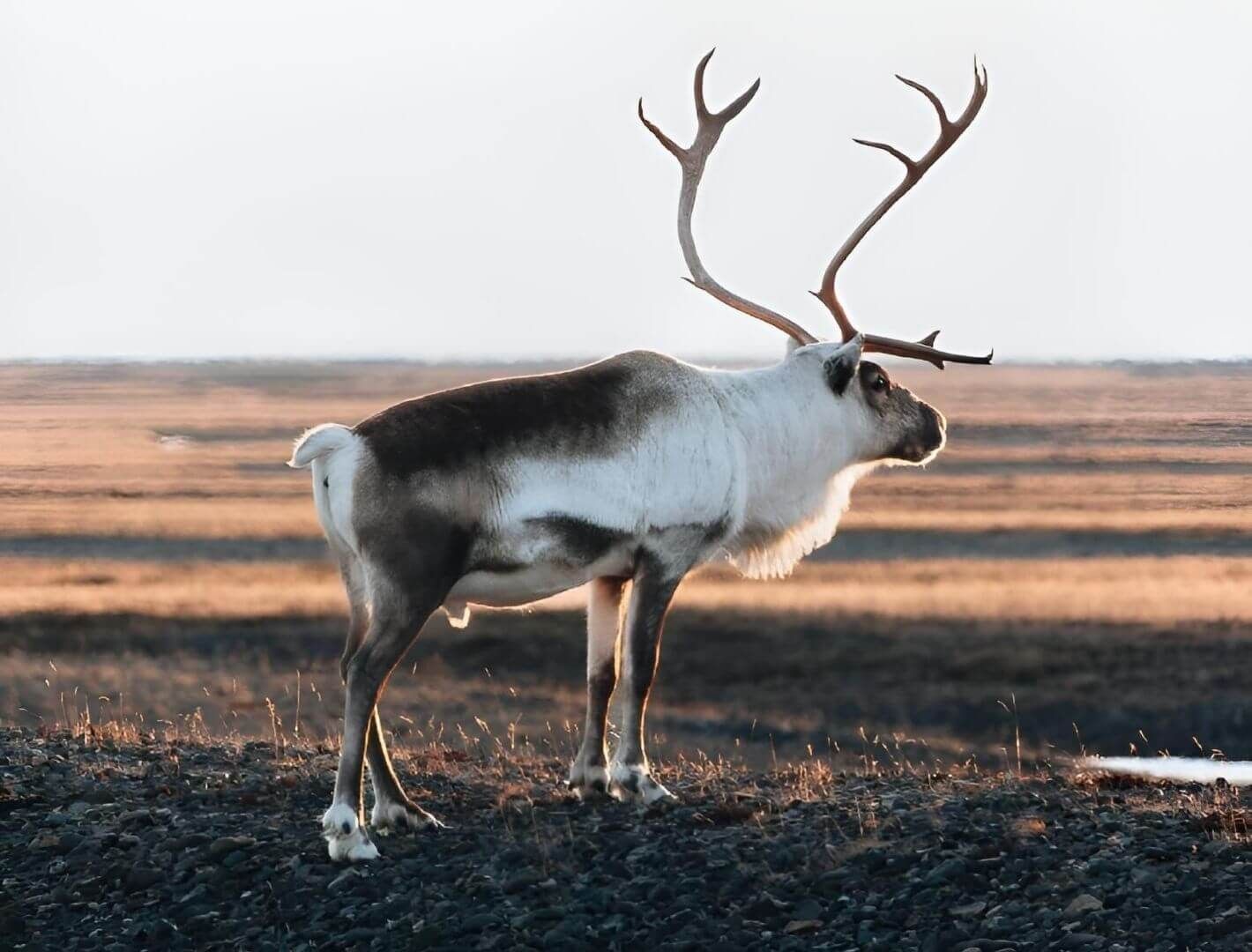
Caribou have enormous antlers. Moose are the only animals with larger antlers. A caribou’s antlers can grow more than 4 feet long. Other animals, like buffalo, sheep, and cattle, also have large structures on their heads. However, they are not antlers. They are horns. Antlers and horns are used in similar ways. They are both used to impress mates, compete, and defend themselves from predators.
So, what is the difference between antlers and horns?
Antlers
1. Antlers are only found on deer species.
2. Antlers are attached to structures on the skull called pedicles.
3. Antlers fall off and regrow each year.
4. Antlers are covered in a layer of fuzzy skin called velvet when they grow. Velvet supplies blood and nutrients to help the antlers grow. The velvet dries out and is scraped off when the antler is fully grown.
5. Antlers are made of bone.
6. Antlers are branched. They have several points.
7. Antlers get larger each time they regrow.
8. Typically, only male deer have antlers (except for caribou!).
Horns
- Horns are found on animals like buffalo, antelopes, sheep, goats, and others.
- Horns are directly attached to the animal’s skull.
- Horns never fall off.
- Horns are supplied with blood and nutrients in the center.
- Horns are made of a bony core covered in keratin (often called a sheath).
- Horns come to one point.
- Horns grow for the animal’s whole life.
- For many species, both males and females have horns. Males usually have larger horns than females.
BRAIN BLAST
Make a list of animals that have antlers and animals that have horns to compare them.
Conservation Corner
Protecting Canadian Caribou
Western Canada has been home to caribou for thousands of years. Each year, they migrate hundreds of miles through forests and tundras. They provide food for predators like wolves and bears. They also provide food for native people. Caribou keep the Arctic ecosystems balanced.
Unfortunately, the caribou population is shrinking. The forests they rely on for food and protection are being destroyed. Trees are cut down for wood. Large sections of forests are destroyed to make room for mines and power plants. It is much harder for caribou to find food and avoid predators. The shrinking caribou population is throwing the Arctic ecosystems out of balance.
The best way to protect caribou is to restore the forest. However, this will take hundreds of years. In the meantime, scientists have other plans. Conservation groups and native people provide food and safety to caribou. They provide extra food for caribou and remove predators from the area. Captive-born caribou are released to help herds grow. Scientists are also closely monitoring the forest using cameras. Scientists and native people are creatively working together to restore balance to the Arctic.
Caribou Challenge
Antlers & Horns
Learn More!
Glossary
Adaptation
The process by which a species becomes more fit for its environment over the course of several generations. It is a result of natural selection.
Antler
The branched, bony structure on the head of adult deer (typically male) that are grown and shed yearly.
Boreal Forest
A forest ecosystem with mostly coniferous trees and freezing temperatures for more than half the year. Also known as taigas.
Buoyant
The ability to float.
Competition
An interaction between organisms where both are working to obtain the same resource.
Domesticated Animal
An animal that has been selectively bred that lives under human care and is used for a task, such as labor, food, milk, etc.
Gregarious
Living in a large social group.
Herbivore
An animal that eats mostly plants.
Lichen
An organism formed from a symbiotic relationship between a fungus and alga.
Mammal
A group of endothermic (warm-blooded) vertebrates that are covered in hair, produce milk for offspring, and generally give birth to live offspring.
Migration
The process of an animal moving to a new location during a specific time of the year.
Mutualism
A symbiotic relationship where both parties benefit.
Predator
An animal that hunts other animals for food.
Prey
An animal that is hunted and eaten by another animal.
Ruminant
A hooved, herbivorous mammal with a specialized digestive system allowing them to eat plants, regurgitate it, and continue digesting in a different part of their stomach.
Sedentary
An animal that stays in one place.
Species
A closely related group of animals with similar characteristics that are capable of reproducing (example: tigers).
Subspecies
A group of animals within a species that are genetically different from other groups in the same species (there are 6 subspecies of tigers).
Symbiosis
A relationship between different organisms where at least one organism benefits.
Tundra
An ecosystem characterized by a treeless landscape and freezing temperatures; the soil is permanently frozen.
Velvet
A layer of fuzzy skin providing blood and nutrients to growing antlers.