
Lions

Let's Learn About Lions
Word of the Week
Natal
Natal refers to an animal's birth. It describes the time, place, or circumstance of its birth.
For example, a lion's natal pride is the pride they were born into. A sea turtles natal beach is the beach it was born on.
Fast Facts
Where do lions live?
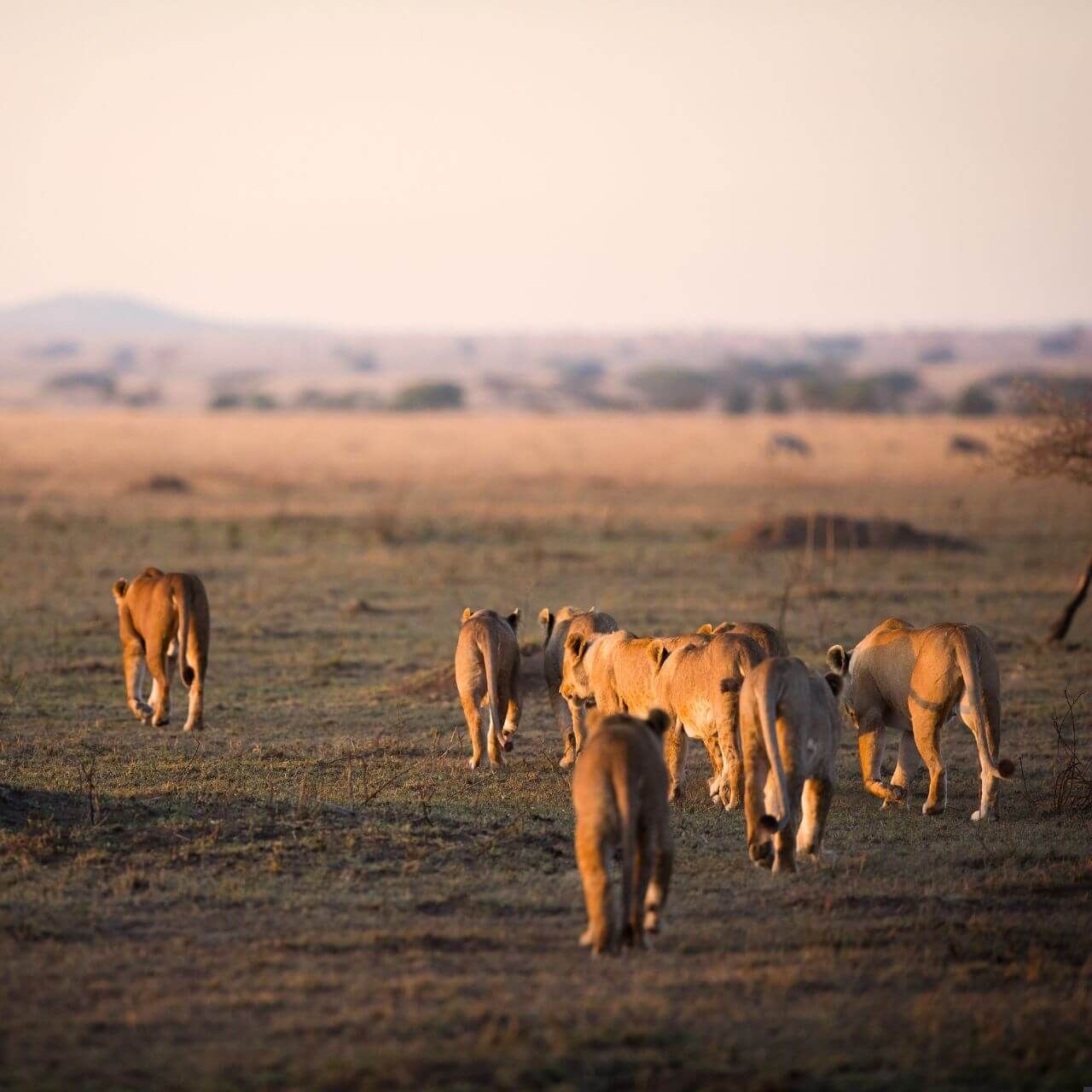
Most lions live in Africa. There is also a small population in Asia.
Lions inhabit savannas and grasslands. They live in open areas with tall grasses or other structures to stay hidden. They do not live in deserts or dense forests.
What do lions eat?
Lions are carnivores. They are meat eaters.
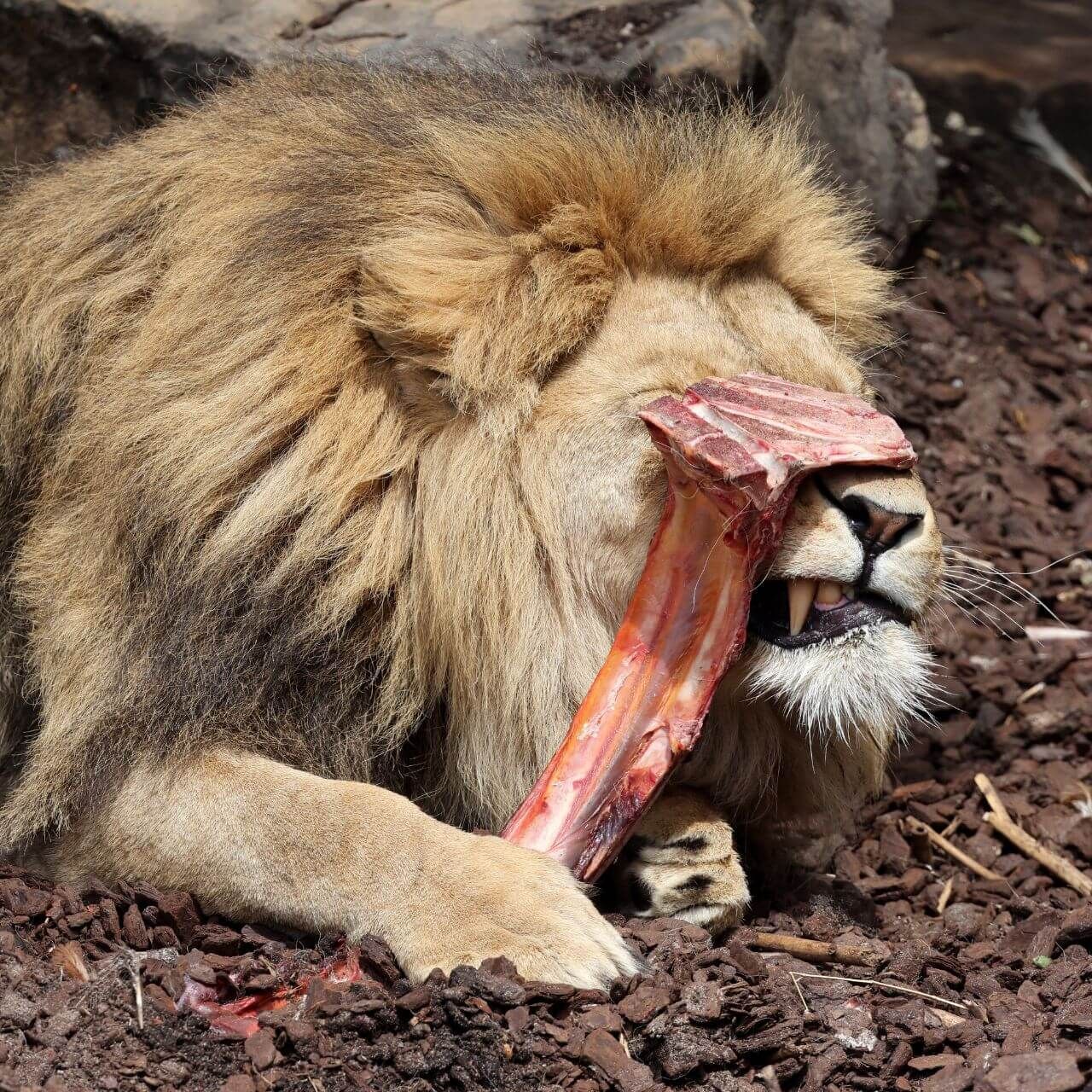
Lions mainly eat medium-sized hoofed animals, like wildebeest and other antelopes, zebras, buffalo, and warthogs. They can even hunt very large prey, like giraffes. Lions sometimes scavenge, meaning they eat animals that are already dead.
What traits do lions have?
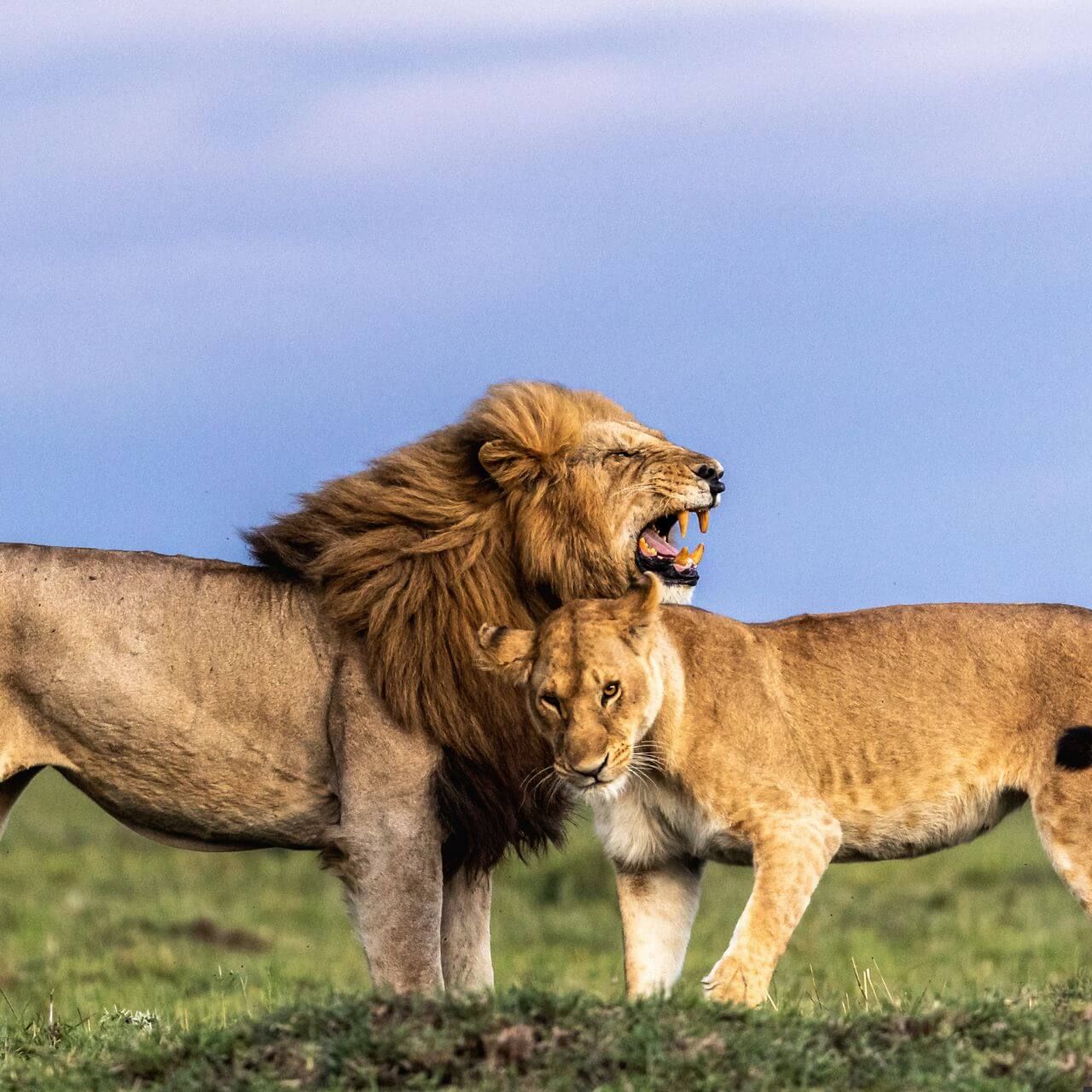
Lions have many traits that make them easily identified, such as...
- Solid, tan coat.
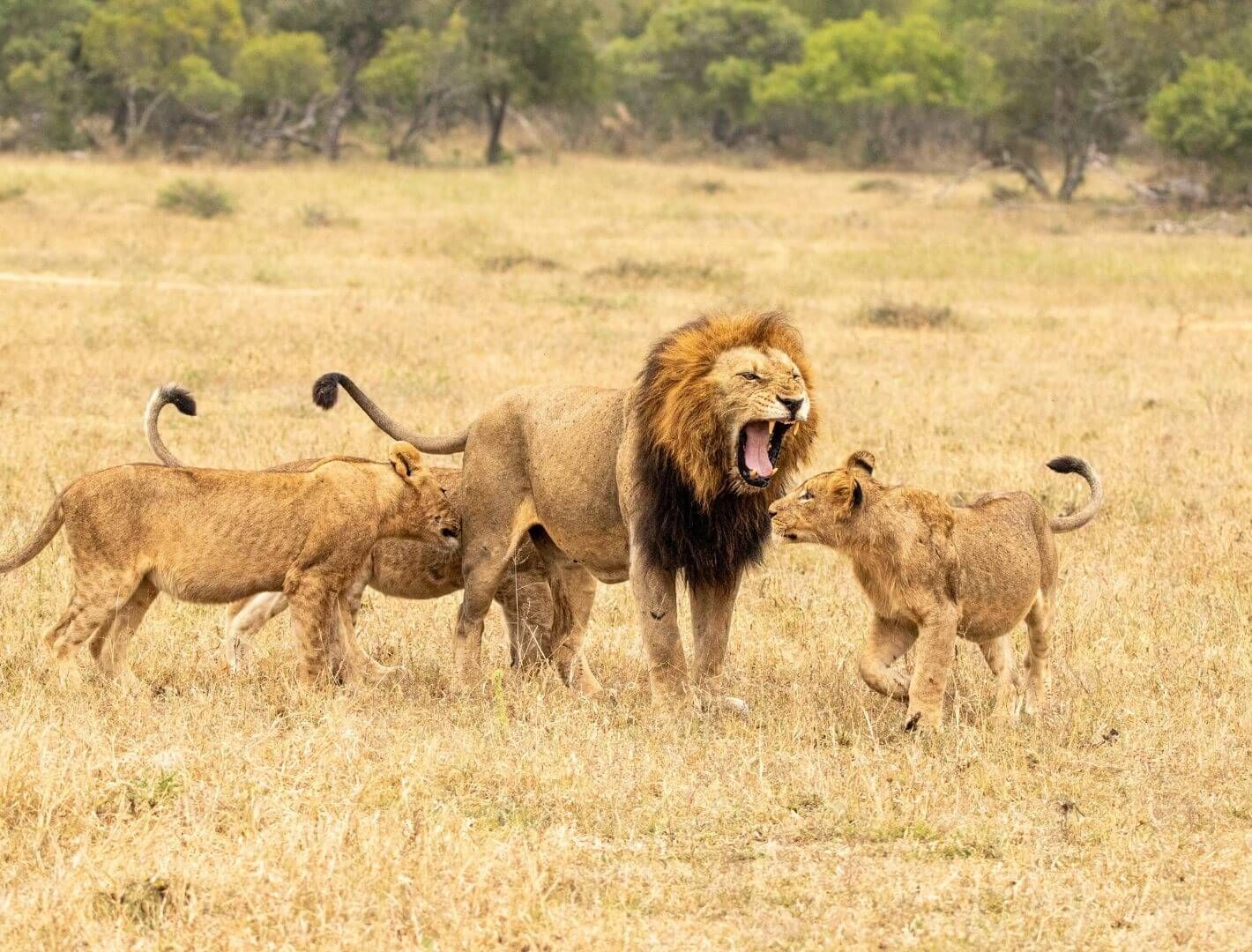
- Large mane on males.
- Sharp teeth and claws.
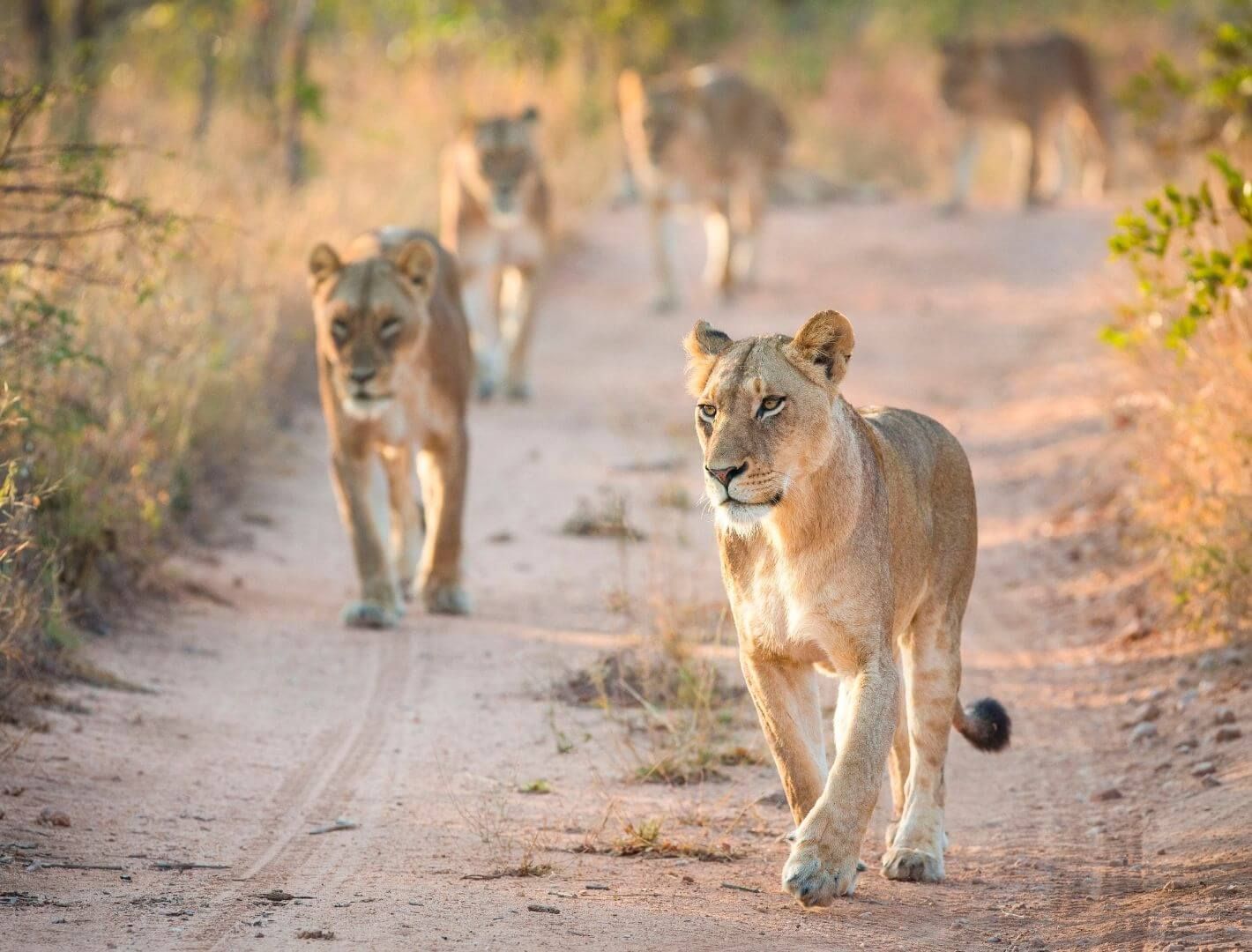
- Living in a social group.
How many lions are there?
There is one species of lion with two subspecies.
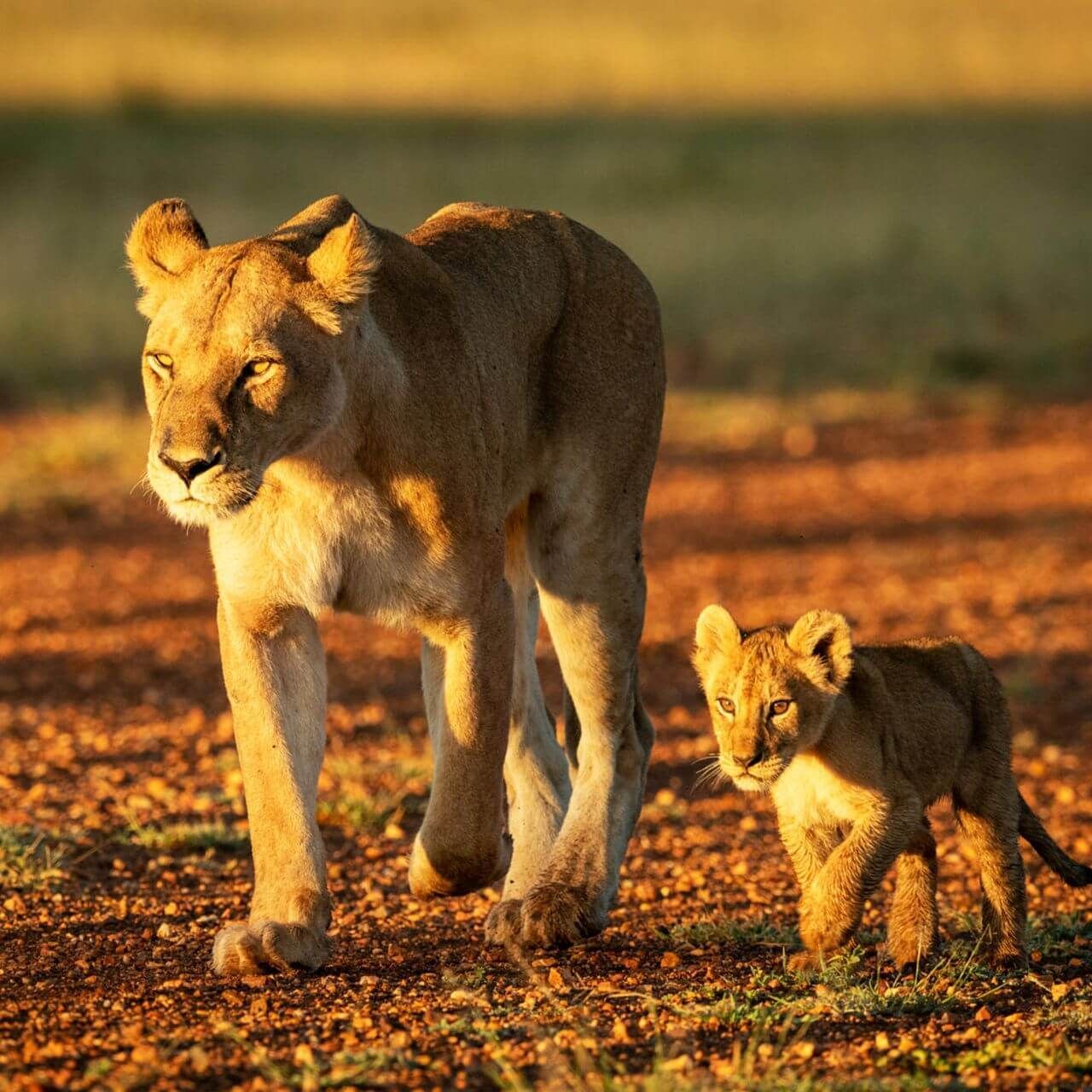
Lions are listed as Vulnerable by the IUCN, meaning their population is shrinking. Some scientists estimate there are about 20,000 lions living in Africa. However, others argue there is not currently an accurate estimate. There are only about 500 lions living in Asia.
Species Spotlight
Asiatic Lions
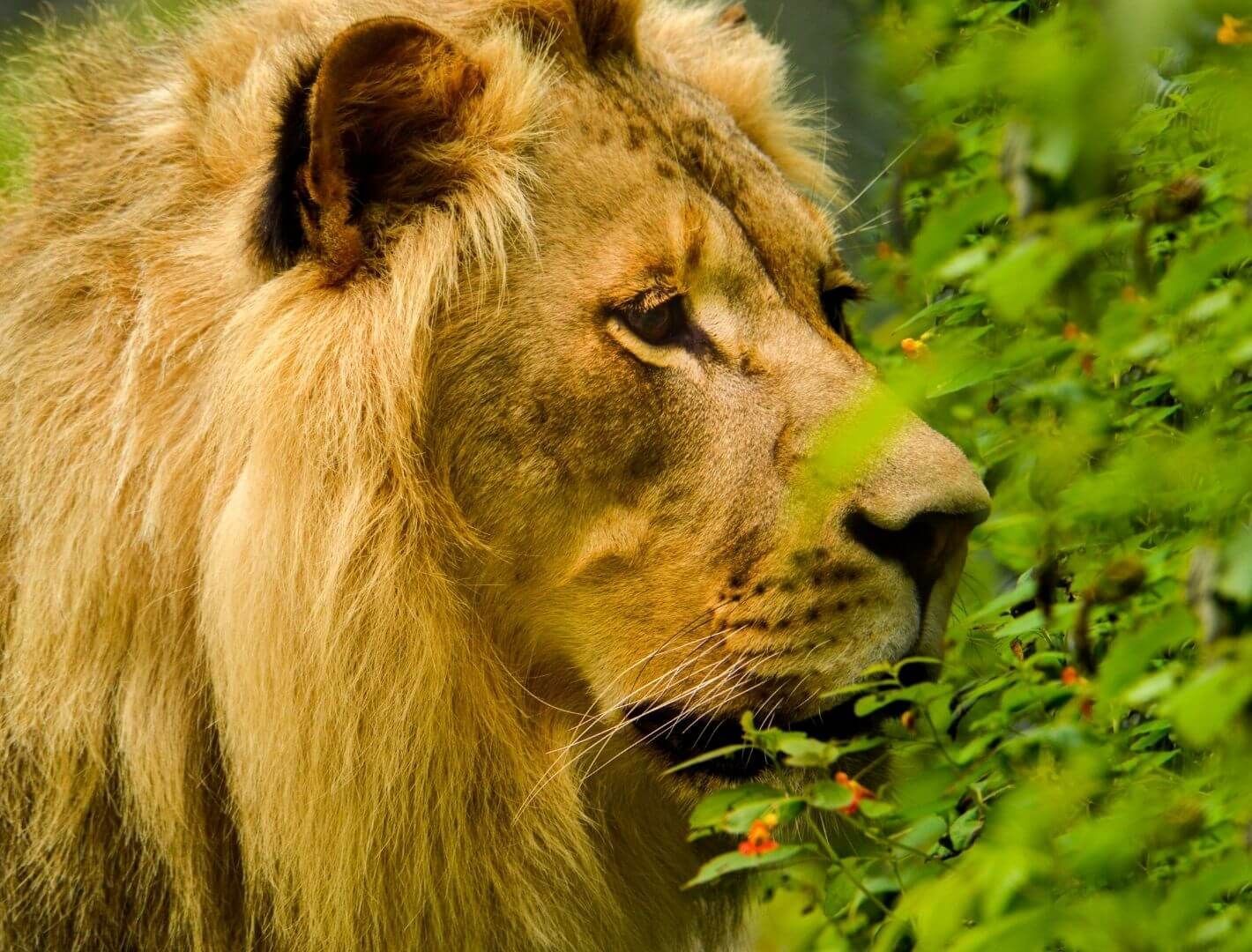
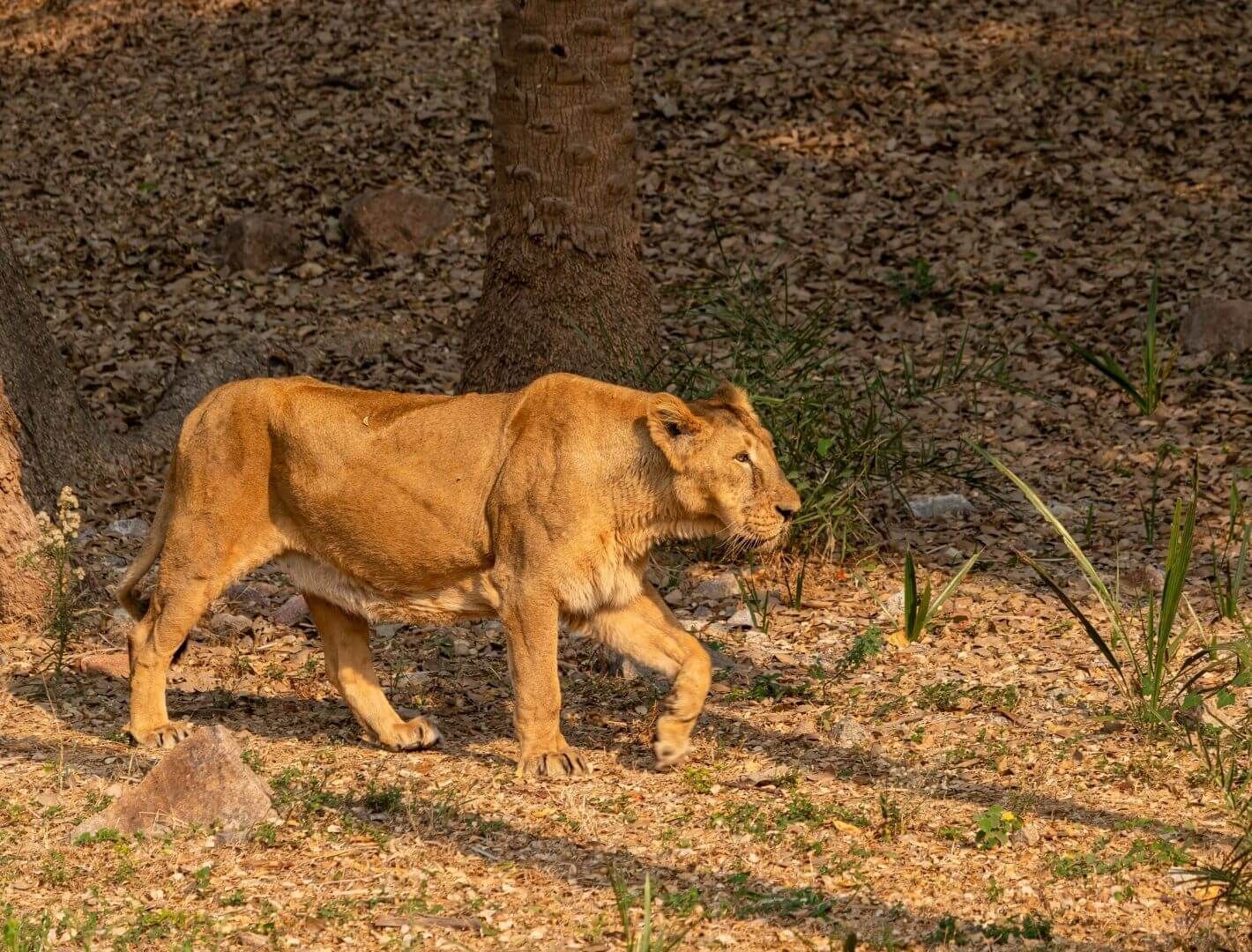
Long ago, lions roamed far beyond Africa. They lived from Europe all the way to southern Asia. As humans took over the land, they forced the lions out. Today, the only lions outside of Africa live in a small part of India. They are called Asiatic lions.
Asiatic lions are closely related to African lions. However, they live in different habitats and have different traits. Asiatic lions live in dry shrubland and forests. African lions live in open grasslands and savannas. Asiatic lions live in warmer, drier habitats.
Asiatic lions live in smaller prides than African lions. This may be because they hunt smaller prey. Asiatic lions usually live in prides of females and their cubs. African lions live in prides with both males and females. Male Asiatic lions are more solitary. They only join together with females for breeding.
Asiatic lions also look slightly different than African lions. Asiatic lions tend to be smaller than African lions. The Asiatic lion’s small size might help them stay cool in the hot climate. Male Asiatic lions also have a smaller mane than African lions. Scientists hypothesize that this prevents the mane from getting snagged on trees and bushes. It also helps them stay cool.
Asiatic lions and African lions still have many similarities. They both have tan fur and sharp teeth and claws for hunting. However, because of their different habitats and separation, they have developed different traits.
BRAIN BLAST
Can you think of other animal species that live in multiple different habitats? What traits do they have that are similar? What traits make them different?
Conservation Corner
Lion Guardians
Humans have farmed and raised livestock in Africa for thousands of years. It is an important part of their survival and culture. As the human population has grown, communities have spread out. They now live closer to lions, which hunt their goats and sheep. Lions are killed to protect livestock. Some communities have “lion hunters” whose job it is to kill lions in the area. Lion hunting is causing lions to become endangered. Scientists have been looking for solutions to protect both local communities and lions.
In 2006, a lion conservation effort called Lion Guardians was started. Lion guardians are warriors in African communities. Their job is to track lions in the area. They tell ranchers what areas to avoid based on lion movement. They also help ranchers build lion-proof enclosures to keep livestock safe at night. Lion guardians gather a huge amount of information about lions. They help scientists learn about their populations and behaviors. Many lion guardians were previously lion hunters. Now, they protect local communities from lions while also protecting the lions.
Lion Challenge
The Traits That Help Lions Survive
Learn More!
*Please note: This video shows lions killing and eating prey*
Glossary
Adaptation
The process by which a species becomes more fit for its environment over the course of several generations. It is a result of natural selection.
Ambush
Sneak attack.
Apex Predator
The animal at the top of its food chain; it has no natural predators.
Big Cat
A genus of large felines, including tigers, lions, jaguars, leopards, and snow leopards.
Camouflage
The ability for an organism to blend into its surroundings usually to hide from prey or predators.
Carnivore
An animal that eats other animals.
Carrion
Dead meat.
Coalition
A group of male animals that live work together to survive, such as in lions and cheetahs.
Competition
An interaction between organisms where both are working to obtain the same resource.
Feline
Referring to members of the cat family.
Gregarious
Living in a large social group.
Habitat
The type of environment where a plant or animal lives.
Habitat Loss
When habitats are destroyed and changed into human-managed land such as farms or cities.
Mane
Long, thick hair along the neck and shoulders of animals like male lions, horses, and zebras.
Natal
Natal refers to an animal's birth, such as the time, place, or circumstance of birth.
Pheromone
A communication chemical used to signal information to members of the same species.
Predator
An animal that hunts other animals for food.
Prey
An animal that is hunted and eaten by another animal.
Range
The geographic location where an animal lives.
Scavenge
To search for dead meat.
Species
A closely related group of animals with similar characteristics that are capable of reproducing (example: tigers).
Subspecies
A group of animals within a species that are genetically different from other groups in the same species (example: Bangel tiger, Sumatran tiger, etc.).
Territorial
Referring to an animal that defends an area (its territory) from other members of its species.