
Anoles

Let's Learn About Anoles
Word of the Week
Dewlap
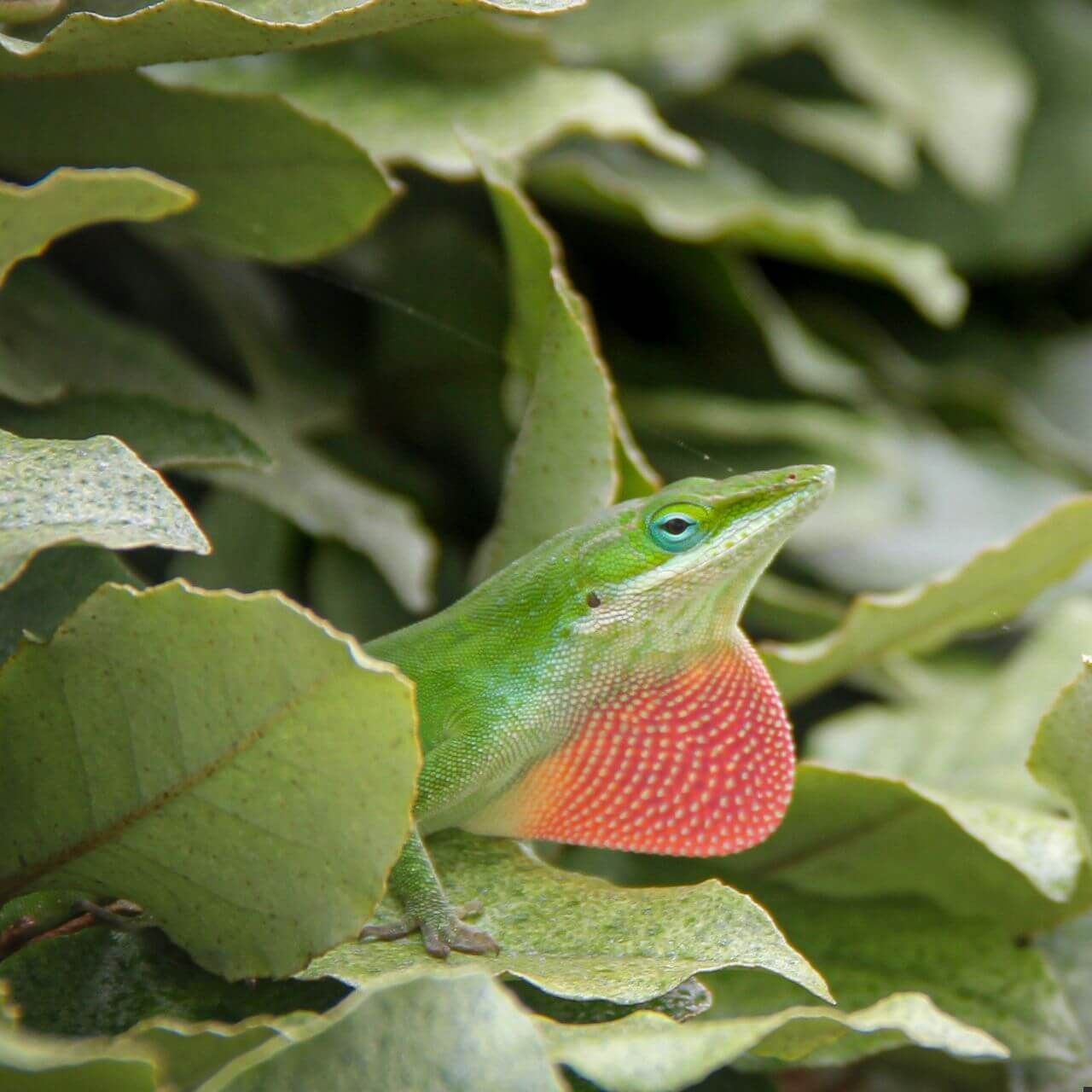
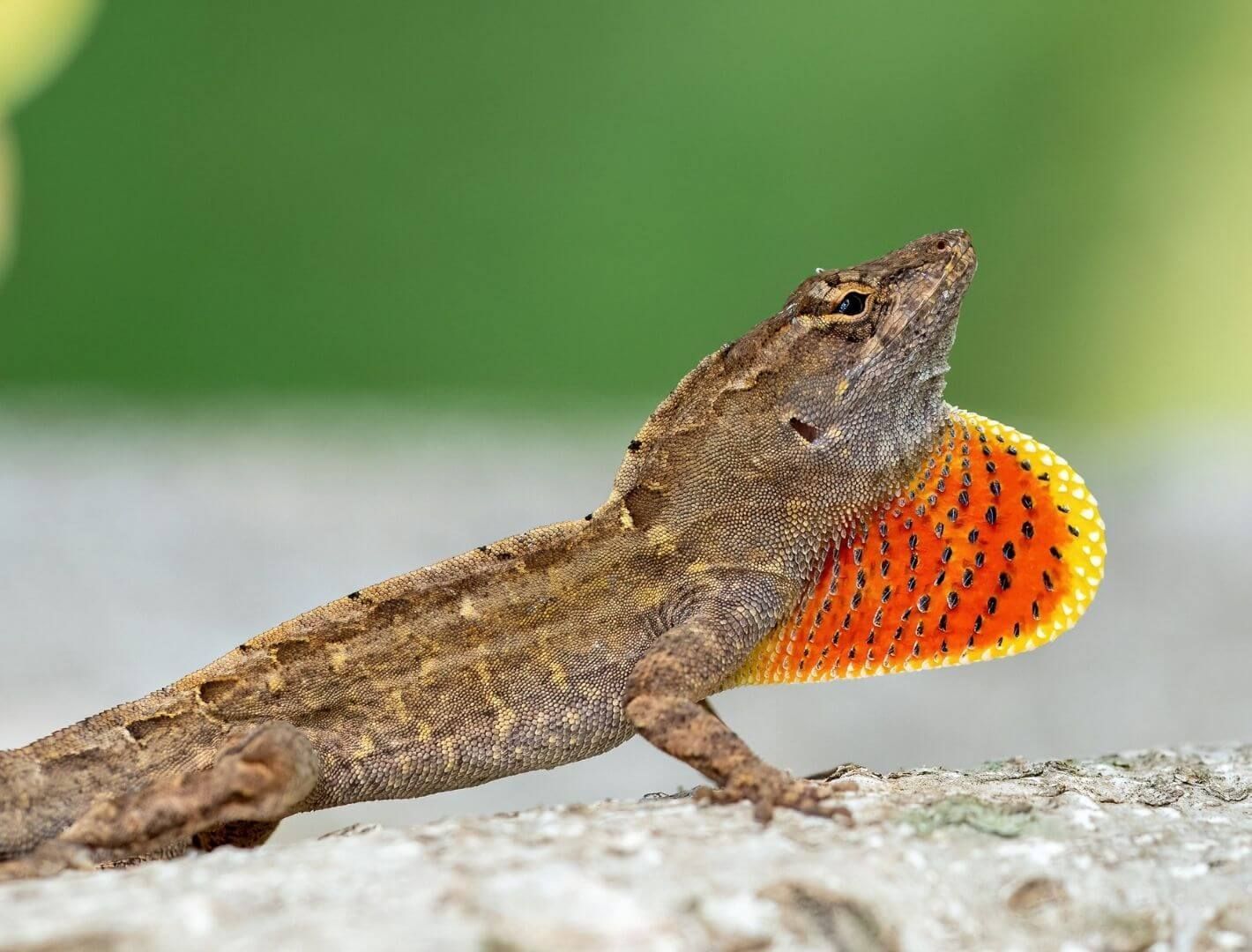
A dewlap is an extendable flap on the chest of some lizards. An anole's dewlap is made of cartilage and covered in skin and scales. When relaxed, it lies flat against its chest.
Anoles, iguanas, and some other lizards have dewlaps.
Fast Facts
Where do anoles live?
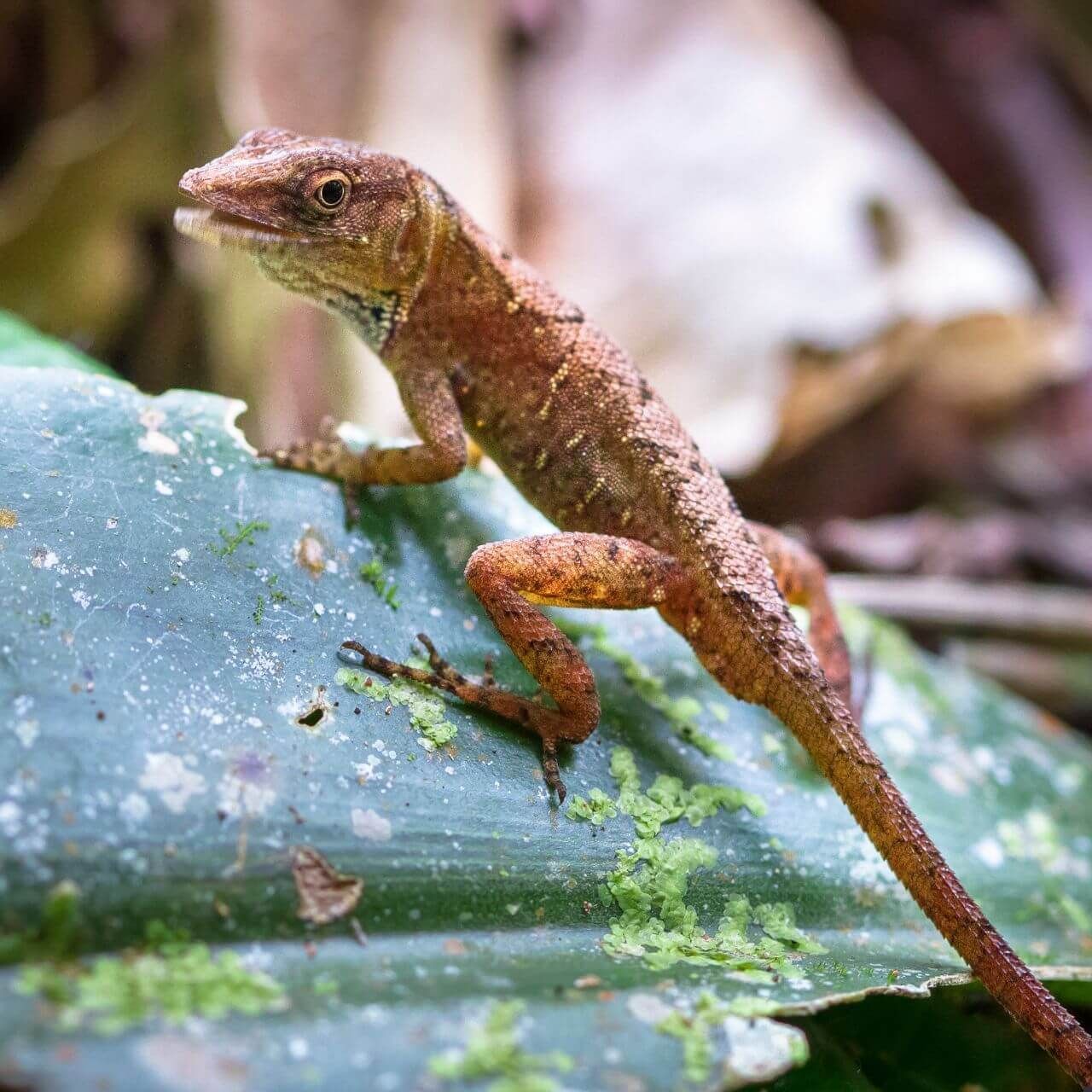
Anoles live in North America and South America. They are also native to several islands.
They are most common in tropical and subtropical climates, especially forests. They also live in coastal ecosystems, woodlands, desert scrublands, and more.
What do anoles eat?
Most anoles are omnivores. They eat both meat and plants.
Most anoles feed heavily on insects. They also eat fruit, flowers, and nectar.
What traits do anoles have?
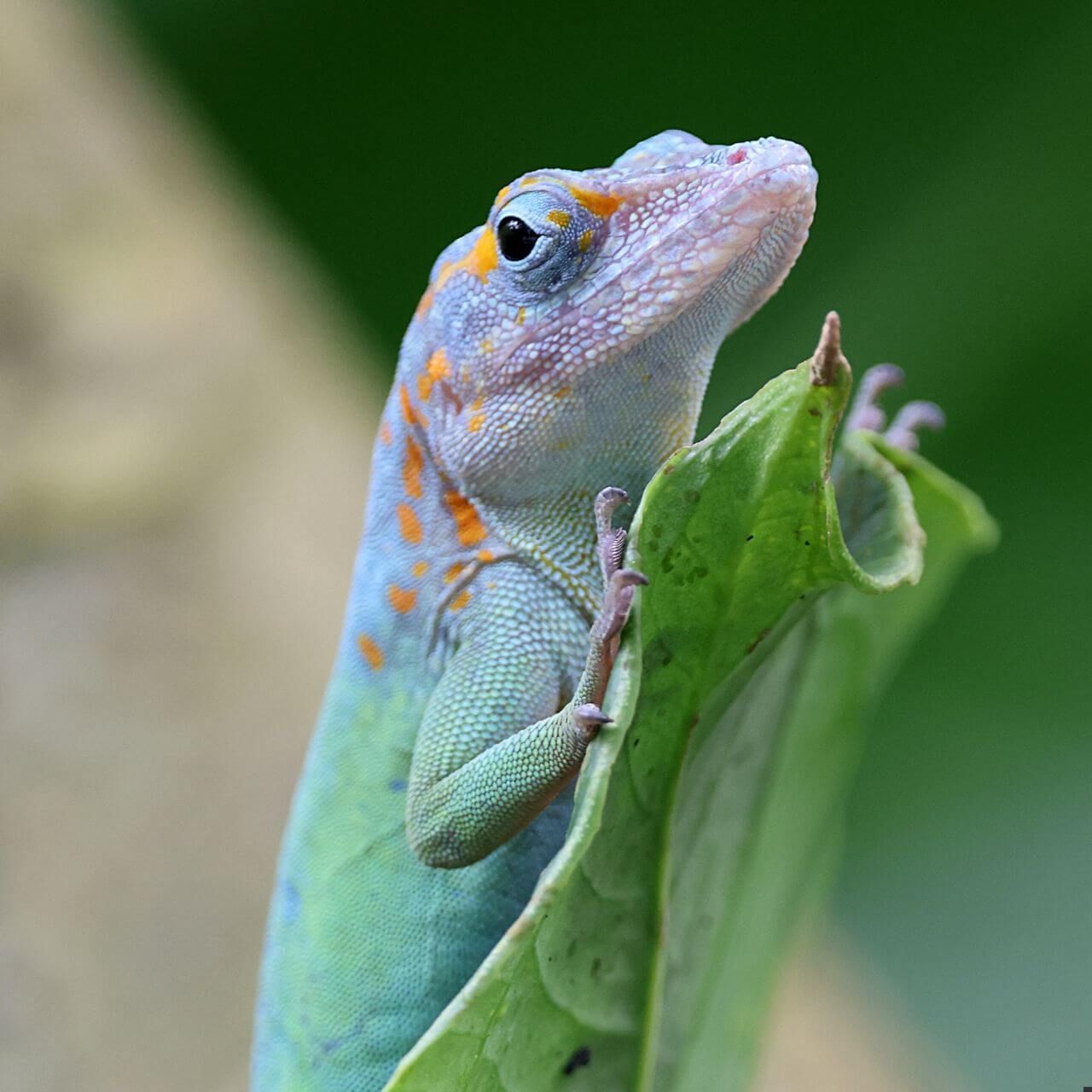
Anoles have many interesting traits. Most anoles...
- Are small in size.
- Have long tails.
- Have colorful dewlaps (mostly male anoles).
- Have the ability to change color.
- Are territorial.
How many anoles are there?
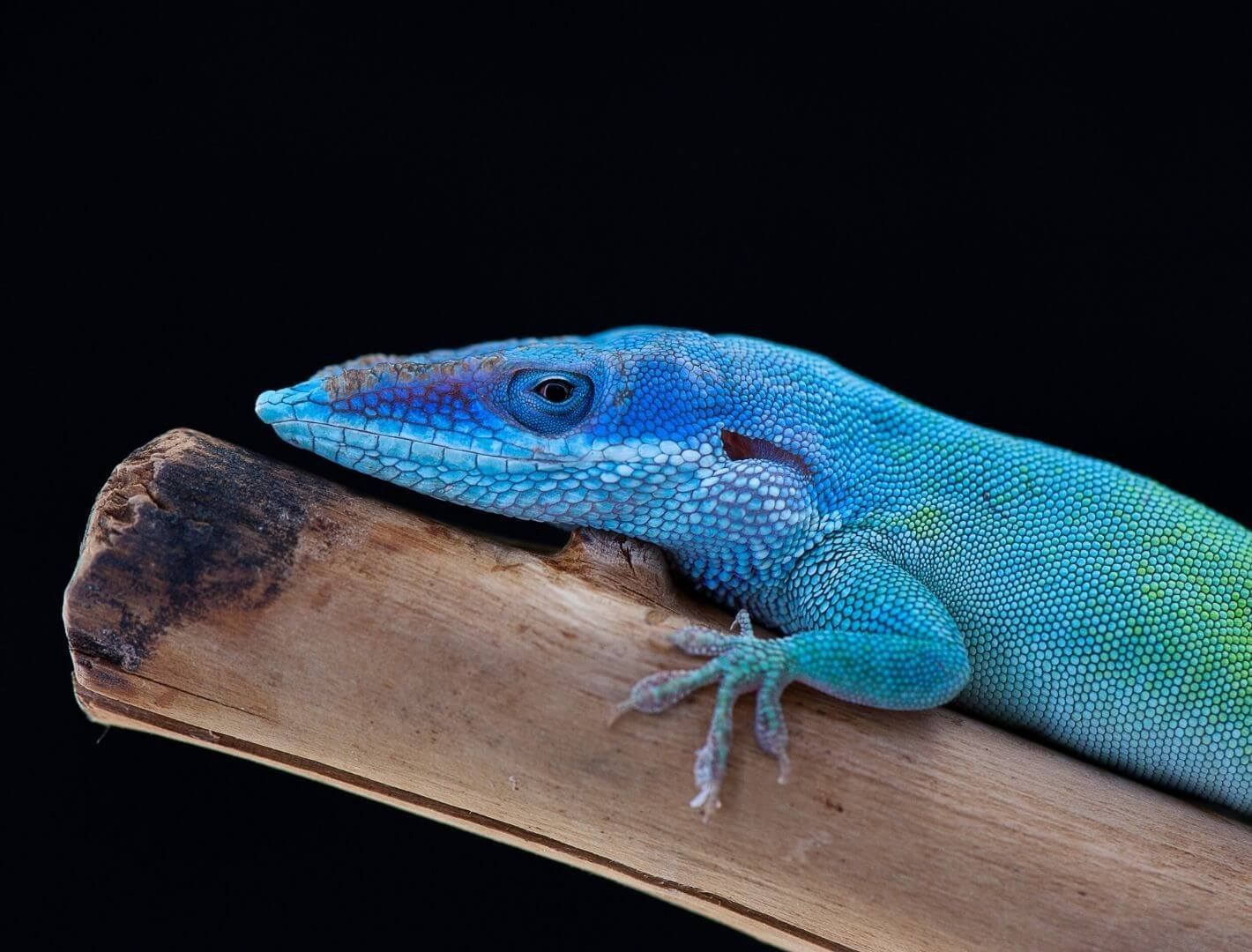
There are more than 400 species of anoles.
Many anole species are not well studied. Scientists do not know the conservation status of all 400+ species. Their main threats are deforestation, invasive species, and extreme weather events.
Species Spotlight
Brown Anoles and Green Anoles
Anolis sagrei and Anolis carolinensis
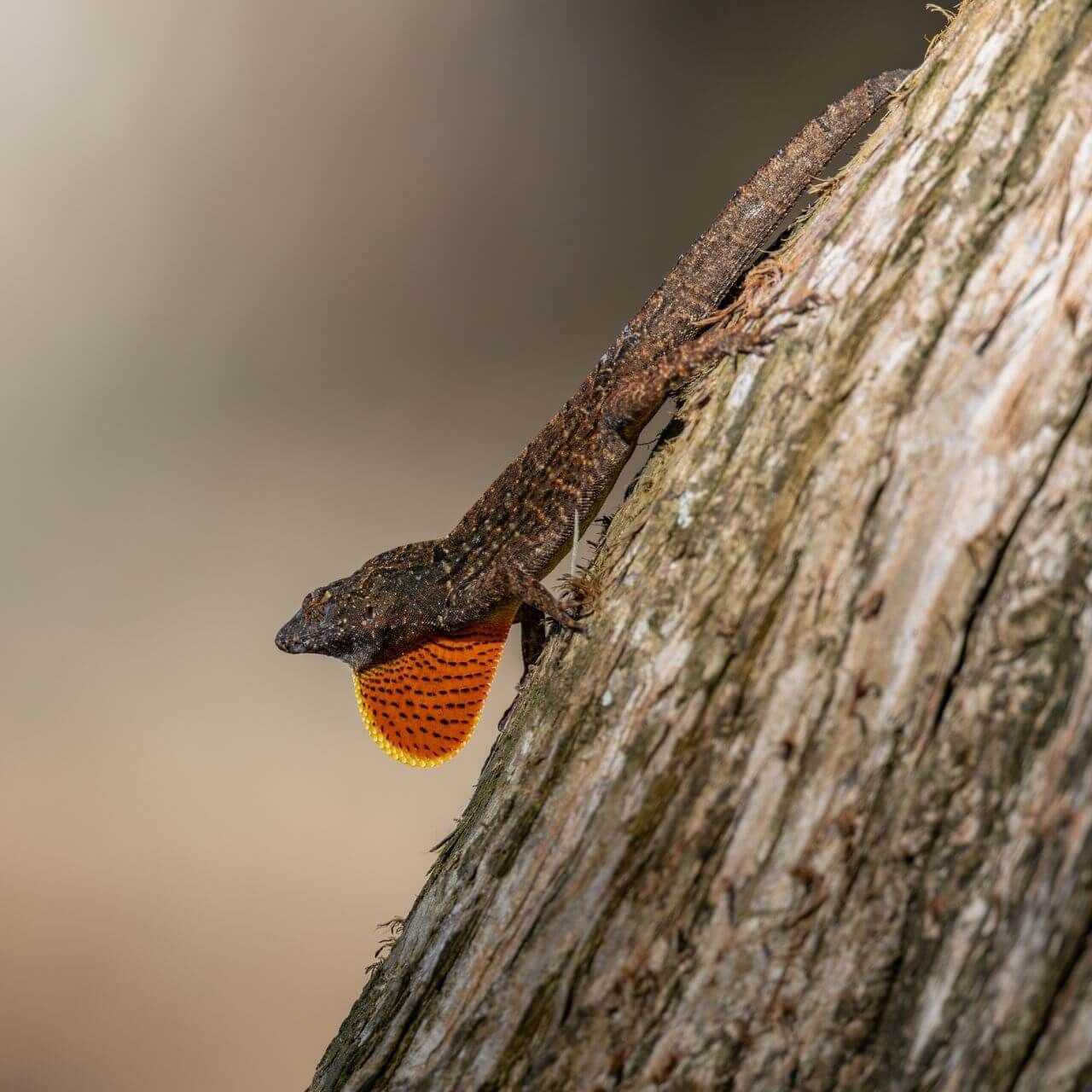
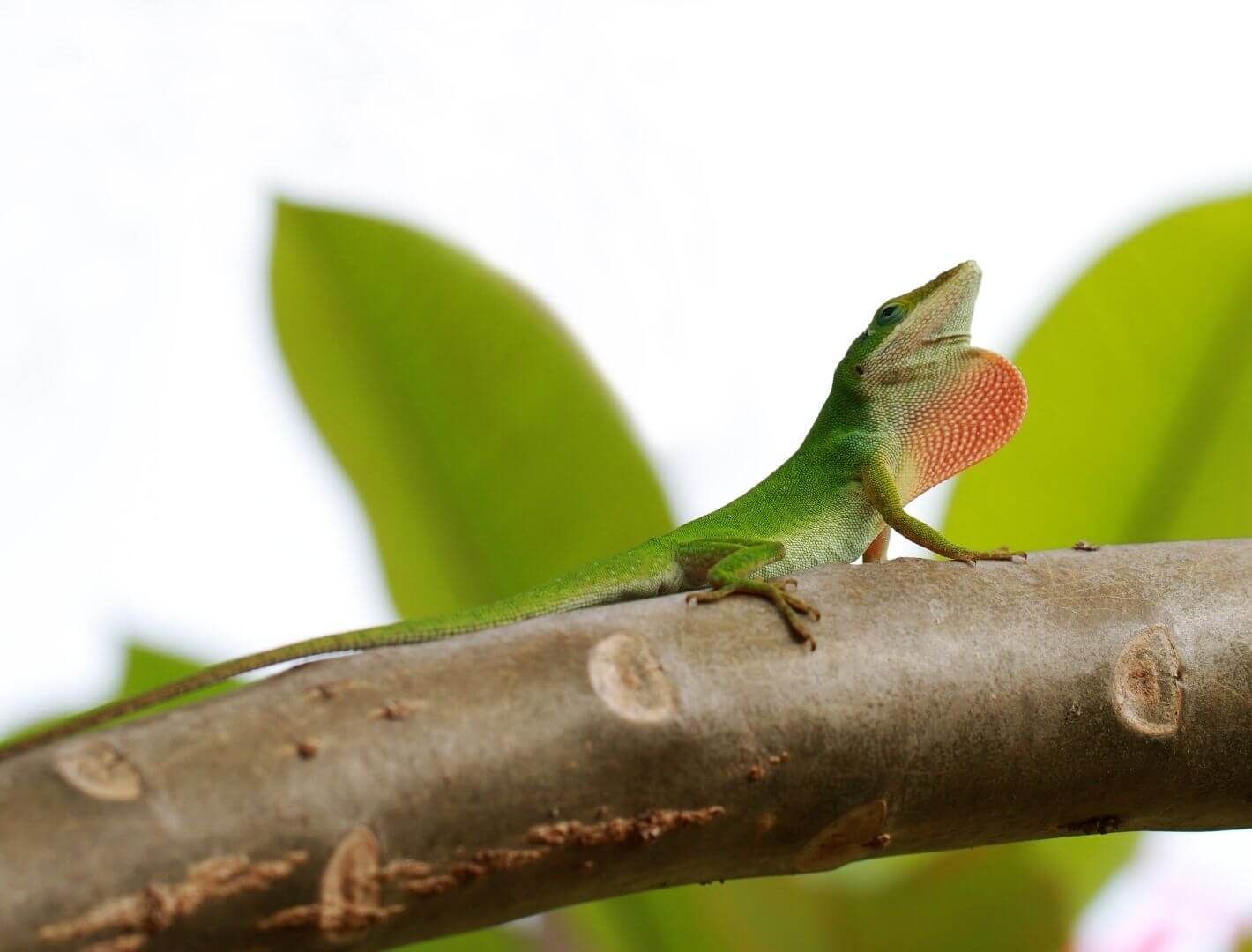
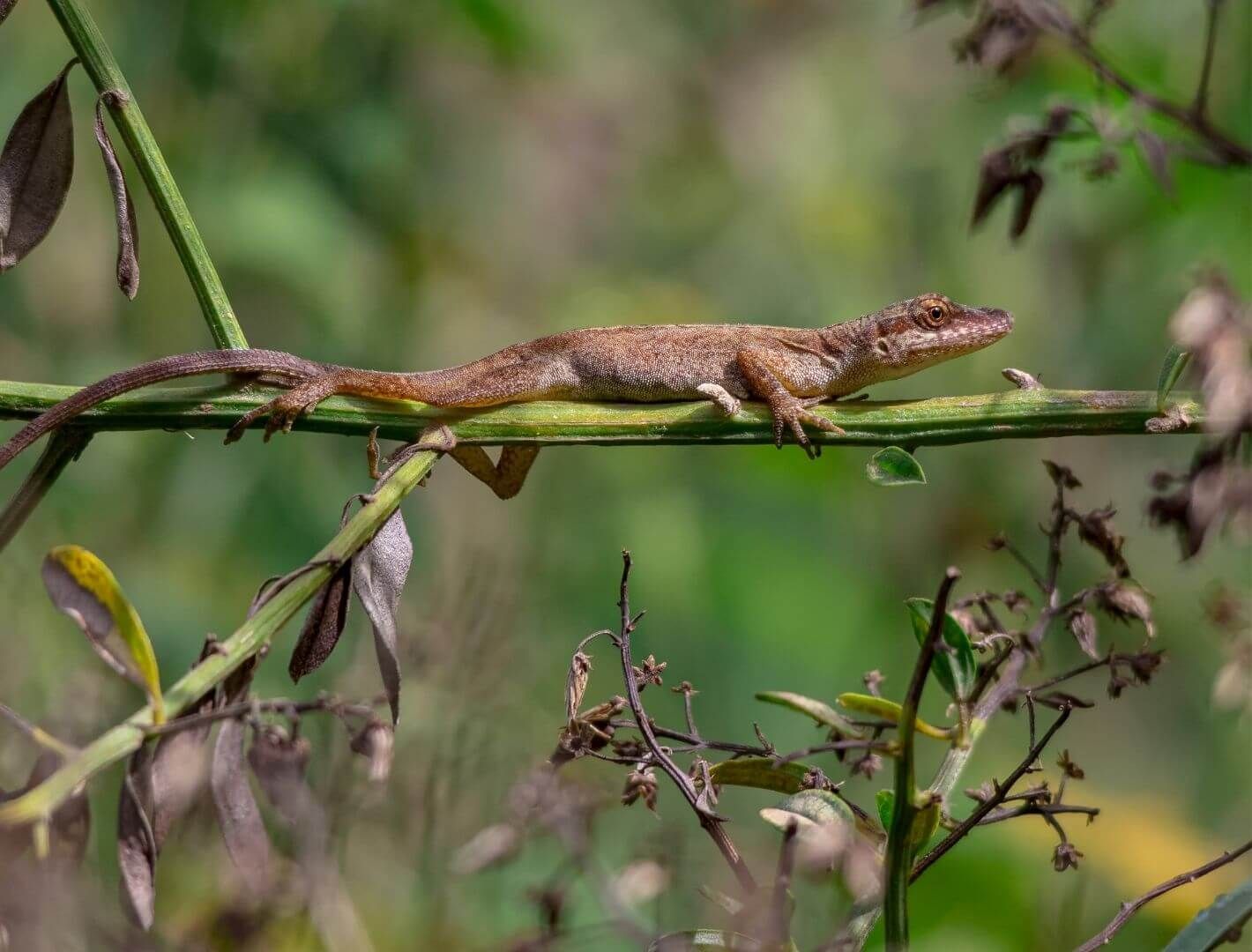
Brown anoles are native to tropical countries around the Caribbean Sea. However, that is not the only place they live. Brown anoles were accidentally brought to the United States more than 100 years ago. Scientists believe they arrived in potted plants shipped from the Caribbean.
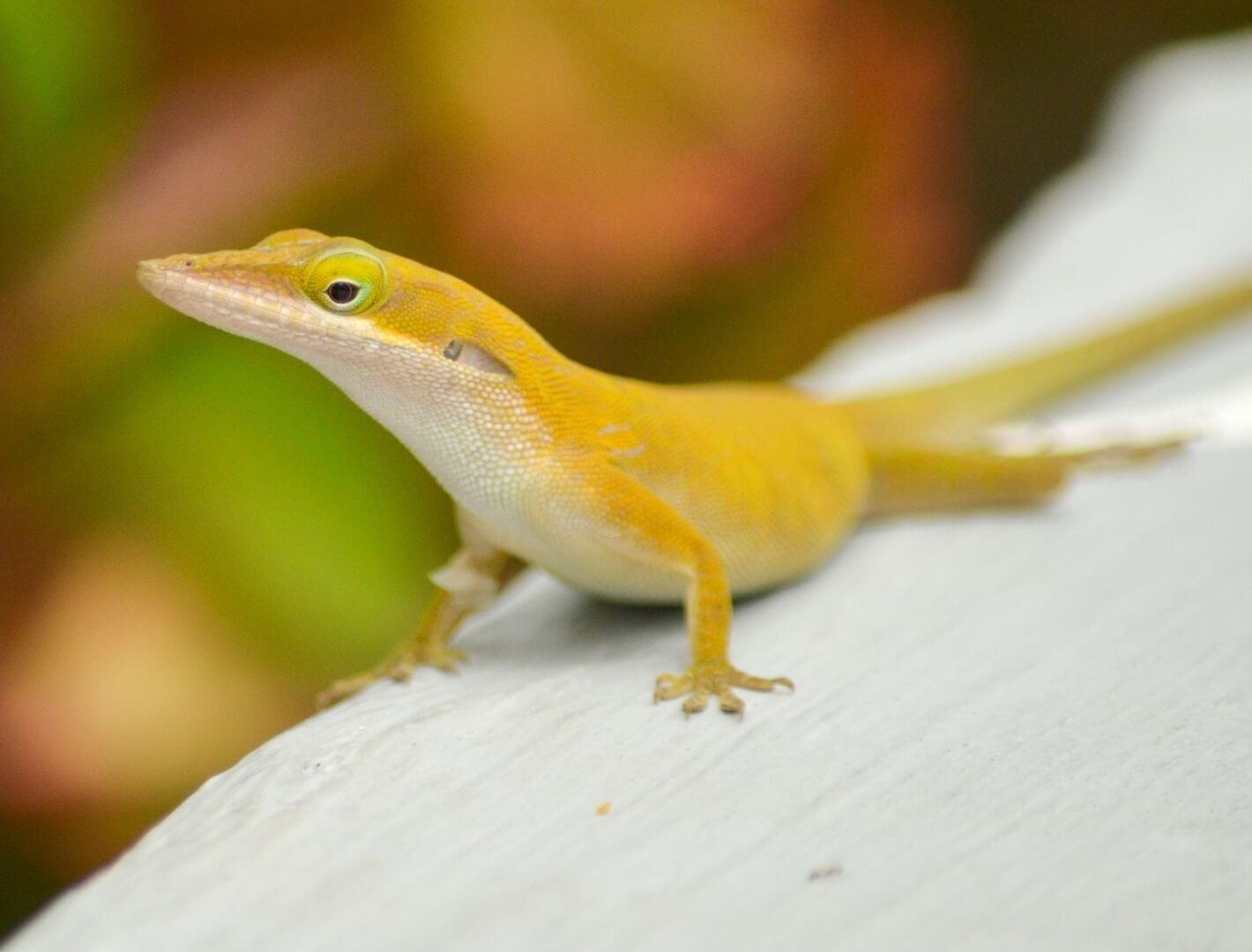
In the United States, their population has grown and spread out. They now live in many states, including Florida. Florida is also home to the native green anole. Brown anoles create many problems for green anoles and other lizards. Brown anoles are slightly larger and stronger than green anoles. They take over green anole territories and eat their food. Larger brown anoles even eat young green anoles.
Green anoles change their behaviors to avoid competition with brown anoles. They spend more time in the trees, while brown anoles prefer to live on or near the ground. Even though green anoles try to avoid them, brown anoles still make it challenging for them to survive. Brown anoles will likely spread north if they are not removed. Scientists believe that brown anoles may help the environment by keeping spiders and other pests in check. However, most argue they do more harm than good by outcompeting native species.
Conservation Corner
Protecting Biodiversity in Cuba
Bio means life, and diversity means different.
Biodiversity: The amount of different species in one area.
Biodiversity Hotspot: An area with high biodiversity. These areas are often threatened by humans.
~~~
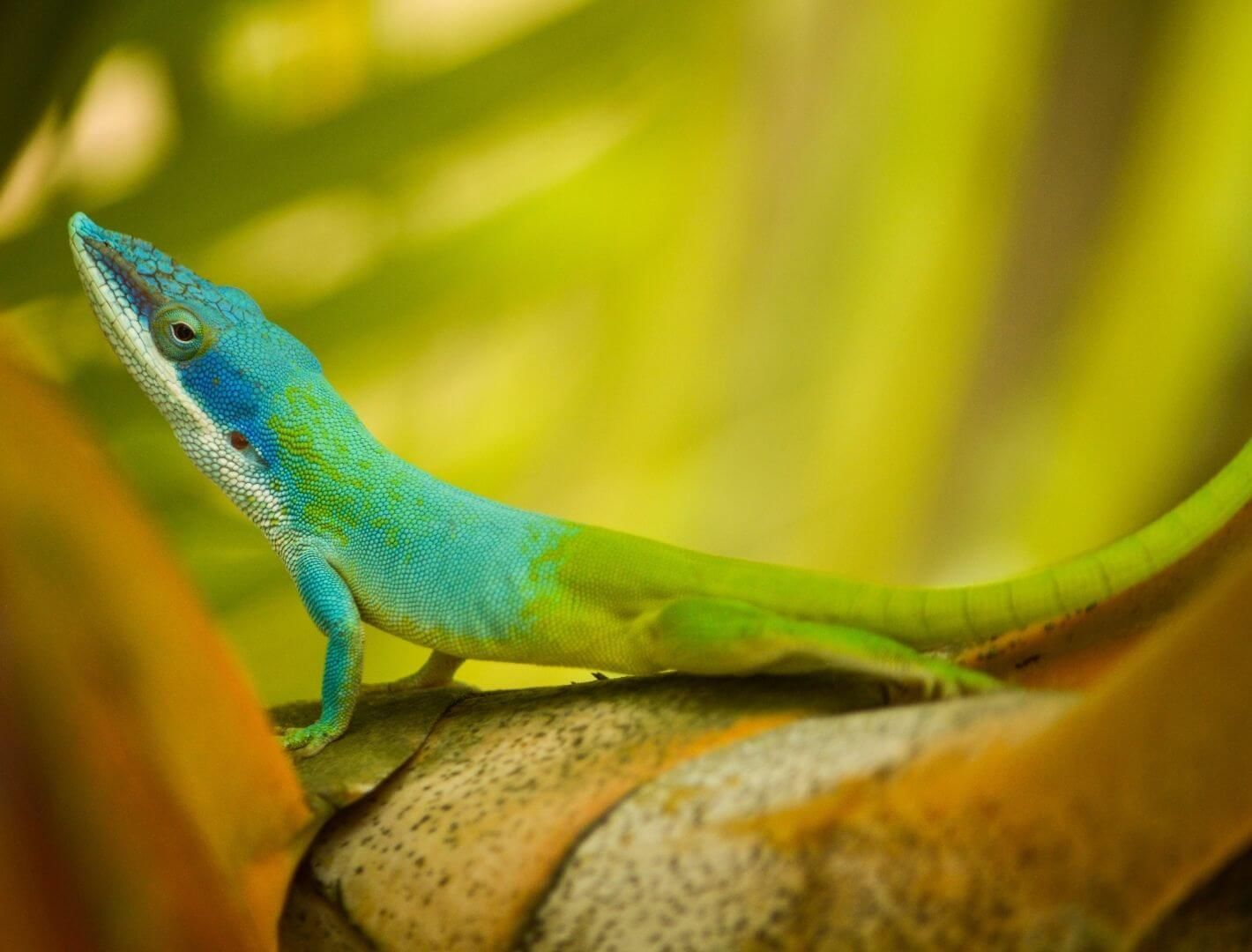
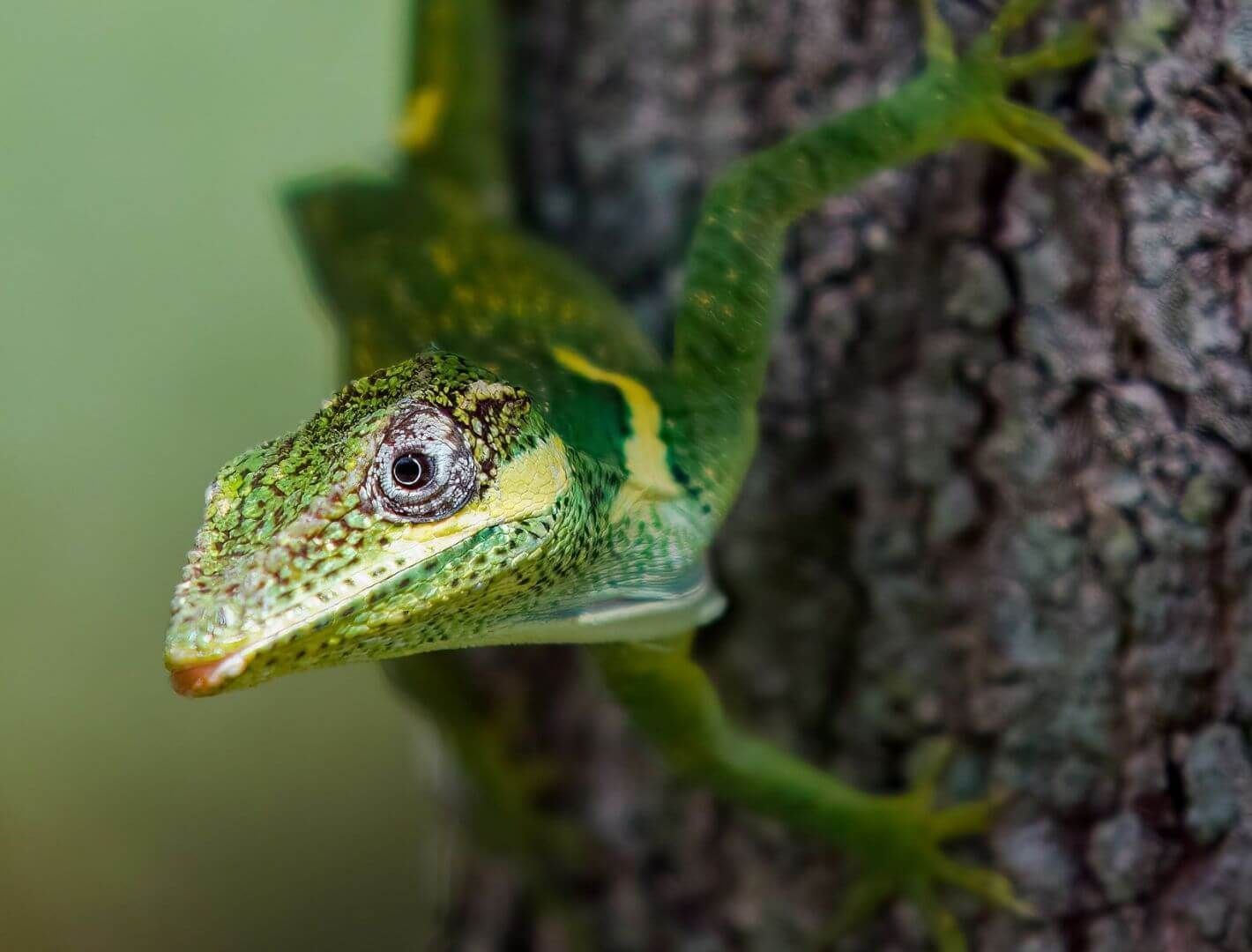
Cuba is an island in the Caribbean Sea. It is roughly the size of Pennsylvania. You could drive across the narrow island in less than half a day. Cuba is mostly covered by forests and wetlands. It is home to amazing animals, such as the world’s smallest bird, endangered crocodiles, and more than 60 species of anoles. Nearly 50% of Cuba’s plants and animals are found nowhere else on Earth. It is a biodiversity hotspot.
Anoles are one of the most well-studied animals in Cuba. The 64 native species live across different parts of the island. Many species live together in the same area. They avoid competition by using different parts of the habitat. Some live in the trees while others live on the ground. They eat different food and have different behaviors. Scientists study anoles in Cuba to learn more about how animals adapt to their specific environments.
Unfortunately, researching anoles in Cuba is becoming more challenging. Forests are being cut down and turned into farms. Climate change is rapidly changing habitats. It is also causing hurricanes to become larger and more frequent. Protecting biodiversity hotspots, like Cuba, is important for scientists to learn how animals adapt over time. Organizations like The Nature Conservancy have worked for decades to save this diverse place. Read more about how The Nature Conservancy is working to protect Cuba.
Anole Challenge
Compare Anoles to Native Lizard
Compare and contrast anoles with a lizard that is native to where you live. Research your native lizard. Use the anole lesson and information from your research to answer the questions below.
Learn More!
Please note: This video discusses evolutionary biology*
Glossary
Adaptation
The process by which a species becomes more fit for its environment over the course of several generations. It is a result of natural selection.
Arboreal
Living in the trees.
Autotomy
The ability to detach or self-amputate a body part, often to escape from a predator.
Biodiversity
The amount of different species living in an area.
Camouflage
The ability for an organism to blend into their surroundings usually to hide from prey or predators.
Carnivore
An animal that primarily eats meat.
Cartilage
Flexible but firm connective tissue that makes up parts of the human nose and ears, along with shark and ray skeletons.
Climate Change
A change in global weather patterns as a result of greenhouse gases in the atmosphere.
Dewlap
An extendable flap on the neck of some lizards.
Diurnal
To be most active during the daytime.
Endemic
Living in one place and nowhere else.
Ectotherm
An animal that relies on the outside temperature to regulate their body temperature (reptiles and amphibians). Also known as cold-blooded.
Insectivore
An animal that eats primarily insects.
Predator
An animal that hunts other animals for food.
Prehensile
Having the ability to grasp.
Prey
An animal that is hunted and eaten by another animal.
Reptile
A group of ectothermic (cold-blooded) vertebrates that are covered in scales and generally lay eggs.
Semi-Aquatic
Spending some time on land and some time in water.
Species
A closely related group of animals with similar characteristics that are capable of reproducing (example: tigers).
Territorial
Referring to an animal that defends an area (its territory) from other members of its species.
Thermoregulation
The act of an animal controlling its body temperature.
Tropical
A region near the equator that has warm temperatures year round.