
Caimans

Let's Learn About Caimans
Word of the Week
Solitary
Solitary animals typically live alone. They do not live in groups with other members of their species. Solitary animals may be in groups when breeding or raising offspring.
Caimans, tigers, and polar bears are examples of solitary animals.
Fast Facts
Where do caimans live?
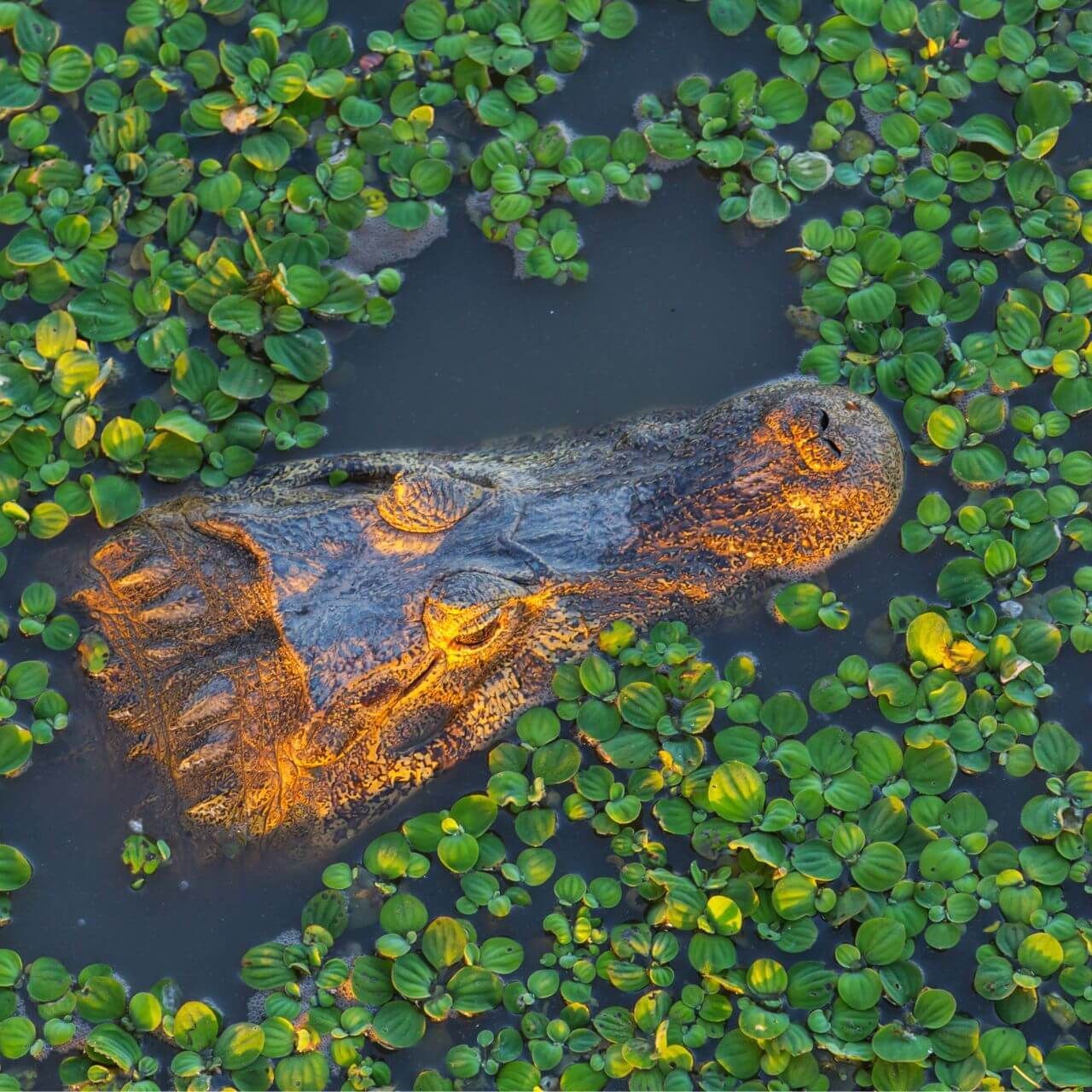
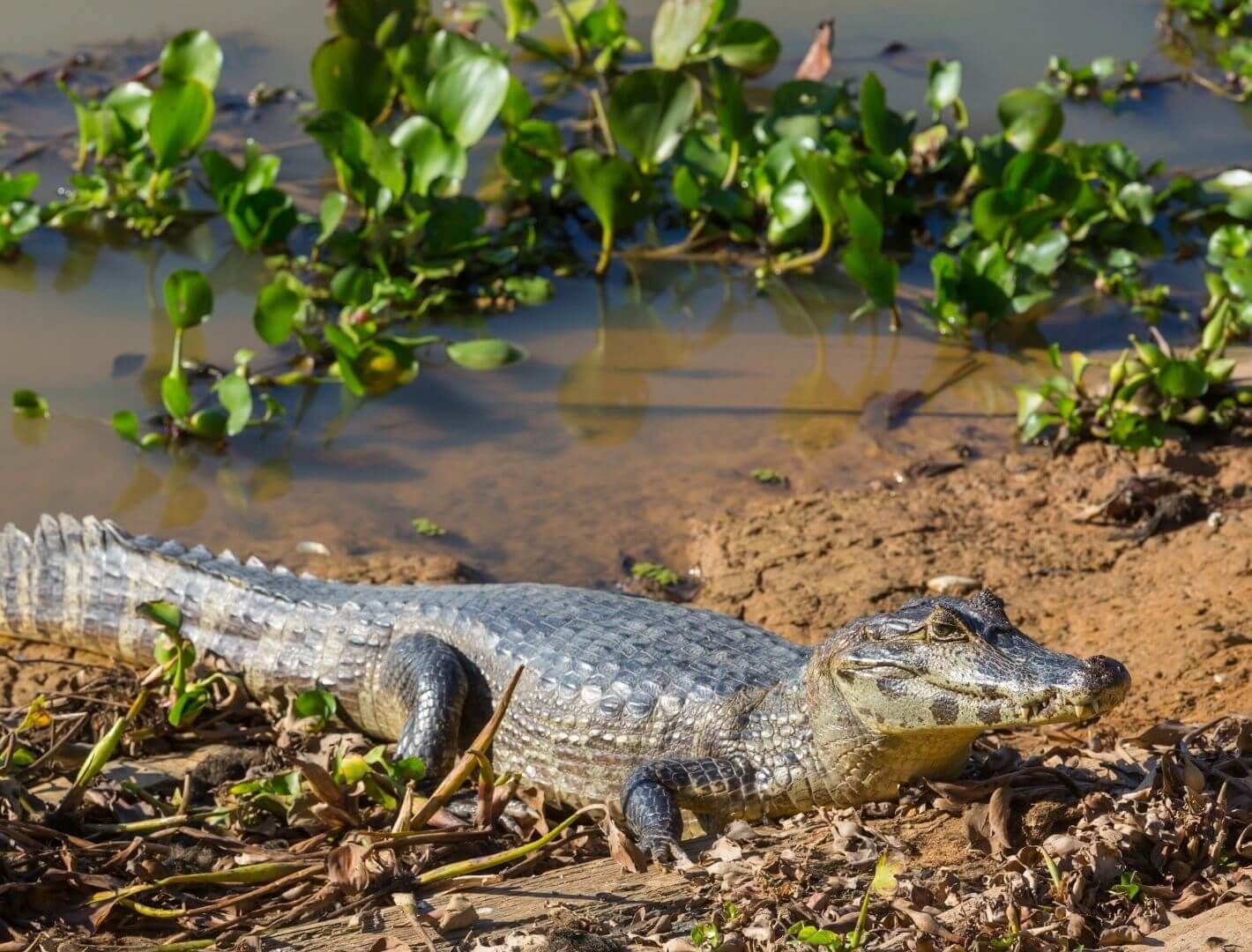
Caimans live in Central America and South America.
They are found in tropical rainforest habitats. Caimans are found near freshwater, such as rivers, swamps, and wetlands.
What do caimans eat?
Caimans are carnivores. They are meat eaters.
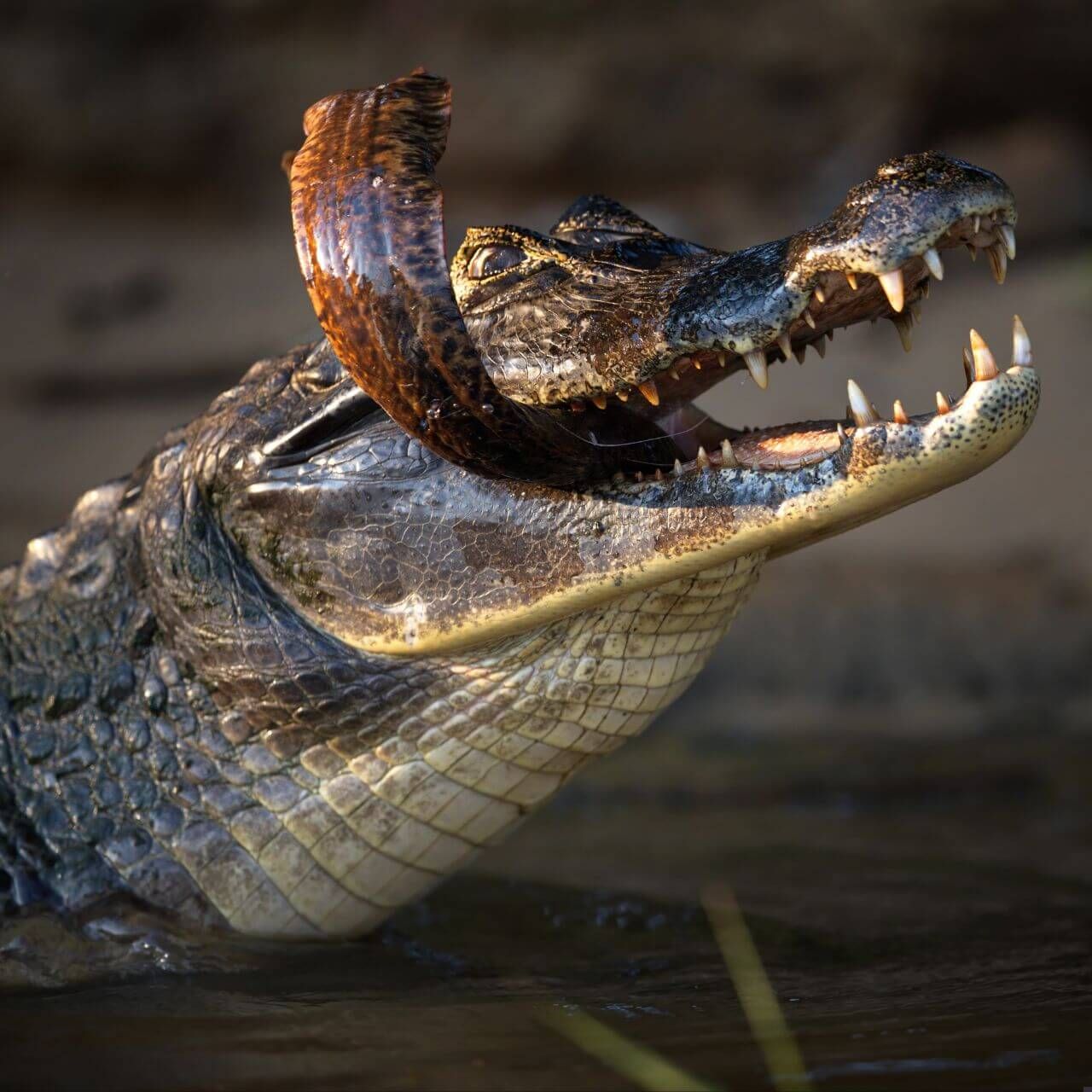
Caimans mostly eat fish. They also eat many other animals. Caimans feed on capybaras and other rodents. They eat birds, like ducks and herons. They even feed on reptiles, like snakes and turtles. When young, caimans eat small animals, like insects.
What traits do caimans share?
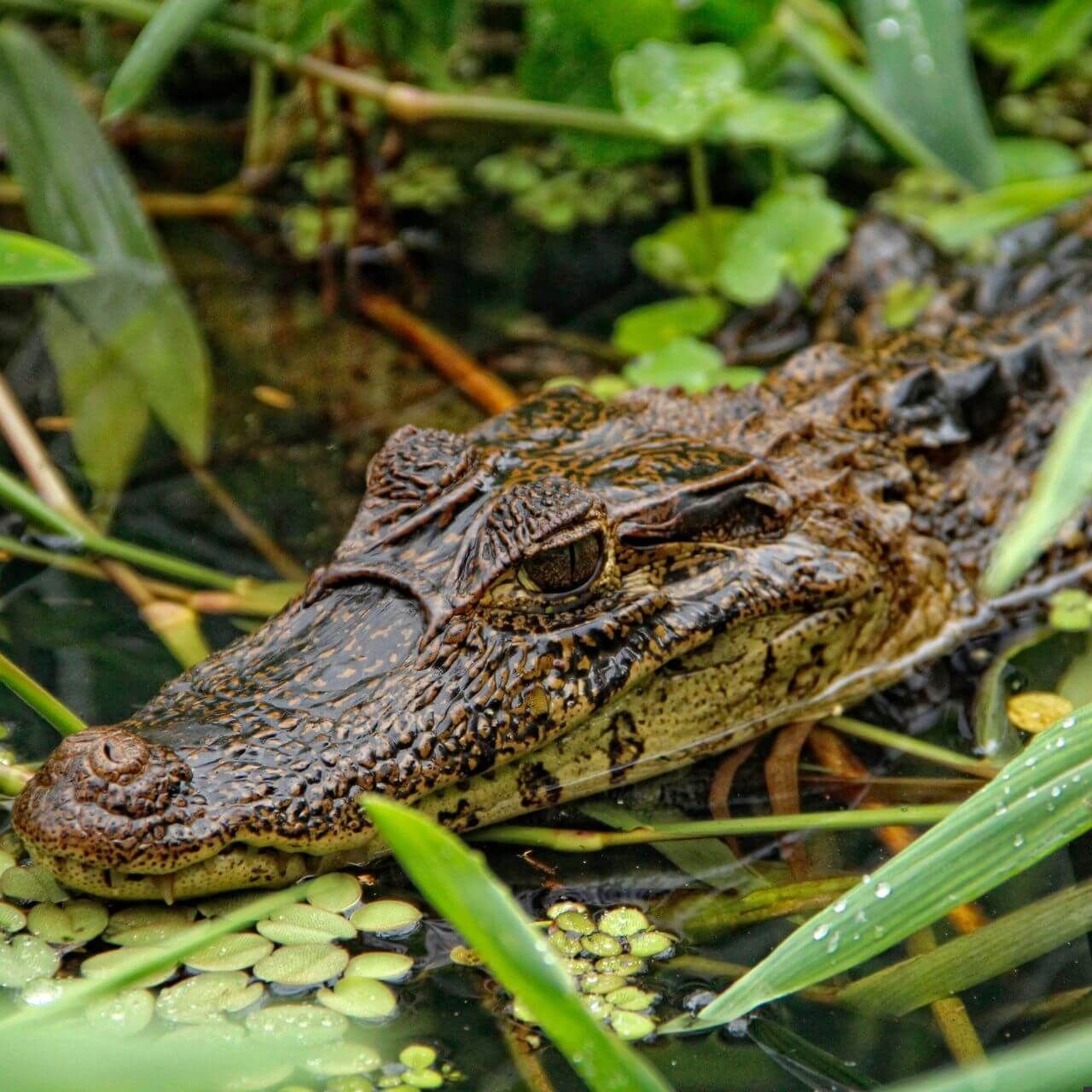
Caimans are a group of crocodilians. They have many traits in common with other crocodilians, such as…
- Semi-aquatic lifestyle
- Powerful, paddle-like tail
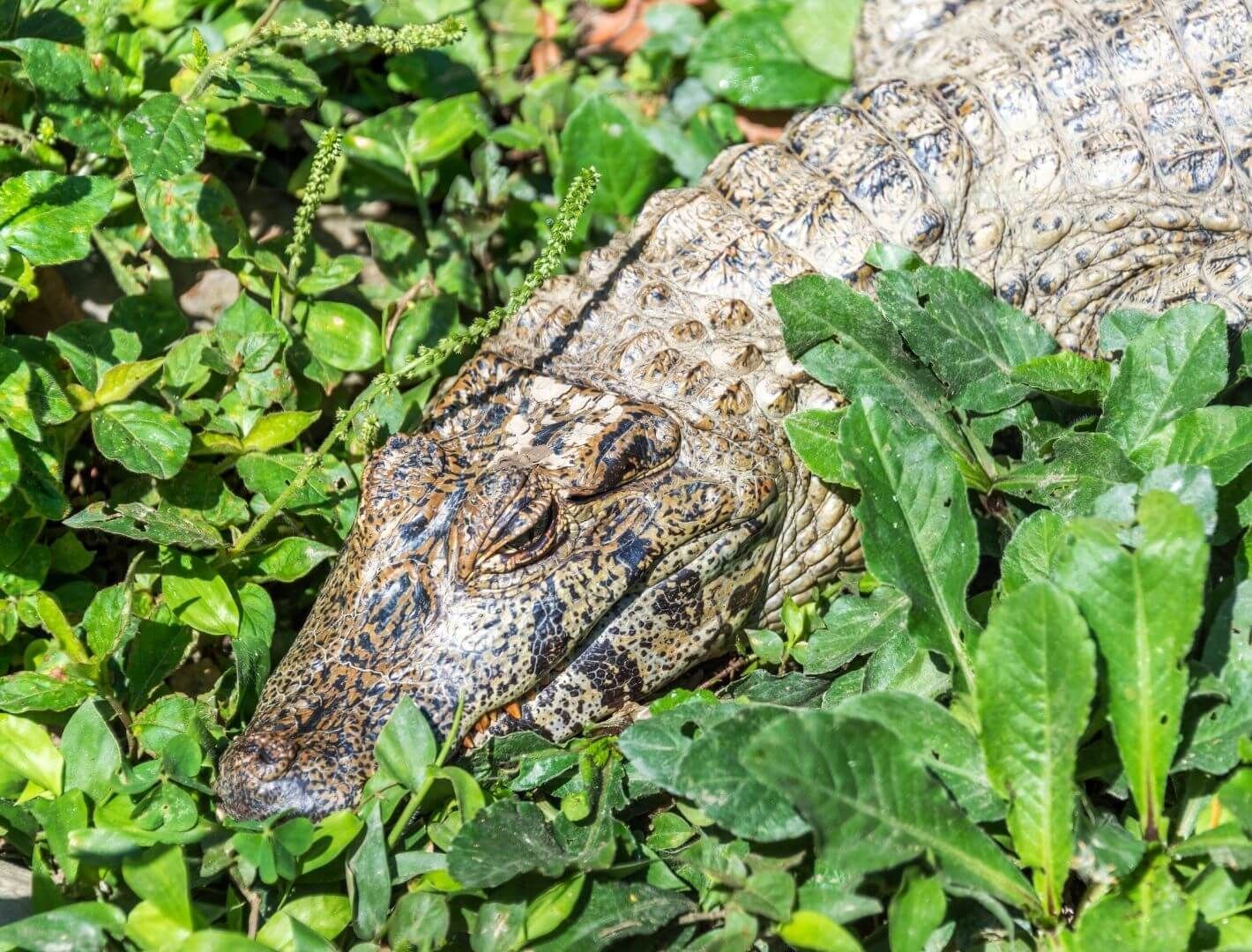
- Bony scales called osteoderms
- Eyes, nose, and ears on top of their head
How many caimans are there?
There are six species of caimans.
Fortunately, caimans are not threatened with extinction. However, they face threats like habitat loss and hunting. Many conservation organizations are working to protect rainforests in Central and South America, which will benefit caimans.
Species Spotlight
Cuvier's Dwarf Caiman
Paleosuchus palpebrosus
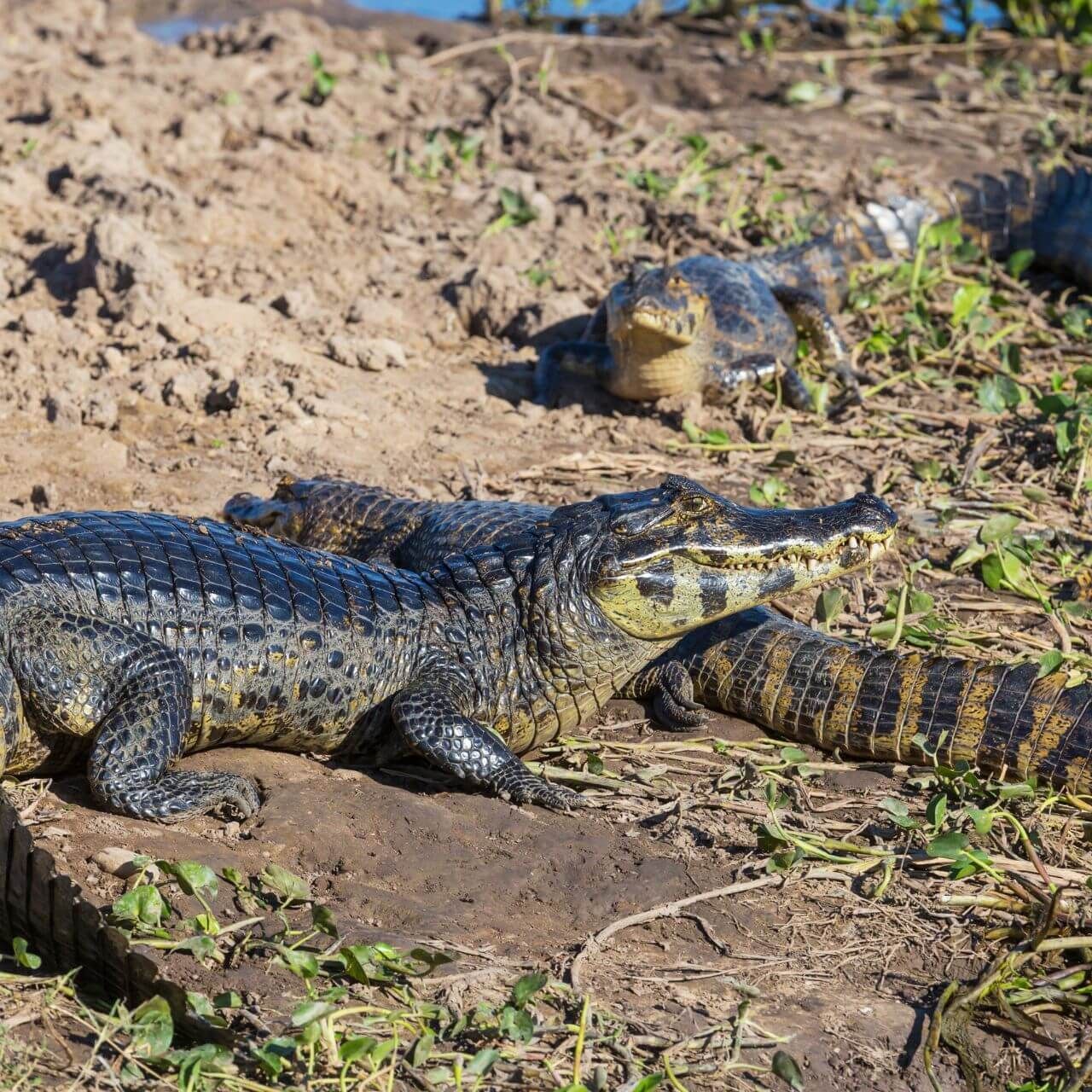
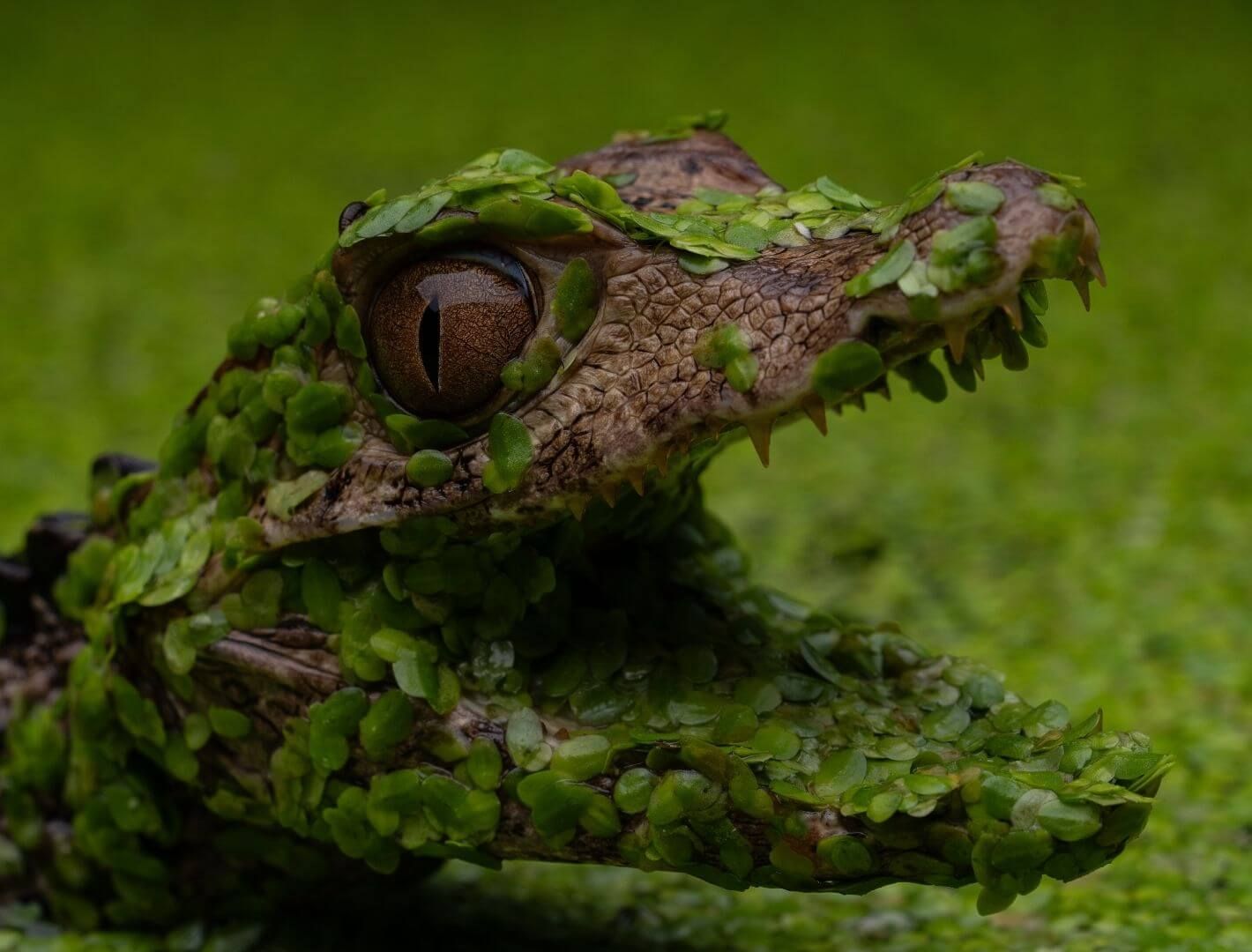
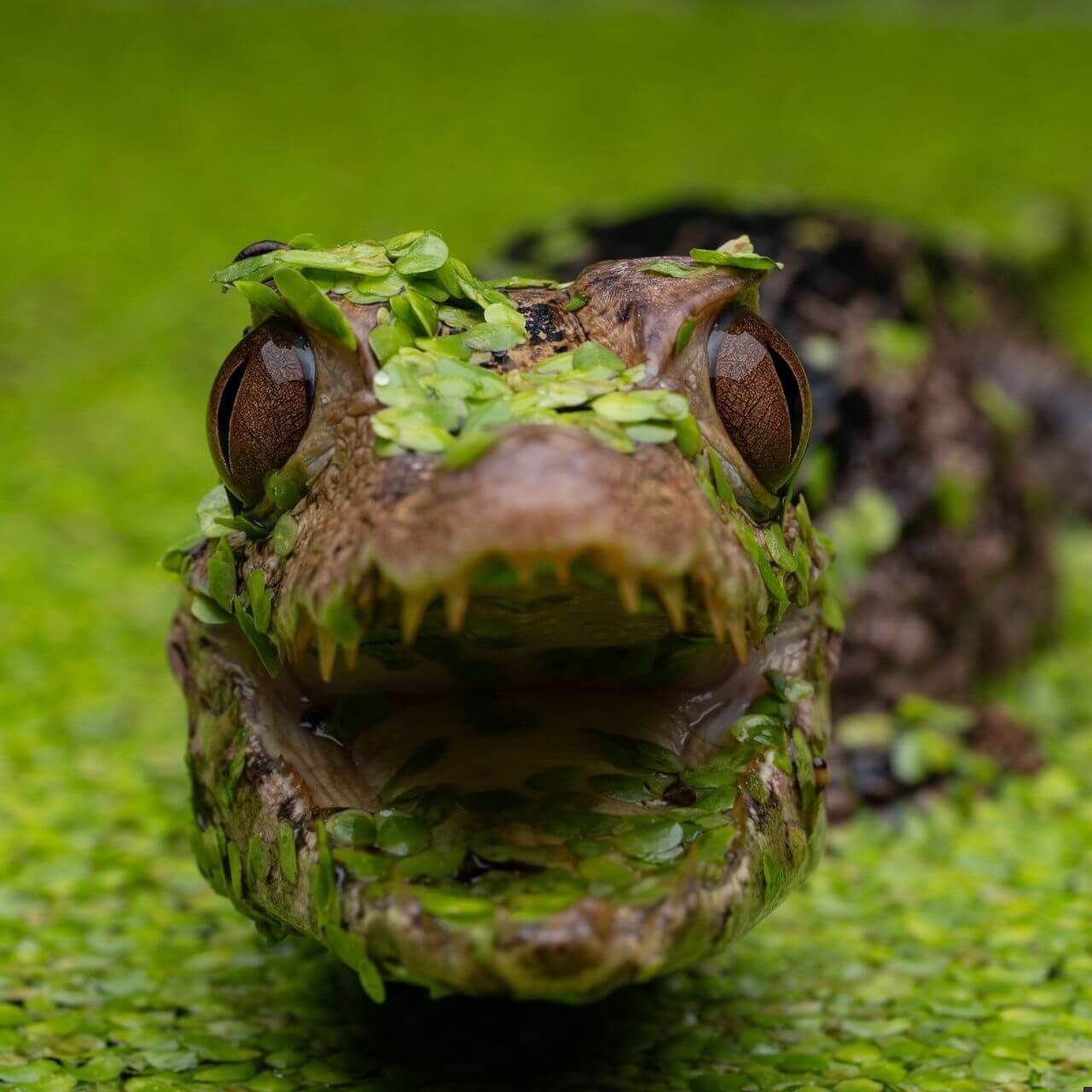
The Cuvier’s dwarf caiman is the smallest species of caiman. It is also one of the smallest Crocodilians. On average, they grow about 4 feet long. That’s about the same length as a 7-year-old child! Cuvier’s dwarf caimans live in rivers and flooded forests in South America. Their small size makes them vulnerable to predators. Their main predators are jaguars, large snakes, and birds of prey.
Fortunately, the Cuvier’s dwarf caimans have adaptations to protect themselves. Like other Crocodilians, they have great camouflage and protective, bony scales. Their eyes, nose, and ears are on the top of their head. This allows them to stay hidden underwater while looking for predators. This also helps them to find their prey.
Cuvier’s dwarf caimans eat fish, amphibians, and invertebrates, like insects and clams. Their diet helps keep the ecosystem balanced. Scientists consider them to be a keystone species. Without them, fish populations would grow out of control.
Unfortunately, their populations are shrinking in some areas. Their main threats are hunting and habitat loss. Some are taken from the wild for the exotic pet trade. They are the most popular Crocodilian to keep as a pet because of their small size. While they may appear cute, Crocodilians do not make good pets and should not be bought or sold.
Crocodile
ButtonBRAIN BLAST
What are the advantages of being a small crocodilian? What are the disadvantages?
Conservation Corner
Threats to Caimans
Caimans are highly important in the Amazon Rainforest. They keep populations of animals like fish and amphibians in check. Unfortunately, caimans and their habitat face many threats.
Caimans are threatened by pollution to their freshwater home. Most of the pollution is caused by mining. Mining releases harmful chemicals into the water. Caimans, their prey, and other animals absorb the toxins and become sick. Unfortunately, this threat is ongoing. Scientists are working with local governments to stop illegal mining in the Amazon.
Dams built along the Amazon River are also threatening caimans. Dams are a great way to create renewable energy. However, they negatively affect the river itself. The dams change the way water flows. They affect how much water is available where caimans hunt and nest. Unfortunately, many more dams are expected to be added to the river in the coming years.
Finally, a third threat to caimans is hunting. In the mid-1900s, some caiman species were nearly hunted to extinction. Caimans are hunted for their meat and skin. Their skin is used in fashion to make boots and jackets. Thanks to new laws, caiman hunting has decreased. Their populations have recovered.
While caimans face many threats in the wild, they are fortunately not at risk of extinction. All six species have healthy populations. It is important that scientists continue to monitor caiman populations. If their populations continue to decline, action will need to be taken.
Crocodilian Characteristics
Determine if each trait describe crocodilians or not by sorting each into the appropriate box.
Caiman Challenge
Caiman Trait Exploration
Learn More!
Glossary
Adaptation
The process by which a species becomes more fit for its environment over the course of several generations. It is a result of natural selection.
Bellow
A deep roaring sound made by animals like alligators and koalas.
Ambush
Sneak attack.
Apex Predator
The animal at the top of its food chain; it has no natural predators.
Camouflage
The ability for an organism to blend into its surroundings usually to hide from prey or predators.
Carnivore
An animal that eats other animals.
Crocodilian
An order of semi-aquatic, carnivorous reptiles including alligators, crocodiles, caimans, gharials, and false gharials.
Ectotherm
An animal that relies on the outside temperature to regulate their body temperature (reptiles and amphibians). Also known as cold-blooded.
Freshwater Ecosystem
Regions of Earth's water systems that have a low salt content and are usually found inland. Examples include lakes, ponds, rivers, streams, wetlands, and springs.
Keratin
A structural protein that makes up hair and fur, along with rhinoceros horns, porcupine quills, and part of turtle shells.
Keystone Species
A species whose presence has an unusually high impact on the ecosystem relative to its population size.
Osteoderm
A bony plate found in the skin of animals like crocodiles and Komodo dragons.
Predator
An animal that hunts other animals for food.
Prey
An animal that is hunted and eaten by another animal.
Reptile
A group of ectothermic (cold-blooded) vertebrates that are covered in scales and generally lay eggs.
Semi-Aquatic
Spending some time on land and some time in water.
Solitary
To live alone.
Species
A closely related group of animals with similar characteristics that are capable of reproducing (example: tigers).
Tropical
A region near the equator that has warm temperatures year round.