
Cobras

Let's Learn About Cobras
Word of the Week
Toxungen
A toxungen is a toxin that is sprayed, spit, or smeared onto another animal.
Spitting cobras use a toxungen to defend themselves from predators. A skunk's stinky spray, a bombardier beetle's acid, and an octopus's ink are also examples of toxugens.
Fast Facts
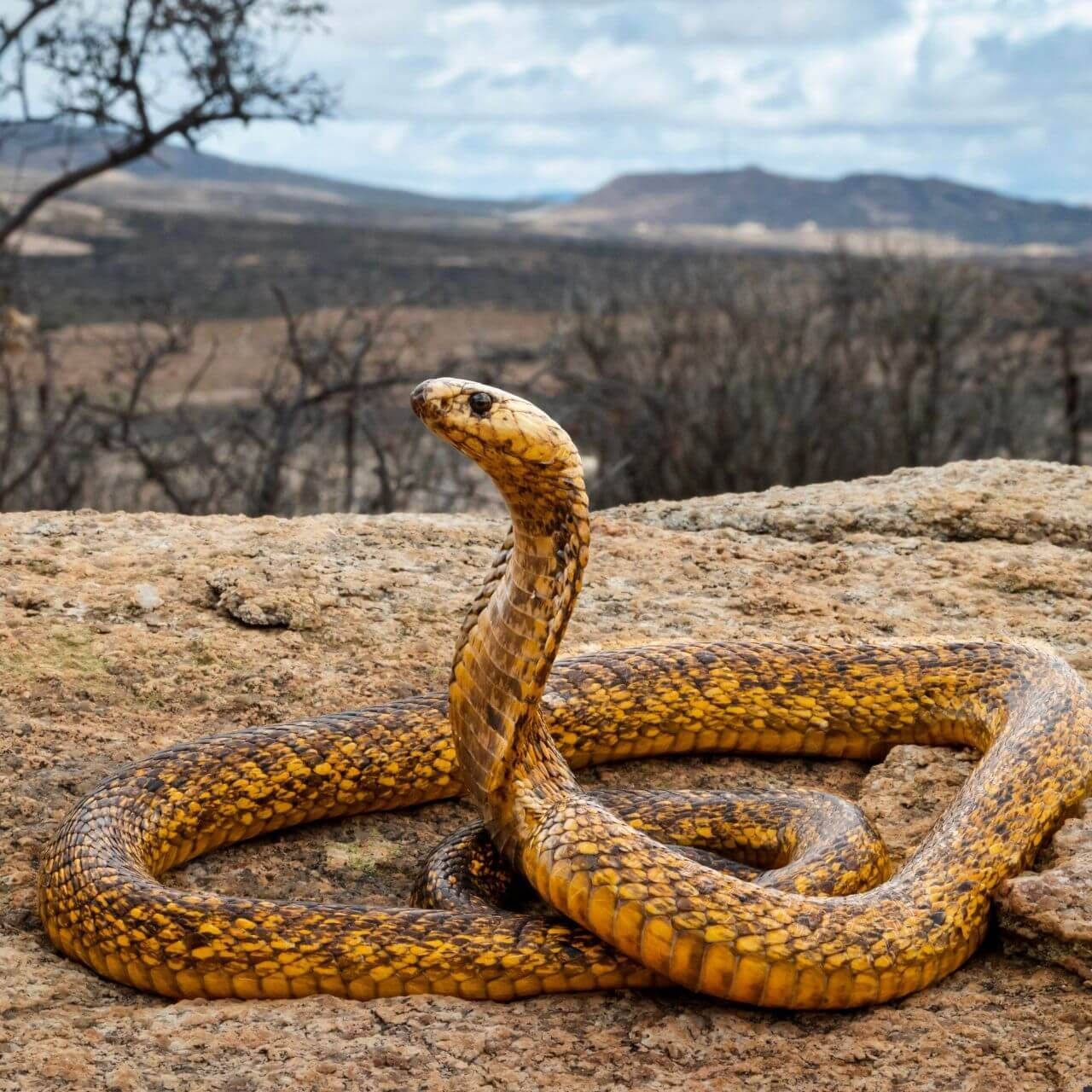
Where do cobras live?
Cobras are found in Africa and Asia.
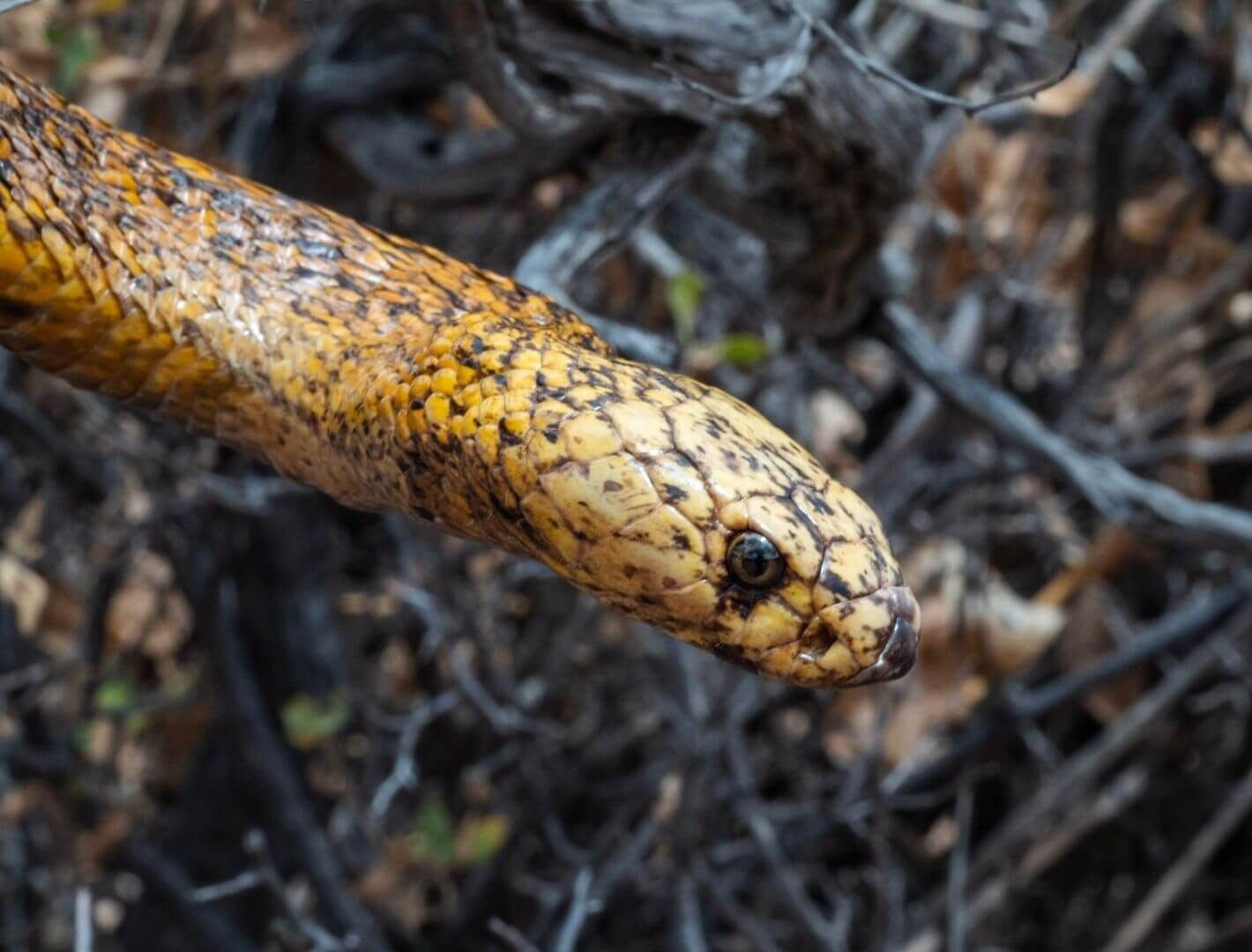
Cobras live in a variety of habitats. They are most common in habitats that are warm for most of the year. They can be found in forests, grasslands, savannas, and deserts. They even live close to people, like on farms.
What do cobras eat?
Cobras are carnivores. They eat meat.
Cobras mainly eat small animals, such as mice, rats, squirrels, or rabbits. They may also eat amphibians, birds, lizards, or even other snakes.
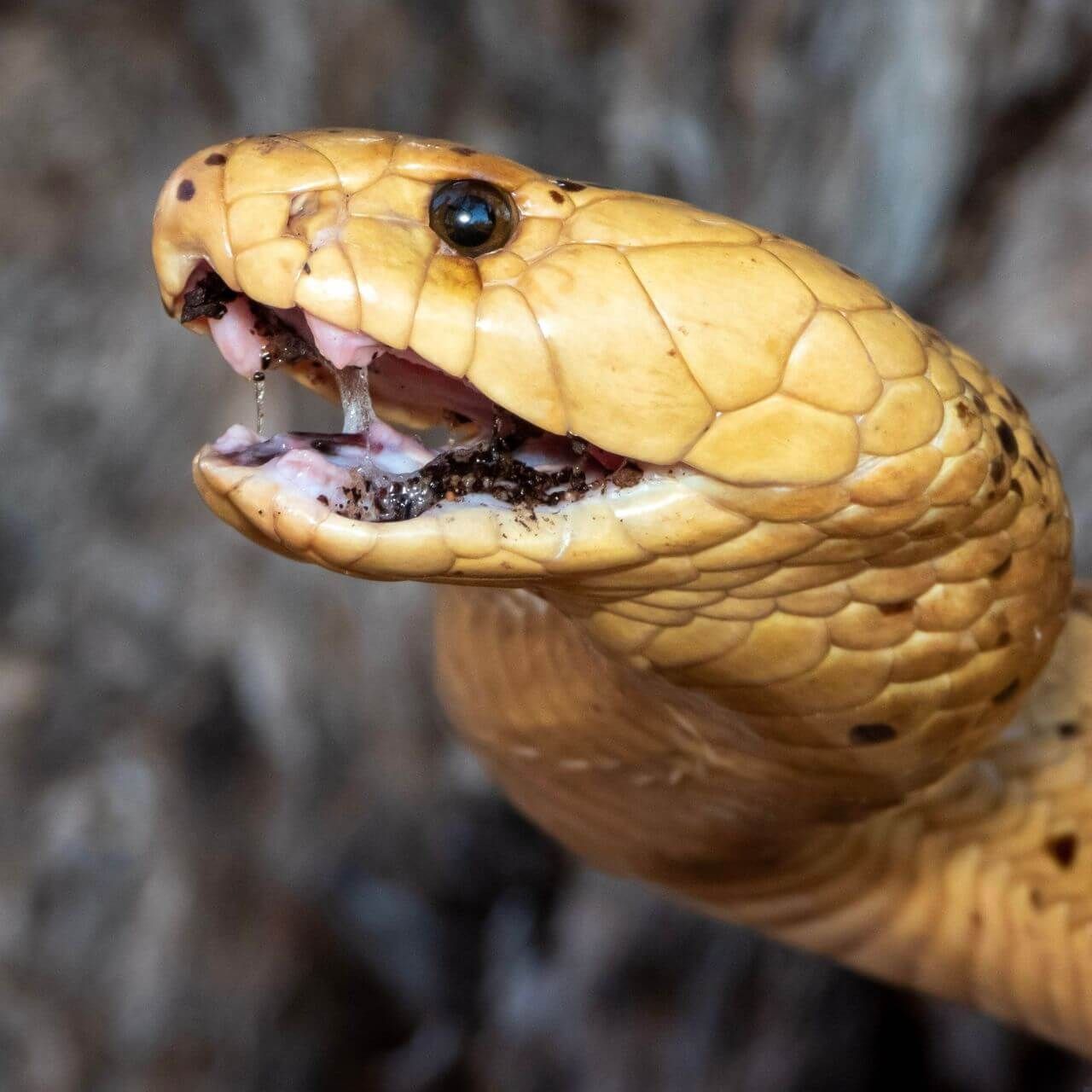
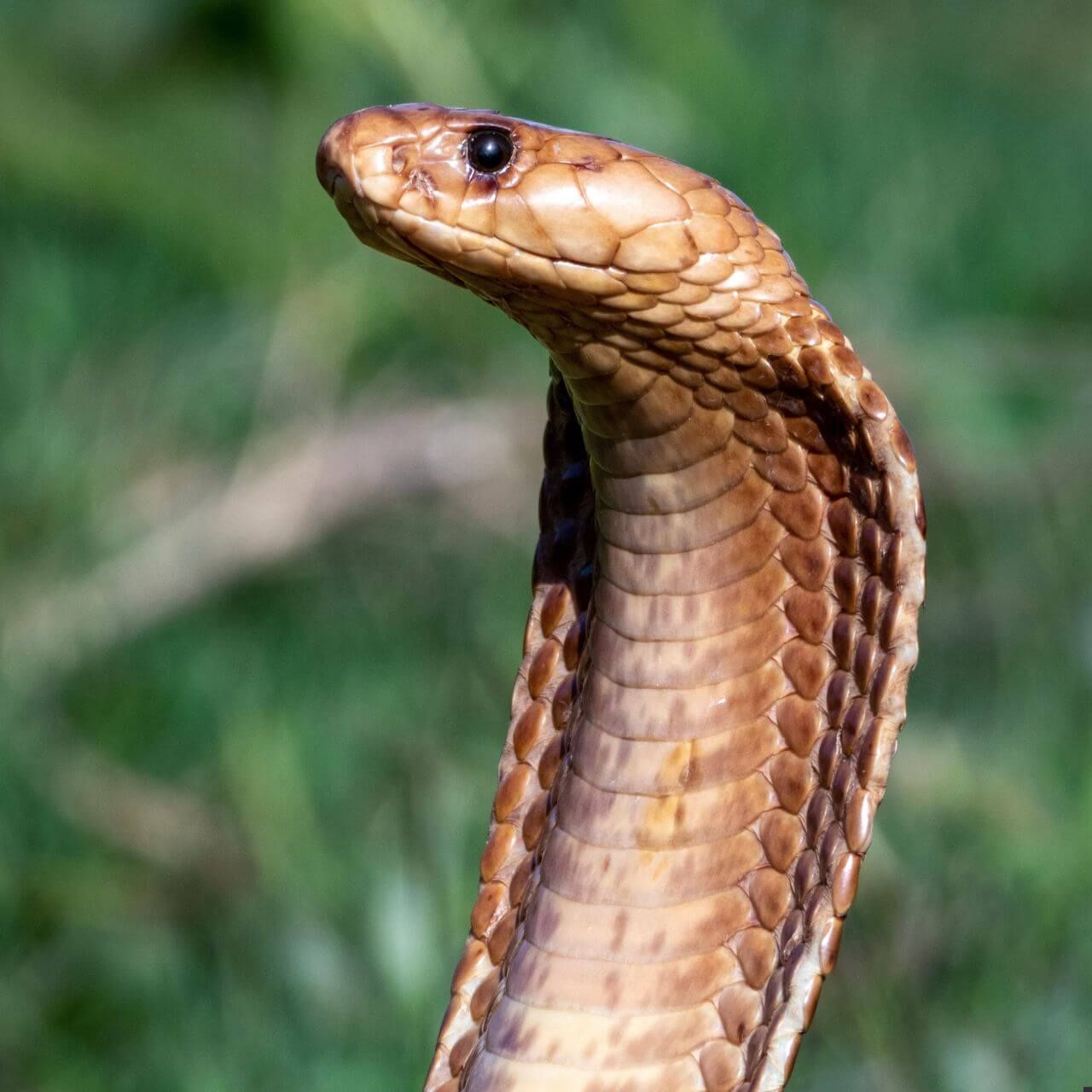
What traits do cobras share?
Cobras have many fascinating traits, including...
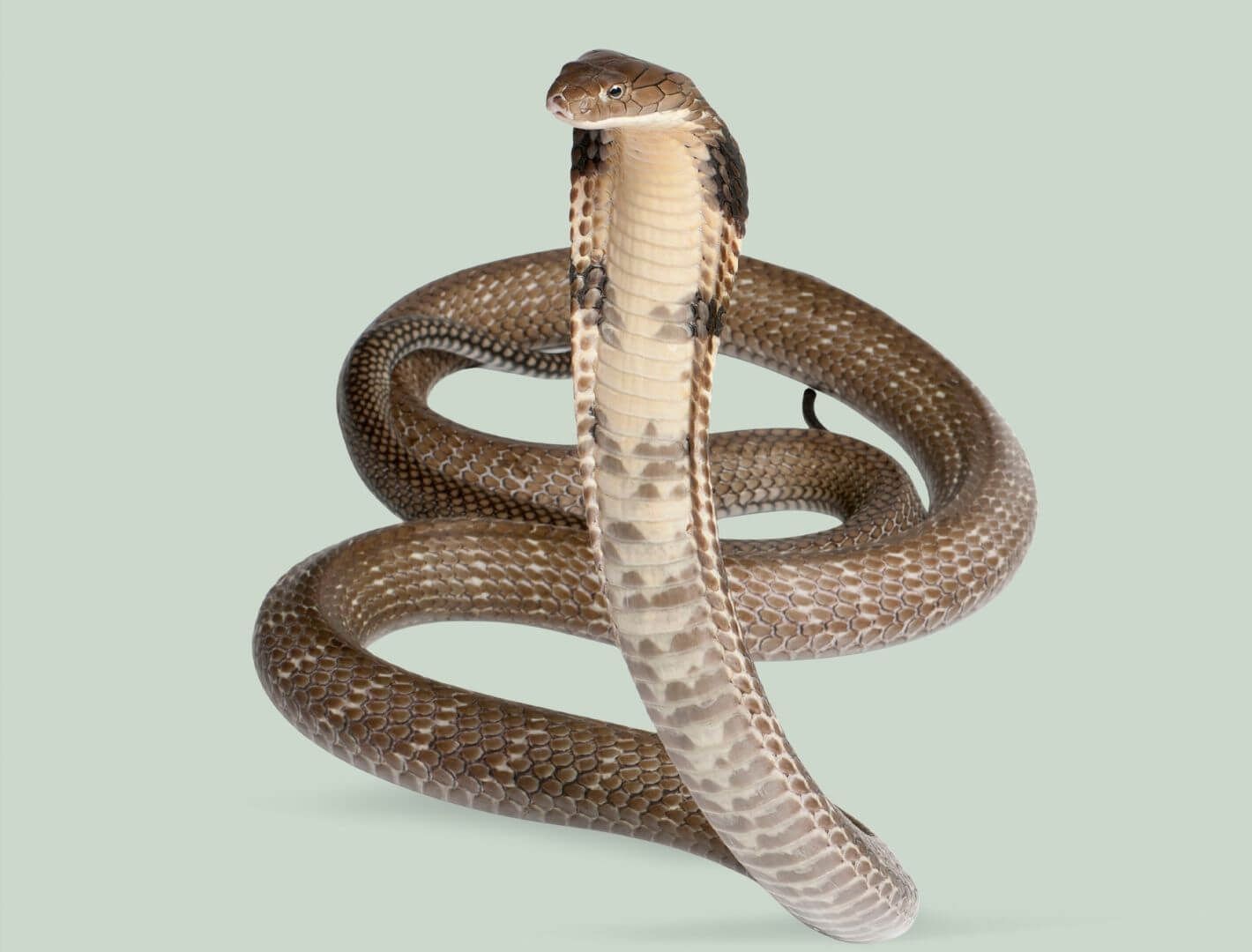
- Flexible neck muscles and ribs to form a hood.
- The ability to stand upright.
- Small fangs.
- Dangerous venom.
- The ability to smell with their tongue.
How many cobras are there?
Cobras are a genus of snakes with 38 identified species. Scientists debate how many species of cobras exist.
Several species are considered to be vulnerable to extinction. The main threat that cobras face is habitat loss. Many of the habitats they rely on are being converted to farms and cities. Cobras are also killed out of fear or taken from the wild.
Species Spotlight
Spitting Cobras
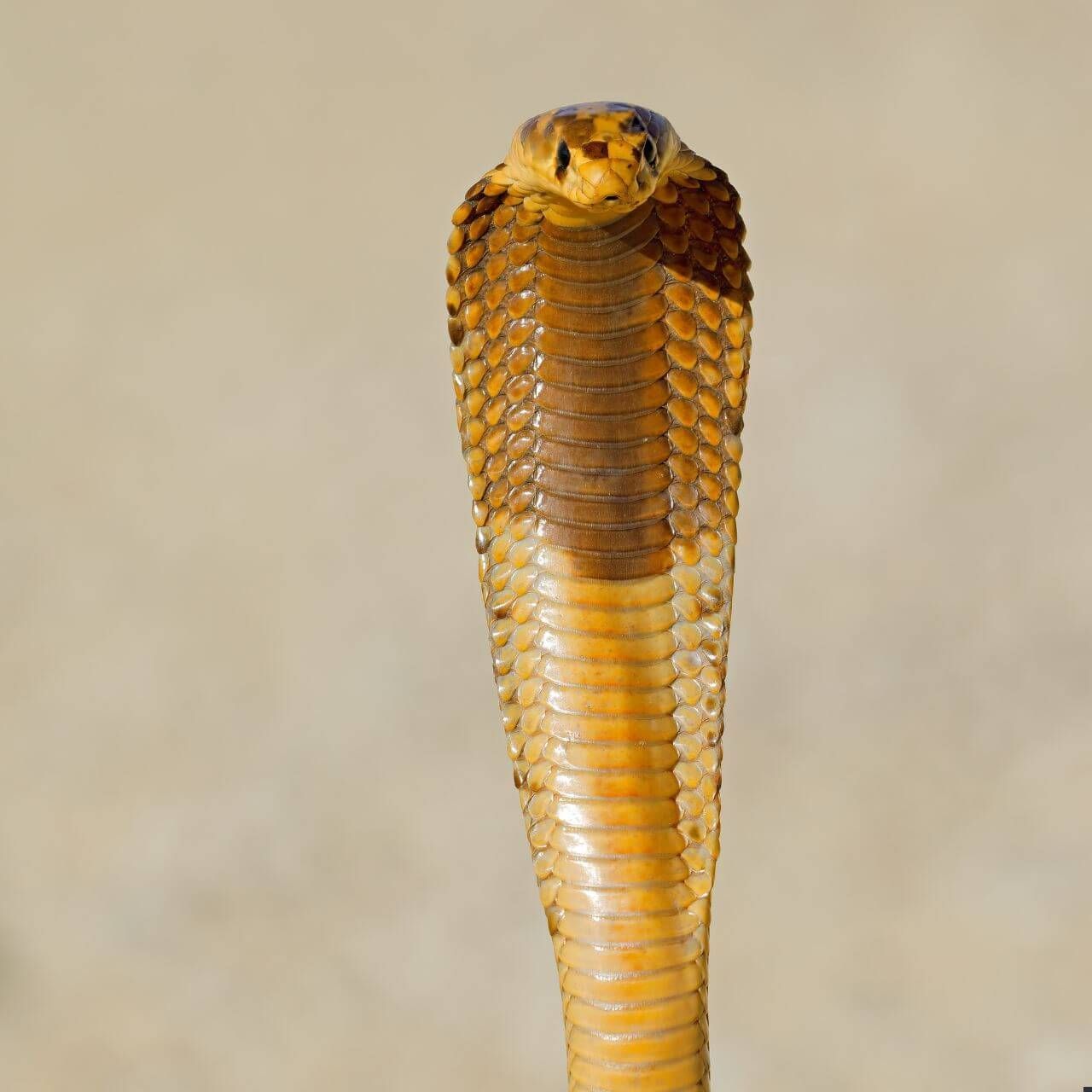
14 species of cobras can “spit” their toxic venom. However, they are not actually spitting. Spitting cobras spray a toxic liquid from small holes on the front of their fangs. When a cobra’s venom is sprayed, it is called a toxungen. A toxungen is different from venom and poison. Venom is a toxin that is injected into another animal. Poison is a toxin that causes harm when eaten or touched.
Venomous snakes produce toxins in glands in their mouth. Toxins travel through small tubes from the glands to the fangs. The toxins exit the fangs through a small hole. For regular venomous snakes, the toxin is forced through the hole at a downward angle when they bite. The holes in a spitting cobra’s fangs point forward instead of downward. This is what allows the toxins to spray forward.
Spitting cobras typically aim their spray at a predator's face. Some species spray more than 6 ft (2 m). It can kill an animal if it gets into their eyes, nose, or mouth! Even if the predator lives, the toxungen can harm them or create a distraction so the spitting cobra can escape.
BRAIN BLAST
Research other animals that spit or spray toxins. How are they similar to or different from spitting cobras?
Conservation Corner
Snake Charming
Not many people would risk getting close to a cobra. Yet, snake charmers do it regularly. Snake charmers are performers. They bring dangerous snakes, like cobras, to markets and festivals. They “hypnotize” the snakes by playing and moving a musical instrument. The snakes emerge from the baskets, often swaying their bodies back and forth. They appear to be enchanted by the music.
While snake charmers may look like musical magicians, they are not. The snakes they use are often taken from the wild. They are starved of food and water and kept in poor conditions. Starvation makes them weak and less able to protect themselves. Some snake charmers even remove the snake’s fangs or venom glands. The snakes appear to dance because they follow the movement of the instrument. They have poor hearing, so they likely cannot hear the music.
Many people do not support snake charming because it harms snakes and their wild populations. In some countries, like India, snake charming is banned. However, it is common in other Asian countries and in northern Africa. Snake charmers feel that charming is an important part of their history and culture. Scientists work to educate these communities about how their performances affect snakes. They hope more countries will ban snake charming once they understand the threats to snakes.
Cobra Challenge
Spitting Cobra Defensives
In this challenge, you will imagine a predator is approaching a spitting cobra.
Determine the order that spitting cobras would use their defenses. Answer the questions about each defense and explain why you put them in that order.
Learn More!
*Please note: This video show a cobra eating a frog*
Glossary
Adaptation
The process by which a species becomes more fit for its environment over the course of several generations. It is a result of natural selection.
Ambush
Sneak attack.
Camouflage
The ability for an organism to blend into their surroundings usually to hide from prey or predators.
Carnivore
An animal that eats other animals.
Ectotherm
An animal that relies on the outside temperature to regulate their body temperature (reptiles and amphibians). Also known as cold-blooded.
Elapidae
A family of venomous snakes, including cobras, mambas, sea snakes, and more.
Habitat Loss
When habitats are destroyed and changed into human-managed land such as farms or cities.
Hatchling
A newborn animal recently hatched from an egg.
Hood
[Of cobras] Expandable neck section that becomes flattened when threatened.
Jacobson's Organ
A sensory organ located in the mouths of snakes and several other animals used to detected chemicals from the air. It is also called the vomeronasal organ.
Neurotoxin
A toxin that harms an animal's nervous system, including the brain and how the brain communicates with the rest of the body.
Pheromones
A communication chemical used to signal information to members of the same species.
Poison
A toxin that is harmful when touched or eaten and is often produced in glands.
Predator
An animal that hunts other animals for food.
Prey
An animal that is hunted and eaten by another animal.
Reptile
A group of ectothermic (cold-blooded) vertebrates that are covered in scales and generally lay eggs.
Species
A closely related group of animals with similar characteristics that are capable of reproducing (example: tigers).
Toxungen
A toxungen is a toxin that is sprayed, spit, or smeared onto another animal.
Venom
A toxin that is injected into prey through teeth or a stinger.