
Marine Iguanas

Let's Learn About Marine Iguanas
Word of the Week
Bask
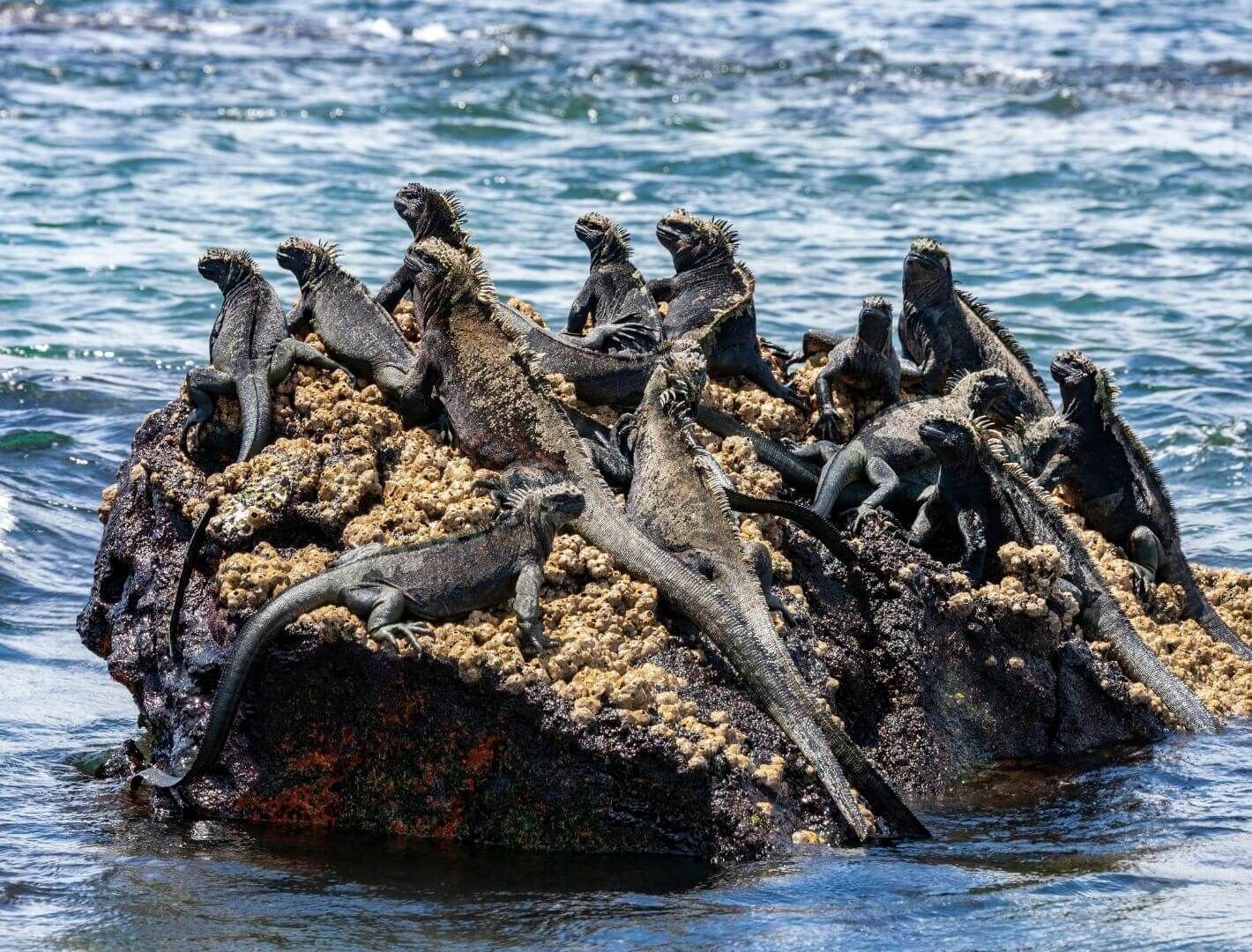
Animals bask, or lie in the sun, to warm their body temperature. Basking allows cold-blooded animals to warm their bodies to the correct temperature.
Basking is important for cold-blooded animals, like lizards, snakes, turtles, and more.
Fast Facts
Where do marine iguanas live?
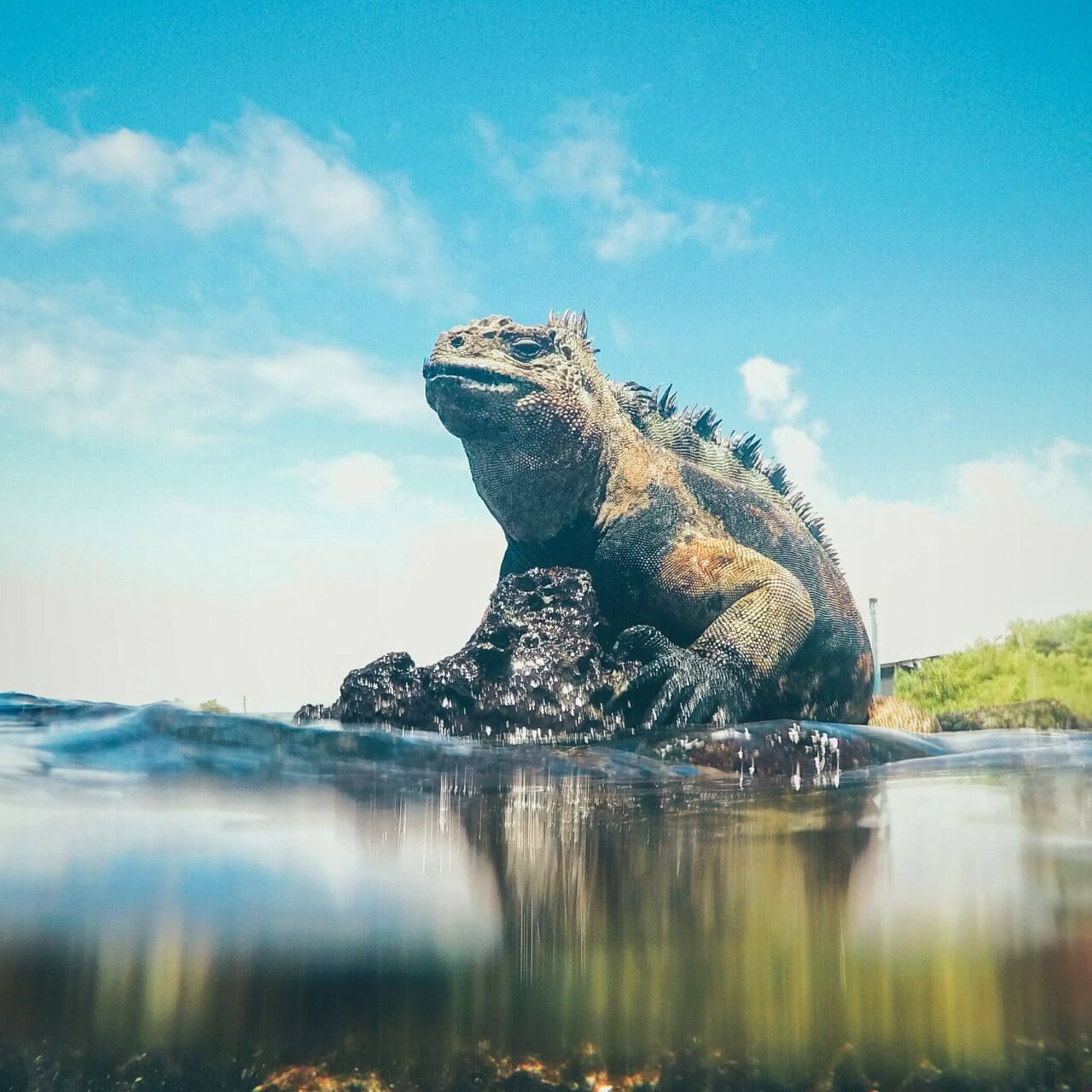
Marine iguanas are endemic to the Galapagos Islands. This means they are not found anywhere else in the world. The Galapagos Islands are about 600 miles off the coast of South America. They are in the Pacific Ocean.
The Galapagos Islands have a variety of habitats. There are forests, grasslands, and shrublands. Marine iguanas live in coastal habitats, especially in areas with volcanic flats.
What do marine iguanas eat?
Marine iguanas are herbivores. They eat algae.
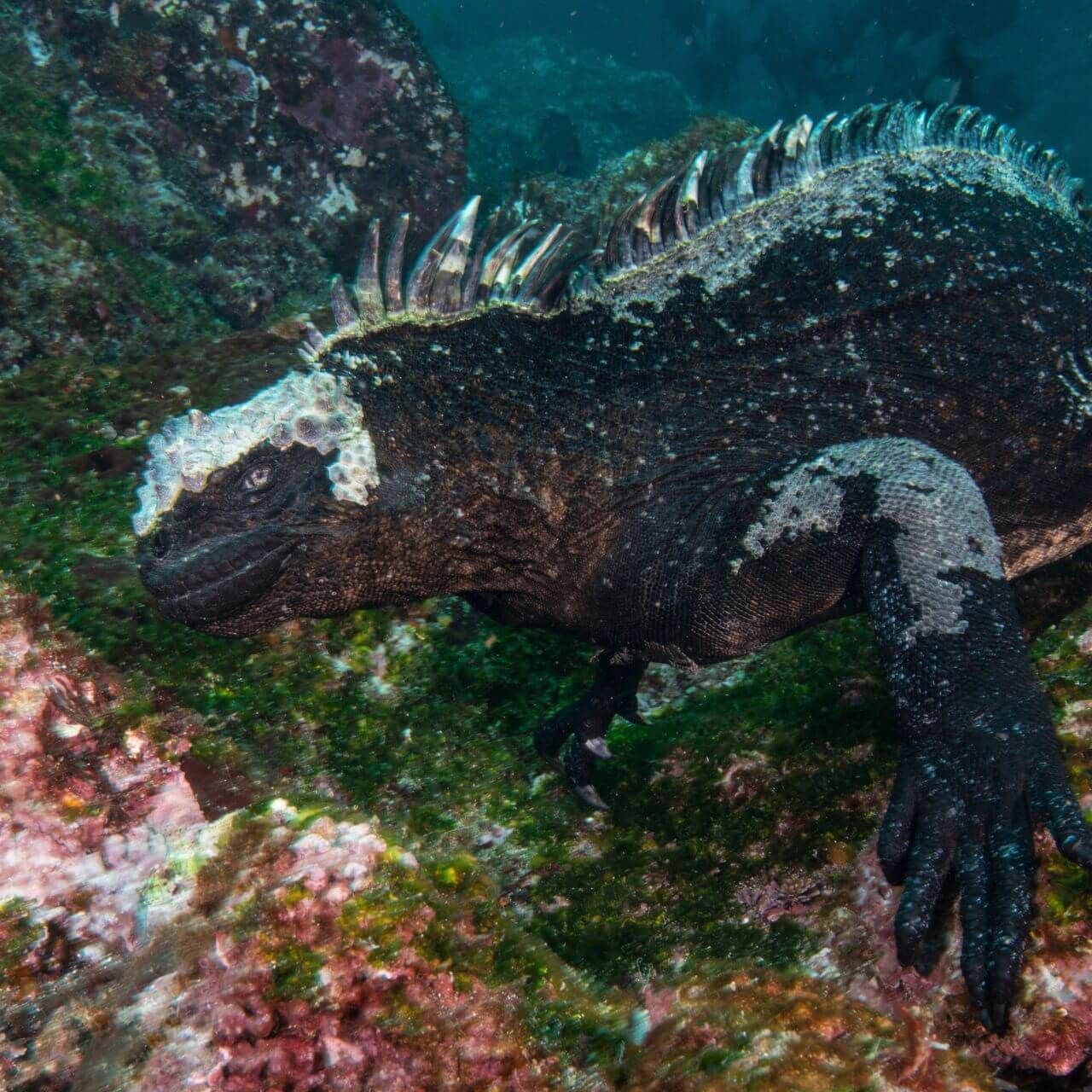
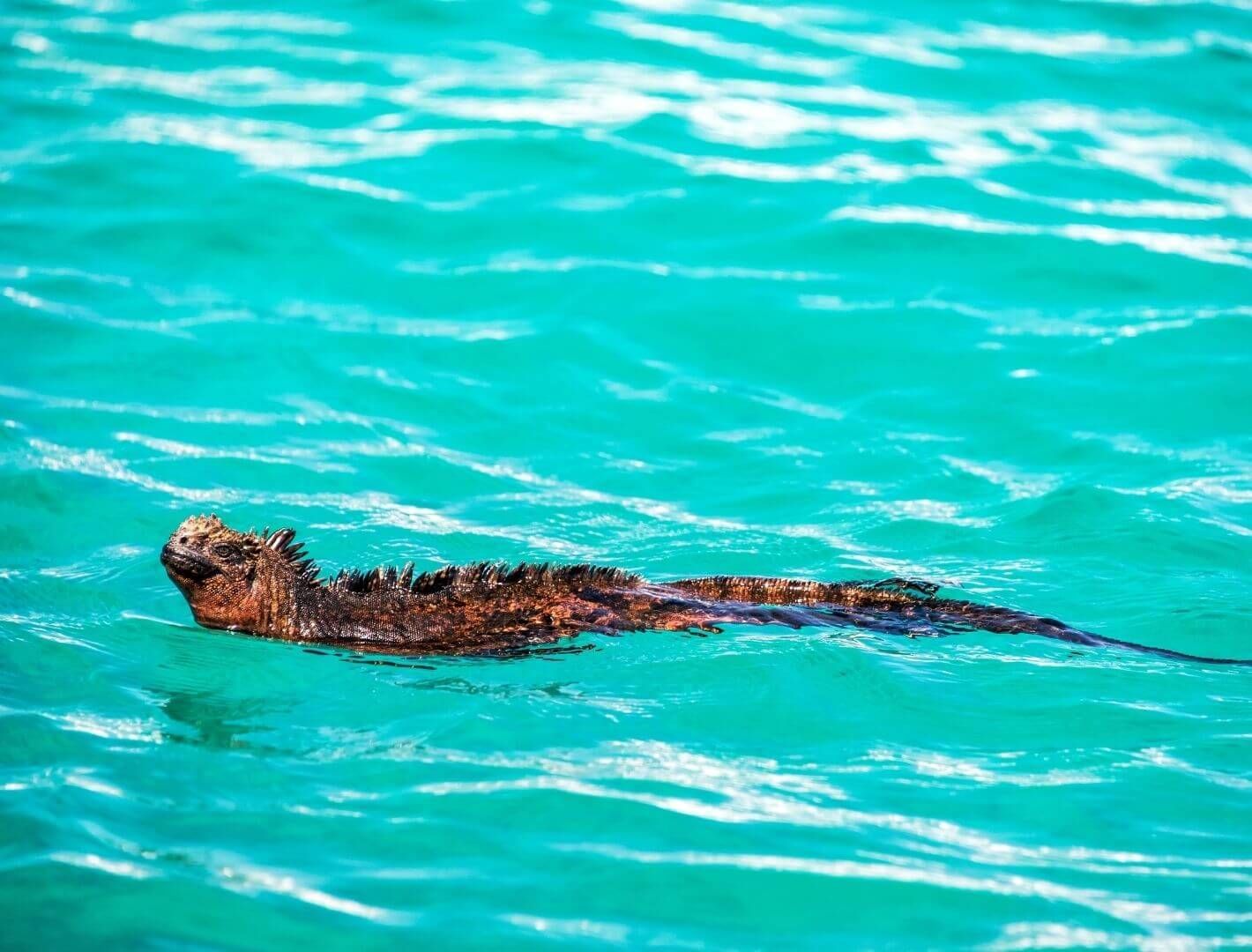
Marine iguanas are the only lizards in the world that find their food in the ocean. Their blunt snout scrapes algae off rocks along the seafloor or in the intertidal zone.
What traits do marine iguanas have?
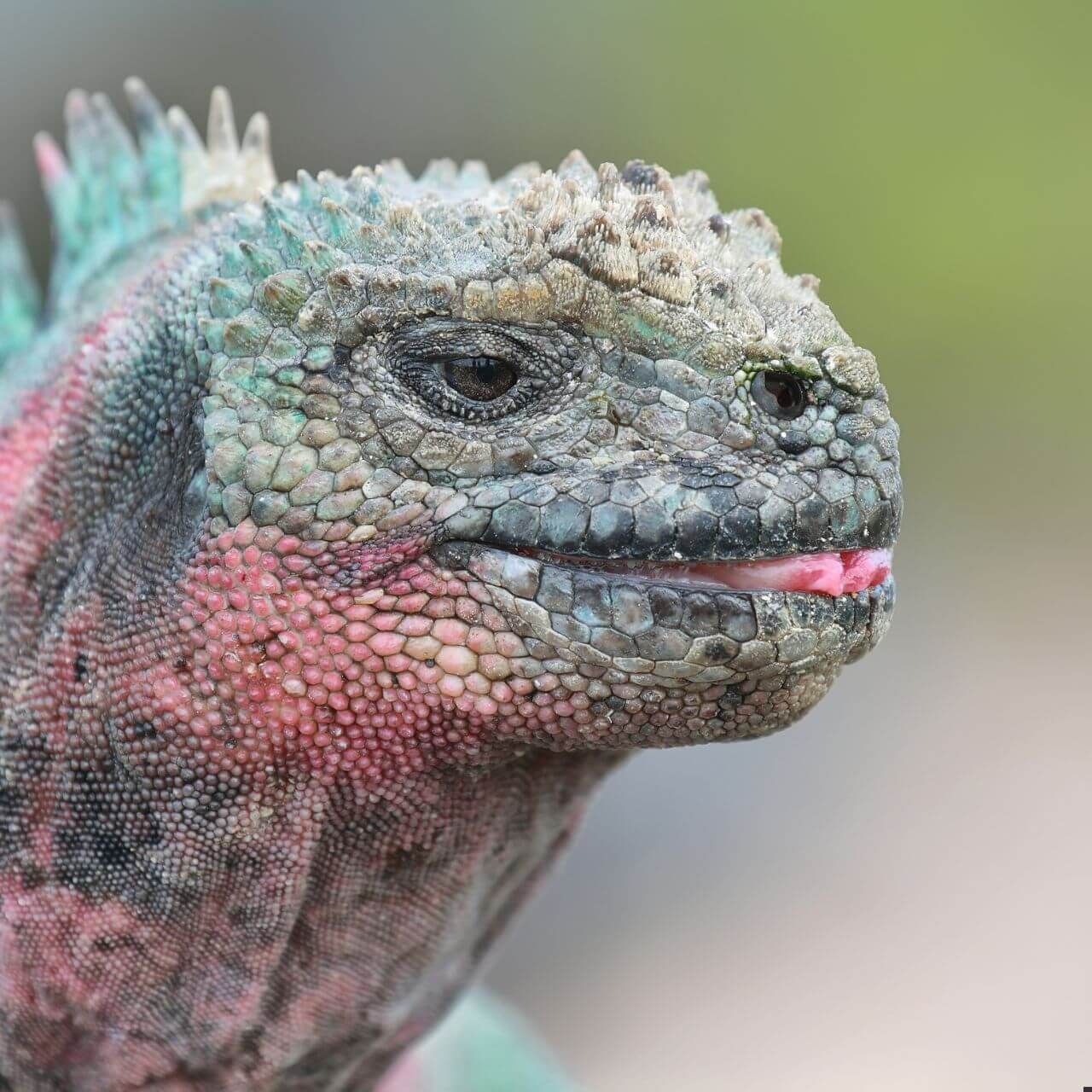
Marine iguanas have many adaptations that help them survive, such as…
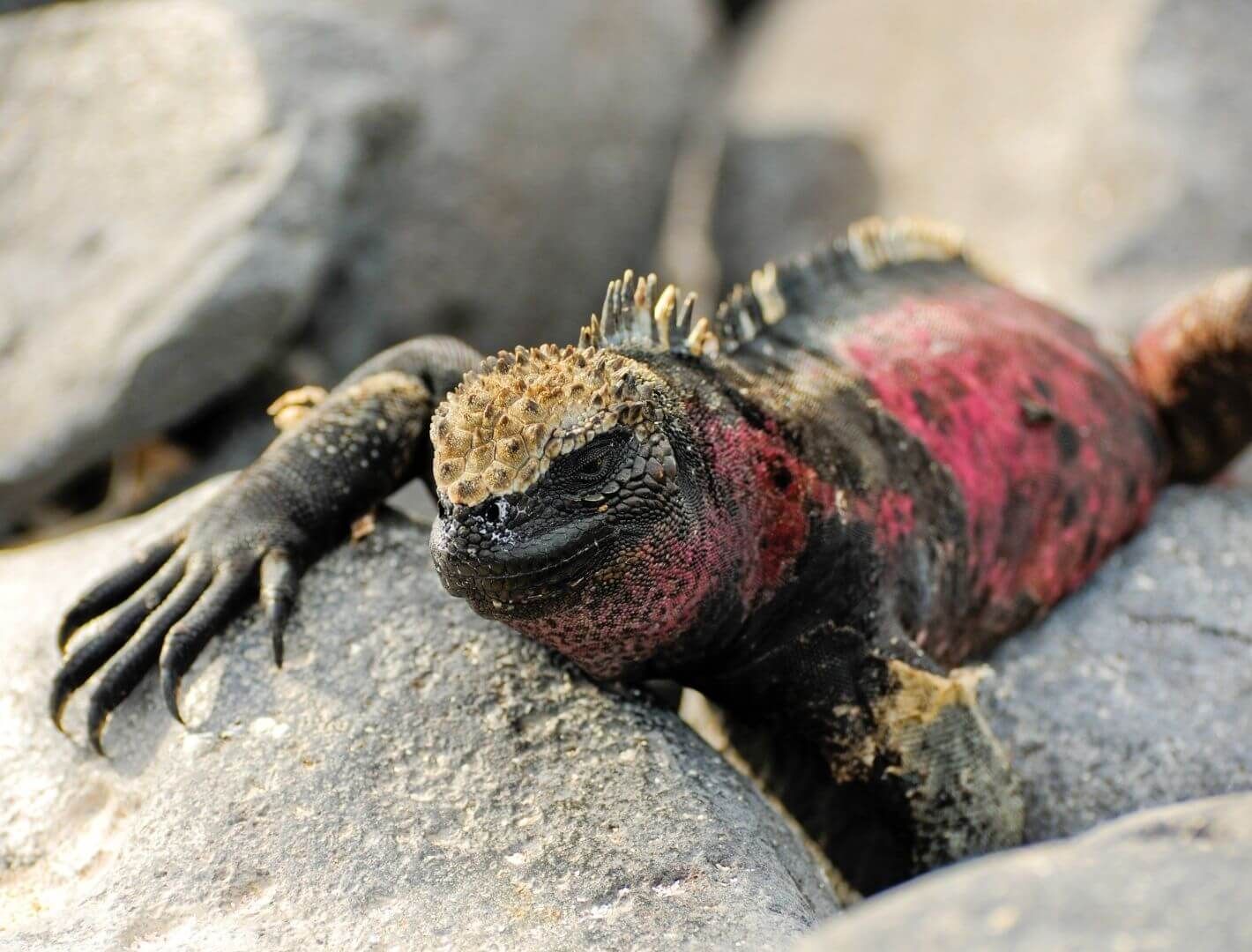
- Dark colors that help absorb sunlight
- A long, paddle-like tail
- Long, sharp claws for grasping rocks
- A streamlined body
- A blunt snout for scraping algae off rocks
How many marine iguanas are there?
Scientists recognize one species of marine iguana. Scientists recently described 11 subspecies.
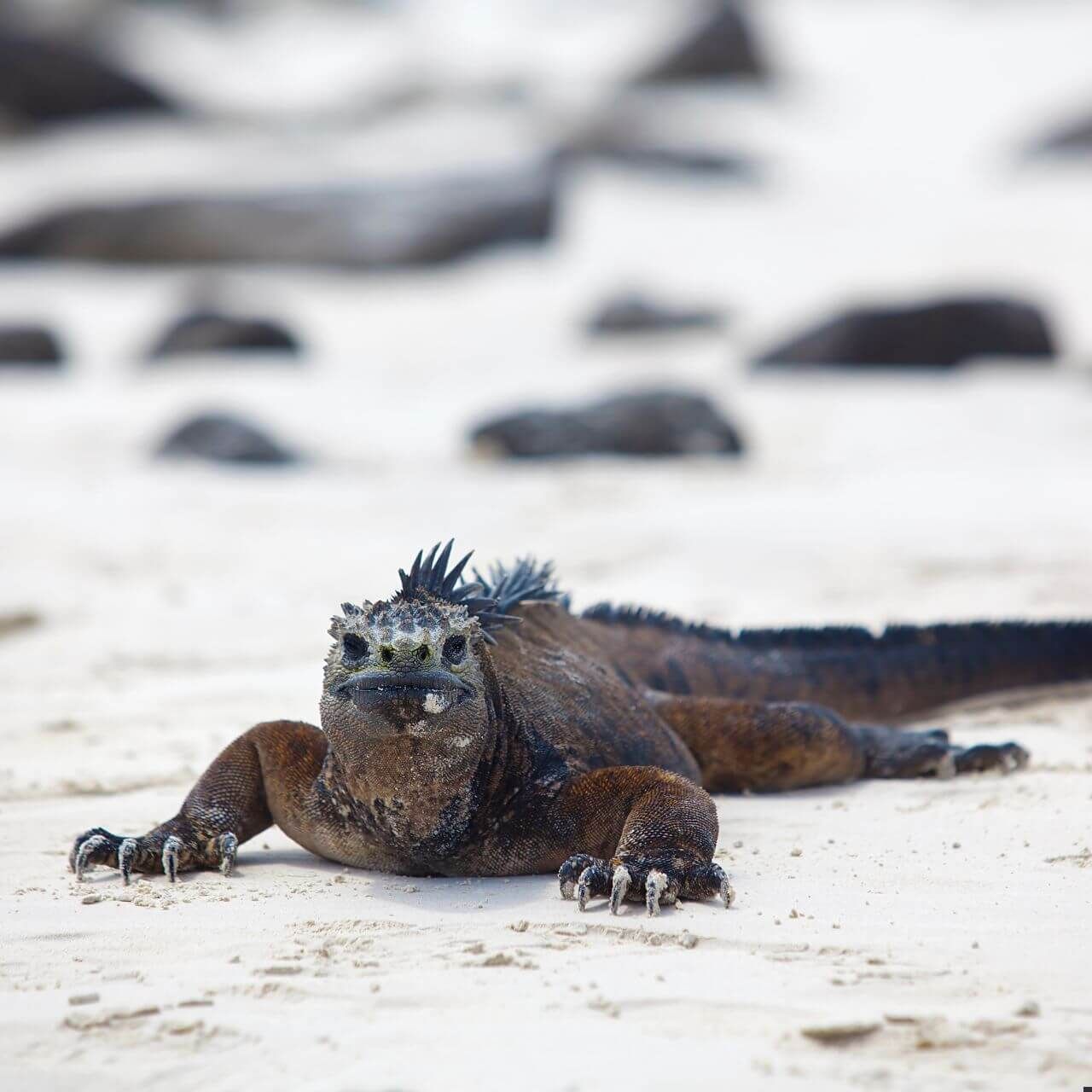
Marine iguanas have a large population. Scientists estimate there are 200,000 to 300,000 marine iguanas in the Galapagos Islands. Even though they have a large population, they are still classified as endangered by the IUCN. They are threatened with extinction due to their small range and changing environment.
Species Spotlight
The Dangers of Being Endemic
Some of the world’s most unique animals live in the Galapagos Islands. There are tortoises that weigh as much as vending machines. There are penguins that have never seen snow. And, of course, there are strange iguanas that take to the sea to feast on algae. Many of these animals are endemic to the Galapagos Islands. These animals are not found anywhere else on Earth.
Endemic species often live on islands. Most animals are not able to cross the ocean to reach other land. Island animals become trapped in unique habitats. While this might be fascinating, it is also dangerous.
Imagine something like a coyote. Coyotes roam across most of the United States. If coyotes became extinct in one state, their overall population would still be fine. Now imagine an animal that only lives in one place, like the marine iguana. They would be gone forever if they became extinct on the Galapagos Islands.
Endemic species on islands face even larger threats. Island animals are vulnerable to changes in the environment. If the environment changes, they cannot move somewhere else. Natural disasters, such as wildfires, volcanic eruptions, or hurricanes, are big threats. They could wipe out entire islands. To protect the endemic species, there are many laws on the Galapagos Islands. Check out our Conservation Corner to learn more.
Conservation Corner
Conservation In the Galapagos Islands
The Galapagos Islands are famous. The strange habitats on these volcanic islands are home to incredible wildlife. They are considered a National Park and World Heritage Site. The animals in the Galapagos are vulnerable to disease, invasive species, and changes to their habitats. To protect them, the local government enforces many laws. Let’s take a look.
Stay at least six feet away from wildlife
It is illegal to touch, feed, or interact with wildlife on the Galapagos Islands. To keep them safe, everyone must stay at least six feet from animals.
No campfires or smoking
Wildfires are a huge threat to wildlife on the Galapagos Islands. To reduce the risk of fire, all campfires and smoking are illegal.
Tourists must be accompanied by a guide
All tourists must be with a naturalist guide when exploring the islands. Guides must be certified by the Galapagos National Park Directorate. These guides keep everyone in approved areas. They make sure that no one interacts with wildlife.
Leave no trace
Snack wrappers, water bottles, and other waste can harm wildlife in any environment. All garbage must be removed before leaving the park.
Laws like these help keep wildlife safe as guests see and learn about them. It’s important to follow laws in any natural environment. Make sure to research and follow the laws in any park you visit.
Marine Iguana Challenge
Marine Iguana Acrostic Poem
Learn More!
Glossary
Adaptation
The process by which a species becomes more fit for its environment over the course of several generations. It is a result of natural selection.
Algae
Photosynthetic, plant-like organisms typically found in water.
Bask
To warm in the sun.
Climate Change
A change in global weather patterns as a result of greenhouse gases in the atmosphere.
Endemic
Living in one place and nowhere else.
Ectotherm
An animal that relies on the outside temperature to regulate their body temperature (reptiles and amphibians). Also known as cold-blooded.
Equator
The imaginary line that divides the Earth in halves, the northern hemisphere and southern hemisphere.
Herbivore
An animal that eats mostly plants.
Intertidal Zone
The area that becomes exposed when the tide goes out.
Invasive Species
An organism that has established a population somewhere it is not native to.
Mutualism
A symbiotic relationship where both species benefit from the interaction.
Oviparous
To lay eggs.
Parasite
An organism that relies on and harms a host for survival.
Predator
An animal that hunts other animals for food.
Prey
An animal that is hunted and eaten by another animal.
Reptile
A group of ectothermic (cold-blooded) vertebrates that are covered in scales and generally lay eggs.
Species
A closely related group of animals with similar characteristics that are capable of reproducing (example: tigers).
Subspecies
A group within a species that is genetically different from other groups in the same species (example: there are many subspecies of gray wolf, like the Mexican wolf and Arctic wolf).
Territorial
Referring to an animal that defends an area (its territory) from other members of its species.
Thermoregulation
The act of an animal controlling its body temperature.
Tropical
A region near the equator that has warm temperatures year round.